
When we think of Richard III and the Wars of the Roses, most of us will first think of Sir Thomas More and his “The History of King Richard III”. It is probably one of the most controversial sources about the Wars of the Roses out there and yet historians still use it. The question is why is there such an attraction to this book and why did Thomas More write it? It is my hope with this article to shed some light on this book, on More and what his possible intentions were when he wrote this book. I will be breaking this article into two parts; who Sir Thomas More was and what the book says. It is important to understand More’s background if we are to have any hope in understanding “The History of King Richard III”. I will only be writing about More’s life up until the time he wrote this book because his later life under Henry VIII and his execution really do not explain the purpose of why More wrote this book.
Sir Thomas More: The Man
So who was Sir Thomas More and why should he matter? Robert Whittington in 1520 says:
More is a man of an angel’s wit and singular learning; I know not his fellow. For where is the man of that gentleness, lowliness and affability? As time requireth a man of marvellous mirth and pastimes; and sometimes of as sad gravity; a man for all season. (Murphy, 1)
Thomas More was born on February 7, 1478 (Ackroyd, 6) to John More and Agnes Graunger. More’s childhood saw the transition from Edward IV as king to Richard III and finally to Henry VII. He attended school for a while at St. Anthony’s and then went on to become a page for John Morton, Archbishop of Canterbury, a man that More deeply admired and who would appear in his History as a wise man. ( Ackroyd, 35)
After working for John Morton, More studied for a little bit at Oxford University. It was at Oxford where he was able to engage in humanism which is studying classic literature through the study of the languages of antiquity and once that was mastered, using rhetoric to debate certain topics. (Johnson, 34-35) Humanism would come to shape the writings of More and his friend Erasmus of Rotterdam, who’s translation of the New Testament would go against the Vulgate, questioning the authority of the papacy, and influence those like Luther, even those Erasmus was a devout Catholic. ( Elton, 113). To put it another way, “Humanists were concerned with integrating, not separating, the human and the Christian.” (Murphy, 7)
More left Oxford without obtaining a degree and went to New Inn and later he was admitted to Lincoln’s Inn in London in 1496. Inns were not what we considered inns today; they were where men who interested in law went to study. ( Ackroyd, 53). He was sixteen at the time. Peter Ackroyd explains how More was able to balance both his religious studies with his study of law:
Religion and law were not to be considered separately; they implied one another. That is why law was considered to be perfect in itself, undamaged by the bad judgments of individual practitioners; the same argument, on the merits of the Mass as opposed to the virtue of the priest who offered it, was at the heart of Catholic eucharistic belief. That is why the law was also considered to permanent; it was what was known to be true, withstanding change or decay. (Ackroyd, 63).
This must be understood in order to understand More. To him, using religious terms to describe political events was just another part of daily life. Another part of his daily life was his family; in 1505, he married Jane Colt and they had four children: Margaret, Elizabeth, Cecily, and John.(Murphy, vii). Four years later, in 1509, Henry VIII became king of England and in 1510, More was made Under- Sheriff of London and was elected into Parliament. (Murphy, vii). Three years later, More wrote his “The History of King Richard III”, but he never finished it. (More, 3).
More’s “The History of King Richard III”
Many argue that More wrote his “ The History of King Richard III” for propaganda of the Tudor Dynasty, especially for Henry VII, however Ackroyd points out something very interesting about their relationship:
It has often been suggested that, at a later date, More professed hostility towards the financial exactions which Henry VII tried to levy upon London. There is no evidence of any open dispute but certainly, at the time of the accession of his so, More composed a sharp attack upon the dead king. (Ackroyd, 84)
If this is the case then what was More’s intentions in writing this book? Before we try to answer that question, we have to explore the text itself.
“The History of King Richard III” by Sir Thomas More is roughly less than a hundred pages in length. Relatively short for such a controversial text. It should be noted that this text is considered a “history” in the loosest possible sense. In fact, More wasn’t using recent histories from his time to formulate his own history, but being the humanist that he was, he used histories from Sallust and Tacitus as examples. ( Ackroyd, 161). Another difference from a typical history is that More relies on oral sources for his history. ( Ackroyd, 161). Anyone who studies history knows that oral sources are not always the most reliable source because words can be misconstrued.
More doesn’t start his history of Richard III with say his birth; instead he starts his book with the death of Edward IV. He describes Edward as “a goodly personage, and very princely to be hold: of heart courageous…” (More, 4). More then goes on to describe the protector of Edward’s children, Richard III, obviously starting with his physical appearances first (More, 8) and then describes who he was as:
…Close and secret, a deep dissimuler, lowly of countenance, arrogant of the heart, outwardly coumpinable where he inwardly hated, not letting to kiss whom he thought to kill; dispiteous and cruel, not for evil will alway, but often for ambition…. Friend and foe was ,such what indifferent….(More, 9)
Not the most courteous way to describe the brother of a king who would be a king himself, but as Sylvester notes, it is not because Richard was a Yorkist king but because he was a “dissimulating tyrant”(More, xv). Now Richard was not Edward’s choice as protector, in fact it was the Queen’s brother Sir Anthony Woodville, “a right honorable man, as valiant of hand as politic in counsel”(More, 15). However, Richard did not like this suggestion and so he had Lord Rivers and his men sent to prison and then later beheaded for “treason”. (More, 21).
Of course in Sir Thomas More’s book, there are no dates, which makes it difficult to pinpoint when these events exactly happened or if they happened at all, including the speeches that More included such as those of the Duke of Buckingham who is trying to convince the former Queen Elizabeth Woodville to hand over her other son to Richard.( More, 29-33). Likewise when Elizabeth refuses to give up her son (More, 35-39) and then later when she reluctantly agrees to do so (More, 41-42). These are very iconic speeches in this book that are full of passion and heartbreak.
So why would More included these either factual or fictitious speeches? Peter Ackroyd gives us an interesting insight into that question:
It is significant, too, that the most elaborate passages of More’s narrative are conceived as speeches; the merits of sanctuary for the royal children are the subject of long debate, for example, while the right of Richard to be king is explained in a number of orations. ‘The History of Richard III’ can be understood, then, as a lesson in the arts of disputation and rhetorical debate similar to those in which More engaged as a schoolboy and a scholar….In his grammatical work More was instructing those who might well be chosen to administer the government of the state: grammar was part of rhetoric, and rhetoric was part of public duty. (Ackroyd, 162-163).
This book is not just a “history” but it is also a lesson in rhetoric for those in government. More may have been a fan of reading history, but his true love was humanism and government, in which rhetoric and grammar were immensely important. It is that love of humanism and government that we see throughout the entire book.
More goes on with Richard’s case on why he should be king. After Richard gets rid of his traitorous former friend Lord Hastings (More, 49-54), he moves on to the important part of his argument; that his brother Edward was already married to a Mistress Shore before he married Elizabeth Woodville.(More, 55-58). Since his brother was already married, that meant that any children that he had with Elizabeth Woodville would be considered bastards, including the young king Edward V. This was damning enough but Richard wanted to make sure that it had legal backing he made a document, that declared the children of Edward IV and Elizabeth Woodville bastards. (More, 60-61). Richard also asks for Dr. Shaa to preach a sermon against Edward’s children with Elizabeth and the Duke of Buckingham giving his speech on how great Richard is (More, 70-76). This leads to the epic conclusion where Richard “reluctantly” takes the throne since he is the obvious choice to take crown since his brother’s heirs were declared bastards. Richard III has become King of England.
But there is one more piece to the puzzle. What happened to the young king and his brother? More leaves us questioning what happened to them because he speaks of rumors of John Green, Sir Robert Brackenbury, the Constable of the Tower, Sir James Tyrell and John Dighton being ordered by Richard III to kill the brothers.(More, 85-90). One has to wonder if this is a credible theory or just rhetoric since More only heard this theory and the fact that there is no written evidence. More does not go into any more detail about this and “ends” the book with Bishop Morton trying to convince Richard III to lead the country with wisdom. (Ackroyd, 35). This is a very unusual ending for someone who is supposed to be writing the book as propaganda for the Tudor dynasty.
Conclusion
So knowing that More was writing this as more of an exercise on humanism and did not finish this book, how should we approach “The History of King Richard III”? I don’t believe that we should merely toss it out. It was not propaganda for the Tudor dynasty since it was written in 1513, before More’s political career really took off. The speeches can be seen as examples of rhetoric. There are some historical facts like the death of Lord Hastings and Lord Rivers, Elizabeth Woodville handing over her son to Richard, and legal document as well as Dr. Shaa’s sermon. Those match up with other sources. As for Mistress Shore and the murder of the princes of the tower, it’s a bit harder to prove since we do not have actual paper evidence to support either theory.
Overall I think More’s history should be understood as a take on history from a humanistic lens. It’s an important piece to read because some of the facts in this piece are in fact true and it gives us an interesting view into what a Tudor scholar thought about those who came immediately before the Tudors. “The History of King Richard III” by Sir Thomas More is a fascinating read for anyone who is interested in the Wars of the Roses, a darker view on Richard III, or on how humanism could be applied in a written sense. I highly recommend that you read this book.
Want to Learn More about More? (Sources)
Ackroyd, Peter, and Diarmaid MacCulloch. The Life of Thomas More. London: Folio Society, 2017.
Elton, G. R. England Under the Tudors. London: Methuen, 1956.
Johnson, Paul. The Renaissance: A Short History. Bridgewater, NJ: Distributed by Paw Prints/Baker & Taylor, 2008.
More, Thomas. The History of King Richard III. Edited by Richard S. Sylvester. New Haven: Yale University Press, 1976.
Murphy, Anne. Thomas More. Liguori, MO: Triumph Books, 1997.
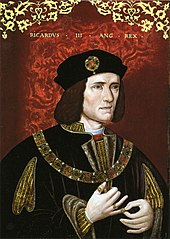 In honor of the third anniversary of the reburial of King Richard III, I have decided to write down my opinions about this controversial king.
 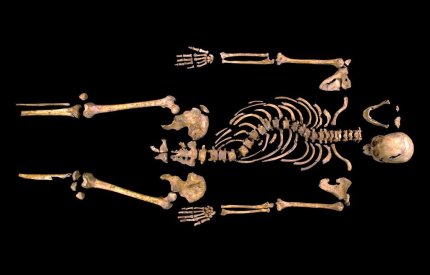 Shakespearean lore. I used to believe this and then his skeleton was discovered under the car park in Leicester. After looking at his skeleton, one would think he would be unfit to fit, but I came across a documentary that proved otherwise. “Resurrecting Richard III” by PBS was able to find a man in England who had the exact same amount of curvature in his back as Richard III. It proved that Richard could fight and that he wasn’t as Shakespeare described
  Just like his father before him, Richard was granted the right to make orders for the king, not because he was well liked, but because he fought against the Woodvilles and the Rivers for the right. He was fighting his brother’s wife’s family for the right to control the country. Richard would have Lord Rivers killed because of “treason” to protect the boy king. Edward V and his younger brother Richard duke of York were led to the Tower of London “for protection” and were never to be seen again after 1483. Since the young king was out of the picture, I believe because Richard had the boys murdered, the only one who had the right to the throne was Richard himself. Just like he planned. To seal the deal, Richard III issued the
  Elizabeth I
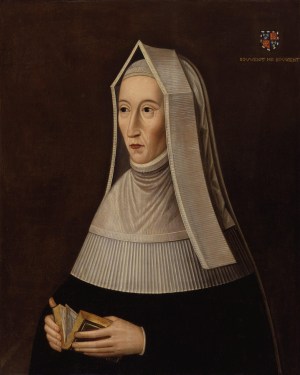 essential. It was a world controlled by men and Margaret played their game well. She was first married to Henry Tudor’s father Edmund when she was around 12 or 13 years old and had Henry when she was either 13 or 14. With the amount of trauma that she endured giving birth to Henry, he was her only child. Only a few months before Henry was born, Edmund died, leaving Margaret a widow and she had to give her son over to an enemy of the Beauforts. As the Wars of the Roses progressed, Henry soon became the last hope for the Lancastrian cause. His life hung in the balance as he and his uncle Jasper was forced into exile. It was through Margaret’s two other marriages that she was able to secure land for her son and was able to help create an army for her son so that he could claim the throne. Most of this she planned while her husband, Lord Stanley, was a strong supporter for the Yorkist cause. This was such a gamble, but the biggest gamble that Margaret made was when she convinced Elizabeth Woodville, the wife of Edward IV, to allow her daughter Elizabeth of York to marry Henry after he defeated Richard III at the Battle of Bosworth Field. All of her hard work paid off after Bosworth and her son Henry Tudor became Henry VII. Margaret had to be very strong in order to survive through all of this turmoil in order to see her only son succeed.
 between their children would help mend the rift in the country. With the marriage between Elizabeth and Henry Tudor, the York and Lancaster houses were united under the red rose of Tudor. I have always wondered what it must have been like for Elizabeth to know that she had to marry Henry who fought on the opposite side of her entire family. At first, it must have been rough but it did develop into love between the two. And then Henry had to deal with men who claimed to be her brothers who were led to the Tower of London and supposedly never heard of again. It must have been hard for Elizabeth to hear about these pretenders who claimed to be her long-lost brothers. At the same time she was building a family with Henry with her sons and daughters. Just when everything was going well for the family, Elizabeth and Henry’s eldest son Arthur died right after he had married Catherine of Aragon, the daughter of Isabella and Ferdinand of Spain. The blow must have rocked their marriage to the core, but luckily they had each other and their other son Henry VIII. It was the love that they had for one another that helped get Elizabeth of York and Henry VII through the rocky patches and helped establish the Tudor dynasty.
 her marriage, to Henry VIII, was arranged all while living in poverty. She could have thrown in the towel and asked to go back home but she stayed and married King Henry VIII, becoming Queen of England. Everything was going fine in their marriage until the miscarriages happened and the fact that she could only give birth to one child, a girl named Mary. This must have felt so horrible for Catherine since Henry only wanted a male heir and she could not give him what he wanted. Henry wanted a divorce and decided to use the fact that she was married to his brother as an excuse to divorce. Since Catherine said she was still a virgin after Arthur died, the Catholic church did not see a reason to hand out the divorce and took a long time to decide so Henry decided to break away from the church and divorced Catherine that way. She was then dismissed to never see him or her daughter Mary again, although she would argue that she was his one true and faithful wife until her dying breath. The amount of courage it must have taken to get through all the Henry through her way is very admirable and inspiring.
 Catherine was a scholar and had written two books, a first for a Queen of England. She acted as a king step mother to Henry’s three children; Edward, Elizabeth and Mary, but she had the best relationship with Elizabeth. After Henry died, Catherine married her sweetheart Thomas Seymour and had Elizabeth live with them. It is rumoured that Thomas Seymour had an inappropriate relationship with Elizabeth. It must have been hard for Catherine to accept this fact and in some cases, it is said that she even assisted Thomas with these incidents. Catherine had to make the hard decision to ask Elizabeth to leave her household, even though she loved her very much. Catherine died giving birth to a daughter. Catherine had to act as a nurse, scholar, wife, and step mother in a time when it was hard to even do one of these jobs properly.
 Adventures of a Tudor Nerd