
Questions About The Wars of the Roses

The Wars of the Roses, the dynastic battle between the Yorks and the Lancasters for the throne of England, last from 1455 at the 1st Battle of St. Albans until 1487 at the Battle of Stoke Field. This is one of my absolute favorite time periods to study because it not only marked the beginning of the Tudor dynasty, but it was also so complex and full of intriguing questions. I have decided to take the questions that you all sent me and answer them to the best of my ability to start off August, which I have dedicated to exploring this time period in honor of the Battle of Bosworth Field. I hope this will encourage more discussions about this series of wars that changed English history forever.

1.) How mad was King Henry VI and was his condition widely known in court, the country, and France? If Henry VI wasn’t mad would York still have rebelled?

There are a lot of theories about King Henry VI and what exactly his “madness, but the leading theories are that it was either catatonic schizophrenia or a severe case of depression. Catatonic schizophrenia limits a person’s movements, which would explain why he is also known as the “sleeping king”. Compared to normal people, Henry VI would seem rather mad, but compare him to say someone like Charles VI of France, the father of Katherine of Valois who believed that he was made out of glass and couldn’t remember his wife and children, Henry VI’s madness doesn’t seem that bad. Margaret of Anjou and others close to the king kept his secret very close so at the beginning, his madness was only known in the court. As the Wars of the Roses progressed and seditious propaganda was made against Henry VI, I think the common people would have learned about his madness. As for the country of France, I am not sure if they knew about Henry VI’s madness because they do offer Margaret of Anjou aid to restore him back to the throne.

I believe that York would still have rebelled because it wasn’t just Henry’s madness that made him a less than average ruler. Henry was a pious, religious man who didn’t really like fighting. He didn’t have the courage that was needed in order to be a medieval ruler of England. I believe that York knew this and decided to act. At first, he might have only been fighting his enemies in court, but I think he believed that his bloodline had a better claim to the throne and he wanted to make England better, so he rebelled against Henry VI. It wasn’t because he was mad, but because he was a weak ruler, that York rebelled.

2.) Why did Lord Stanley, who was a staunch supporter of Richard III, switch sides and support Henry Tudor during the Battle of Bosworth Field? He would not have benefitted from supporting  Henry anymore than he had Richard and all of his wife’s estates were declared forfeit to himself. So couldn’t have been for financial gain?

This was the biggest switch during the Wars of the Roses, and ultimately it is what established the victory for Henry Tudor. Richard believed that he had Lord Stanley on his side, but the morning of the battle, Lord Stanley faked being sick to avoid fighting. Lord Stanley and his son Lord Strange sat on the sidelines during the battle. Then, when all hope seemed lost for Henry Tudor, Lord Stanley and Lord Strange come to the rescue. Lord Stanley broke his own oath Sans Changer (Without Changing)to help a young man, who was virtually unknown, become King of England and helped create the Tudor Dynasty.

So the question is why did he do it. Why did Lord Stanley switch sides? I believe he might have switched because he saw how much his wife Margaret Beaufort believed in her son’s cause. Think about it. She risked everything to make sure he was safe. Even when she had lost everything, Margaret was still funding his rebellion. Even though Lord Stanley saw favor from Richard III, it must have been disheartening for him to see Richard III’s closest allies being either killed or exiled. I think this must have freaked Lord Stanley out. He wanted to make sure that he would have survived so he took a risk and bet on the young man Henry Tudor.

3.) Do you think Edward IV regretted marrying Elizabeth Woodville instead of going with a foreign bride which could have given him an alliance and back up during the war?

I don’t think Edward IV ever regretted marrying Elizabeth Woodville. I believe he loved her very dearly. In the Historie of the Arrivall of Edward IV. in England and the Finall Recouerye of His Kingdomes from Henry VI (which is a very interesting read that I recommend if you want to study the Wars of the Roses), there is a moment where Edward IV returns to his throne in 1471 and sees his family again after being in exiled. He is described as having tears in his eyes as he embraces his wife and children. I believe that this passage, whether it was embellished a bit or not, shows Edward IV never regretted marrying Elizabeth Woodville. Sure a foreign bride may have established an alliance and back up during the war, but Edward was popular with the English people, even if his wife wasn’t popular with the people. Even with his numerous affairs, Edward IV’s true love was Elizabeth Woodville.

4.) Had Elizabeth (Woodville)Grey not gone into sanctuary before Richard III’s coronation, would she have survived his purge of her family members?

I really don’t think that Elizabeth (Woodville) Grey was in danger of being killed. Sure Richard III disliked the Woodvilles, but I don’t think he would have killed a woman, even if she was indeed the cause of his hatred towards one family. Richard III may have slandered his mother’s name, but I don’t think he would have murderous intentions towards women. I believe that she would have survived the purge of her family members.

5.) What was the nature of the relationship between Elizabeth of York and Richard III? Was it more than uncle and niece?

Elizabeth of York was the eldest daughter of Edward IV and Elizabeth Woodville. She was the niece of Richard III and there are some who say that he was planning on taking her as his wife after Anne Neville died. I believe that Richard III and Elizabeth of York had a normal uncle and niece relationship. We must remember that the Wars of the Roses was not only a series of wars that were fought on the battlefield, but also through propaganda. What better way to defame Richard III a bit further than claim that he had a relationship with his niece? There is no evidence that they had a relationship other than that of an uncle and niece.

6.) Was Edward IV a usurper?

A usurper is anyone who takes a position of power through force or illegal means. By this definition, Edward IV was indeed a usurper. He won his crown first at the battle of Towton on March 29, 1461, and then again at the battle of Tewkesbury in 1471. He took the crown of England twice. However, just because Edward IV was a usurper does not mean that he was a bad ruler. Henry VII was also a usurper and he was able to establish the Tudor dynasty, thus ending the Wars of the Roses and brought back a time of peace and prosperity to England. Edward IV did something similar while he reigned from 1471 until his untimely death in 1483. England had a strong and stable ruler, the opposite of what Henry VI was,  with Edward IV even though he was a usurper.

Book Review: “The First Elizabeth” by Carolly Erickson

78c6ce34a9b7447cedba2378b607f3d4The story of Elizabeth I is full of twists and turns. From the moment she was born, she had to fight to survive. Through all that she went through, Elizabeth found the strength and courage to become the legendary queen to help England to enter into a golden age of peace and prosperity. This, however, is just one side of Elizabeth. The other side of Elizabeth’s personality, her anger and her interactions with her councilors, is explored thoroughly in Carolly Erickson’s book “The First Elizabeth”.

Carolly Erickson explains this other side of Elizabeth a bit further:

But if Elizabeth’s political and intellectual skills served her well, though hardly infallibly, in dealing with her councilors she relied on her volatile, imperious temperament and on her inbred capacity for duplicity and deceit to keep them at bay. She was dangerously unpredictable in her moods. She blustered one minute and beguiled the next. Now coaxing and cajoling, now spitting out ringing oaths and insults, she kept her advisers off balance and perpetually astonished them by the range and mutability of her passions. Beyond this, they came to know that, with Elizabeth, nothing was ever what it seemed. Beneath her surface emotions were layer upon calculating layer of secondary reactions, ploys and schemes. She took pleasure in laying traps for her unwary ministers and ensnaring them later with their own words. Even the wittiest of them were sometimes left tongue-tied and flat footed in her presence, while all of them, however fleetingly, were on occasion dazzled by her youthful, radiant femininity and sexual magnetism.(Erickson, 173).

Erickson begins her book with the birth of Elizabeth and her relationship with her father Henry VIII. With the death of the king, Elizabeth had to adapt to the rules of her step brother and sister, Edward VI and Mary. It’s really Mary’s reign where Erickson focuses her attention for the first part of the book. To her, Elizabeth is more timid and scared whereas Mary comes off strong. It’s a different look at these two sisters and their relationship.

With Mary’s death, the twenty-five year old Elizabeth is declared Queen of England. The people of England were relatively hesitant about  this newcomer since they did not know much about her. Elizabeth worked hard to create an image of a good and benevolent queen for her people while hiding her temper that she was notorious for. Those who were closest to Elizabeth would often feel her anger first hand. Erickson also shows how even though there was a facade of peace in England during Elizabeth’s reign, there were those who wanted Elizabeth dead. Elizabeth fought both internal and external enemies in order to survive. It was her strength and her determination that made her a legend.

Erickson’s book may be a biography but it reads like a historical fiction novel. There were times when Erickson would mention famous passages or rumors and I was wishing that she had included the actual text in the book. Another thing that Erickson did that I bothered me a bit was that she made Elizabeth a bit darker than she is normally portrayed. When it came to the death of Mary Queen of Scots, Erickson really did not mention how much of a struggle it was for Elizabeth to sign the death warrant against Mary.

Overall, I think that “The First Elizabeth” by Carolly Erickson was an interesting read. There were some facts and rumors in this book that I was not aware of and her portrayal of Elizabeth was memorable. Elizabeth was prone to angry tirades but ultimately she had her people’s best interest in mind. I am glad that I read Carolly Erickson’s book because it did show a different side of this remarkable queen. I would recommend this book for anyone who is looking for a different perspective on Elizabeth I.

Book Review: “The Life of Elizabeth I” by Alison Weir

111222Elizabeth I was perhaps the most influential monarch in English history. There are episodes in her life that became legendary. From her tumultuous childhood to her reign where everyone either wanted her to marry or put someone else on the throne, Elizabeth’s life was hardly easy. Even though much is known about her public life as queen, we really do not know a lot about her private life. In Alison Weir’s book, “The Life of Elizabeth I”, the gap between the public Elizabeth and the private Elizabeth is bridged in order to give a more complete biography of this fascinating English queen.

Alison Weir explains what Elizabeth had gone through in her early life and how it shaped her as a queen:

When she came to the throne her subjects knew relatively little about her. Nurtured in a hard school, having suffered adversity and uncertainty from her infancy, and having gone in danger of her life on at least two occasions, she had learned to keep her own counsel, hide her feelings and live by her wits. Already, she was a mistress of the arts of deception, dissimulation, prevarication and circumvention, all admired attributes of a true Renaissance ruler. At twenty-five years old, she was at last in control of her destiny, and having lived in one kind of constraint or another for the whole of her existence so far, she was determined to preserve her independence and autonomy. She had learned from her sister’s mistakes and resolved never to repeat them. She would identify herself with her people and worked for their common interests. She would bring peace and stability to her troubled kingdom. She would nurture it, as a loving mother nurtures a child. For this, she believed, God had preserved her life. (Weir, 9-10)

Weir begins her book with the coronation of Elizabeth, touching briefly on Elizabeth’s childhood and how she got to the throne. She explains the England that Elizabeth knew and how right after she was crowned, her people desired for the queen to have a husband and to know what religion she would adopt for her own and for her country. Although Elizabeth liked to have quite a few favorites, including Robert Dudley and Francis Duke of Anjou, she never gave her heart solely to one man. Instead she chose to be the mother of her country and to be married to the job of protecting her people. Elizabeth not only had to keep her people happy but she had to deal with threats from other countries, including King Philip II of Spain and his Armada, the  St. Bartholomew’s Day massacre of the Huguenots in France, and the religious feuds in the Netherlands. One of her biggest external threats was her cousin Mary Queen of Scots, who claimed that she should be Queen of England. Elizabeth eventually had to make the decision to execute another queen, very similar to the decision her father had to make when he had Elizabeth’s mother executed a few decades before.

Elizabeth also had to deal with internal threats such as favorites, especially  Robert Devereux, the 2nd Earl of Essex, becoming jealous of others in court and throwing fits. There were those who would dare to marry without the Queen’s permission and had their own children. In these instances, Elizabeth’s anger would come out in full force. She didn’t trust many people and tended to keep her feelings to herself. To the outside world, she was “Gloriana” or “The Virgin Queen”, but to those who truly knew her, she was just Elizabeth, a woman who became queen and who was just trying to survive for herself and her country.

Elizabeth I has always been my favorite Tudor monarch. Her story was the one that really got me interested in the Tudors and this book made me fascinated with her all over again. Alison Weir was able to yet again combine her engaging writing style with amazing details to tell the full story of the reign of Elizabeth I, from her coronation at age of 25 to her death at the age of 69, and how she changed England for the better. I loved reading this book. There was so much information about Elizabeth that I didn’t know about in this book, it was like discovering a whole new side to a person I thought I knew very well. If you want to learn more about Elizabeth I, the woman behind the legend, and her impact on England and the 16th century world, I highly recommend you read this book, “The Life of Elizabeth I” by Alison Weir. An absolutely fascinating read on one of England’s most remarkable rulers.  

Book Review: “The Lady in the Tower: The Fall of Anne Boleyn” by Alison Weir

6282683Anne Boleyn, the  second wife of Henry VIII and the mother of Elizabeth I. Most of us know her story of how she fell in love with Henry VIII and how their relationship changed England forever as Henry broke off with Rome in order to get a divorce from his first wife Katherine of Aragon so that he could marry Anne. Unfortunately, when Anne couldn’t give Henry the son he so desired, their love began to fade. Anne Boleyn’s story ends in tragedy as she was accused of having multiple affairs, plotting the death of Henry VIII, and witchcraft, Anne was found guilty and was killed. Her fall happened in May 1536, a month that changed everything, but how much of these charges are true? Did she indeed have these affairs? Did she plot to kill her husband? What is the truth behind her fall? These are the questions that Alison Weir try to answer in her book “The Lady in the Tower: The Fall of Anne Boleyn.”

Alison Weir states that:

In assessing Anne’s character and impact on history, we should ask ourselves how she would be viewed today if she had not perished on the scaffold. Her end was one of the most dramatic and shocking episodes in English history, her last days the best documented period of her life, vividly described in the sources, while the powerful image of her on the scaffold, courageously facing a horrible death, has overlaid all previous conceptions of her. (Weir, 337-338).

Weir begins her book with the May Day joust of 1536, when Henry VIII abruptly left Anne all alone. A few months before, Anne had her last miscarriage, unable to provide Henry the son that he so desired. Henry’s attention began to wander towards Jane Seymour, even though, at this time, he still had feelings for Anne. After Katherine of Aragon’s death, a few weeks before the miscarriage,  Anne’s enemies began to make their moves. Anne had many enemies in court and the entire country was against her in her role in the divorce of Henry and Katherine of Aragon, who was extremely popular.Cromwell, who despised Anne, planned a way to get Anne off the throne with the help of Chapuys, the Imperial ambassador to England for Charles V.

Cromwell had enlisted the help of Anne’s servants, including her sister-in-law Anne Boleyn, to make a tale of scandal. The story goes that Anne had affairs with five men: Sir Henry Norris, Sir Francis Weston, Sir William Brereton, Mark Smeaton, and her brother George Boleyn. Alison Weir explores the validity of the claims of the affairs as well as the details of the trials. Of course, the trials did not go in a way that was what we would now today consider “fair” and the sentence of death was passed on all of the accused. Anne Boleyn and the men accused with her are executed. The only legacy Anne left behind was her daughter, who would become Queen Elizabeth I.

I have been a fan of Alison Weir’s for years. I love the amount of details that she puts into her books and how both her fiction and non-fiction books are so easy to read. “The Lady in the Tower: The Fall of Anne Boleyn” follows this trend. For me, Anne Boleyn has been one of those people in the Tudor time  that really has not interested me. That was until I read this book. The story of her fall is so dramatic and quick that it leaves a lot of intriguing questions about if Anne and the men who fell with her were indeed innocent. “The Lady in the Tower: The Fall of Anne Boleyn” by Alison Weir is such a fascinating read for anyone who is interested in Anne Boleyn and her fall from grace.

Book Review: “Owen: Book One of the Tudor Trilogy” by Tony Riches

Medieval knightOwen Tudor, the second husband of Catherine of Valois and the father of Edmund and Jasper Tudor. His affair with Catherine changed English history forever, yet not much is known about his past before he met Catherine. Was he married before  he met Catherine and after she died? What must have been like for him as the Wars of the Roses began to take hold of England and everything he worked hard for began to fade away. The man who started as a Welsh servant turned step- father to King Henry VI and the grandfather of King Henry VII, the patriarch of the Tudor Dynasty, this is the protagonist in Tony Riches’ book, “Owen: Book One of the Tudor Trilogy”.

Tony Riches explains his fascination with Owen Tudor:

I was born near Pembroke Castle and recently visited the small room where the thirteen- year old Margaret Beaufort gave birth to Henry Tudor. I also stood on the pebble beach at Mill Bay near Milford Haven, imagining how Jasper Tudor would have felt as he approached with Henry and his mercenary army to ride to Bosworth- and  change history. These experiences made me wonder about Owen Tudor, the Welsh servant who began this fascinating dynasty. I felt a responsibility to research his story in as much detail as possible and try to sort out the myths from the facts. There are huge gaps in the historical records, which only historical fiction can help to fill. As well as there being no surviving record of Owen’s marriage, no  reliable image of him exists….I would like to remember Owen , not as a victim of the Wars of the Roses, but as an adventurer, a risk- taker, a man who lived his life to the full and made his mark on the world through his descendants. (Riches, 168).

Tony Riches starts his book with Owen’s entrance into Catherine of Valois’ household as the Keeper of her Wardrobe after the death of her first husband, Henry V. Owen tries to focus on his job, and not on Catherine, but he cannot help it. He loves Catherine and she loves him. They decide to marry in secret and they have 3 boys; Edmund, Jasper, and a third son who joined the church. The happiness that Catherine and Owen had living in the countryside would not last long. Catherine dies shortly after giving birth to a daughter and their secret relationship is revealed. Owen is thrown in jail while his sons Edmund and Jasper are raised to be the step-brothers of King Henry VI.

Eventually, Owen is released and is allowed to live a good life as a commander in France while his sons are given titles and land. Owen helps escort Margaret of Anjou to England to marry Henry VI and he helps walk his daughter in law Margaret Beaufort down the aisle. Unfortunately, the wheel of fortune is always turning and the happiness is soon replaced with tragedy yet again. Edmund Tudor dies shortly before the birth of his son Henry Tudor and the Wars of the Roses tears the country apart. Owen is killed before he could see his family triumph as the new dynasty in England.

This is the story of Owen Tudor. I found Tony Riches’ book “Owen” a thrilling read. I have always been fascinated by the life of Owen Tudor and his sons and Tony Riches was able to write a story that made me want to study more about Owen Tudor and his life. Riches was able to combine the historical facts that we know about Owen with fictitious elements, including two other women that Owen fell in love with and a friend named Nathaniel, into a cohesive and engaging book. I did not want to stop reading this book. This was my first time reading a book by Tony Riches and I loved it. His writing style is engaging and very easy to read. I look forward to reading more books by him in the future.  I absolutely recommend this book to anyone who is interested in Owen Tudor and the beginning of the Tudor dynasty.

Book Review: “The Path to Somerset” by Janet Wertman

Path-to-Somerset-eBook-Cover-ProofEdward Seymour, the brother of Thomas and Jane Seymour, as well as the uncle of Edward VI. Many people remember him for his role as Lord Protector to his nephew as well as his role in the execution of his brother Thomas. That, however, is only a small snapshot into the life of an interesting man. His life  after his sister Jane died and before he became the 1st Duke of Somerset was one of twists and turns. Nothing was safe for the brother of Henry VIII’s most beloved wife, especially when it came to dealing with his enemy at court, Bishop Stephen Gardiner. This is the time period that Janet Wertman has decided to explore in her latest book, “The Path to Somerset”, the second book in her Seymour saga (The first book of the Seymour saga is called “Jane the Quene”).

I would like to thank Janet Wertman for sending me an advance review copy of “The Path to Somerset”. This is my first time reading a Janet Wertman book and I must say that it was a joy to read. I am familiar with some aspects of the Seymour family, like Jane and Thomas, but Edward Seymour is one of those people who I have wanted to read more about for quite a while. From the books that I have read, Edward seemed like a cruel person when it came to his brother. That is not how he is portrayed in this book. In fact, Edward Seymour is a loving and caring husband who only wants to do what he believes is best for his King, Henry VIII. He tries to navigate the ever changing political scene, the religious dilemma, as well as Henry’s three wives, all while trying to stay alive.

His family and friends were always there to support him, especially his beloved wife Anne Stanhope and his brother Thomas, or “Tom” in this book. Anne has always been one of those women from this period that I never really liked, but in this book, she is very likable. Henry VIII himself is a sick man, full of pain and regrets of his past. He is a loving family man who misses Jane terribly and tries to fill the void in his heart while trying to keep control of his country. Bishop Stephen Gardiner tries to pursue a way to get on the King’s good side using some very underhanded methods.

Janet Wertman is able to bring to life this tumultuous rivalry between Gardiner and Seymour in such a way that you can understand both sides. Two men fighting for the control of  King Henry VIII, and later King Edward VI, but only one man can come out on top. This book was a fantastic read. It was very engaging and intriguing. It gave me a different perspective on Edward Seymour and the people who surrounded him during this time. Janet Wertman does a fantastic job navigating this complex political landscape to show Edward Seymour in a new light. This may be my first time reading a book by Janet Wertman, but this will not be my last. I thoroughly enjoyed her writing style and I look forward to reading more books by her. I would highly recommend this book for anyone who is interested in the Seymour family or the last years of Henry VIII’s life.

If you are interested in this book and want to learn more on how you can get a copy for yourself, you can pre-order a copy of it here.

“The Path of Somerset” by Janet Wertman will be released in August 2018.

Book Review: “The Temptation of Elizabeth Tudor” by Elizabeth Norton

Queen Elizabeth I is often known as “the Virgin Queen” because she never married. 25673950There were some men who tried to court Elizabeth, including Robert Dudley, but none could ever get her to the altar. That was when she was queen, however, there was one man who was very close to marrying her when she was just  Elizabeth Tudor. The man was Thomas Seymour, the brother of Edward and Jane Seymour and the husband of Catherine Parr. In Elizabeth Norton’s book, “The Temptation of Elizabeth Tudor: Elizabeth I, Thomas Seymour, and the Making of a Virgin Queen”, she explores the relationship between Thomas and Elizabeth and why he was her temptation.
Elizabeth Norton explains who Thomas Seymour was:

Thomas Seymour once said that the memory of brave men lived forever and that ‘a good name is the embalming of the virtuous to an eternity of love and gratitude among posterity.’ To future generations, his good name was lost; but those who had known him still remember him fondly. He was a turbulent, troublesome individual, but also a likable one, and – at the start of 1549- the man who would come closest to marrying the future Queen Elizabeth. As far as is recorded, no other man ever climbed into bed with England’s virgin queen, or trimmed her clothes and intimately appraised her body. As Elizabeth looked at Thomas’s portrait in the gallery at Somerset Place, she would have been able to reflect upon the man who had so nearly seduced her. He was the temptation of Elizabeth Tudor. (Norton, 280).

So how did Elizabeth meet Thomas Seymour and why did Elizabeth chose to become “the Virgin Queen”? These are the questions that Elizabeth Norton wants to answer in her book.

Norton begins her book with the birth of Edward VI, the death of Jane Seymour, and the relationship between Catherine Parr and Henry VIII. Catherine Parr had been married a few times before Henry and she tried to be the best step mother to Henry’s three children as she could be, but when Henry died, things changed. Since Edward VI was still a minor, he was granted a Lord Protector, his uncle Edward Seymour, 1st Duke of Somerset. His brother, Thomas Seymour, wanted to marry either princess Mary or princess Elizabeth, but after he was rejected by both, he would marry Catherine Parr shortly after the death of Henry VIII, sending shock waves throughout the court. Catherine would allow Elizabeth Tudor and Lady Jane Grey to be raised in her household, thinking that it would be beneficial for the young girls. While it was great for their education, Elizabeth was constantly under the wandering gaze of Thomas Seymour.

Thomas is reported to come into Elizabeth’s bedroom early in the morning when she was barely dressed to hug her and tickle her. Elizabeth’s governess Kate Ashley would often try to persuade Thomas to leave her alone, but he did not give up. There was one incident where Thomas took a knife to one of Elizabeth’s gowns while she was walking in a garden and tore it to shreds. It is even rumored that Elizabeth gave birth to Thomas’s child and that the child was thrown into a fire, but  Norton explains why this story is not related to Elizabeth. Catherine Parr was aware of what was happening, but because she promised to love and obey her husband, she never confronted Thomas about the relationship, although she did dismiss Elizabeth from her household. Catherine would eventually become pregnant and give birth to a baby girl. While she was on her deathbed, she did not want to see Thomas; Catherine would die on September 5, 1548, which meant that Thomas was a bachelor yet again.

With the death of Catherine, Thomas turned his eyes towards politics. He wanted what his brother Edward Seymour had, control of the king. He joined forces with William Sharington, a member of parliament and a known embezzler, to build an army to overthrow the government. During this time, he wrote a letter to Elizabeth to ask her to marry him. Kate Ashley thought it was a good idea and she told Elizabeth to send her reply through Thomas Parry that she desired to marry him. Unfortunately, Thomas Seymour would be caught by his brother Edward Seymour when it was reported that Thomas tried to either kidnap or kill the king. Thomas’s scheme with Sharington would be found out, as well as his relationship with Elizabeth; Thomas Parry and Kate Ashley were sent to the Tower for interrogations. Thomas Seymour would quickly be found guilty and was executed for treason. It was with Thomas’s death that Elizabeth’s desire to marry died as well.

Elizabeth Norton in her book “The Temptation of Elizabeth Tudor” paints a picture of the young Elizabeth Tudor in which love was her desire and Thomas Seymour was indeed her temptation. Norton shows Thomas Seymour in such a way that makes him intriguing. I found myself wanting to learn more about Thomas Seymour and his relationship with Elizabeth. This book was so well written and fascinating. If you are interested in Elizabeth’s childhood, Thomas Seymour and his fall, and the reason why Elizabeth chose to be known as “the Virgin Queen”,  this is the book for you.

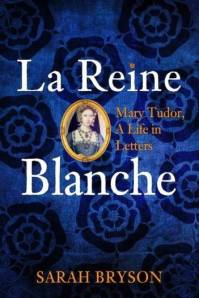
Book Review: “La Reine Blanche: Mary Tudor, A Life in Letters” by Sarah Bryson

35067557_1710198212397536_7023071200330907648_nWhen we think of the Tudors, we often think of  strong women like Katherine of Aragon, Anne Boleyn,  Elizabeth I, Margaret Beaufort and Mary I. However, there was another Mary who made an impact during this time. She was the daughter of Henry VII, the sister of Henry VIII, and the wife of King Louis XII of France. She was referred to as one of the most beautiful women in the world. She gave away all of her titles to marry the man she loved, even though he was not a king. She took on debt to have a family and helped those who needed help. This is the life of Mary Tudor.  In Sarah Bryson’s debut book, “La Reine Blanche: Mary Tudor, A Life in Letters”, Bryson explores the life of this extraordinary woman through her letters.

Sarah Bryson explains why she decided to include Mary’s letters in this book:

Mary Tudor’s letters are a fascinating and captivating look at how a woman could wield power without publically challenging the patriarchy. They show how Mary was able to manoeuvre those around her to follow her heart- marrying her second husband for love, rather than being dragged back to the international chess game as a marriage pawn. They are also, on occasion, a way of looking into Mary’s life whereby the layers of princess and queen are stripped back and only the woman remain. (Bryson, 11).  

Bryson decides to begin her book not with the birth of Mary, but rather with the Wars of the Roses in order to understand how the Tudors came into power and the importance of the marriages that Henry VII established for his children were. She then moves onto the family aspect of the Tudors and the birth of Mary, which to me was fascinating to understand those early years of a young princess. Unfortunately  Mary’s world was not a picture perfect one as her father was constantly fighting those who wanted to take his throne, including Lambert Simnel and Perkin Warbeck. Her brother Arthur, Prince of Wales, would marry Katherine of Aragon, but only a few months after they were married, Arthur tragically died. Mary’s mother would also pass away while trying to give birth to a baby girl. In order to build a strong alliance, Henry VII made a marriage treaty between Mary and Archduke Charles (later Charles V, Holy Roman Emperor), but it would eventually fall through.

Henry VII would die on April 21, 1509, leaving the throne to his son Henry VIII; Henry would marry his brother’s widow Katherine of Aragon on June 11, 1509. Henry arranged Mary’s first marriage with King Louis XII with an enormous dowry, but their marriage would not last long as Louis XII would die on January 1, 1515. Mary would retire from public life and would wear the white mourning clothes of a widow, thus the nickname “La Reine Blanche”, the white queen. Mary would not stay single for long as she married Charles Brandon, Duke of Suffolk. Charles Brandon was a notorious ladies’ man and happened to be one of the people who Henry VIII sent over to France to help Mary. To say that Henry was upset would be an understatement; he refused for the couple to return to England, for a time, and ordered that Charles Brandon would pay off Mary’s dowry. It would leave the couple impoverished for the rest of their lives, but they were happy and in love. It was really during this time that Mary’s letters showed her heart and who she truly was. Mary had to be incredibly strong to show the love that she had for her husband to her brother. Henry eventually accepted the couple and they went on to have four children of their own: Henry, Frances, Eleanor and Henry 1st Earl of Lincoln. Their daughter Frances would marry Henry Grey and would become the mother of Lady Jane Grey, Katherine Grey and Mary Grey. Mary Tudor would die on June 25, 1533, shortly after Anne Boleyn was crowned queen.


Mary Tudor’s story is one of tragedy and love. I will be honest and say that I only knew about half of her story, but Sarah Bryson made Mary come alive. “La Reine Blanche: Mary Tudor, a Life in Letters” may be Bryson’s debut book but it feels like she has been writing for a while. This is a lovely book that combines facts and letters in such a way that it is a joy to read. I look forward to reading more from Sarah Bryson in the near future. If you are interested in the life of Mary Tudor, this is a great book about her life through her letters.

Book Review: “The Sisters Who Would Be Queen” by Leanda de Lisle

3980321When we think of the Grey family, we often come up with certain stereotypes. Lady Jane Grey was a passive, obedient girl who did whatever her family and her husband’s family wanted her to do. Frances Grey was a cruel mother. Katherine and Mary lived very uneventful lives. These could not be further from the truth. Leanda de Lisle in her book, “The Sisters Who Would Be Queen” attempts to paint a more realistic of the Grey sisters; Jane, Katherine and Mary.
Leanda de Lisle explains the importance of the Grey sisters:

Dynastic politics, religious propaganda, and sexual prejudice have since buried the stories of the three Grey sisters in legend and obscurity. The eldest, Lady Jane Grey, is mythologized, even fetishized, as an icon of helpless innocence, destroyed by the ambitions of others. The people and events in her life are all distorted to fit this image, but Jane was much more than the victim she is portrayed as being, and the efforts of courtiers and religious factions to seize control of the succession did not end with her death. Jane’s sisters would have to tread carefully to survive: Lady Katherine Grey as the forgotten rival Queen Elizabeth feared most, and Lady Mary Grey as the last of the sisters who were heirs to the throne. (de Lisle, xxx).

These three sisters were the daughters of Henry and Frances Grey. Frances is often viewed as a power hungry mother who didn’t care about Jane, but de Lisle explains why this is merely a stereotype. The Grey’s gave their daughters the best education imaginable for those who were in line for the throne. Jane, Katherine and Mary were raised to be educated and opinionated young ladies, which really defined who Jane was, even when she became queen for a fortnight, not the nine days of the myth. Jane was in fact one of the leaders of the new Protestant movement and she stuck to her beliefs, even when she was facing execution.

It was the memory of Jane that was always in the back of Katherine and Mary’s minds. After Jane’s death, neither girl truly pursued the crown of England. Instead, they wanted to be happy and marry who they wanted for love, no matter what. It started with Katherine, who was going to be next in line to the throne after Elizabeth became queen since Elizabeth never married. Katherine wanted a simple life so she married Edward Seymour, 1st Earl of Hertford without Elizabeth’s knowledge. Elizabeth sent both Katherine and Edward to the Tower where they had two children, Thomas and Edward Lord Beauchamp. Katherine would die sick, impoverished and under house arrest, separated from her husband and her children.

Mary did not fare much better. Mary married Thomas Keyes, a sergeant porter to Elizabeth I, in secret. Unlike Katherine, Mary and Thomas’s marriage ended badly after Thomas was sent to a cramp and dark prison cell. Mary never married again, but she was able to return to court.

This is the story of the Grey family without all the frills. The stories of Jane, Katherine and Mary are stories of heartache and pain. They were too close to the throne to have a normal life that they wanted. When I started reading this book, I will admit that it shocked me. I thought I knew the story of the Grey family, but I was wrong. Leanda de Lisle has opened my eyes to the truth about the Greys with her book “The Sisters Who Would Be Queen”. This book is very well written and so easy to understand. If you are interested in the Grey family and the story of Jane, Katherine and Mary, this is the book for you.

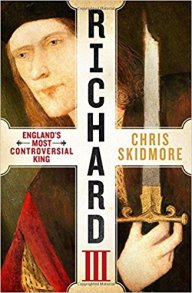
Book Review: “Richard III: England’s Most Controversial King” by Chris Skidmore

517EnSUqESL._SX324_BO1,204,203,200_When we often think about Richard III, we tend to focus on the princes in the tower, Bosworth Field where he died, and the discovery of his body in 2012. But he was a brother to a  king, a protector and he did rule as king of England. There should be more to his story than this. Chris Skidmore believed so and decided to write a modern biography on Richard called “Richard III: England’s Most Controversial King”.

There have been a lot of books written about Richard III, but Skidmore explains what separates his book from others:

This work has unapologetically been written as a narrative history of Richard’s life and reign; in doing so, attention has been paid mainly to the high courts politics of the age, and Richard’s role within this world. I have attempted to focus on how Richard constructed his own power base, for it was his northern affinity, constructed in his early years as duke, that would prove so crucial for him obtaining the throne…. Too much attention is traditionally paid to Richard’s individual role in his accession, when, like any political coronation, this was only possible with the support of certain  key members of the nobility, who backed regime change. Richard’s success depended as much upon their own individual grievances and ambitions as his own.(Skidmore, 11)

It was really these alliances that helped Richard III come onto the throne. Skidmore starts off his book with an interesting account of a Silesian knight named Niclas von Popplau and his encounter with Richard III’s court. It is not what those who have studied the “black legend” of Richard III would expect. Skidmore then dives into Richard’s childhood, the Wars of the Roses, the death of his father,  his brother Edward’s accession to king of England, and his brother George’s fall from grace and later execution.

These are such pivotal moments in Richard’s young life and they do shape what kind of king he would be, but it was his northern affinity and his relationship with men like the duke of Buckingham and Hastings that defined the motives that he would later take. For example, the murders of Lord Rivers and Lord Hastings seem like paranoia, but Skidmore sheds new light onto these murders. As to the most controversial moment of Richard III’s life, the disappearance of the princes in the tower, Skidmore does not spend a lot of time on the topic. As soon as Richard is crowned king, Skidmore talks about his policies as king and his relationships with foreign monarchies throughout Europe. Richard III’s reign was quite short; he only reigned for 788 days so it wasn’t a long time to establish the relationships he needed to with his European counterparts, like France and Scotland, which helped propel Henry Tudor’s claim to the throne of England.

In the last few chapters, Skidmore paints the scene for Bosworth Field, the battle between Richard III and Henry Tudor for the crown of England. He writes the actual battle in such a way that it makes you feel like you are witnessing the battle first hand, including the slaughter of Richard III and the way they discarded his body.

What I enjoy about Chris Skidmore is that he includes so much detail into his books and not the facts that those of us who are familiar with the topic necessarily are aware of. With this book, Skidmore shows his readers a different side of Richard III, one in which Richard III is king with powerful allies that helped him become king of England. Richard III may have been king for only 788 days, but his legacy has lasted for centuries and this book, “Richard III: England’s Most Controversial King” by Chris Skidmore, adds another perspective into his legacy. This book is very well written and is a fascinating read.