
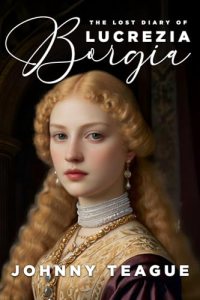
 Have you ever wondered what it might be like to discover a long-lost diary of a historical figure by accident? Archaeologist Giuseppe Campise has already found a diary of Mary Magdalene. Now, the Vatican wants Giuseppe to uncover the tomb of Alexander the Great. However, while on the search for the tomb, Giuseppe finds something even more precious, the diary of Lucrezia Borgia. What secrets does the diary hold? Johnny Teague tells the tale of Lucrezia Borgia through her diary in his latest novel, “The Lost Diary of Lucrezia Borgia.”
I would like to thank Histria Fiction and Net Galley for sending me a copy of this novel. I have been interested in Lucrezia Borgia’s story since reading “Cesare and Lucrezia Borgia” by Samantha Morris, so I wanted to see how her story would translate into a historical fiction novel.
Since this book is actually a novella, I will try to keep this review short. We begin with Giuseppe Campise as he begins his search for the tomb of Alexander the Great. Along the way, he gets lost and finds the tomb of Pope Leo X. By the tomb, he finds a diary that was written by Lucrezia Borgia, so he begins to read.
Lucrezia’s diary begins with her reflecting on her life as she is ill with her final pregnancy. This diary is really her autobiography, beginning in her childhood, when her father was Cardinal Rodrigo Borgia, before he became Pope Alexander VI. We also get to see how close Lucrezia was to her brother Cesare and how it changes over time. Since they are the illegitimate children of a Pope, they are expected to make alliances through marriages and military might. Lucrezia was married three times. Her first marriage was to Giovanni Sforza, but it was quickly dissolved by her father, Pope Alexander VI. Her second marriage, to Alfonso of Aragon, resulted in a son, Rodrigo, before Alfonso died young. Lucrezia’s final husband was Alfonso d’Este, Duke of Ferrara. We get to see how Lucrezia’s life was changed through the chaotic politics of the Italian states, the constant wars, and the schemes of her father and her brother Cesare. Lucrezia was not just a one-dimensional character, but is well developed, and you feel sympathy for what she is going through.
Personally, I think this was a decent novella, but the subplot with Giuseppe did not feel necessary for me. The story of Lucrezia Borgia could stand on its own without the modern bits cutting in. Overall, I enjoyed this novella. If you enjoy reading about Lucrezia Borgia, her life and times, you might enjoy “The Lost Diary of Lucrezia Borgia” by Johnny Teague.
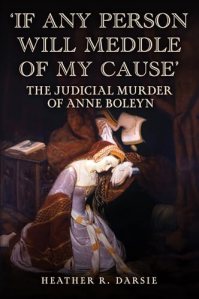 We all know the story of Anne Boleyn. The story of the English noblewoman who caught the eye of King Henry VIII, who decided to divorce his first wife, Katharine of Aragon, to marry Anne. He broke away from Rome and created the Church of England to do it, but marital bliss did not last long, as a few years later, Anne would leave their three-year-old daughter Elizabeth behind when she was executed by Henry over charges of adultery. We know this version of the story, but what if we look at Anne’s story from a continental European perspective? How does her story change when we view her life through a religious lens? Heather R. Darsie hopes to show her audience a different side of Anne Boleyn in her latest book, “‘If Any Person Will Meddle of My Cause’: The Judicial Murder of Anne Boleyn.”
 When we think of Elizabethan England, we tend to think of the Golden Age of England. A time of discoveries and for the arts to flourish under the Virgin Queen, Elizabeth I. However, there is a darker side. It was also a time of espionage, fears of invasions from other countries, and the hatred between Catholics and Protestants. The dangers of the Elizabethan underworld have reached the queen, as there is an attempt on her life. Can Jack, the son of a crime boss, change his life and find the culprit before they find him, or will he be betrayed by those he calls his friends? Amie McNee explores the seedy underworld of Elizabethan England in her novel, “To Kill a Queen.”
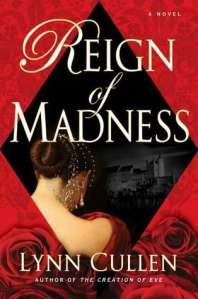 The daughters of Isabel of Castile and Ferdinand of Aragon lived very interesting lives. Of course, we know what happened to Katherine of Aragon, but her elder sister, Juana, has her own tragic tale. She was known as Juana the Mad because the rumors were that when her husband, Philip the Handsome, died, she carried her coffin around for months and would not let him be buried. Was Juana truly mad, or was it all a ruse by powerful men to steal her lands and titles? Lynn Cullen explores Juana of Castile’s life in her novel, “Reign of Madness.”
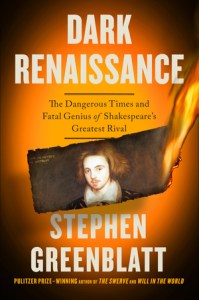 Sixteenth-century England was a time of great change. There were religious changes as the crown passed from one member of the Tudor family to another. Wars and illnesses like the plague and the sweating sickness were rampant. However, this was also a time of an explosion of the arts, particularly of the theatre. We see men like William Shakespeare and Ben Jonson rise from obscurity to write plays that would propel them to become phenomena. There was a third playwright who should be included in this list. He was the son of a cobbler who was educated at Cambridge University. A brilliant man who wrote groundbreaking plays while he was a spy for her majesty Queen Elizabeth I, his cause of death when he was only in his twenties would remain a mystery for centuries. Christopher (Kit) Marlowe’s story is told in Stephen Greenblatt’s latest book, “Dark Renaissance: The Dangerous Times and Fatal Genius of Shakespeare’s Greatest Rival.”
 The year is 1599 in Rome, Italy. A young rich woman stands in front of an executioner’s block. She is a mother, a daughter, a sister, a lover, and a killer. Her victim was her father, a man who made her life and the lives of her family members a living hell. When she falls in love with one of her father’s spies, she believes that it is a way out. However, the path she chooses to embark on will bring deadly consequences. What is the truth surrounding this case, and is Beatrice Cenci a cold-blooded murderer or a victim looking for her freedom? Elizabeth Fremantle explores the life of Beatrice Cenci and the circumstances of this crime in her latest novel, “Sinners.”
 In each era throughout history, we see how men and women adapt to the struggles and triumphs of the age. Take, for example, the 16th century, primarily in Tudor England. It was a time of great religious changes and dynamic rulers who would change the course of European history forever. While men had the most power, except for a handful of women, the majority of women struggled to survive each stage of life. So, what was life truly like for Tudor women? Elizabeth Norton explores this topic in her book, “The Lives of Tudor Women.”
 The 16th century was dominated by powerful women who left their indelible mark on European history. Take, for example, the aunt of Charles V, the Holy Roman Emperor. No, not Catherine of Aragon, the first wife of Henry VIII. I am talking about a woman who was the daughter of Emperor Maximilian I, was married three times, had no children, and helped raise her nephew Charles V, was an essential part of the Ladies’ Peace, taught Anne Boleyn how to live at court, and was a patroness of the arts and literature. Of course, I am talking about Margaret of Austria, the Governor of the Netherlands. A formidable woman who saw much change and chose to be part of politics, even though she was a woman. Her remarkable story is told in Rozsa Gaston’s novel, “Margaret of Austria: Governor of the Netherlands and Early 16th-Century Europe’s Greatest Diplomat.”
 We all know the story of Romeo and Juliet. Two crazy kids in love, whose families hated each other they decided to make the ultimate sacrifice and die for each other. One of the greatest tragic love stories of all time. But what if it didn’t end in tragedy? What if Romeo and Juliet had their happy ending and had a large family? In this version of Verona, Romeo and Juliet have a large family, and their eldest daughter Rosaline is the most beautiful, headstrong girl in all of Verona. Unfortunately, Rosaline (Rosie) has got herself in quite a mess with an unwanted prince fiancé, a ghost who only she can see, and a murder investigation. Can Rosie solve the case and figure out her love life before things go horribly wrong? This is the premise of the second book of the Daughter of Montague series by Christina Dodd called “Thus with a Kiss I Die.”
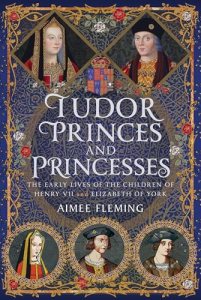 The year is 1485, and the last Plantagenet king, Richard III, is dead. The young man whose army defeated the king is Henry Tudor, and he is about to start a dynasty that will reshape world history forever. Henry Tudor, now King Henry VII, married the daughter of King Edward IV and Elizabeth Woodville, Elizabeth of York. Their marriage and their children would lay the foundation for the Tudor dynasty, but what was life like for the children who were the first generation of this remarkable dynasty? Aimee Fleming explores the lives of these royal siblings in her latest book, “Tudor Princes and Princesses: The Early Lives of the Children of Henry VII and Elizabeth of York.”
 Adventures of a Tudor Nerd