
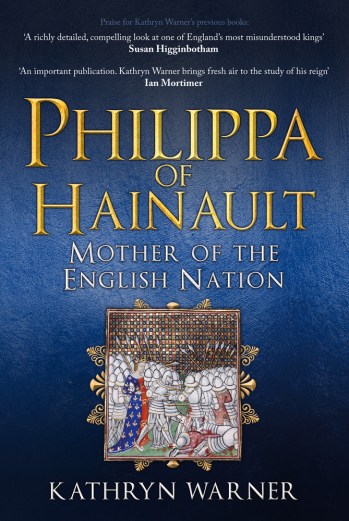
 In medieval England, the queens were almost as famous, or infamous, as their husbands. In most cases, they came from royal backgrounds and their sons would become kings. That, however, was the case for Philippa of Hainault, the wife of King Edward III. She tends to be forgotten when it comes to discussing her famous husband, her infamous mother-in-law Isabella of France, and her sons whose children would go on to shape English history forever. That is until now. Kathryn Warner has decided to discover the truth about this rather remarkable woman in her latest biography, “Philippa of Hainault: Mother of the English Nation”.
I would like to thank Amberley Publishing for sending me a copy of this informative biography. It looked rather intriguing and this was the first time that I have read a book by Kathryn Warner. This was an absolute joy to read.
Warner begins by explaining Philippa of Hainault’s immediate family. As a queen, she had a rather unusual upbringing since she was the daughter of Willem, Count of Hainault and Holland and his wife Jeanne de Valois (whose brothers and sisters would be kings and queens throughout Europe). Philippa’s husband was Edward III, whose parents were King Edward II and Isabella of France (who did not get along at all, especially over the issue of Hugh Despenser). Philippa and Edward III came from rather different backgrounds, but they were married so that Philippa’s father could help Isabella of France with her invasion of England, which resulted in the abdication of her husband and her son becoming the new King of England. An unusual reason to get married, but it actually worked rather well.
Isabella of France and her partner in crime, Roger Mortimer, were hoping that Edward III was going to be like a puppet king, but they were wrong. Edward III did things his own way, wife his beloved wife Philippa by his side. While Edward III was taking care of domestic and foreign issues, Philippa was raising their large family. Their sons and daughters included Edward of Woodstock “The Black Prince”, Isabella of Woodstock, Lionel of Antwerp, John of Gaunt, Edmund of Langley, and Thomas of Woodstock. Although they did have a large family, none of their children would become King or Queen of England; it would be Edward of Woodstock’s son, Edward and Philippa’s grandson, Richard of Bordeaux who would become King Richard II. It was the descendants of Edward and Philippa’s sons and daughters that would go and shape the conflict that would be known as the Wars of the Roses.
Another lasting legacy of Edward III was the beginning of a conflict between England and France that would be known as the Hundred Years’ War. It started when Edward III declared war on Philippa’s maternal uncle King Philip VI of France. Talk about family drama. But family drama was nothing new for Philippa since she was connected to many kings, queens, emperors, and empresses throughout Europe through marriage and there were times where her husband would get into disagreements with her extended family. That was the nature of medieval Europe, but it never affected her relationship with Edward III. Around this time, the Black Death was beginning to leave its mark on Europe, hitting many families including Edward III and Philippa of Hainault’s children.
Kathryn Warner brought Philippa of Hainault into the spotlight that she deserved with a delightful plethora of details combined with an eloquent writing style. Warner does repeat facts in her book, but as someone who is a novice in studying this time period, it was rather useful for me to have her repeat these facts. I enjoyed this book immensely and it really helped me understand her story and the legacy that her family left behind for England and for Europe. If you want a great book about Philippa of Hainault and her family, I highly recommend you read, “Philippa of Hainault: Mother of the English Nation” by Kathryn Warner.
 The 16th century was filled with extremely strong women who went on to shape European and world history forever. This was true for England and Scotland, two countries whose stories were intertwined by powerful women. The women who ruled these two countries during this time were women that those who study this time period know about; Lady Jane Grey, Mary I, Elizabeth I, and Mary Queen of Scots. There was one woman who knew all four of these women and lived for over 80 years: Bess of Hardwick, Countess of Shrewsbury. The story of these five women is told in Jill Armitage’s book, “Four Queens and a Countess: Mary Queen of Scots, Elizabeth I, Mary I, Lady Jane Grey and Bess of Hardwick: The Struggle for the Crown”.
 There are many noble or royal families that truly were the backbone of the English society and that could help or hinder the monarchy. One such family was the Greys, who started as a baronial family and rose through the ranks by good marriages and staying loyal to those who were in power. Of course, when one rises high, there is also the risk of falling low spectacularly, which happens when Lady Jane Grey becomes Queen of England for a mere 9 days. The story of the house of Grey is complex, yet it has never been told in its entirety, until now. This extraordinary family saga is told in Melita Thomas’s latest book, “The House of Grey: Friends and Foes of Kings”.
  Words have a lot of power, especially when it comes to how we perceive historical figures. It can be through letters, chronicles, biographies, and this instance, through a couplet written by William Collynbourne in 1484. The couplet in question goes; “
 Henry VII winning at the Battle of Bosworth Field on August 22, 1485, is viewed as the beginning of the Tudor Dynasty. However, the story of the Tudor family goes back centuries in Wales. What we consider the story of the Tudors tends to start with a man named Owen Tudor, a servant, who fell in love and married the dowager Queen of England, Catherine of Valois. Quite a romantic tale, but how much of it is true? Were the Tudors simple folk or did they have a bigger role to play in their native Wales? What roles did Owen and his sons play in the Wars of the Roses? These questions and more are explored in Terry Breverton’s latest biography, “Owen Tudor: Founding Father of the Tudor Dynasty”.
 In history, many people tend to focus on the big names. The kings and queens, the rebels, and those who really made an impact. The political advisors and men of the church tend to get left behind in the dust since they are not seen as “important”. However, it is these men who were the backbone of the monarchy, who helped make the king’s vision come to fruition. They tend to come and go, so that is why John Morton’s story is so extraordinary. John Morton helped three separate kings of England, was the enemy to a fourth king, tried to reform the church, and had numerous building projects. His life tends to be overshadowed by the kings that he served, but his life is brought into the light in this biography by Stuart Bradley, “John Morton: Adversary to Richard III, Power Behind the Tudors”.
 There are quite a few events that one can name that radically shaped the course of British history. None more so than the events of 1066, the year that saw Norman, Breton, Flemish, and French forces, led by the Duke of Normandy, William the Conqueror, invaded England in what we know today as the Norman Conquest. Most history books tend to focus on the men who lived before, during, and after the Norman Conquest: Aethelred the Unready, Edward the Confessor, Cnut, Harold II, Harald Hardrada, and of course William the Conqueror just to name a few. What the history books tend to gloss over is the strong women who stood by their husbands, brothers, and sons during this conflict. Who were these women? What were their stories? How did they help their families before, during and after 1066? These questions are answered in Sharon Bennett Connolly’s delightful book, “Silk and the Sword: The Women of the Norman Conquest”.
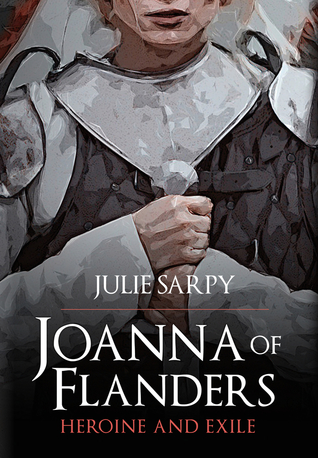 Strong medieval women who helped lead armies were unusual phenomena. Women like Eleanor of Aquitaine, Isabella of France, and Margaret of Anjou, have been seen as “she-wolves” and their stories have lived on for centuries. They were all queens, but strong women from the past could be of any rank, even though their stories are not celebrated as much. Take, for example, the story of Joanna of Flanders, Countess of Montfort and Richmond, Duchess of Brittany. She was a wife and mother who protected Hennebont Castle in Brittany from the French in 1342 while her husband was held captive. She then leaves her beloved Brittany for the court of Edward III of England and all but disappears from the historical record until her death in 1374. What happened to this extraordinary woman and why did she disappear from the historical records? Julie Sarpy answers these questions and more in her book, “Joanna of Flanders: Heroine and Exile”.
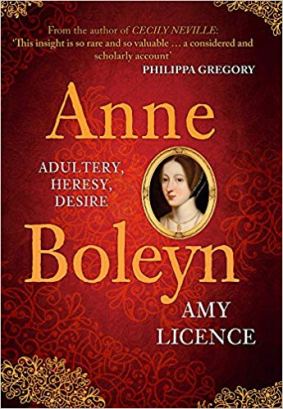 Anne Boleyn, the second wife of Henry VIII and the mother of the future Queen Elizabeth I, is one of the unique characters of the Tudor era. She was the sister of one of the king’s mistresses, Mary Boleyn, which she could have been, but Henry wanted Anne as his queen. Unfortunately, he was married to his first wife, Catherine of Aragon. It is Henry’s divorce to Catherine and his relationship with Anne, the rise and fall, is what many people look at, but there is more to Anne’s story than just her life with Henry. What was Anne’s life really like and what really caused her fall? These are just a few questions that Amy Licence tackles in her latest biography, “Anne Boleyn: Adultery, Heresy, Desire.”
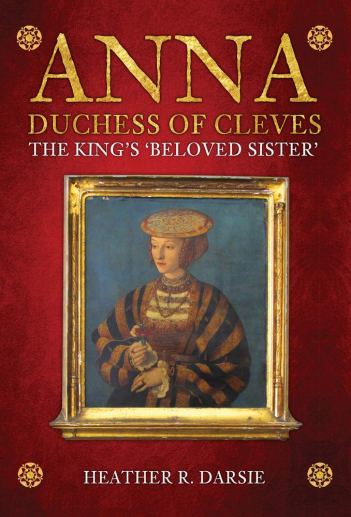 The wives of Henry VIII are some of the most hotly-discussed women of the Tudor Dynasty. They all had unique lives and origins before and after they met the man that connects them all. Two of his brides, Catherine of Aragon and Anna, Duchess of Cleves, were foreign princesses and their marriages were used to create alliances with Spain and Germany respectfully. While Catherine of Aragon and the rest of the wives of Henry VIII get a ton of attention, Anna Duchess of Cleves tends to be brushed aside. She is often seen as the wife that Henry did not approve of because of her looks. However, Heather R. Darsie decided to change how we view Anna with her groundbreaking debut biography, “Anna, Duchess of Cleves: The King’s ‘Beloved Sister’”.
  Adventures of a Tudor Nerd