
 When we think about the men who surrounded King Henry VIII, a few names come to mind. Cranmer, More, Wolsey, and Wroithesley are just a few, but the man who is synonymous with the infamous king’s reign is Thomas Cromwell. The man who helped Henry get his divorce from Katherine of Aragon saw both the rise and fall of Anne Boleyn. He also assisted in the dissolution of the monasteries and brought reform to England with the break from the Roman Catholic Church. To modern audiences, it feels as if we know everything that there was to know about Thomas Cromwell’s public life, but what was he like in his private life when his friends and family surrounded him? Caroline Angus gives her readers an insight into Cromwell’s personal life in her latest book, “The Private Life of Thomas Cromwell.”
Thank you, Pen and Sword Books and Net Galley, for sending me a copy of this book. I love finding new perspectives about historical figures, like Thomas Cromwell, so when I heard that Caroline Angus was writing this book, I was delighted. I wanted to see what new information this book could provide about Thomas Cromwell’s life.
Angus begins her new nonfiction book on Cromwell by showing the origins of the Cromwell family and how Thomas went from the son of a blacksmith to his journeys in Italy, especially in Florence. It is impressive to see how Thomas’ influential friends from Florence would help shape how he conducted business later on in life as one of King Henry VIII’s top counselors. Thomas must have been a polymath to achieve the astronomical rise to power that we see him go through that landed him in the workforce of Thomas Wolsey.
Under Thomas Wolsey, Thomas Cromwell’s private and public life became insanely busy as he gained the king’s respect. He would be the principal architect for the dissolution of monasteries and helped Henry VIII gain his divorce from Katherine of Aragon to marry Anne Boleyn. As Cromwell became a player in Tudor politics, he married Elizabeth Williams and had several children. As Cromwell’s family grew, so did Thomas’ roles at the court of Henry VIII. He was the king’s number one advisor and was asked to perform the most difficult tasks, like bringing the downfall of Anne Boleyn and breaking England from the Roman Catholic Church. In a way, Thomas Cromwell was the Tudor equivalent of Alexander Hamilton.
I enjoyed this book because we see Cromwell as a human being, not just some lofty historical figure. He was a man who climbed the social ladder with his talents and his connections throughout England and Europe. With every title and every bill passed, Cromwell gained new enemies, who would lead to Thomas Cromwell’s downfall after the disastrous marriage between Henry VIII and Anna of Cleves. His fall was so dramatically quick that even Henry VIII regretted killing Thomas Cromwell.
Angus’s passion for comprehensively telling Cromwell’s story for scholars and students of Tudor history shines through this book. Her research is meticulous as she balances Thomas’ public life and private life to tell the whole story of the legendary man. If you are interested in understanding the life of Henry VIII’s most faithful servant and trusted advisor, I recommend reading “The Private Life of Thomas Cromwell” by Caroline Angus.
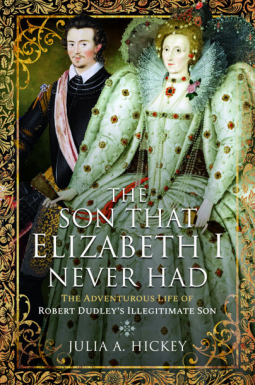 When we study the life of Queen Elizabeth I, the image of a virgin queen who never married tends to come to mind. Of course, she had a man who she favored above all others, Robert Dudley, but he married several times to Amy Robsart and Lettice Knollys. It was with Lettice Knollys that Robert Dudley was able to produce his heir, aptly named Robert Dudley Lord Denbigh, who unfortunately died at a young age. Robert Dudley was left without a legitimate heir, but he did have another son, albeit an illegitimate son, also named Robert Dudley. Julia A Hickey has decided to examine the life of the illegitimate Robert Dudley in her book, “The Son that Elizabeth I Never Had: The Adventurous Life of Robert Dudley’s Illegitimate Son.”
 When we think of those who made an impact in history, we tend to think of those who have been born to a married couple and therefore were considered legitimate children, especially when it comes to royal children. However, we know that illegitimate royal children, like William the Conqueror, greatly impacted history. Illegitimate royal children may have been barred from becoming king or queen of their respective countries of birth, but that does not mean they didn’t impact how their home country was governed. One of these children who affected politics during the Tudor dynasty was Arthur Plantagenet, the illegitimate son of Edward IV. In her latest book, “Arthur Plantagenet: Henry VIII’s Illegitimate Uncle,” she explores the life of this man who gives us extraordinary insight into the running of Calais and how Henry VIII treated other family members.
 When we think of famous artists in the 15th and 16th centuries, we focus on the great European masters. Michelangelo, Leonardo da Vinci, and Albrecht Durer tend to come immediately to mind. However, one man from Augsburg, Germany, revolutionized how we viewed the Tudor dynasty through portraiture: Hans Holbein the Younger. Many are familiar with his famous works of art and how they influenced how the Tudors have been perceived for centuries, but the man behind the masterpieces has been overlooked. His story and how art was understood in the 16th century is told in Franny Moyle’s latest biography, “The King’s Painter: The Life of Hans Holbein.”
 In history, the stories of women closest to those who sat on the throne tend to shine a bit brighter than others. Their tales give us great insight into how their respective countries were run and how dangerous it could be to marry someone with royal blood in their veins. However, some of the tales get lost in the annals of the past, only to be discovered much later. One of those tales is the story of Cecily Bonville- Grey, the wife of Thomas Grey Marquis of Dorset. In her own right, an extremely wealthy woman, her marriage into the Grey family would help define the succession issue during the late Tudor dynasty. Her story is finally told in Sarah J. Hodder’s latest book, “Cecily Bonville-Grey- Marchioness of Dorset: From Riches to Royalty.”
 In any dynasty, those closest to the throne are the most at risk of dealing with suspicions and conspiracies. Those who were not next in line for the throne were seen as threats, especially those whose bloodline was a bit stronger than those who sat on the throne. The Tudor dynasty’s biggest threat was the few Plantagenets who still lived at court. The family that had the most Plantagenet blood in their veins and poised the most significant threat was the Pole family. However, one woman who was very close to Henry VIII and his family married a man who had Plantagenet blood in his veins. Her name was Gertrude Courtenay, the Marchioness of Exeter, and her story is finally getting the light it deserves in Sylvia Barbara Soberton’s latest book, “The Forgotten Tudor Women: Gertrude Courtenay: Wife and Mother of the Last Plantagenets.”
 Medieval princes are often viewed as men who will one day be king of their homeland or another country. They are seen as wealthy men with prestige and honor who live lavish lifestyles and go to war to earn titles and estates. One of these noble medieval princes was a man who married three times, including to his most beloved mistress. He was the son of Edward III, the uncle of Richard II, and the father of the queen of Castile and King Henry IV, the first Lancastrian king. His children, grandchildren, and great-grandchildren would rule in different European countries, even though he never had the chance to wear the crown of England or Castile for himself. His name was John of Gaunt, and his story is told in Kathryn Warner’s latest biography, “ John of Gaunt: Son of One King, Father to Another.”
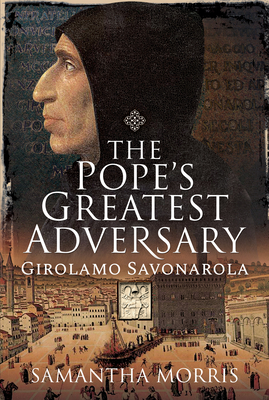 When we think about men who challenged the Church and are known as Reformers, we tend to think of Martin Luther, Jan Hus, and John Calvin. However, a man fought against corruption in his beloved Florence who should be included in the list of great reformers. He was a Dominican monk who was not afraid to preach against sin and took aim at the most powerful men in all of Italy, including Pope Alexander VII. His sermons were so scandalous that they would lead to his demise upon a pyre in the middle of Florence. His name was Girolamo Savonarola, and his story is told in Samantha Morris’s latest biography, “The Pope’s Greatest Adversary: Girolamo Savonarola.”
 The story of King Henry VIII and his six wives has been regaled for centuries in different mediums. We love the marital problems of this one English king because of how much of an impact it made on all of Europe in the 16th century and beyond. Yet our love affair with the Tudor dynasty would not have gotten to the point that it is today without the tireless efforts of the ambassadors who went to England to report the news of the day to their respected kings and emperors. We tend to think that the ambassadors are better left in the shadows, working to promote peace between countries and report what was happening, but one man made a name for himself as an ambassador and transcended time. His name was Eustace Chapuys. His story and his mission are finally being told in Lauren Mackay’s brilliant debut book, “Inside the Tudor Court: Henry VIII and his Six Wives through the eyes of the Spanish Ambassador”.
 A man who was young and had charisma would attract the attention of the Virgin Queen herself, yet that attention came with a price. The young man could not do what he desired and was buried in debt. His anger could not be quenched and he would end up rebelling against the very queen who brought him so much glory and honor. This rebellion would lead to his execution. The man’s name was Robert Devereux, 2nd Earl of Essex, and his story is told in Sarah-Beth Watkins’ latest bite-size biography, “Elizabeth I’s Last Favourite: Robert Devereux, 2nd Earl of Essex”.
 Adventures of a Tudor Nerd