
 A man ahead of his time who never finished the tasks that he was given as his mind was constantly racing, thinking of new ideas. This is what we consider a genius or a Renaissance Man today, but during Leonardo da Vinci’s time, it was just considered odd. Leonardo da Vinci was an enigma. He could make the impossible possible. His art seemed to leap off the canvas with its realism. However, there are still so many mysteries surrounding his life and his works. What made this one artist/inventor so fascinating for centuries? In her book, “The Real Leonardo da Vinci” Rose Sgueglia opens the curtain to reveal Leonardo da Vinci’s truth and inner circle.
I would like to thank Net Galley and Pen and Sword Books for sending me a copy of this book. I am one of those people who is familiar with da Vinci’s works, but not so much with his actual life and what made him tick. I have always wanted to read biographies about the great artists of the Renaissance, but I didn’t know where to start. This was the perfect book to start my journey into art history.
To understand da Vinci’s lifestyle later in life, we have to understand his origins. His mother was an absent figure in his life as Leonardo was her illegitimate son, but his father seemed to have taken care of him. Leonardo was trained under Verrocchio where he would learn the skills that would be vital for his art career, however, it was his insatiable appetite for exploring new subjects that would make him a polymath to many.
Sgueglia dives into the intricacies of da Vinci’s life, including his love life which has been debated for centuries. As an illegitimate son, he was not tied down to one location so he frequently traveled and would be employed by some of the greatest families in Italy, including the Borgias, the Medicis, and Ludovico Sforza. Along the way, he would create his own following of artists that were loyal to him until the bitter end. Da Vinci would also encounter fellow masters Donatello and Michelangelo as he competed for commissions.
I think Sgueglia does a decent job introducing the Leonardo da Vinci that she has gotten to know through her research. She also included interviews between her and a researcher of the Mona Lisa as well as the director of a movie about Leonardo da Vinci within this book, which I found fascinating. I think it is these interviews and including the transcripts as part of the book that sets it apart from other biographies about Leonardo da Vinci.
There were a few things about this book that I found a bit off or lacking. My big concern was the lack of illustrations of his lesser-known pieces of art and the artwork of other artists that Sgueglia references. If this is a biography about a well-known artist and inventor, then let’s celebrate the masterpieces and the inventions. I had to find the obscure artworks online while I was reading to act as a companion to get the full impact of what she was writing about. I also think it was a tad repetitive and I would have personally liked to have seen more books in the bibliography for research purposes.
Overall, I found this book was an adequate biography about Leonardo da Vinci. It is easy to read with intriguing facts that will captivate those who are new to da Vinci’s story. There is something intriguing about looking at the man behind these masterpieces and I think Sgueglia does an excellent job of showing a unique side of this artist’s life. If you want a great book that will introduce you to this polymath’s life and times, I recommend you read, “The Real Leonardo da Vinci” by Rose Sgueglia.
 Two cousins fighting for the right to rule England during the 16th century. One was the daughter of Henry VIII and Anne Boleyn who fought tooth and nail to rule without a man by her side. The other was the daughter of Mary of Guise and King James V of Scotland whose marriage record would prove to be fatal. Elizabeth I and Mary, Queen of Scots, may have been sister queens, but the way they were treated in their own countries differed completely. While Elizabeth I was praised and protected from harm in England, Mary was a scapegoat for so many in Scotland. The way that Mary was used as a pawn even though she wore a crown was nothing short of extraordinary. The story of how these two queens came on a collision course that would leave one queen beheaded and the other forever changed has been told in many different ways from both sides of the tale, but it has rarely been told as a cohesive nonfiction book. That is until Kate Williams’ marvelous biography, “The Betrayal of Mary, Queen of Scots: Elizabeth I and Her Greatest Rival”.
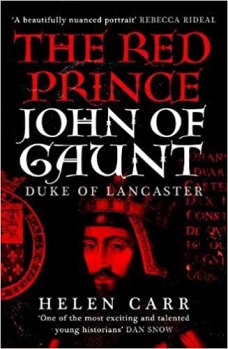 When one studies the history of the English monarchy, we tend to consider those who ruled and those who advised the ruler as significant characters. We rarely study the family members of the monarch who did not win the right to rule the kingdom. Yet, they are often either extremely loyal or they desire the crown with such ferocity that they rebel against their own family. It seems like a rather cruel world, but that was the life of a medieval monarch. True loyalty for one’s family was a rare feat. One man showed the depth of his loyalty to his family, even when the people despised him. He was the son of King Edward III, the brother of the famous Black Prince, the uncle of King Richard II, and the father of Henry Bolingbroke who would become King Henry IV. Gaunt’s reputation and legacy have been marred by his wealth and the role that he played with the Peasants’ Revolt, but was he such a bad person? In Helen Carr’s brilliant debut biography, “The Red Prince: The Life of John of Gaunt, the Duke of Lancaster”, she looks to uncover the truth about the man behind the throne and why he never desired the crown for himself.
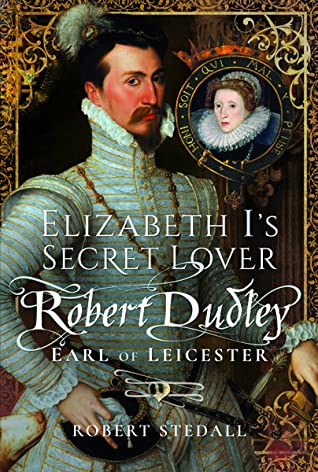 The last Tudor monarch, Queen Elizabeth I, was known for many things, but her main legacy is that she never chose to marry anyone. She was the infamous “Virgin Queen”. However, there were those around her who manage to capture her attention and her admiration for a time. The most famous of these men was Robert Dudley, Earl of Leicester. He was a massive supporter of the arts and the Protestant faith, gaining prestige and praise from his highly exalted monarch. Yet, his life and his relationship with his wives, his enemies, and Elizabeth I was full of dangers and numerous scandals. Who was this man who wooed the heart of the most eligible woman in all of 16th century Europe? Robert Stedall investigates the relationship between these two lovers destined to never marry each other in, “Elizabeth I’s Secret Lover: Robert Dudley, Earl of Leicester”.
 “Uneasy lies the head that wears the crown.” This famous quote from William Shakespeare’s play Henry IV, Part III has been used throughout the centuries to describe how difficult it is to rule a country for any duration of time. Most kings and queens of the past lasted for a few years, but there was one queen who lasted for a handful of days. She was the successor of Henry VIII’s only male son, King Edward VI, and was meant to replace his eldest half-sister, who would become Queen Mary I. It was a battle between Protestantism and Catholicism with a 17-year-old scholar caught in the middle. Her name was Lady Jane Grey, but many refer to her as the “Nine Day Queen of England”. Lady Jane Grey’s tragically short story, how she became queen, and the consequences of her reign are discussed thoroughly in Nicola Tallis’ beautifully written debut biography, “Crown of Blood: The Deadly Inheritance of Lady Jane Grey”.
 Divorced, beheaded, died. Divorced, beheaded, survived. For those who study Tudor history, we have heard this unimaginative rhyme to refer to the wives of Henry VIII for the longest time. We all know the stories of the queens, especially Anne Boleyn, but the fifth wife and the second one to be beheaded tend to be cast aside for some of the more intriguing tales. Her name was Catherine Howard, Henry’s youngest bride. Her story is full of rumors and myths, just like her cousin Anne Boleyn. Most know of her romantic dalliances that, in the end, led to her demise, but what was her reign like as queen? What was the court of Henry VIII like during his fifth marriage as his health was failing? In Gareth Russell’s brilliant biography, “Young and Damned and Fair: The Life and Tragedy of Catherine Howard at the Court of Henry VIII”, he dives deep into the archives to shine a light on the life of this tragic and young queen.
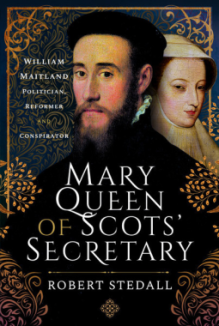 One of the most dynamic queens in 16th century Europe who spent most of her youth in a country that was not her homeland, but was fighting for the right to rule England. Her name was Mary Queen of Scots, the cousin of Queen Elizabeth I. Many know of her tragic tale, but there was a man who was behind the scenes trying to guide Scotland to a brighter future. He was not married to Mary Queen of Scots, but he was influential in her life and choosing who she might marry and who she would end up divorcing. He was a politician and a religious reformer whose decisions would alter history dramatically. His name was William Maitland and he served as Mary’s secretary. He is always mentioned as a footnote in history, until now. Robert Stedall’s latest biography, “Mary Queen of Scots’ Secretary: William Maitland- Politician, Reformer, and Conspirator”, explores the life and legacy of this rather extraordinary secretary.
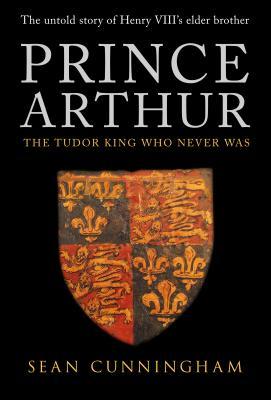 A new dynasty is born out of war and bloodshed. Hope is restored to the land as the remains of the Houses of York and Lancaster are united when Henry VII marries Elizabeth of York. It was not until the birth of their eldest child and heir, Prince Arthur, that the union was truly complete. Arthur was the hope for the nation, but when he tragically died shortly after marrying Catherine of Aragon, he was replaced by his younger brother who would become King Henry VIII. Arthur’s life was indeed very short, but his legacy and untimely death altered the course of history forever. Arthur tends to be a footnote in history, between Henry VII’s and Henry VIII’s reigns, but what was this young prince like? Why did his death leave such a large hole in the plans for the future of the Tudor dynasty? What was his relationship like with his family and those closest to the prince? These questions and more are explored in Dr. Sean Cunningham’s brilliant biography, “Prince Arthur: The Tudor King Who Never Was”.
 The Tudors were a royal family striving to survive in England through male heirs. Yet, its strongest rulers were female, Elizabeth, and her eldest half-sister, Mary. Obviously, many remember Queen Elizabeth I for her “Golden Age” and the first woman monarch of England to rule by her own right, but that title should really go to Mary I. Elizabeth tends to get all of the attention, but Mary’s life was full of her own struggles. In “Mary Tudor: A Story of Triumph, Sorrow and Fire”, Anthony Ruggiero explores the myths and the facts about this much-maligned and tragic figure in English history.
 Adventures of a Tudor Nerd