
 The stories of the men behind the English crown can be as compelling as the men who wore the crown themselves. They were ruthless, cunning, power-hungry, and for many of them, did not last long. However, there were a select few who proved loyal to the crown and lived long and eventful lives. They are not as well known as their infamous counterparts, yet their stories are just as important to tell. One such man was the grandfather of two of Henry VIII’s wives and the great-grandfather of Elizabeth I. He lived through the reign of six kings and led his men to victory at the Battle of Flodden against King James IV of Scotland towards the end of his life. Thomas Howard, 2nd Duke of Norfolk had his fair shares of highs and lows, including imprisonment, but his story is rarely told. That is until now. Kirsten Claiden-Yardley has taken up the challenge to explore the life of this rather extraordinary man in her book, “The Man Behind the Tudors: Thomas Howards, 2nd Duke of Norfolk”.
I would like to thank Pen and Sword Books for sending me a copy of this book. I honestly did not know a whole lot about the Howard family, other than Katherine Howard, so this book sounded intriguing to me.
Claiden- Yardley begins her biography by exploring the rise of Thomas Howard’s family and how his father, John Howard, became a powerful man. What was interesting was the Howard connection to the de Mowbrays and how John used these relations to his advantage to help his growing family find favor with the nobility and the monarchs of the time, including Edward IV and Richard III. She explores the relationship between Thomas and Richard III, including the possibility that Thomas had something to do with the Princes in the Tower.
It was at the Battle of Bosworth Field where things get treacherous for the Howard family. Richard III and John Howard were both killed and Thomas Howard was captured, stripped of his titles, and sent to prison to await Henry VII’s decision on how to handle him. After some time, Thomas not only was released from prison, he became a valuable asset for the Tudor dynasty. He would be a diplomat, a chief mourner for Arthur Tudor’s funeral, and escort two princesses to their weddings in France and Scotland. He worked hard to make sure that his family married well and that they were financially stable.
The Battle of Flodden would be Thomas’ defining moment, even though it was towards the end of his life. Claiden-Yardley takes the time to explain why this battle had to be fought and the details of the battle. I found this extremely interesting to see how Thomas led his men into battle and how he helped stopped a Scottish invasion of England at the age of 70.
Claiden-Yardley has done extensive research into the life of Thomas Howard. I did find her writing a bit dry in some places, but overall, she did what she set out to do. She shed some light on a rather remarkable man who was really behind the curtain during the reigns of quite a few English kings. His loyalty to the crown and his family was unwavering. If you want to read a good biography about Thomas Howard and how the Howard family rose to power during the Tudor dynasty, I would recommend you read, “The Man Behind the Tudors: Thomas Howard, 2nd Duke of Norfolk” by Kirsten Claiden-Yardley.
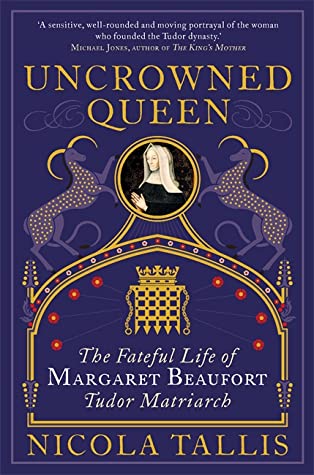 The stories of the women of the Wars of the Roses have become very popular in recent years. Tales of Jacquetta Woodville, Elizabeth Woodville, Margaret of Anjou, and Elizabeth of York tend to be favorites of those who read historical fiction. However, there was one woman whose life story is so much better than fiction. She was married 3 or 4 times (depending on if you count her first marriage), had only one beloved son who she helped rise to become King of England, and was considered one of the most powerful women of her time. In the modern era of historical dramas, Margaret Beaufort has been portrayed as malicious and cunning, someone who plotted against the Yorkist cause. With all of these conflicting reports about this one woman, can we ever find out the truth about her life? What kind of person was Margaret Beaufort? Nicola Tallis has taken up the challenge to answer these questions to find the truth about this remarkable woman in her latest biography, “Uncrowned Queen: The Fateful Life of Margaret Beaufort Tudor Matriarch”.
 Medieval kings are often painted as strong, colorful figures in history. They were warriors who fought to protect their families and countries. Often, we tend to think of men like King Henry V and King Edward IV when it comes to the late medieval kings of England. However, there was a man who was sandwiched between these two pillars of strength. He was the son of Henry V, the king who came before Edward IV, and the man who started the conflict known as the Wars of the Roses. Unlike these two men, Henry VI was a pious peacemaker and is often viewed as a mere man in the background who never measured up to the standards his famous father left behind. His story is often incorporated into other biographies of people of his time; Henry VI has not had a solid biography about his life in a long time. That is until now. Lauren Johnson has taken up the challenge of exploring the life of this often-overlooked monarch in her latest biography, “Shadow King: The Life and Death of Henry VI”.
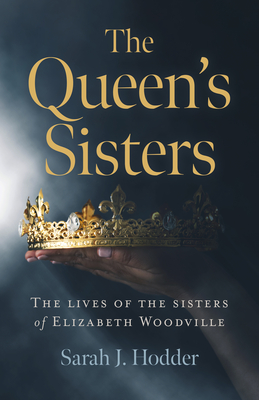 The story of the Woodville family has fascinated those who study the Wars of the Roses for centuries. Their mother Jacquetta of Luxembourg married Richard Woodville because she loved him, even though he was the chamberlain of her late husband. Jacquetta and Richard had numerous children, notably Elizabeth Woodville, who would marry the first Yorkist king, Edward IV. Elizabeth and her brothers are often talked about when discussing the Woodville children, however, Elizabeth had several sisters who married relatively powerful men. The stories of the sisters are rarely told, until now. Sarah J. Hodder has decided to take on the task of exploring the lives of these hidden figures in her debut book, “The Queen’s Sisters: The Lives of the Sisters of Elizabeth Woodville”.
 Two women who shared a name, related by marriage but divided by political and monetary motives. In Medieval Europe, this statement could refer to any number of women, but the two women who are the center of this particular story revolve around medieval England and the reign of King Henry III. One was Henry’s sister whose marriages and money problems were a thorn in her brother’s side. The other was Henry III’s wife who stood by his side and protected their children even when the nation despised her. Their names were Eleanor de Montfort and Eleanor of Provence respectfully; their stories are filled with disasters and triumphs that would shape how England was ruled in medieval times. Darren Baker explores their lives and the lives of their families in his latest biography, “The Two Eleanors of Henry III: The Lives of Eleanor of Provence and Eleanor De Montfort”.
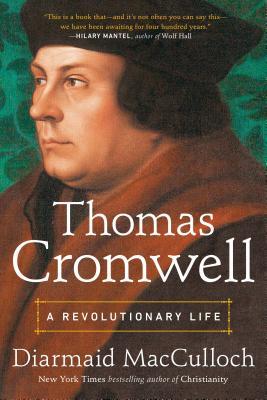 The stories of King Henry VIII and the men around him have fascinated generations of historians, but there was one man who has received a negative reputation for his actions. He was the supposed son of a butcher who rose to be Henry VIII’s right-hand man, until his dramatic fall in July 1540. Thomas Cromwell was credited for helping Henry with his Great Matter, the fall of Anne Boleyn, the establishment of the Church of England, and the disastrous marriage between Henry and Anna of Cleves. Diarmaid MacCulloch has taken on the challenge to figure out who Thomas Cromwell really was by sifting through all remaining archival records that we have from this extraordinary man. It is in this book, “Thomas Cromwell: A Revolutionary Life” that MacCulloch masterfully explores the story of this man who changed English and European history forever.
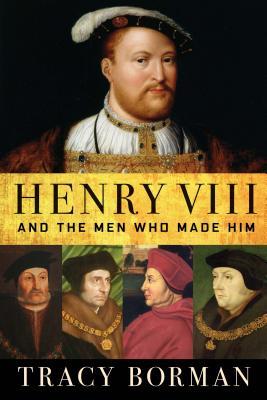 The story of the reign of King Henry VIII has been told mainly through his numerous marriages and through the lives of his children. Although his immediate family was a big part of his legacy, there is much more to his story than his tempestuous relationships. There were also his legal, religious, and military exploits. The ones who were with Henry when he made these decisions were the men who were loyal to him, his counselors and companions. Their tales are often told separately, until now. Tracy Borman has decided to masterfully combine their tales to explore the life of their infamous king in her latest biography, “Henry VIII and the Men Who Made Him”.
 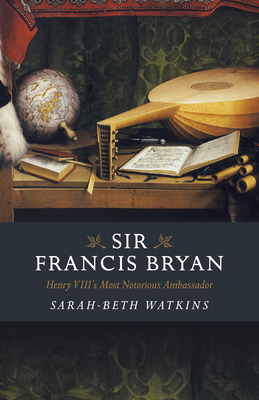 During Henry VIII’s reign, those who were most loyal and the closest to the king did not often last long to enjoy the rewards of his friendship. However, there was one man who stayed in relatively good favor with the king throughout his reign. He was a sailor, a soldier, a diplomat, and acted as an English ambassador mostly in France. He was a cousin to a few of Henry VIII’s wives, a lover of wine, and an infamous womanizer. The name of this rather extraordinary man was Sir Francis Bryan and the story of how he survived the tumultuous reign of Henry VIII is told in Sarah-Beth Watkins’ latest biography, “Sir Francis Bryan: Henry VIII’s Most Notorious Ambassador”.
 When we think of medieval kings of England, we tend to think about strong warriors who did things their own way. Men like Edward I and Edward III often come to mind. Yet, there was a king in between these two legendary warriors whose name lives on in infamy, King Edward II. He is known for his numerous favorites, his relationships with men like Piers Gaveston and Hugh Despenser the Younger, his disagreements with the barons who were trying to help him run the country, his relationship with his equally famous wife and son, Isabella of France and Edward III, and his dramatic death. But who was the man known as King Edward II? What was he really like? Stephen Spinks explores these questions in his latest biography, “Edward II the Man: A Doomed Inheritance”.
 The Tudor dynasty and the enigmatic figures who made this time period so fascinating have been hotly discussed for centuries. Henry Tudor, who became King Henry VII after defeating King Richard III at the Battle of Bosworth Field in 1485. King Henry VIII, the second son whose numerous wives and his split from the Catholic Church made his name infamous in history. King Edward VI, Henry VIII’s beloved son who died before he really could accomplish the reformation that he had planned for England. Queen Mary I, who was the first Queen of England to rule in her own right and wanted to restore the Catholic Church. Finally, Queen Elizabeth I, who never married and led England to a “Golden Age”. Many historians have viewed the Tudor dynasty as a time of great change and England was in a good place. However, G.J. Meyer paints a darker picture of the era in his book, “The Tudors: The Complete Story of England’s Most Notorious Dynasty”.
 Adventures of a Tudor Nerd