
 In English history, the story of the royal families tends to capture the imagination of those who study it. Full of dynamic tales of kings and queens, and numerous nobles, these are tales that make it into history books and history classes. We tend to focus on the same kings and queens, who have become the popular royals. But what about those who are left in the dust of those popular royals? Who were the royal women who lived in the shadow of the throne that time has forgotten? What were the lives of these women like? It is these women who are the focus of Erin Lawless’s latest book, “Forgotten Royal Women: The King and I”.
I would like to thank Pen and Sword Books for sending me a copy of this book. The title of this book initially caught my eye and I really wanted to see what royal women Erin Lawless would be discussing in this particular book.
Lawless has decided to write about thirty different royal women, from Scota to Princess Charlotte, covering several centuries of vivacious women. Some of these women I have encountered in my own studies, like Margaret Pole, Margaret Tudor, Eleanor Cobham, and Mary Grey( who are obviously women from the Tudor dynasty). Others were women that I have never heard of, like Gwellian ferch Gryffydd and Isabella MacDuff, who lead armies for their respective countries, Wales and Scotland respectfully, to fight against the English. Grace O’Malley, also known as Granuaile, who was Queen of Umaill, chieftain of the O Maille clan, and a pirate from Tudor Ireland. And of course, plenty of royal women who married for love and suffered the consequences.
These tales are truly tantalizing, yet they are tragically too short as Lawless only spends a few pages on each woman. Just as you are starting to really get into the story, you move onto another lady and her history. It may seem a little bit unfair, but I think it should be noted that Lawless did this with a rather important purpose behind it. Lawless wanted to give an introduction to the lives of these women, both the fictional tales and the facts so that readers would be intrigued and decide to study more about them. It’s a great strategy to get more people interested in studying the obscure and forgotten royal women in history. Of course, I wanted more details, but that is because I love having a plethora of information about a subject in books that I read, yet in this case, I think the amount of details works in Lawless’s favor.
The one thing that I really wish Lawless did include was a bibliography or a list of books that helped her with her own research when it came to this book. I really like seeing an author’s research in the back of biographies or history books, especially for a book that covers different topics, so that I can have a starting point for my own personal research.
Overall, I found this book incredibly enjoyable. It is certainly a conversation starter for those who discuss the English monarchy. Lawless has a delightful writing style that feels like you are having a casual history conversation with her. This book is small in size, but it could be the stepping stone for new research for those novice historians who want to write about someone who has been stuck in the shadow for centuries. If you would like to read short stories about royal women who have stayed in the background for a long time, I highly recommend you read “Forgotten Royal Women: The King and I” by Erin Lawless.
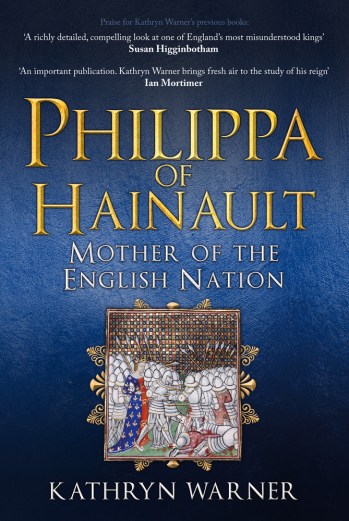 In medieval England, the queens were almost as famous, or infamous, as their husbands. In most cases, they came from royal backgrounds and their sons would become kings. That, however, was the case for Philippa of Hainault, the wife of King Edward III. She tends to be forgotten when it comes to discussing her famous husband, her infamous mother-in-law Isabella of France, and her sons whose children would go on to shape English history forever. That is until now. Kathryn Warner has decided to discover the truth about this rather remarkable woman in her latest biography, “Philippa of Hainault: Mother of the English Nation”.
 The 16th century was filled with extremely strong women who went on to shape European and world history forever. This was true for England and Scotland, two countries whose stories were intertwined by powerful women. The women who ruled these two countries during this time were women that those who study this time period know about; Lady Jane Grey, Mary I, Elizabeth I, and Mary Queen of Scots. There was one woman who knew all four of these women and lived for over 80 years: Bess of Hardwick, Countess of Shrewsbury. The story of these five women is told in Jill Armitage’s book, “Four Queens and a Countess: Mary Queen of Scots, Elizabeth I, Mary I, Lady Jane Grey and Bess of Hardwick: The Struggle for the Crown”.
 The study of the Tudors tends to focus on England as a country of focus, however the Tudors did affect other countries like Spain, France, and Scotland. Many know the story of Mary, Queen of Scots and her relationship with Elizabeth I, but many do not know the tale of her mother, Marie de Guise. Her tale is one of love for her family and her adoptive country of Scotland. It is of loyalty and strength to do what she believed was right. She was a sister, a daughter, a mother, a queen, and a regent of Scotland. Marie’s story tends to be overshadowed by her daughter’s tragic tale, until now. Her story is the main focus of Melanie Clegg’s latest biography, “Scourge of Henry VIII: The Life of Marie de Guise”.
 Words have a lot of power, especially when it comes to how we perceive historical figures. It can be through letters, chronicles, biographies, and this instance, through a couplet written by William Collynbourne in 1484. The couplet in question goes; “
 Henry VII winning at the Battle of Bosworth Field on August 22, 1485, is viewed as the beginning of the Tudor Dynasty. However, the story of the Tudor family goes back centuries in Wales. What we consider the story of the Tudors tends to start with a man named Owen Tudor, a servant, who fell in love and married the dowager Queen of England, Catherine of Valois. Quite a romantic tale, but how much of it is true? Were the Tudors simple folk or did they have a bigger role to play in their native Wales? What roles did Owen and his sons play in the Wars of the Roses? These questions and more are explored in Terry Breverton’s latest biography, “Owen Tudor: Founding Father of the Tudor Dynasty”.
 In history, many people tend to focus on the big names. The kings and queens, the rebels, and those who really made an impact. The political advisors and men of the church tend to get left behind in the dust since they are not seen as “important”. However, it is these men who were the backbone of the monarchy, who helped make the king’s vision come to fruition. They tend to come and go, so that is why John Morton’s story is so extraordinary. John Morton helped three separate kings of England, was the enemy to a fourth king, tried to reform the church, and had numerous building projects. His life tends to be overshadowed by the kings that he served, but his life is brought into the light in this biography by Stuart Bradley, “John Morton: Adversary to Richard III, Power Behind the Tudors”.
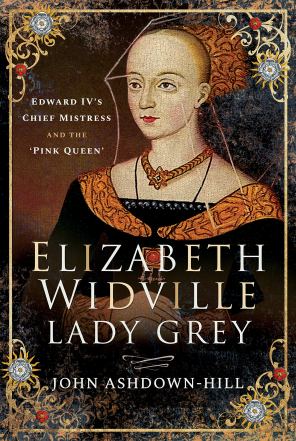 The English conflict known as the Wars of the Roses is filled with dynamic figures whose stories are those of legends. None more so than the wife of Edward IV and the mother of Elizabeth of York and the princes in the Tower, Elizabeth Woodville. She has been known in popular culture as the commoner turned “White Queen” consort, but do we really know the true story about her life? Was she really Edward IV’s wife? How much influence did she actually carry? These questions and more are tackled in Dr. John Ashdown-Hill’s latest book, “Elizabeth Widville Lady Grey: Edward IV’s Chief Mistress and the ‘Pink Queen’.
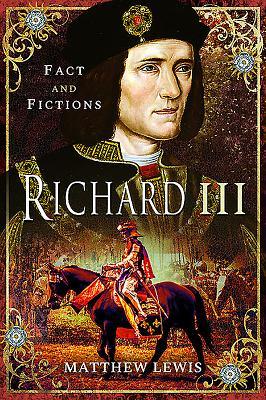 When one looks at the study of history as a whole, the traditional way to look at a person as either good or bad through a combination of facts and fictional tales of their supposed exploits. None so much so as King Richard III, one of the most controversial English monarchs. Fictitious tales, like William Shakespeare’s play
 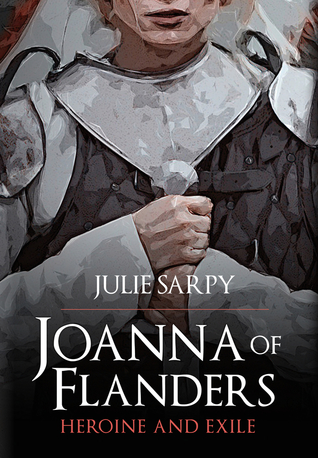 Strong medieval women who helped lead armies were unusual phenomena. Women like Eleanor of Aquitaine, Isabella of France, and Margaret of Anjou, have been seen as “she-wolves” and their stories have lived on for centuries. They were all queens, but strong women from the past could be of any rank, even though their stories are not celebrated as much. Take, for example, the story of Joanna of Flanders, Countess of Montfort and Richmond, Duchess of Brittany. She was a wife and mother who protected Hennebont Castle in Brittany from the French in 1342 while her husband was held captive. She then leaves her beloved Brittany for the court of Edward III of England and all but disappears from the historical record until her death in 1374. What happened to this extraordinary woman and why did she disappear from the historical records? Julie Sarpy answers these questions and more in her book, “Joanna of Flanders: Heroine and Exile”.
 Adventures of a Tudor Nerd