
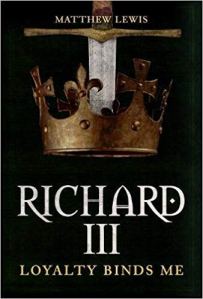
 When we study history and look at certain people, we often have a tendency to treat them almost like fictional characters. They are either the hero, all good with no flaws, or villains, all bad where we only focus on their flaws. We don’t see the person as “human”, neither good nor bad, just someone who tried their lives to the best of their abilities. One such person who tends to get either the hero or the villain treatment is King Richard III of England. To some, he is “white knight”, a man who was wrongly accused and who was faultless. To others, he was a “black legend”, a dastardly villain who wanted power and did not care who he stepped on in order to achieve his goals. With these two different portrayals of Richard III, we often forget that he was just an ordinary man who became king. Matthew Lewis has decided to strip away both the white and black portrayals of Richard III and explore who Richard III the man was in his latest book, “Richard III: Loyalty Binds Me.”
Matthew Lewis explains exactly who Richard III was and why he wanted to explore him further:
Richard was a man. He made mistakes and misjudgements. He had his flaws, as we all do, but beneath the grime of centuries of slander and gossip, the facts can be uncovered and polished up to provide a far more rounded and interesting man, with novel ideas that seem ahead of his time. Undoubtedly he was willing to do that which was within his power to protect his position and that of his family. He was a fifteenth-century nobleman when they were a brutal and acquisitive breed. That does not mean that he was incapable of less selfish acts that many of his contemporaries, or of hankering for a bygone age in which men, at least in the stories he read, had been honourable and lived by codes. Any time a person from history is viewed as one-dimensional, as simply good or bad, that should be cause to look again and question more deeply, because they were people, just like you and I. They had hopes and fears, dreams and insecurities that fused together to make them. When Richard charged at the Battle of Bosworth, did he blindly believe he could kill Henry Tudor and that would be the end of it? Was he, perhaps, afflicted by the loss of his son and wife? Did he wonder what the purpose of carrying on might be? Did he hope that God would help him win the day and once more approve of him? We cannot know for certain. Arguably, what makes him unique amongst medieval monarchs and nobles was the antithesis of what history has remembered him for. He was no petty tyrant bent on murdering all in his way. He was a forward-thinking reformer who tried to tackle the real problems he saw in English medieval society, and paid the price for thinking he could resolve them. (Lewis, 391).
I have a deep fascination with the Wars of the Roses and how the people during this time are portrayed. Richard III has been one of those people that has caught my interest especially. I am always looking for a new perspective when it comes to controversial figures to find out what their lives were really like.
When it comes to biographies about Richard III, you will either get the white narrative or the black, and nothing in the middle. He is either a heartless villain or a saint of a man. Although Lewis is a Ricardian, he has decided in this biography to forego the traditional narratives and take a look at Richard’s life by what we know and not stipulations. This book was such an enlightening read. Richard III the man and his times was brought to light as all the controversies of his life were explored thoroughly. By looking at Richard as just a man and not a controversial figure, you get a real sense that his life was more complicated and almost relatable at points.
As Lewis said, Richard III was just a man, and it is through this biography that we truly get to meet the man. I have read quite a few biographies about Richard III, but this one is by far my favorite. I learned so much about Richard III, his life and times, and the different authors and sources against him, that I will never look at Richard III the same way again. If you are interested in Richard III and the times that he lived in, I highly recommend you read Matthew Lewis’s book, “Richard III: Loyalty Binds Me”. I believe that if we look at historical figures the way Matthew Lewis does with Richard III in this book, we might better understand the past and better appreciate those who came before us.
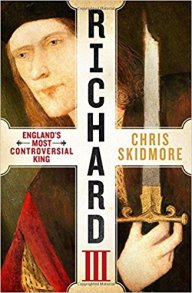 When we often think about Richard III, we tend to focus on the princes in the tower, Bosworth Field where he died, and the discovery of his body in 2012. But he was a brother to a king, a protector and he did rule as king of England. There should be more to his story than this. Chris Skidmore believed so and decided to write a modern biography on Richard called “Richard III: England’s Most Controversial King”.
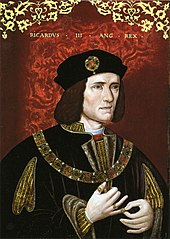 In honor of the third anniversary of the reburial of King Richard III, I have decided to write down my opinions about this controversial king.
 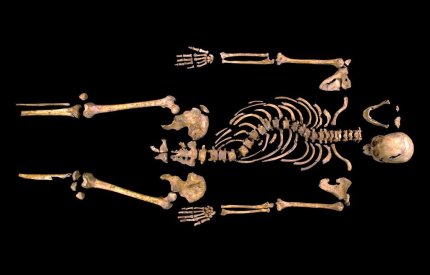 Shakespearean lore. I used to believe this and then his skeleton was discovered under the car park in Leicester. After looking at his skeleton, one would think he would be unfit to fit, but I came across a documentary that proved otherwise. “Resurrecting Richard III” by PBS was able to find a man in England who had the exact same amount of curvature in his back as Richard III. It proved that Richard could fight and that he wasn’t as Shakespeare described
  Just like his father before him, Richard was granted the right to make orders for the king, not because he was well liked, but because he fought against the Woodvilles and the Rivers for the right. He was fighting his brother’s wife’s family for the right to control the country. Richard would have Lord Rivers killed because of “treason” to protect the boy king. Edward V and his younger brother Richard duke of York were led to the Tower of London “for protection” and were never to be seen again after 1483. Since the young king was out of the picture, I believe because Richard had the boys murdered, the only one who had the right to the throne was Richard himself. Just like he planned. To seal the deal, Richard III issued the
  Adventures of a Tudor Nerd