
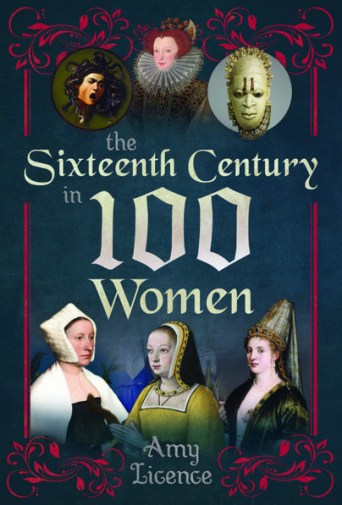
 When we think of the phrase “16th-century women,” we often consider those from royal or noble houses throughout Europe. We tend to think of women like the six wives of Henry VIII, Mary I, Elizabeth I, Catherine de Medici, Mary Queen of Scots, and others associated who made an impact during the Renaissance and the Reformation. However, the 16th century did not stop at the borders of Europe; it extended all over the globe. There are many stories of women from all over the world and from different social classes that can help us understand how the world changed in the 16th century. Amy Licence took this concept and decided to write her latest book about a variety of women from around the world who lived in the 16th century, “The Sixteenth Century in 100 Women.”
Thank you, Pen and Sword Books and Net Galley, for sending me a copy of this book. When I heard that Licence was writing this book, it intrigued me. I wanted to know more stories from the 16th century from all around the world.
“The Sixteenth Century in 100 Women” is a collection of 100 mini-biographies of women from every walk of life and every corner of the globe. Licence has decided to organize this particular book in chronological order, with the date emphasis on the significant events of their lives. Staying true to her word, she writes about women from different countries, like Japan, Nigeria, Russia, Mexico, Poland, Chile, Morocco, and Burma, to name a few.
What I loved the most about this book is the diversity of figures that Licence chose to include in this journey from 1500 to 1600. They were not just queens, princesses, and noblewomen. Licence included women who would have been seen as outsiders in everyday society, such as prostitutes during the Banquet of Chestnuts, Margaret Drummond, Ellen Sadler, and La Malinche. There were those whose appearance made them outsiders, like Aura Soltana, Elena/Eleno de Cespedes, and Tognina Gonsalvus. Some women stood up for what they believed was right, such as Cecily Bodenham, abbess of Wilton Abbey, Lady Nata of Japan, Margaret Cheney, Sayyida al-Hurra, and Beatriz de Luna.
Some women suffered horrendous tragedies beyond their control, like Suphankanlaya, whose husband was killed in an angry rage, Amy Robsart, and an unknown woman who dealt with a tsunami in Chile. Others were women who had nasty reputations associated with their lives, such as Elizabeth Bathory, Mary Frith, and the Irish pirate Grace O’Malley. We also see female artists, authors, fictional figures, and those who sat for portraits.
Licence has painted a colorful picture of the 16th century with the 100 miniature biographies she chose to include in this book. This book may highlight only a select few stories of the century, but they were new and enthralling tales of women I had never heard of, which broadened my understanding of the era. An informative, refreshing, and unique approach to the 16th century, “The Sixteenth Century in 100 Women” by Amy Licence is a breath of fresh air for anyone who wants to discover new tales from the past.
 When we think of the word “education,” images of sitting in school rooms for hours, listening to lectures, and doing endless homework pop into our minds. Our modern education system tends to focus on math, science, language arts, and history as the core subjects we study, with music and physical education as something that we in America call an “elective.” But have you ever wondered what education looked like in the past? How did the Tudors pass on their knowledge to future generations? What subjects did the Tudors consider essential, and how did the amount of education you received change depending on your class? Amy McElroy explores these questions in her book, “Educating the Tudors.”
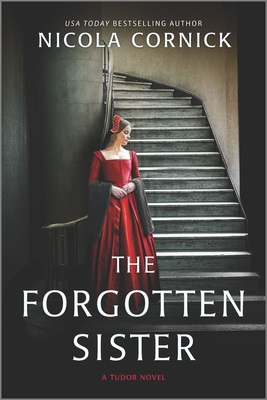 The year is 1560, and a young woman hatches a way to escape her loveless marriage. Her name is Amy Robsart, and she is the wife of Robert Dudley, one of Queen Elizabeth I’s favorites at court. Unfortunately, things do not go as planned, and the consequences reverberate throughout the centuries. Lizzie Kingdom, a television star, struggles to find her way in life. When tragedy strikes when her friend Dudley’s wife is found dead at the bottom of a staircase, the scandal breaks, threatening to ruin Lizzie’s life and reputation. A deadly secret from the past and an encounter with a mysterious young man will forever transform the lives of these two women from different centuries. Will Lizzie Kingdom discover the truth before it is too late? This mystery is masterfully told in Nicola Cornick’s Tudor novel, “The Forgotten Sister.”
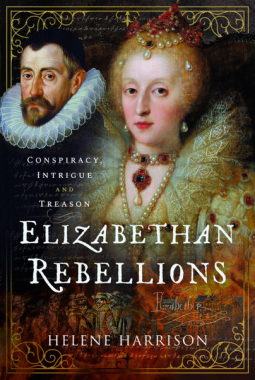 The struggle to be a king or queen in any country during Europe’s medieval or early modern era was only the beginning. They are either the next in line to the throne and inherit the crown, or they sometimes fight to the death to wear it. After the king or queen settles into ruling their respective countries, the real challenge emerges as they have to deal with rebellions and those who commit treason against their monarch. Take, for example, what happened during the reign of Elizabeth I. We consider her reign the “Golden Age” in English history. Still, she had to deal with numerous rebellions and conspiracies surrounding her viewpoints on religion and how she dealt with her cousin, Mary Queen of Scots. In her first book, “Elizabethan Rebellions: Conspiracy, Intrigue, and Treason,” Helene Harrison takes an in-depth look at each rebellion and how they left a mark on Elizabeth I’s reign.
 The House of Windsor has been attracting worldwide attention in recent decades with scandals, deaths, weddings, and the birth of royal children. As living symbols of England, the Windsors are seen as an above-average family with numerous jobs and responsibilities. We know their names; King George VI, Queen Elizabeth II, Prince Phillip, Prince (now King) Charles, Princess Diana, and Prince William. We know their stories from the numerous books, tabloids, and documentaries about their lives, but what about their lives when they go home to relax? Gareth Russell peels back the gilded curtain to explore the life of Elizabeth Bowes-Lyon, lovingly known as the Queen Mother, in his latest biography, “Do Let’s Have Another Drink: The Singular Wit and Double Measures of Queen Elizabeth The Queen Mother.”
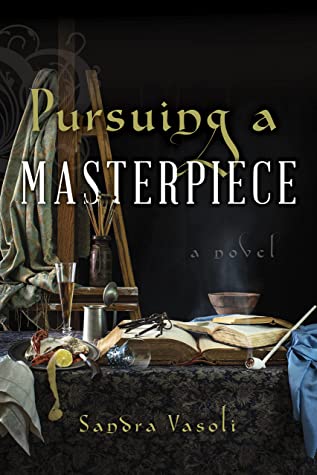 What if you found information about a mysterious portrait that would radically change how we view history forever? Who would you tell? When Zara Rossi entered the Ancient Manuscripts Room at the Papal Archives in Rome, she never imagined how a single letter would change her life and the Tudor community. Each piece of the puzzle unlocks a new story from the past and allows Zara to explore the remarkable tale of this masterpiece. Follow the clues with Zara Rossi to solve this mystery from the past in Sandra Vasoli’s latest book, “Pursuing a Masterpiece: A Novel.”
 When we think of the title “medieval queen,” a few things come to mind. They were seen as mere trophy wives who were only suitable for making alliances and giving birth to children. It may be a cruel assessment for a modern audience, but that was the reality of the medieval world. However, the late Plantagenet queens decided to step outside the socially acceptable path for their lives and forged a new one. In Alison Weir’s latest nonfiction book, “Queens of the Age of Chivalry: England’s Medieval Queens,” she explores the lives of five Plantagenet queens who had to adapt quickly to the ever-changing world of late medieval England.
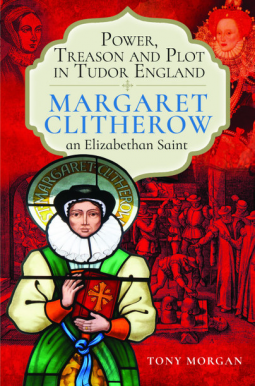 The Tudor dynasty was a time of significant political change, but it was also a time of tremendous religious change. Each Tudor monarch had a different view on the divide between Catholics and Protestants. Although we have an idea of what it might have been like during the reign of Mary I, the way Elizabeth I tackled the issue of religion during her reign. One story of how Catholics were treated in the so-called “Golden Age” of Elizabethan England is the story of Margaret Clitherow. She helped hide a couple of Catholic priests and ended up suffering for her actions by being crushed to death. Tony Morgan tells her story and how she became a Catholic martyr in his book, “Power, Treason, and Plot in Tudor England: Margaret Clitherow, an Elizabethan Saint.”
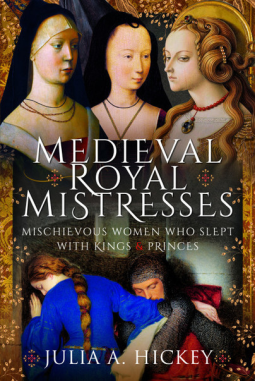 When we think about royal relationships from the past, we do not associate them with love; it is more about cementing power. Princes and kings knew how much was at stake, so they tended to have wives for politics and produce legitimate heirs that would inherit their kingdoms. For matters of love and lust, kings and princes would have mistresses, either of noble birth or lower, on the side. These women have been deemed whores and homewreckers but is that a fair assessment of their legacies? Julia A. Hickey takes a closer look at these misunderstood mistresses in her latest book, “Medieval Royal Mistresses: Mischievous Women who Slept with Kings and Princes.”
 A 16-year-old duchess, who lived a sheltered life, died in a remote villa after only being married to her husband, Alfonso Duke of Ferrera, for a mere year. Many suspect that she died of a fever, but there are rumors that her husband had her poisoned. Not much is known about Lucrezia de Medici, Duchess of Ferrara, except her marriage portrait and a brief mention of her in Robert Browning’s poem, “My Last Duchess.” Did she die of a fever, or was there a more sinister plot behind her demise? The mystery around her life and unexpected death have not been discussed much until now in Maggie O’Farrell’s latest novel, “The Marriage Portrait.”
 Adventures of a Tudor Nerd