
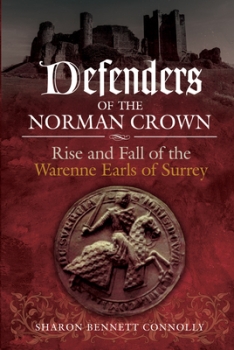
To survive during the reigns of the Norman and Plantagenet Kings of England, one must understand where their loyalty and trust lied. Did they follow the crown or did they take a risk and follow those who opposed the person who wore the crown? For one family, there was no question who they were loyal to, which was the crown. The Warenne Earls of Surrey served the Kings of England from William the Conqueror to Edward III, gaining titles, prestige, and marriages that would cement their names in history books. They survived some of the most turbulent times in English history even if they did have a few scandals in their illustrious history. In Sharon Bennett Connolly’s latest non-fiction adventure, “Defenders of the Norman Crown: The Rise and Fall of the Warenne Earls of Surrey ”, she explores this family’s history that spanned over three centuries.
I would like to thank Pen and Sword Books and NetGalley for sending me a copy of this book. I have been a fan of Sharon Bennett Connolly’s books for a while now, so when I heard about this title, I knew I wanted to read it. I was going in a bit blind since I have never heard of the Warenne Earls of Surrey, but that is part of the fun of studying a new aspect of history.
The first Earl of Surrey, William de Warenne began this family’s tradition of royal loyalty as he joined William the Conqueror on his journey to England and fought alongside him to establish Norman rule at the Battle of Hastings. William’s descendants would be involved in some of the most important events of the time, from the crusades to the 1st and 2nd Baron’s Wars and the sealing of the Magna Carta. At some points, the earls would briefly switch sides if they thought the king was not in the best interest of the country, but they remained at the heart of English politics and worked hard to help guide the king and the country to become stronger.
What made the Warennes a tour de force when it came to noble families was their ability to marry well, except for the final earl and his scandalous relationships. The second earl desired to marry into the royal family, which did not happen, but his daughter, Ada de Warenne would marry William the Lion, King of Scotland. One of the daughters of Hamlin and Isabel de Warenne would be the mistress of King John and would give birth to his illegitimate son Richard of Chilham. The only woman of the family who inherited the earldom of Surrey, Isabel de Warenne, was married twice and so both of her husbands, William of Blois and Hamelin of Anjou, are considered the 4th earl of Surrey.
Connolly does a wonderful job explaining each story in de Warenne’s long history, including the minor branches of the family. I was able to understand the difference between family members who shared the same first name, (like William, John, and Isabel) but I know that others might have struggled with this aspect. I think it would have been helpful if Connolly had included either a family tree or a list of family members of the de Warennes at the beginning of this book to help readers who did struggle.
I found this particular title fascinating. The de Warennes were a family that proved loyalty to the crown and good marriages went a long way to cement one’s legacy in medieval England. Connolly proved that she has a passion for bringing obscure noble families to the spotlight through her impeccable research. If you want a nonfiction book of a noble family full of loyalty, love, and action, you should check out “Defenders of the Norman Crown: The Rise and Fall of the Warenne Earls of Surrey” by Sharon Bennett Connolly.
 Two cousins fighting for the right to rule England during the 16th century. One was the daughter of Henry VIII and Anne Boleyn who fought tooth and nail to rule without a man by her side. The other was the daughter of Mary of Guise and King James V of Scotland whose marriage record would prove to be fatal. Elizabeth I and Mary, Queen of Scots, may have been sister queens, but the way they were treated in their own countries differed completely. While Elizabeth I was praised and protected from harm in England, Mary was a scapegoat for so many in Scotland. The way that Mary was used as a pawn even though she wore a crown was nothing short of extraordinary. The story of how these two queens came on a collision course that would leave one queen beheaded and the other forever changed has been told in many different ways from both sides of the tale, but it has rarely been told as a cohesive nonfiction book. That is until Kate Williams’ marvelous biography, “The Betrayal of Mary, Queen of Scots: Elizabeth I and Her Greatest Rival”.
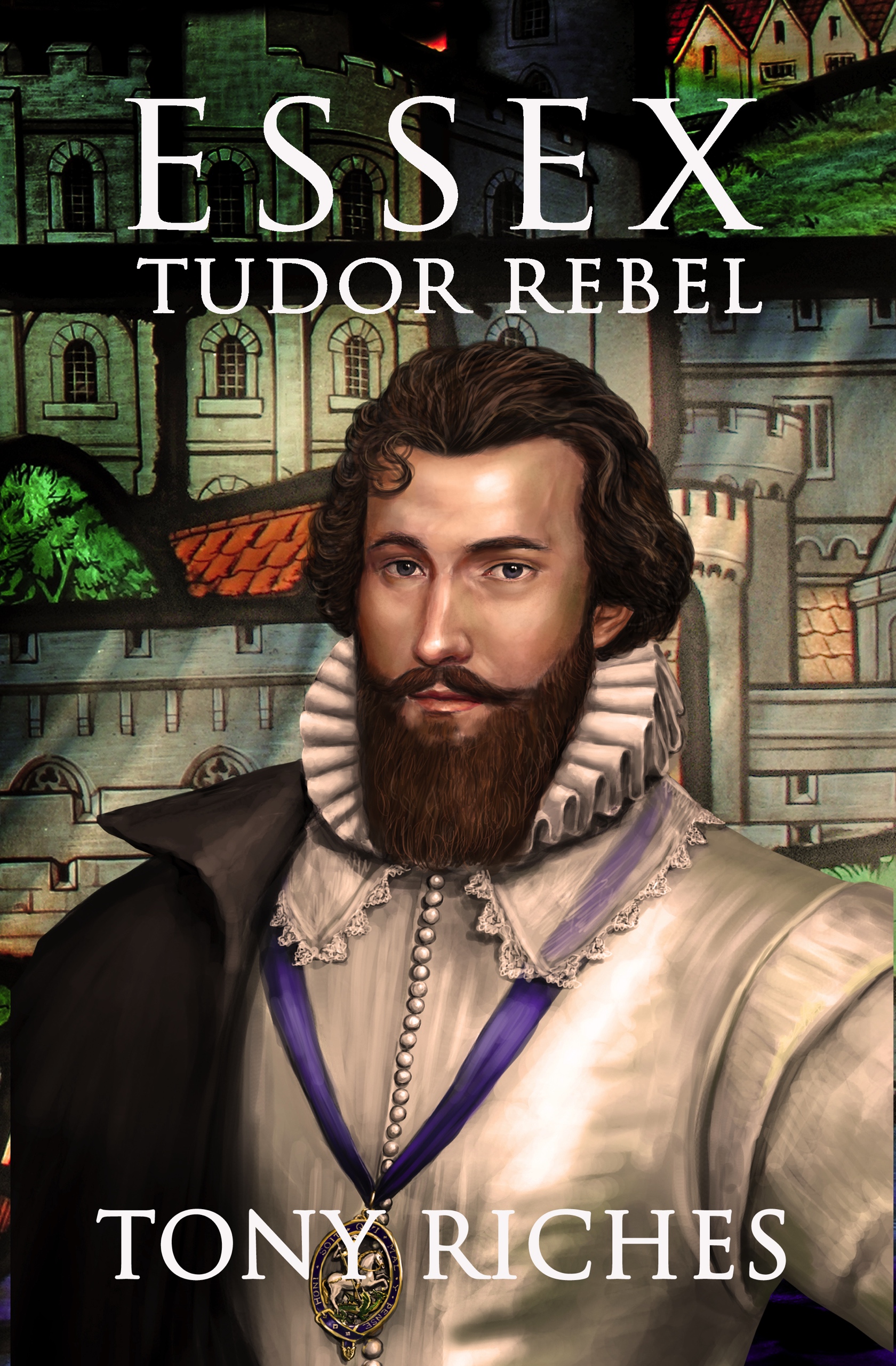
 Today, I am pleased to share my book review of the latest Elizabethan novel by Tony Riches as my contribution to his “Essex: Tudor Rebel” blog tour. Thank you to Tony Riches for sending me a copy of his latest novel, and to The Coffee Pot Book Club for allowing me to take part in this tour.
  (Blurb)
 Author Bio
 One of the most infamous families in the history of England lasted for over three hundred years and it was filled with numerous princes that fought for their right to rule, much to the chagrin of the Tudor dynasty. The Plantagenet Dynasty was full of scandals and bloodshed, testing the core values of what it meant to be a family and rulers of an emerging country like England. This dynastic clash for power that came to define this dynasty began with Henry II and his sons by his wife Eleanor of Aquitaine. When their father refused to give the boys any true power, which was to be excepted with all princes, his sons waged war against Henry II and their brothers. The stories of these bonds and what ultimately tore them asunder are told in Douglas Boyd’s latest collection of biographies aptly titled, “Plantagenet Princes: The Sons of Eleanor of Aquitaine and Henry II”.
 The year is 1586 and Ursula Blanchard is on a mission to protect Queen Elizabeth I. After returning home from a previous mission, Ursula and her household come into contact with a countrywoman named Etheldreda Hope who has brought a peculiar case to the forefront. In the forest by the village that Etheldreda calls home, there have been strange rituals occurring that include reference to an evil queen. Are these rituals harmless or is there a sinister motive behind the beliefs of the pagans who meet in the forest? Will Ursula and her household solve the case in time? This is the premise of Fiona Buckley’s latest Ursula Blanchard Tudor mystery, “Forest of Secrets”.
 The life of a medieval princess was not a life of luxury that we often see in fantasy films. It can be filled with lovely gowns and castles, but it can change in an instance. Take, for example, the lives of the daughters of King Edward IV and Elizabeth Woodville. One minute their father was King of England and life was comfortable; the next minute, they were in the sanctuary, hoping and praying that they would be able to be reunited with their father one day. Their lives were planned out for them when their father was alive, but when Edward IV died unexpectedly in April 1483, the princesses found their world taking another turn. We know what happened with the eldest daughter, Elizabeth of York, as she married Henry VII and became the first Tudor queen, but what about her sisters? In her second book, “The York Princesses: The Daughters of Edward IV and Elizabeth Woodville”, Sarah J. Hodder explores what happened to Elizabeth of York and her sisters once the House of York fell and the Tudors became the new dynasty.
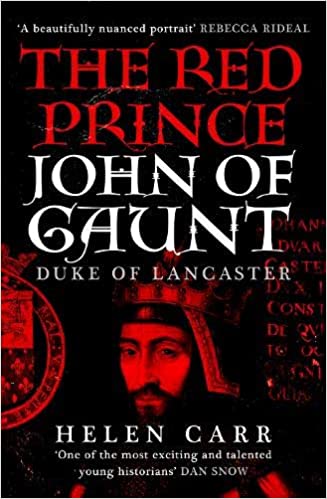 When one studies the history of the English monarchy, we tend to consider those who ruled and those who advised the ruler as significant characters. We rarely study the family members of the monarch who did not win the right to rule the kingdom. Yet, they are often either extremely loyal or they desire the crown with such ferocity that they rebel against their own family. It seems like a rather cruel world, but that was the life of a medieval monarch. True loyalty for one’s family was a rare feat. One man showed the depth of his loyalty to his family, even when the people despised him. He was the son of King Edward III, the brother of the famous Black Prince, the uncle of King Richard II, and the father of Henry Bolingbroke who would become King Henry IV. Gaunt’s reputation and legacy have been marred by his wealth and the role that he played with the Peasants’ Revolt, but was he such a bad person? In Helen Carr’s brilliant debut biography, “The Red Prince: The Life of John of Gaunt, the Duke of Lancaster”, she looks to uncover the truth about the man behind the throne and why he never desired the crown for himself.
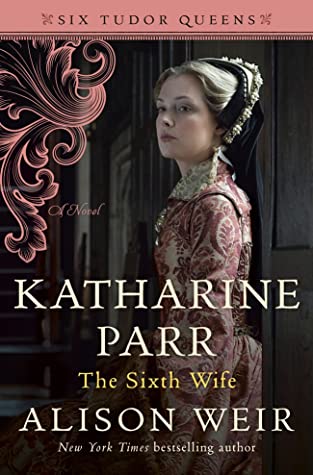 A woman twice widowed with no children of her own has the opportunity to choose who she will marry next. Will she marry the man of her dreams or marry the man who has been married numerous times and has killed two of his wives already? It seems like a no-brainer who she should choose, but the man she married for her third marriage was the man who was married numerous times before simply because he is the notorious King Henry VIII and you do not disobey the king. However, his last wife, Katharine Parr, is willing to fight for the religious reforms and her stepchildren that she loves dearly. In the last book of the Six Tudor Queens series, “Katharine Parr: The Sixth Wife”, Alison Weir takes her readers on an extraordinary journey to explore who this brave woman was and why she is the one who survived Henry’s last days.
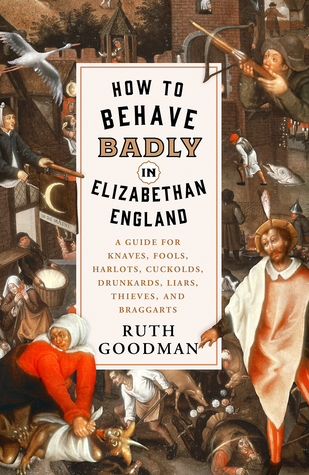 In many books about the different mannerisms and routines of different dynasties, we tend to see how the average person lived in the most prim and proper manner. How they avoided trouble at all costs to provide the best life that they could for their families. Yet, we know that there were those who did not adhere to the rules. They chose to rebel against the natural way of life. Every social echelon had their own rule-breakers, but what were these rules that they chose to break? How are these troublemakers of the past similar and different from our modern-day rebels? Famed experimental archeologist and historian Ruth Goodman takes her readers on a journey through the Elizabethan and the early Stuart eras to show how the drunkards, thieves, and knaves made a name for themselves. The name of this rather imaginative book is “How to Behave Badly in Elizabethan England: A Guide for Knaves, Fools, Harlots, Cuckolds, Drunkards, Liars, Thieves, and Braggarts”.
 Margery Kempe, the only daughter of the mayor of Bishop’s Lynn, England has made a tough decision in 1413. She has decided to leave her home, her husband, and her fourteen children to go on a pilgrimage to the holy city of Jerusalem as a way to honor her late father’s dying wishes. As she begins her journey, she meets the famous anchoress Julian of Norwich, who entrusts Margery with an important mission. She gives Margery her book Revelations of Divine Love and tells her to spread her message throughout the world in secret. Margery’s pilgrimage, her connection to Julian of Norwich, and the aftermath of her journey are intricately woven together in Mary Sharratt’s stunning novel, “Revelations”.
 Adventures of a Tudor Nerd