
 When we think of knights, we often think of shining armor, King Arthur and his fabulous court, fair maidens, and of course chivalry. These are considered to be literary ideals, almost too fantastic to be real. However, knights did live in the Middle Ages into the 14th century where some of the greatest knights lived. One is known as The Black Prince; the other was John of Gaunt. Both were brothers, sons of Edward III, the one who helped launch the Hundred Years’ War with France. The Black Prince might have a pretty cool nickname, but the one who really stole the show was John of Gaunt. The subject of Norman F. Cantor’s book “The Last Knight: The Twilight of the Middle Ages and the Birth of the Modern Era” is none other than the third son of Edward III, John of Gaunt.
Now I know what you are thinking, why do a book review for about someone who lived in the 1300s when this blog is focused on the Wars of the Roses and the Tudors. The answer is simple. It is because John of Gaunt and his children with his third wife and mistress Catherine Swynford would create the Beaufort line, the same family of Margaret Beaufort, mother of Henry Tudor, the founder of the Tudor Dynasty. It was also with John’s first wife Blanche of Lancaster, that the line of Lancaster was formed. He may have only been a third son but he became one of the wealthiest men in Europe and his family would shape the future of England forever.
Cantor, in this book, explores the world that John of Gaunt called home. What was it like in not just in England but in all of the medieval world? What about religion and literature? What was life like for women and knights in court? All of these aspects are explored throughout this book as well as elements in John of Gaunt’s life that made him unique, including his wealth and becoming King of Castile after he married his second wife Constance. Through wars and plagues, politics and rebellions, exploration and the beginning of the Renaissance, John of Gaunt navigated through it all.
It sounds like a very complex time, however, Cantor has a way of explaining it all in such a way that is both engaging and educational. Cantor through his writing style makes it easy to understand John of Gaunt’s legacy, not only is his time but how his legacy affected even our time. It was through his patronage that men like Chaucer and John Wyclif were able to complete their best works.
Shakespeare gave John of Gaunt a very patriotic speech, “this sceptre’d isle…This other Eden, demi-paradise”. Shakespeare was speaking as though John of Gaunt was an old man, reminiscing about the good times as the younger generation was taking over like Henry Bolingbroke and Henry the Navigator. Cantor brings to life the legend of John of Gaunt. Towards the end of his book, Cantor nicely sums up John of Gaunt’s life:
Above all, Gaunt’s taste for war, his frenetic energy, and his physical strength, as well as his love of women and his wealth and lifestyle, set the model for European aristocratic behavior, which went unchallenged until the nineteenth century and is still the pattern for all effective and durable social elites. (Cantor, 239).
John of Gaunt was a Renaissance man of his times. He wasn’t just some old man of Shakespearean lore. Cantor makes John of Gaunt and his world of the Middle Ages come alive. If you want to learn more about John of Gaunt, his family, and his world, Norman F. Cantor’s book “The Last Knight” is the book for you.
Sources
Cantor, Norman F. The Last Knight: The Twilight of the Middle Ages and the Birth of the Modern Era. New York: Harper Perennial, 2005.
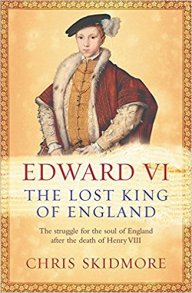 When we think of the Tudor rulers, we think of Henry VII, Henry VIII, Mary I and Elizabeth I. However, there was another king who ruled for only five years and was Henry VIII’s only legitimate male heir, Edward VI. Most people think that Edward was a mere pawn of his government officials but is that accurate? Chris Skidmore tackles that question of who was the real Edward VI in his book “Edward VI: The Lost King of England”.
 making a foothold in England. Most people think that Henry VIII was the one who helped bring the Protestant faith to England when he broke away from Rome. Henry VIII might of helped get the reform started, but Edward VI was the one who took the Protestant movement and was willing to make it known throughout England, even if it meant facing against his most formidable foe, his half-sister Mary who was a devout Catholic.
 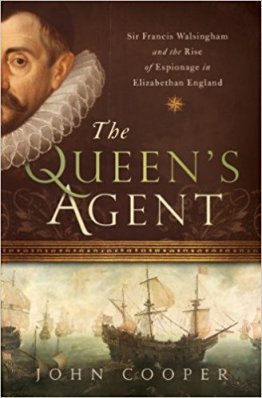 When we think about spies, we often think of modern examples like the ones we see in movies. However, spies and their spymasters have been working hard to protect their countries and their rulers for centuries. For Queen Elizabeth I, the only man she could trust to be her spymaster was Sir Francis Walsingham. But is it fair to call Walsingham as only Elizabeth’s “spymaster”? That is the question that John Cooper tries to answer in his book “The Queen’s Agent: Sir Francis Walsingham and the Rise of Espionage in Elizabethan England”. Who was Sir Francis Walsingham and what did he do to help his queen and his country?
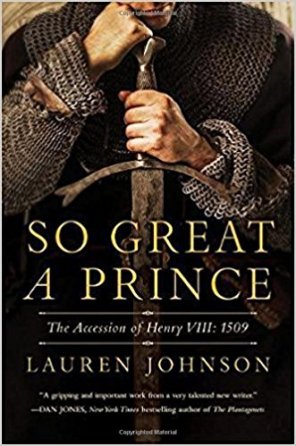 There are some books that leave a very good impression on you. Books that even when you stop reading it and move to another, you keep thinking about it. For me, this is one of those books. “So Great a Prince: The Accession of Henry VIII 1509” by Lauren Johnson is a page turner, but not because of the main character Henry VIII, but because Johnson writes about how the average citizen was affected by the accession of Henry VIII.
 attention towards women like Elizabeth I, Isabella of Castile, Katherine of Aragon, Mary I and Catherine de Medici. These seemed like extraordinary examples of power that stretched the boundaries on what was right and acceptable for women of the time. That, however, couldn’t be further from the truth. In fact, the sixteenth century in Europe was filled with powerful women who do not get the attention that they deserve. In Sarah Gristwood’s book “Game of Queens: The Women who made Sixteenth- Century Europe”, we are shown that it really wasn’t the men who had control, but their wives and daughters.
 On September 8, 1560, a young woman’s body is discovered at Cumnor Place alone at the bottom of the stairs with her neck broken with no other marks on her body. This would have been declared an accidental death by normal people, however the woman was anything but a normal woman; this was the wife of Robert Dudley, Amy Robsart. It was because of who she was and who her husband was that people speculated that foul play was afoot.
  became the Master of the Horse for Elizabeth, Robert changed. He was at home less and Amy had to take over the household affairs. It is through letters that Amy wrote that Skidmore is able to paint a picture for us about how their household worked. The day that Amy died was very peculiar in the fact that she wanted to be left alone; her husband was with the Queen miles away. The original jury found that this was a case of accidental death, however Skidmore decided to take a deeper look into the case. He decided to explore the possibility of accidental death by stairs, the possibility of a medical explanation on why Amy could have fallen down the stairs, and he found the original coroner’s report, which portrays a different story. The amount of research Skidmore pours into this one accidental death is admirable. The one issue I have with the book is the fact that he describes the type of staircases and the details of the coroner’s report but he doesn’t show pictures of these things so it’s a bit hard to visualize what he is talking about.
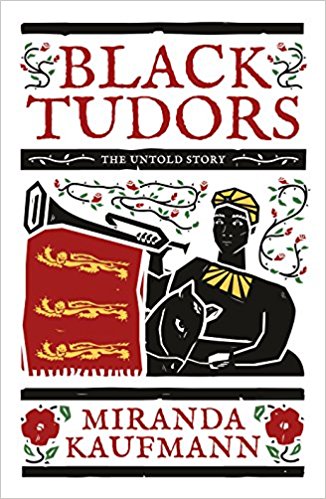 I have always enjoyed reading about the Tudor time period and learning new things about it. There have been some titles that have caught my eye and I have wanted to read for quite some time. This is one such books: “Black Tudors: The Untold Story” by Miranda Kaufmann.
 Adventures of a Tudor Nerd