
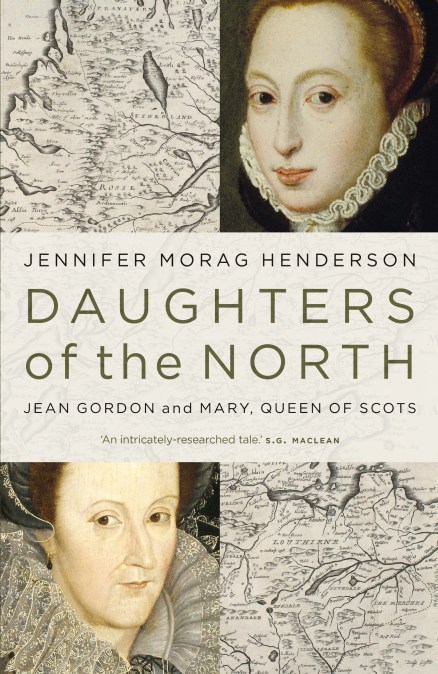
 In the late 16th/ early 17th centuries, Scotland was chaotic and full of dynamic characters near or on the throne. People like Mary of Guise, Mary Queen of Scots, Lord Darnley, Earl of Bothwell, the four Maries, and James VI/I show how turbulent the Scottish court was to those around it. However, the stories of those who lived outside the court system and tried their best to maintain control of the country for their monarch tend to fade into obscurity. Take for example the story of Jean Gordon. A noblewoman who was married three times; to James Hepburn, Earl of Bothwell, Alexander Gordon, Earl of Sutherland, and her true love, Alex Ogilive. Jean’s story is full of heartaches, clashing clans, religious squabbles, and loyalty to one’s family, which is told in Jennifer Morag Henderson’s book, “Daughters of the North: Jean Gordon and Mary, Queen of Scots.”
I would like to thank Sandstone Press and Casemate for sending me a copy of this book. When it comes to 16th-century history, I mostly focus on England, but I wanted to branch out to other countries and learn more about European history as a whole. When I saw the title of this book, it immediately caught my attention because I wanted to learn more about Scottish history and I did not know anything about Jean Gordon.
Jean Gordon, born in 1545, was the daughter of one of the most powerful men in Northern Scotland (known as King of the North), George Gordon 4th Earl of Huntly, and his wife Elizabeth Keith. When she was a child, Jean fell in love with a man named Alex Ogilive, but it was never meant to be as her family fortune changed when the Huntlys decided to clash with Mary, Queen of Scots’ illegitimate brother Lord James Stewart, 1st Earl of Moray. This clash ended with the death of George Gordon (with his corpse being put on trial) and the execution of Jean’s brother John Gordon. The family fell out of favor with the young Mary, Queen of Scots, but they would soon rise again.
Mary, Queen of Scots ended up marrying Lord Darnley and having the future King James VI/I of Scotland and England, while in 1566, Jean married James Hepburn, Earl of Bothwell. Jean and James were not married for long because in 1567 after it was found that Lord Darnley was murdered, Bothwell decided to dump Jean and marry Mary, Queen of Scots; we all know how that one turned out. Bothwell was such a jerk, but Jean did not mind as she did not care for Bothwell at all.
Jean would marry for a second time to Alexander Gordon, 12th Earl of Sutherland. They would have between seven and eight children. Although it was an arranged marriage, there was love between Jean and Alexander as they worked hard to maintain order in the North while clans were clashing over small issues (like cutting horsetails) and religious rows. After Alexander died, Jean decided to take a chance and marry her true love Alex Ogilive after over 30 years of waiting. Jean would outlive her husbands, her siblings, some of her children, and several monarchs, dying in 1629.
As someone who did not know much about Jean Gordon’s story or 16th/17th-century Scottish history, I adored this book. Henderson has made this complex history accessible to readers, both novices and experts alike. Now I want to explore more Scottish history, maybe even medieval Scottish history. If you want a fresh look into the wider world of the 16th century full of romance and drama, I highly recommend you read, “Daughters of the North: Jean Gordon and Mary, Queen of Scots” by Jennifer Morag Henderson.
 The Tudor dynasty was a time of significant political change, but it was also a time of tremendous religious change. Each Tudor monarch had a different view on the divide between Catholics and Protestants. Although we have an idea of what it might have been like during the reign of Mary I, the way Elizabeth I tackled the issue of religion during her reign. One story of how Catholics were treated in the so-called “Golden Age” of Elizabethan England is the story of Margaret Clitherow. She helped hide a couple of Catholic priests and ended up suffering for her actions by being crushed to death. Tony Morgan tells her story and how she became a Catholic martyr in his book, “Power, Treason, and Plot in Tudor England: Margaret Clitherow, an Elizabethan Saint.”
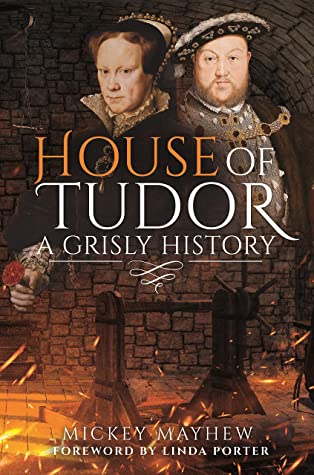 The glitzy, glamorous life of the Tudors portrayed in popular TV shows and novels mask the truth of this infamous dynasty. It is more bloody than what has been described. It is filled with grotesque executions, deadly diseases, bloody battles, and bloody battles. What happened to Richard III’s remains? What was Tudor torture like for those unfortunate victims? What were other devious tales at play in 16th-century Europe? Mickey Mayhew has worked hard to answer these questions by combining 45 of the most gruesome stories from this dynasty into one book, “The House of Tudor: A Grisly History.”
 Medieval Europe was inundated with strong rulers and dominant figures who made a difference in how the policies of certain countries were formed. We tend to focus on the male figures, from kings to lords and rebels, when we study medieval European history. Still, the women in their lives significantly influenced how their countries were governed. Although many women stood by the side of their husbands and didn’t make much of an impact on European history, some women chose to stand out from the crowd and make a name for themselves. Rebecca Holdorph has chosen to highlight a handful of these dynamic women throughout medieval Europe in her book, “Women in the Medieval Court: Consorts and Concubines.”
 Adventures of a Tudor Nerd