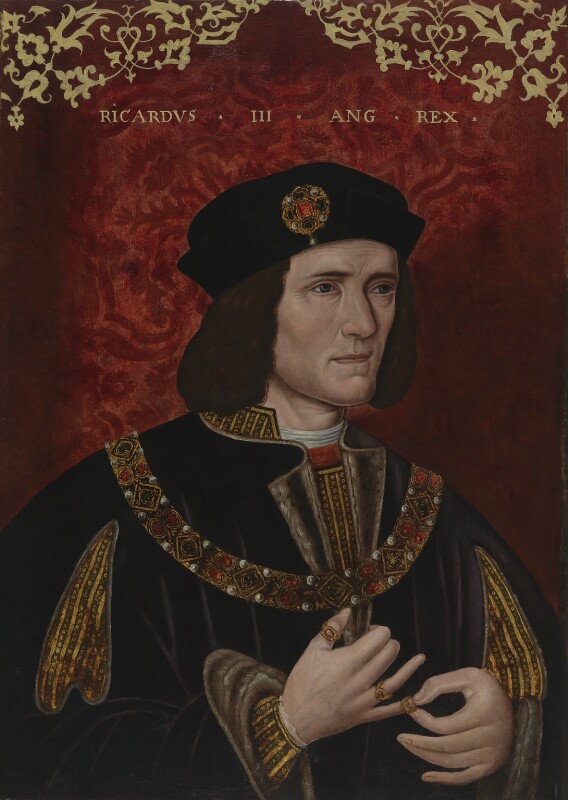
Book Review: “Edward IV & Elizabeth Woodville: A True Romance” by Amy Licence


When we think of a fairy tale romance, we think about stories like Cinderella. A girl of lower status captures the heart of the handsome prince. They overcome the odds and live happily ever after. But that kind of romance only exists in books. The closest story we have to that in medieval English history might be the story of Edward IV and Elizabeth Woodville. A widow who begged the handsome and younger King of England for help, but ended up becoming his wife. It’s a story that any romance-loving history lover will swoon over, but how accurate is that story? What is the real story of Edward IV and Elizabeth Woodville? Amy Licence explores the nature of their relationship in her book, “Edward IV & Elizabeth Woodville: A True Romance.”

I have been reading books by Amy Licence for a few years now, so when I saw this title, I knew I wanted to read it. The Wars of the Roses is one of my favorite areas of history to study, but I have not read a joint biography of Edward IV and Elizabeth Woodville. When I saw this title, I knew that this was a must-read for me.

We begin in 1431 in Rouen, France, where the Maid of Orleans, who we know as Joan of Arc, is about to die on the pyre. In the same town, eleven years later, the future King Edward IV would be born to Cecily Neville and Richard, Duke of York. Edward’s future bride, Elizabeth Woodville, was born around six years after the death of Joan of Arc. Her mother, Jacquetta of Luxembourg, had married below her station after the death of her first husband, John Duke of Bedford passed away; Jacquetta would marry a knight, Sir Richard Woodville, Elizabeth’s father. Jacquetta was close to King Henry VI and Margaret of Anjou, the Lancastrian rulers of England, and Edward IV’s father, Richard, Duke of York, would fight against the Lancastrians for the right to rule England during the conflict that we know today as the Wars of the Roses. To top it all off, Elizabeth was married to Sir John Grey of Groby Old Hall, a man who fought and died for King Henry VI.

In other words, Edward and Elizabeth were on different sides of the Wars of the Roses, but somehow these two found each other after Edward IV became king. The obvious choice for Edward’s bride should have been a foreign princess to create an alliance, but there was something about Elizabeth that convinced Edward to forgo the wisdom of Warwick and marry her. Their court was based on the Burgundian court. They had a large family, but the fight for the crown with the Lancastrian cause and Edward’s own family continued. Just when the throne is secure, Edward passes away. Elizabeth had to fight for her children, fight against her brother-in-law, and join forces with her enemy Margaret Beaufort to help usher in the Tudor dynasty.

Licence was able to present the information not only about this period, but also about Edward and Elizabeth in such a comprehensive way that both novices and experts can understand. She can present theories that she either agrees with or disagrees with respectfully. I thoroughly enjoyed this joint biography as it gave me a better appreciation for the reign of Edward IV and Elizabeth Woodville. If you want to learn more about the Wars of the Roses, the first Yorkist king, and his wife, I highly recommend you read “Edward & Elizabeth Woodville: A True Romance” by Amy Licence.

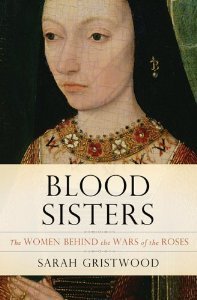
Book Review: “Blood Sisters: The Women Behind the Wars of the Roses” by Sarah Gristwood

Blood SistersWhen it comes to studying wars from the past, we often focus on the men who fought during the battles the strategies that were implemented to win and the plans that backfired spectacularly. So frequently in the study of wars, we forget about the women left behind, but in fact, they had bigger roles to play than sitting on the sidelines. For example, the royal women who lived in England during the conflict known as the Wars of the Roses played an essential role in how the wars concluded. These women are slowly coming into the spotlight in biographies and historical fiction novels, but it is rare to read a book about the Wars of the Roses where the central figures are the women, until now. Sarah Gristwood has taken seven women from this age and weaved their stories into her book, “Blood Sisters: The Women Behind the Wars of the Roses.”

I have been interested in the Wars of the Roses and the women who lived during that period for years. I heard about this book when I started studying this period, but I have never had a chance to read it, until now.

There were so many strong women from this period, but Gristwood narrowed her choices down to seven remarkable women to focus on; Margaret of Anjou, Margaret Beaufort, Elizabeth Woodville, Elizabeth of York, Cecily Neville, Anne Neville, and Margaret of Burgundy. By choosing these women, Gristwood is presenting a story of a conflict that spanned multiple generations, both York and Lancaster, and showing how both the English and Burgundian nobility dealt with the changes that were happening when the Tudors took control.

Gristwood begins with the marriage of Margaret of Anjou and Henry VI. Though she was French by birth, her loyalty was always going to be with her husband’s Lancasterian family. That meant she would eventually become enemies with the proud Cecily Neville, the wife of Richard Duke of York and mother of King Edward IV and King Richard III, but Margaret was allied with Margaret Beaufort, the tenacious mother of King Henry VII, the founder of the Tudor dynasty. The conflict passed onto the daughters of these women, like Anne Neville and Margaret Burgundy, as well as the daughter of Jacquetta of Luxembourg, Elizabeth Woodville. These women would continue the conflict and help seal the fate of the Lancastrians, see the rise and fall of the Yorkists, and the beginning of the Tudor dynasty through the marriage of Elizabeth of York, the daughter of Elizabeth Woodville, and Henry Tudor. This book spans decades and includes events like the disappearance of the Princes in the Tower, well into the Tudor dynasty such as the pretenders, the marriage of Prince Arthur and Catherine of Aragon, the death of Prince Arthur, and the rise of Henry VIII.

This was a delightful look into the Wars of the Roses through the eyes of the women who lived through this period. They were mothers, daughters, wives, queens, fighters, and survivors. They showed that without their tenacity and determination to fight for what they believed was right and for their families. If you are a fan of the women who defined the Wars of the Roses, I highly suggest you read, “Blood Sisters: The Women Behind the Wars of the Roses” by Sarah Gristwood.

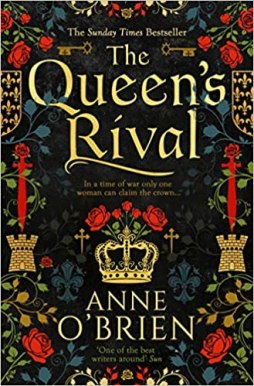
Book Review: “The Queen’s Rival” by Anne O’Brien

the queen's rivalEngland is in the midst of chaos in a conflict known as the Wars of the Roses. The Yorkist cause is formulating a case to take the throne’s power from Henry VI and the Lancastrians and replace the king with Richard, Duke of York, whose claim to the throne is a bit stronger. Caught in the middle of the Wars of the Roses was one strong and courageous woman who would fight tooth and nail for her family and the Yorkist cause. Her name was Cecily Neville, Duchess of York, and her story is masterfully told in Anne O’Brien’s novel, “The Queen’s Rival.”

A few years ago, I hosted Anne O’Brien to discuss this book as part of a blog tour for The Coffee Pot Book Club. I will admit that this was the first time I had read a novel by Anne O’Brien, but I had heard amazing things about her writing style, so when I saw this novel at a bookstore, it was an instant buy for me.

We begin in the year 1459 and the house of York is facing a disaster. The Yorkists have lost the Battle of Ludford Bridge and must now separate and go into exile. Cecily can only watch as the Lancastrians lay siege to her home, forcing her and her young children to be imprisoned at Tonbridge Castle. This moment might have broken Cecily’s spirit, but Cecily is a proud Neville, willing to fight until the bitter end to see her family safe and secure on the throne of England. Along the way, she must endure heartache (such as the death of her husband Richard Duke of York) and moments of betrayal, such as George, Duke of Clarence, and Richard, Earl of Warwick. Cecily’s name and reputation are dragged through the mud on numerous occasions. However, she gets to witness moments of glory, the crowning of her sons Edward IV and Richard III, and the birth of her grandchildren, to create the House of York.

My favorite aspect of this novel is that the chapters are not written like traditional chapters. The chapters are a series of letters to and from Cecily to her family members or those she considers her enemies to convince them to give her and her family leniency. Cecily’s main correspondences are with her sisters, Anne Duchess of Buckingham, and Katherine Dowager Duchess of Norfolk. One of my favorite characters is the author of England’s Chronicle, who reminds me of a gossip columnist, ready to spill all the secrets and rumors to anyone who will hear it.

I had such a fun time reading this novel. Even though I knew the events of the Wars of the Roses and what would happen, I found it refreshing to read it as a series of letters so that you can sense how the historical figure might have felt during that moment. This may have been my first novel by Anne O’Brien, but it definitely will not be my last. If you want a thrilling novel about the Wars of the Roses from the perspective of Cecily Neville, I highly suggest you read, “The Queen’s Rival” by Anne O’Brien.

Book Review: “Women in the Medieval Court: Consorts and Concubines” by Rebecca Holdorph

60474164._SY475_Medieval Europe was inundated with strong rulers and dominant figures who made a difference in how the policies of certain countries were formed. We tend to focus on the male figures, from kings to lords and rebels, when we study medieval European history. Still, the women in their lives significantly influenced how their countries were governed. Although many women stood by the side of their husbands and didn’t make much of an impact on European history, some women chose to stand out from the crowd and make a name for themselves. Rebecca Holdorph has chosen to highlight a handful of these dynamic women throughout medieval Europe in her book, “Women in the Medieval Court: Consorts and Concubines.”

Thank you, Pen and Sword Books and Casemate Group, for sending me a copy of this book. I have seen quite a few people read this book, and since I am always interested in learning about new figures in medieval history, I knew I wanted to read this title.

To cover so many women over several centuries, Holdorph breaks her book down into four sections; noblewomen, consorts, reigning queens, and concubines. Each section starts with a cast of characters list, so the reader has a brief synopsis of each woman featured in the chapter. She then dives into the stories of the women in each section, showing how they were similar and how they differed in the roles that society gave them in life.

Holdorph covers many European countries from the 11th to the 15th century to give her audience a broad scope of what it meant to be a woman in power in medieval Europe. We are introduced to noblewomen like Anna Komnene, the author of the Alexiad, Marie of France, Alice de Lacy, and the Rose of Raby herself, Cecily Neville. While examining the lives of these noblewomen, Holdorph looks at how their public lives differed from their private lives. Next, she explores the lives of queen consorts, those who married a prince or a king and ruled beside their husbands; some of the women included in this chapter are Eleanor of Castile, Maria de Luna, Isabeau of Bavaria, and Margaret of Anjou. In this section, Holdorph explores how these women became queens and what the job of the queen consort meant for each woman.

The third section focuses on the women who were allowed, for a time, to rule their respective countries on their own; women like Urraca of Castile and Leon, Berenguela of Castile, and Margrete of Denmark. Holdorph explores how each queen came to power and how they ruled their kingdoms for a little bit. Finally, we are introduced to the mistresses of rulers, known in this book as concubines, who made an impact that ended up costing them their lives. The women featured in this section include Maria de Padilla, Alice Perrers, Katherine Swynford, and Agnes Sorel, to show what it meant to be a good mistress versus a bad mistress.

I enjoyed learning about new powerful women from European countries other than England and France during the medieval period. My one complaint is that I wish Holdorph would have written this book in chronological order. Since many of these stories in this book were relatively new to me, the jumping back and forth between centuries and stories added to my confusion. Holdorph would have made a more significant point if she had her miniature biographies in chronological order and then summarized her points at the end of each section.

Overall, I found this a decent book. Holdorph does have a passion for this subject of medieval queens, but I think there are some elements of this book that could be improved on to make it more understandable for her audience. Suppose you want a solid introduction to medieval European women who may be unfamiliar with many casual history fans. In that case, I recommend you read “Women in the Medieval Court: Consorts and Concubines” by Rebecca Holdorph.

Book Review: “Red Rose, White Rose” by Joanna Hickson

20892659One woman is torn between the loyalty to her birth family and the loyalty to her family by marriage. Now, this may sound like the story of Elizabeth of York, but alas, it is not. This story does take place in the fifteenth century, but it is the story of Elizabeth of York’s grandmother, “The Rose of Raby,” Cecily Neville. Born to the proud Neville family, who were proud Lancastrians, Cecily’s father, Ralph Neville, the Earl of Westmorland, arranged a marriage for his daughter to the young and ambitious Richard, Duke of York. She is now one of the most powerful women in England, but with power comes risks of ruin as Cecily has a secret that could be disastrous. War looms between the Red Roses of Lancaster and the White Roses of York, one that will transform English history forever, with Cecily caught in the middle. Her story is told in Joanna Hickson’s novel, “Red Rose, White Rose.”

Hickson begins her book by showing the interaction between Cecily and her half-brother, Cuthbert or Cuddy. Cecily is engaged to Richard Duke of York when she is kidnapped but is later rescued by John Neville, a distant cousin. In John Neville’s care, Cecily Neville’s life takes an unexpected turn, and a secret relationship is formed between the two. Although I know this was a fictitious relationship invented for this book, it still did not sit well with me. I have always thought Cecily was loyal and devoted to her husband and family (even though there were rumors of her and a knight having an affair), so this did not fit my view of Cecily Neville.

The bulk of this novel explores how Cecily and Richard were able to navigate the complex world of 15th-century English politics while their family grew. We also see Cuthbert fall in love and have his own family while he stays by Cecily’s side during such a tumultuous time.

This novel did not spend much time on the Wars of Roses. We get to see the origins of the major battles and how Edward became king, but we don’t see Cecily trying to hold her family together. I wanted to see her interactions with her sons Edward, George, and Richard during their feuding years. I wanted to see her reactions to Edward’s marriage to Elizabeth Woodville and her interactions with her daughter-in-law. In short, I wanted a longer story that focused more on the Wars of the Roses and how Cecily Neville dealt with the changes in her family dynamic due to the throne’s power.

Overall, this novel was enjoyable and well-written. Some elements were included that I disagreed with their concept. The story was engaging and gave Hickson’s audience a sneak-peek into Cecily Neville, Richard Duke of York, and their children. If you want a solid novel about Cecily Neville, I recommend reading “Red Rose, White Rose” by Joanna Hickson.

Book Review: “Cecily” by Annie Garthwaite

55818511._SY475_The Wars of the Roses was a time filled with dynamic figures who fought for the right to restore order to England. We often think about the strong warrior men who marched into battle, facing their inevitable doom just for the chance to wear the crown and rule the land. The women who stood by their husbands’ and sons’ sides were just as strong as their male counterparts, even if they did not wear armor. They were on the sidelines, ensuring that they could create alliances that would prove helpful in future conflicts. The most famous examples of strong women during the Wars of the Roses are Margaret of Anjou, Margaret Beaufort, and Elizabeth Woodville. Yet, there was another woman who stood firmly on the side of the Yorkist cause. She was known as the Rose of Raby and the wife of Richard, Duke of York. Her name was Cecily Neville, and she is the protagonist of Annie Garthwaite’s brilliant debut novel, “Cecily.”

I have been a fan of Wars of the Roses historical fiction for a while now, and so when I heard about this novel, I knew I wanted to read it. I usually don’t comment about the covers of books, but this particular cover was simply gorgeous, which added to my desire to read it. Cecily Neville is one of those characters that is rarely given a chance to shine, so this book was a treat to see how Garthwaite would portray her.

Garthwaite’s novel begins with the execution of Joan of Arc, which was an event that Cecily Neville witnessed with her husband Richard Duke of York. It marked a turning point for the English campaign in France as the young King Henry VI was crowned King of France. Richard Duke of York is a cousin of the young king and is considered next in line to the throne until Henry VI has a son. Richard is given command of the French campaign, with his beloved wife by his side. Cecily and Richard have known the sorrow of losing children, but eventually, their family begins to grow with the birth of their eldest son Edward. More children will follow, including Edmund, George, and little Richard often referred to as Dickon.

The campaign in France does not end well, so Cecily, Richard, and their growing family go back to England. Along the way, Henry VI decides to take Marguerite of Anjou as his bride; Marguerite and Cecily start as friends and allies, but their relationship will eventually sour and turn into rivals. Richard and Cecily will travel to Ireland to help their king to show their loyalty. Still, when Henry VI falls ill, Richard believes that he must protect his king and country from men like Henry Beaufort, Duke of Somerset, who is a favorite of Queen Marguerite.

It was during this conflict that Cecily’s true strength shines through. She not only has to be a mother to her growing family, but she has to act as a political advisor and confidant to her husband while staying loyal to her king and undermining the queen’s authority. It was not a rebellion that Richard and Cecily wanted, but they felt that it was a necessary evil to protect their family and their kingdom. To see Cecily protecting her young children from the Lancastrian as her husband and oldest sons flee to fight another day. When Richard and their son Edmund tragically died at the battle of Wakefield, to see Cecily go through her grief while fighting to give Edward a chance to defend her family’s honor was inspiring.

This novel was a delightful read. Garthwaite portrayed Cecily as a strong, independent wife and mother who would stop at nothing to protect her dear ones. For a debut novel, this is a smash hit. It is unique and tells an engaging story that every fan of the Wars of the Roses will love. I cannot wait for Garthwaite’s next novel. If you want a new book with a heroine that you will adore, check out “Cecily” by Annie Garthwaite.

Guest Post: “Cecily Neville, Duchess of York: Inspiration for The Queen’s Rival” by Anne O’ Brien

The Queen's RivalToday, I am pleased to welcome Anne O’Brien to my blog to discuss the inspiration for her latest novel, The Queen’s Rival. I would like to thank Anne O’Brien and The Coffee Pot Book Club for allowing me to be part of this blog tour. 

In past years I have written about a variety of medieval women, either royal or attached to the Court.  I enjoy investigating how these women played a role in the political manoeuvrings of their day.  Although we so rarely hear the voices of these women, since they lived in a man’s world and the history was invariably written by men, their involvement was often considerable and they deserve our interest.

Cecily Neville, Duchess of York, is one of the most appealing women of English medieval history, worthy of celebration.  Most medieval women verge towards the invisible, a two-dimensional entity without character or apparent influence; Cecily Neville is an exception.  The Wars of the Roses were both vast in scope and complex in the range of family connections.  So was Cecily’s own Neville family with its royal blood inherited through their mother Joan, Countess of Westmoreland, daughter of John of Gaunt. Cecily demanded in a regal fashion that she be allowed to speak for herself.  It was a challenge that lured me to become involved; I accepted the challenge and wrote about her. 

Without a doubt, Cecily was a remarkable woman, living for eighty years through five reigns, interacting with a vast dramatis personae of famous, infamous, and influential characters in these tumultuous years.  She was the mother of two kings, Edward IV and Richard III, and  grandmother to a Queen Consort, Elizabeth of York, who stepped across the divide between York and Lancaster and married King Henry VII.

On the surface, this would seem to be a life bringing Cecily immense satisfaction and personal achievement, but it was also a life of tragedy.  Cecily outlived all but two of her twelve children, both daughters, some dying in infancy, others meeting terrible ends.  George, Duke of Clarence, was executed for treason, on the orders of his brother King Edward, in the Tower of London.  Richard III died on the battlefield at Bosworth; Edmund of Rutland met his end in an act of revenge after the Battle of Wakefield.  What heartbreak this must have inflicted on her, added to the death of her husband, Richard, Duke of York, at Wakefield.

Cecily’s life also witnessed its share of scandal.  The rumour of her liaison with the common archer Blaybourne, thus prompting the blot of illegitimacy against King  Edward IV, was too valuable a rumour to ignore for those such as the Earl of Warwick and Duke of Clarence who would willingly depose King Edward.  Was the scandal true?  Unlikely, but the widespread gossip must be faced.  How difficult for a woman of Cecily’s pride to accept that her own family would dishonour her reputation.

Would such tragedy obliterate the strength of Cecily’s character?  Cecily worked tirelessly for the House of York. She stood by her children as far as it was possible, even George of Clarence, trying to bring him back into the Yorkist fold.  In Ludlow, abandoned by her husband, Cecily faced a leaderless Lancastrian army and howling mob intent on plundering the town. She proved to be a woman of great courage.  As old age approached, she devoted herself to a life of duty and formidable piety almost worthy of the life of a nun, a life of loyalty to the family she had always supported.

Cecily, Duchess of York, was the doyenne of late medieval history, the Queen who was never crowned.  It would have been unforgivable of me to leave her out of my pantheon of medieval ‘heroines’. 

The Queen's Rival final version(Blurb)

England, 1459. 

One family united by blood. Torn apart by war…

The Wars of the Roses storm through the country, and Cecily Neville, Duchess of York, plots to topple the weak-minded King Henry VI from the throne.

But when the Yorkists are defeated at the Battle of Ludford Bridge, Cecily’s family flee and abandons her to face a marauding Lancastrian army on her own.

Stripped of her lands and imprisoned in Tonbridge Castle, the Duchess begins to spin a web of deceit. One that will eventually lead to treason, to the fall of King Henry VI, and to her eldest son being crowned King Edward IV.

Buy Links

Amazon UK: https://www.amazon.co.uk/Queens-Rival-Anne-OBrien/dp/0008225532

Amazon US: https://www.amazon.com/Queens-Rival-Anne-OBrien/dp/0008225532

Amazon CA: https://www.amazon.ca/Queens-Rival-Anne-OBrien/dp/0008225532

Amazon AU: https://www.amazon.com.au/Queens-Rival-Anne-OBrien/dp/0008225508

Barnes and Noble: https://www.barnesandnoble.com/w/the-queens-rival-anne-obrien/1137842630

Waterstones: https://www.waterstones.com/book/the-queens-rival/anne-obrien/9780008225544

Kobo: https://www.kobo.com/gb/en/ebook/the-queen-s-rival-the-sunday-times-bestselling-author-returns-with-a-gripping-historical-romance

Audio: https://www.audible.co.uk/pd/The-Queens-Rival-Audiobook/0008225524

Blackwells: https://blackwells.co.uk/bookshop/product/The-Queens-Rival-by-Anne-OBrien-author/9780008225544

WHSmith: https://www.whsmith.co.uk/products/the-queens-rival/anne-obrien/hardback/9780008225544.html

Anne O'Brien promo picAuthor Bio

Anne O’Brien

Sunday Times Bestselling author Anne O’Brien was born in West Yorkshire. After gaining a BA Honours degree in History at Manchester University and a Master’s in Education at Hull, she lived in East Yorkshire for many years as a teacher of history.

Today she has sold over 700,000 copies of her books medieval history novels in the UK and internationally. She lives with her husband in an eighteenth-century timber-framed cottage in the depths of the Welsh Marches in Herefordshire. The area provides endless inspiration for her novels which breathe life into the forgotten women of medieval history.

Social Media Links:

Website: https://www.anneobrienbooks.com/

Twitter: https://twitter.com/anne_obrien

Facebook: https://www.facebook.com/anneobrienbooks/?ref=bookmarks

LinkedIn: https://www.linkedin.com/in/anne-o-brien-89668a45/

Pinterest: https://www.pinterest.co.uk/thisisanneobrie/_saved/

Amazon Author Page: https://www.amazon.co.uk/Anne-OBrien/e/B001HD1NHI

Goodreads: https://www.goodreads.com/book/show/51111864-the-queen-s-rival?from_search=true&from_srp=true&qid=MIYPBpVMFH&rank=1

News Letter sign up: https://www.anneobrienbooks.com/

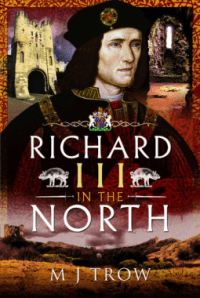
Book Review: “Richard III in the North” by M.J. Trow

If you have studied the Wars of the Roses, you are obviously very familiar with the infamous last Plantagenet King of England, Richard III. He is known for many things, but the most notorious thing that he is associated with is the murder of the Princes in the Tower, his nephews. However, we cannot be certain that he committed this crime or if a crime was committed in the first place. These rumors swirled around London and Southern England where Richard III was not popular. It was a different story in Northern England, where he was much beloved. In M.J. Trow’s latest book, “Richard III in the North”, he tries to uncover the true story of Richard III by looking at his life while he was living in the North. Was he really the monster that literature has portrayed him as or do we have a case of misunderstanding a historical figure?

I would like to thank Pen and Sword Books and Net Galley for sending me a copy of this book. I am by no means a Ricardian, but I do enjoy nonfiction books about a historical figure that gives a new twist to their story, which this book does rather well.

To understand why Richard was positioned in the North and why it was crucial, Trow takes readers on a journey through the past. Trow first explores the origins of Richard Duke of York and Cecily Neville, Richard III’s father, and mother, which was very interesting to read. As someone familiar with these characters, it was easy for me to follow the genealogy, but I know that there would be some readers who would have found family trees helpful in this particular section. At the start of each chapter, Trow has decided to include the coat of arms of a different historical figure that made an impact in Richard’s life, which I thought was an elegant touch.

Obviously, since Richard III lived in the time that we refer to as the Wars of the Roses, Trow spends quite a bit of time discussing major battles and causes of the conflict. What I really appreciated is when Trow went into details about major battles that are often overlooked, like Wakefield. These battles and these causes led to the decision by Richard’s brother King Edward IV to send Richard to the north to quell the violence that might have been caused by allies of the Lancastrians.

It is the North that Trow gives us as readers a different view of the much-maligned man. It was here that Richard was beloved and that he spent much of his adult life. He creates a different world that is hostile to Southerns, yet Richard is able to make a cordial relationship that would turn into him being adored by the people. Trow includes vivid descriptions of castles that were associated with and what life was like for him and his immediate family. It was a unique side of the infamous figure that made him more life-like instead of how he is portrayed in literature.

This may seem like yet another book about Richard III, but I think Trow’s focus on the relationship between the last Plantagenet king and the North makes this stand out from all of the rest. Trow has a very casual writing style but you can tell he has obviously done his research. I think if you are a Ricardian or if you want to look at a new aspect of the Wars of the Roses, I would recommend you read, “Richard III in the North” by M.J. Trow.

Biography: King Richard III

mw05304(Born October 2, 1452- Died August 22, 1485). Son of Richard 3rd Duke of York and Cecily Neville. Married to Anne Neville. Father of Edward of Middleham, Prince of Wales.
Richard III is one of the most controversial kings in English history. His death at the Battle of Bosworth Field led to the beginning of the Tudor Dynasty.

Richard III was born to Richard 3rd Duke of York and Cecily Neville on October 2, 1452 at Fotheringhay Castle in Northamptonshire. Many believed that it was a difficult birth. What we do know from historical records is that he might have been breeched born, which means that he was born upside down, which might have led to his physical deformities. From what we do know from examining his skeleton is that he had scoliosis, a sideways curvature of the spine.

Richard’s father was one of the most important men in all of England. He was a loyal follower to King Henry VI and when Henry VI had his bouts of mental illness, it was Richard Duke of York who would become the Lord Protector. York’s enemy was Edmund Beaufort Duke of Somerset, who was an ally of Margaret of Anjou; York had Somerset arrested during his protectorate but when the king recovered, Somerset was released and all of York’s reforms were reversed. York decided to face off against Somerset at the First Battle of St. Albans in 1455, where Somerset was killed. This was the first major battle in The Wars of the Roses. Margaret of Anjou never trusted York, especially when the king decided to name York and his sons the next heir to the throne, dismissing his son Edward of Westminster. Margaret of Anjou formed the Lancastrian army to face off against York and his ally Richard Neville Earl of Warwick.

It would be on December 30, 1460 when Richard’s life would radically change. This was the day when his father and eldest brother Edmund Earl of Rutland both died at the Battle of Wakefield. As the next Duke of York, Richard’s brother Edward was left the task of avenging their father’s death, with the help of Richard Neville, Earl of Warwick. Edward did so at the Battle of Towton on March 29, 1461. This battle would ultimately lead to Edward being crowned king on June 28, 1461. Around the same time, Richard was declared Duke of Gloucester and made a Knight of the Garter and Knight of the Bath.

With this new title and his brother being King of England, Richard’s home life changed greatly. He moved to the castle of Middleham, home of Richard Neville Earl of Warwick, where he continued his education for at least four years. This was where he became friends with Francis Lovell and Robert Percy, two of his closest allied; he would also meet his future wife, Anne Neville, the daughter of the Earl of Warwick, here. Richard would leave Warwick’s household in 1468.
Warwick and Richard’s brother Edward IV were close since Warwick helped Edward become king. That was until Warwick found out that Edward had married Elizabeth Woodville instead of marrying the French princess that Warwick had in mind in order to create an English- French alliance. This was seen as an act of betrayal by not only Warwick, but the other lords of the court since it meant that Elizabeth’s family members would have a chance to marry well, thus allowing her family to move up in society. Around this time, Warwick was trying to arrange marriages for his daughters Anne and Isabel to George Duke of Clarence and Richard Duke of Gloucester, the brothers of the king. Edward did not approve of this idea at all.

Warwick decided to marry his daughter Isabel to George Duke of Clarence in July 1469, and Warwick tried to put George on the throne instead of Edward, which angered Edward IV and Parliament. Warwick took his family and his son-in-law George to France where Warwick reconciled with Margaret of Anjou. In order to cement their new alliance in order to get Henry VI back on the throne, Warwick had Anne marry Edward of Westminster, Prince of Wales, on December 13, 1470, making Anne Neville Princess of Wales. Their marriage would not last long.

During this time, Richard stayed loyal to his brother Edward and when Warwick came back in October 1470, Richard and Edward fled to Burgundy. They came back in March 1471. On April 14, 1471 at the Battle of Barnet, Warwick was killed. A few weeks later, on May 4, 1471 at the battle of Tewkesbury, Edward of Westminster, Prince of Wales, was killed and Henry VI was placed in the Tower. On May 21, 1471, King Henry VI was murdered. It is unknown who killed him, but many suspect that it was under the orders of King Edward IV. Some believe that Richard may have had a hand in this murder, but there is no evidence to either support or deny this claim.

Anne Neville was now a very powerful widow and there were again talks about her marrying Richard Duke of Gloucester. This made George Duke of Clarence nervous since he didn’t want to share the Warwick inheritance with his brother. George treated Anne like she was his ward and opposed her getting married. The story goes that George made Anne dress as a maid and hid her in a London shop, but Richard found her and escorted her to sanctuary at the Church of St Martin’s le Grand. George and Richard would feud about the lands that belonged to Anne and Isabel’s mother Anne Beauchamp. Edward resolved the matter by splitting the inheritance between the two sisters. This paved the way for Anne and Richard to be married, probably in the spring of 1472.

George would cause more trouble for Edward. Isabel died on December 22, 1476. Though it is believed that Isabel died of either consumption or childbed fever , George was convinced she had been poisoned by one of her ladies-in-waiting, Ankarette Twynyho, whom, as a consequence, he had judicially murdered in April 1477 right after her trial. The same year, George was eligible for Mary Duchess of Burgundy’s hand, but when Edward refused the marriage suit, George left court.

Edward was convinced that George was aiming at his throne after three of George’s men were tried for treason and were executed. George was thrown into prison, and in January 1478 the king unfolded the charges against his brother to the parliament. He had slandered the king; had received oaths of allegiance to himself and his heirs and had prepared for a new rebellion. Both Houses of Parliament passed the bill of attainder, and the sentence of death was announced. It is said that Edward gave his brother a choice on how he would die and George said that he would like to be drowned in a butt of Malmsey wine. What we do know is that George Duke of Clarence was executed in private in February 1478.

After George’s execution, Richard left court to take care of things in northern England. He conducted a few campaigns against James III of Scotland in 1482, which resulted in England regaining possession of Berwick, as well as the English advancing into Edinburgh. Richard was seen by his peers as a wise and strong general who ruled northern England and was granted palatine powers in the west in March 1483. Two months later, Richard’s world would change forever.

On April 9, 1483 Edward IV died and his son Edward V became king, Richard was named Lord Protector. On April 29, as previously agreed, Richard and his cousin, the Duke of Buckingham, met Queen Elizabeth’s brother, Anthony Woodville, 2nd Earl Rivers, at Northampton. At the queen’s request, Earl Rivers was escorting the young king to London with an armed escort of 2000 men, while Richard and Buckingham’s joint escort was 600 men. The young king himself had been sent to Stony Stratford. Richard had Earl Rivers, his nephew Richard Grey and his associate, Thomas Vaughan, arrested. They were taken to Pontefract Castle, where they were executed on June 25 on the charge of treason against the Lord Protector after appearing before a tribunal led by Henry Percy, 4th Earl of Northumberland. Richard took the young king under his protection, escorted him to London, and placed him in the Tower for his protection. After hearing about what had happened, the dowager queen Elizabeth Woodville took her children, including her daughters and her youngest son Richard Duke of York, and fled to sanctuary in Westminster Abbey.

At a council meeting on June 13 at the Tower of London, Richard accused William Hastings and others of having conspired against him with the Woodvilles. Hastings, once a loyal supporter of Richard and a staunch opponent of the Woodvilles, was executed without trial. On June 16, the dowager queen agreed to hand over the Duke of York to the Archbishop of Canterbury so that he might attend his brother Edward’s coronation. Richard was said to have been informed with information that Edward V was illegitimate because Edward IV had entered into a previous marriage contract. On June 22nd, the day which was supposed to be Edward V’s coronation, Dr. Ralph Shaa gave a sermon at Old St. Paul’s Cathedral declaring that Edward IV’s children, the young king, his brother and sisters, were illegitimate. On June 25, Parliament agreed that Edward V was illegitimate and the following day, June 26, Richard was proclaimed king. His joint coronation with his wife Anne Neville would occur on July 6, 1483, and his title was confirmed in an act of Parliament called the Titulus Regius, which was passed in January 1484.

We do not know what happened to the Princes in the Tower, Edward V and Richard Duke of York. They disappeared from sight after the summer of 1483, which has led many to speculate that Richard III had them murdered. At this point we cannot confirm or deny this theory. We don’t even know if they were murdered at all. It still remains one of the biggest unsolved mysteries in history.

Although secure on the throne, Richard had to deal with some rebellions. The main rebellion came from his once loyal supporter Henry Stafford, duke of Buckingham. Buckingham decided to support the Woodvilles, Henry Tudor and his mother Margaret Beaufort to have Henry Tudor replace Richard III as king of England.

A widespread plot was soon formed, but Richard had early warning, and on October 15, 1483, he issued a proclamation against Buckingham. Buckingham, as arranged, prepared to enter England with a large force of Welshmen. Buckingham’s troops were stopped by a massive flood on the Severn and he himself took refuge with a follower, Ralph Bannister, at Lacon Hall. Bannister betrayed him for a large reward, and on the November 1, 1483, Buckingham was brought to the king at Salisbury. Buckingham never saw Richard III and right after his trial on November 2, 1483, a Sunday, he was beheaded in the courtyard between the Blue Boar Inn and the Sarcen’s Head Inn near the marketplace at Salisbury.

Richard was actual a very good ruler. He treated his subjects fairly and was highly regarded as a monarch by the English and his European counterparts. He was a pious man and was a staunch supporter of the church. In April 1484, Richard’s only legitimate son, Edward of Middleham, died, leaving Richard and Anne devastated. On March 16, 1485, Anne Neville died of possibly tuberculosis. There were rumors that Richard was trying to marry his niece Elizabeth of York and he had poisoned Anne to do so, but there is no evidence to prove these rumors.

Henry Tudor was able to make it to England in August 1485. Richard faced off against Henry Tudor at the Battle of Bosworth Field, on August 22, 1485. Richard’s army outnumbered Henry’s by quite a bit. Richard divided his army, which outnumbered Henry’s, into three groups. One was assigned to the Duke of Norfolk and another to the Earl of Northumberland. Henry kept most of his force together and placed it under the command of the experienced Earl of Oxford. Richard’s vanguard, commanded by Norfolk, attacked but struggled against Oxford’s men, and some of Norfolk’s troops fled the field. Northumberland took no action when signaled to assist his king, so Richard gambled everything on a charge across the battlefield to kill Henry and end the fight. Seeing the King’s knights separated from his army, the Stanleys intervened; Sir William Stanley led his men to Henry’s aid, surrounding and killing Richard. Richard’s body was stripped naked and it was carried on a pack horse to the Greyfriars Church in Leicester. His remains were found in 2012 under a parking lot in Leicester and he was reburied at Leicester Cathedral on March 26, 2015.

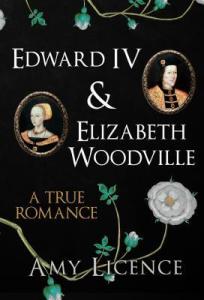
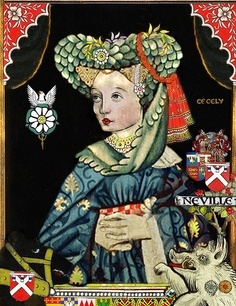
Biography: Cecily Neville, Duchess of York

cecily_neville_originalAlso known as “the Rose of Raby” and “Proud Cis”. (Born May 3, 1415-Died May 31, 1495). Daughter of Ralph Neville, 1st Earl of Westmorland and Joan Beaufort. Married to Richard Plantagenet 3rd Duke of York. Mother of Anne, Duchess of Exeter, Edward IV, King of England, Edmund, Earl of Rutland, Elizabeth, Duchess of Suffolk, Margaret, Duchess of Burgundy, George, 1st Duke of Clarence and Richard III, King of England.
Cecily Neville was the mother of two kings of England, Edward IV and Richard III. She was known for her piety and her pride.

Cecily Neville was the daughter of Ralph Neville, 1st Earl of Westmorland and Joan Beaufort. Her paternal grandparents were John Neville, 3rd Baron Neville de Raby, and Maud Percy, daughter of Henry de Percy, 2nd Baron Percy. Her maternal grandparents were John of Gaunt, 1st Duke of Lancaster, and his third wife Katherine Swynford, thus making her a great granddaughter of King Edward III on her mother’s side of the family. She was born on May 3, 1415 at Raby Castle in Durham thus gaining the nickname “the Rose of Raby”. Her father Ralph Neville was granted the wardship of a young Richard Plantagenet, 3rd Duke of York and in 1424, she was betrothed to Richard. When Ralph Neville died in 1425, his widow Joan Beaufort was able to maintain the wardship of Richard Plantagenet. In October 1429, Richard and Cecily were married; their first child Anne was not born until August 1439.

Richard was made king’s lieutenant and governor general of France in 1441; Cecily and Anne moved to Rouen to be with him. They had a son Henry but he would die soon after he was born. On April 28, 1442, their son the future Edward IV was born in Rouen. He was baptized shortly afterward, which caused both his cousin Richard Neville, Earl of Warwick and his own brother George Duke of Clarence to question if he was actually the son of Richard Plantagenet. These claims were dismissed as attempts to remove Edward from the throne. Richard Plantagenet always acknowledged Edward as his own son. In total, Cecily and Richard would have 13 children including Edward IV, George Duke of Clarence and Richard III.

Richard had an enemy at court and that was Edmund Beaufort, 2nd Duke of Somerset, a cousin of Cecily Neville. Richard did not like how close Somerset was to the king and to Margaret of Anjou. In 1454, Henry VI had a mental breakdown and it was Richard, not Somerset, who was made Lord Protector and Richard threw Somerset in prison. Richard was removed from the post in 1455, all of his reforms were changed and Somerset was released from prison. This infuriated Richard and so he decided to march against Somerset at the First Battle of St. Albans where Somerset was killed. During this time, Cecily and her children were living in Ludlow Castle, even when Richard fled to Ireland and the European continent. In November 1459, Cecily travelled to London to plead for her husband’s cause to Parliament. Richard lost all of his titles but Cecily was able to get a grant of 600 pounds for her efforts in order to provide for her children.

1460 was a year of change for the York family. When the Yorkist army won at the Battle of Northampton in July 1460, Cecily moved her family to London where they stayed with the lawyer John Paston. Richard and his heirs were declared Henry VI’s successors in the Act of Accord, which made Cecily a queen-in-waiting. This pushed Edward of Westminster, Prince of Wales, out of the line of succession, which angered his mother Margaret of Anjou. Margaret led the Lancastrian army against the Yorkist army at the battle of Wakefield on December 30, 1460, where Richard Duke of York and his son Edmund Earl of Rutland were killed. Cecily sent her young sons George and Richard to the court of Philip II duke of Burgundy for their protection, making Philip an ally of the Yorkist cause.

Cecily’s son Edward took up the Yorkist cause with the help of Richard Neville, Earl of Warwick. Edward was able to defeat the Lancastrians and become king, making Cecily mother of the king. In 1461, Cecily included the royal arms of England on her own coat of arms, which hinted that her husband was the rightful king of England. When Edward married Elizabeth Woodville in 1464, he built a new queen’s quarter for Elizabeth and let Cecily stay in the old queen’s quarters. When Warwick and Cecily’s son George rebelled in 1469 against Edward, Cecily worked hard to get both sides to reconcile, which briefly happened. Warwick and George went to France and joined the Lancastrian cause. In 1470, the Lancastrian cause under Warwick overthrew Edward and placed Henry VI back on the throne. It only lasted for six months and on April 14, 1471, Edward came back to the throne and Warwick was killed.

Edward never really trusted George again and on February 18, 1478, George was executed for treason at the Tower of London. This must have been a difficult moment for Cecily as one son had another executed for treason. Edward IV would die suddenly on April 9, 1483, leaving his young son Edward V as the next king of England. He was 13 and his younger brother Richard was 10 years old. Richard, Cecily’s youngest son and the boys’ uncle, became their Lord Protector. He had the boys placed in the Tower and they were never seen again. There was an enquiry into Edward’s marriage to Elizabeth Woodville and they found that it was invalid and an Act of Parliament called the Titulus Regius declared that the Princes in the Tower were illegitimate and that paved the way for Richard to become Richard III on July 6, 1483. Cecily got along rather well with Richard’s wife Anne Neville and would often discuss religious matters with her, until Anne died.

On August 22, 1485, Richard III was killed at the Battle of Bosworth Field and Henry Tudor became Henry Tudor. Cecily’s husband and all four of her sons were dead by 1485, Edward IV was the only one by natural causes. On January 18, 1486, Cecily’s granddaughter Elizabeth of York married Henry VII and help bring forth the Tudor Dynasty. At this time, Cecily devoted her life to religious duties and she gain a reputation for her piety. Cecily Neville never married again and on May 31,1495, she died. She was buried in the tomb with her husband Richard and their son Edmund at the Church of St Mary and All Saints, Fotheringhay, Northamptonshire.