
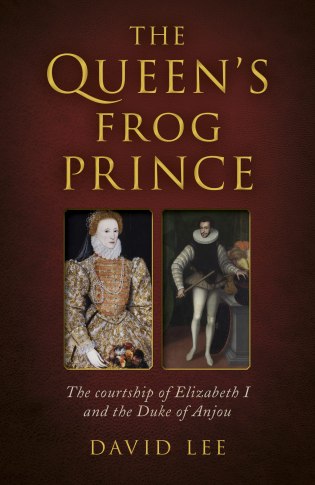
 Romances in the Tudor era are legendary for their effects on English, European, and world history. From international matches to domestic love stories, the Tudors had a way of capturing our attention with whom they married. The one Tudor whose relationships caught everyone’s attention just as much as Henry VIII is his daughter with Anne Boleyn, Elizabeth I. The legendary “Virgin Queen” did have some men who caught her eye and some that she even considered marrying. There was Robert Dudley, but the one who may surprise a lot of people is the French prince, Francis Duke of Anjou. So how did this whirlwind romance begin and why did Elizabeth choose to stay single instead of marrying to secure a strong alliance with France? In his latest book, “The Queen’s Frog Prince: The Courtship of Elizabeth I and the Duke of Anjou,” David Lee explores the heart of this long-forgotten international romance.
I would like to thank Chronos Books for sending me a copy of this book. I am always looking for a new book about the reign of Elizabeth I. I will admit that I was one of those people who did not take her relationship with the Duke of Anjou as a serious infatuation, but when I heard about this title, I wanted to see if I could be proven wrong.
Unlike many books dedicated to the reign of Elizabeth I, Lee begins in 1579, when the relationship between Elizabeth and the Duke of Anjou began. Elizabeth knew that if she was going to marry anyone, it had to be soon or there would be no Tudor heirs to inherit the throne. The top contender for her heart, Robert Dudley, betrayed the queen and married Lettice Knollys behind her back in 1578. The following year, she was presented with an opportunity to marry the younger brother of the King of France, Francis Duke of Anjou.
The bulk of this book examines the correspondence between Elizabeth I and the Duke of Anjou through their letters from 1579 until the end of the relationship in 1581. When we think about Elizabeth I and her international romantic relationships, we often have an image of a stoic queen who wants to keep relationships with other countries cordial even when she rejects their advances. These letters are so heartfelt and present a new side of Elizabeth I which I was not expecting to see, especially not for someone who was not Robert Dudley. There was true passion and love between the queen and her frog prince, but it was not meant to be as religious differences, her age, and the question of Elizabeth’s ability to rule with a man by her side made it impossible for the relationship to continue.
Lee has presented a heartbreaking tale of love and loss between a queen and her frog prince. He has done meticulous research to show a different side of Elizabeth I that I did not know even existed. It begs the question if nothing was standing in her way, would Elizabeth have married the Duke of Anjou and how would that have affected English and European history as a whole?
If you want a book that makes you question the end of Elizabeth I’s reign and her last international romance, I highly recommend you read, “The Queen’s Frog Prince: The Courtship of Elizabeth I and the Duke of Anjou” by David Lee.
 In history, the stories of women closest to those who sat on the throne tend to shine a bit brighter than others. Their tales give us great insight into how their respective countries were run and how dangerous it could be to marry someone with royal blood in their veins. However, some of the tales get lost in the annals of the past, only to be discovered much later. One of those tales is the story of Cecily Bonville- Grey, the wife of Thomas Grey Marquis of Dorset. In her own right, an extremely wealthy woman, her marriage into the Grey family would help define the succession issue during the late Tudor dynasty. Her story is finally told in Sarah J. Hodder’s latest book, “Cecily Bonville-Grey- Marchioness of Dorset: From Riches to Royalty.”
 A man who was young and had charisma would attract the attention of the Virgin Queen herself, yet that attention came with a price. The young man could not do what he desired and was buried in debt. His anger could not be quenched and he would end up rebelling against the very queen who brought him so much glory and honor. This rebellion would lead to his execution. The man’s name was Robert Devereux, 2nd Earl of Essex, and his story is told in Sarah-Beth Watkins’ latest bite-size biography, “Elizabeth I’s Last Favourite: Robert Devereux, 2nd Earl of Essex”.
 The life of a medieval princess was not a life of luxury that we often see in fantasy films. It can be filled with lovely gowns and castles, but it can change in an instance. Take, for example, the lives of the daughters of King Edward IV and Elizabeth Woodville. One minute their father was King of England and life was comfortable; the next minute, they were in the sanctuary, hoping and praying that they would be able to be reunited with their father one day. Their lives were planned out for them when their father was alive, but when Edward IV died unexpectedly in April 1483, the princesses found their world taking another turn. We know what happened with the eldest daughter, Elizabeth of York, as she married Henry VII and became the first Tudor queen, but what about her sisters? In her second book, “The York Princesses: The Daughters of Edward IV and Elizabeth Woodville”, Sarah J. Hodder explores what happened to Elizabeth of York and her sisters once the House of York fell and the Tudors became the new dynasty.
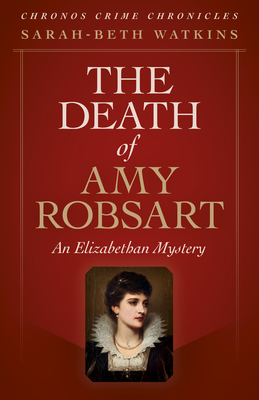 On September 8, 1560, a woman was found dead at the bottom of a flight of stairs inside Cumnor Place. The only visible marks on her body were two wounds on the side of her head, yet her neck was clearly broken. If she was an ordinary woman, her death would not have been remembered through the centuries, yet she was no ordinary woman. She was the wife of Robert Dudley, the man who was considered as one of Queen Elizabeth I’s favorite courtiers. Amy Robsart was a third wheel in the relationship between her husband and the queen, but does that mean that she was murdered? In her latest book, “Chronos Crime Chronicles- The Death of Amy Robsart: An Elizabethan Mystery”, Sarah-Beth Watkins plays detective to uncover the cause of death and the possible motive for those who wanted to see Amy dead.
 The story of the Woodville family has fascinated those who study the Wars of the Roses for centuries. Their mother Jacquetta of Luxembourg married Richard Woodville because she loved him, even though he was the chamberlain of her late husband. Jacquetta and Richard had numerous children, notably Elizabeth Woodville, who would marry the first Yorkist king, Edward IV. Elizabeth and her brothers are often talked about when discussing the Woodville children, however, Elizabeth had several sisters who married relatively powerful men. The stories of the sisters are rarely told, until now. Sarah J. Hodder has decided to take on the task of exploring the lives of these hidden figures in her debut book, “The Queen’s Sisters: The Lives of the Sisters of Elizabeth Woodville”.
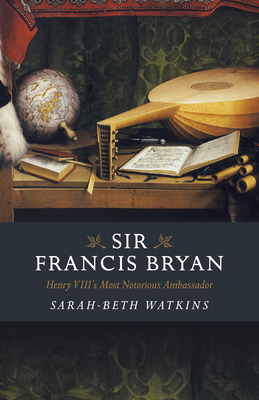 During Henry VIII’s reign, those who were most loyal and the closest to the king did not often last long to enjoy the rewards of his friendship. However, there was one man who stayed in relatively good favor with the king throughout his reign. He was a sailor, a soldier, a diplomat, and acted as an English ambassador mostly in France. He was a cousin to a few of Henry VIII’s wives, a lover of wine, and an infamous womanizer. The name of this rather extraordinary man was Sir Francis Bryan and the story of how he survived the tumultuous reign of Henry VIII is told in Sarah-Beth Watkins’ latest biography, “Sir Francis Bryan: Henry VIII’s Most Notorious Ambassador”.
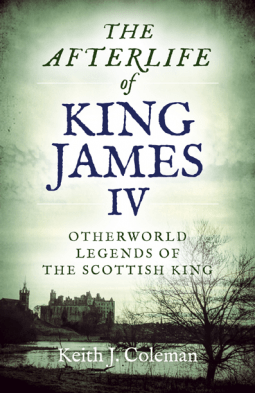 A king who died on the battlefield and his remains were never found. His story and his legacy went through many revisions throughout history. This sounds like a certain English king, King Richard III, but this story actually takes place decades after Richard’s death in Scotland. This is the story of King James IV of Scotland, who died at the Battle of Flodden in 1513. It was this event and how James IV was viewed afterward which Keith J. Coleman explores in his book, “The Afterlife of King James IV: Otherworld Legends of the Scottish King”.
 The children of Henry VIII have been the center of historical studies for centuries. Edward VI, Mary I, and Elizabeth I were all considered Henry’s “legitimate” children and were able to obtain the crown of England. Henry Fitzroy was the illegitimate son of the king, but he was still able to gain titles and a good marriage before he died. They all had something in common; they were all recognized by their father, Henry VIII. However, there was another child who many believed to have been the daughter of the king. The name of this intriguing lady was Lady Katherine Knollys and her story comes to life in Sarah-Beth Watkins’ book, “Lady Katherine Knollys- The Unacknowledged Daughter of King Henry VIII”.
 Love stories tend to be rare during the Tudor dynasty. They are often of royal women marrying men well below their station in life and then the ruling monarch throwing them in the Tower until they ended up divorcing or dying. Nothing really romantic about these stories. However, there is one story that breaks the mold of disastrous love. It is the story of Mary Tudor, the sister of King Henry VIII and the Dowager Queen of France, who married the charming knight and best friend of her brother, Charles Brandon. Their story is often told in historical fiction novels, but Sarah-Beth Watkins decided to dive deep into the lives of these two lovebirds, before and after they were married, in her book, “The Tudor Brandons: Mary and Charles- Henry VIII’s Nearest and Dearest”.
 Adventures of a Tudor Nerd