
 The Tudor dynasty was full of colorful characters and events that defined the era. Their lives were full of love affairs, marriages, births, wars, tragedies, and triumphs. In numerous books about these monarchs and this period in history, we have seen the significant events that defined the era, but what about lesser-known social events that these monarchs participated in. The bulk of the research into this dynasty focuses on those who ruled, from Henry VII to Elizabeth I, because their lives give us a brilliant insight into what it was like to live in the glittery Tudor court. In “The Tudor Socialite: A Social Calendar of Tudor Life,” Jan-Marie Knights gives her readers a glimpse into the social calendar of the Tudor rich and famous.
I want to thank Amberley Publishing for sending me a copy of this book. When I saw the title of this book, I was intrigued. I was hoping for a book that would include different religious holidays and festivals that the Tudors would have known.
Knights starts her book by giving her readers a brief history lesson from Richard II to Edward IV and the Wars of the Roses in five pages; talk about a whirlwind of an introduction. Readers then see how Knights will format her book by looking at each Tudor monarch with a broad lens and then taking a diary-style approach to their reigns to explain the significant events of their rules. I enjoyed how Knights included more minor pageants and visits that each monarch took part in and cases that average Tudor fans do not hear about as much.
I did have a few issues when I was reading this particular title. I wouldn’t say I liked that the entries for each event were written in the present tense; I know it was supposed to be a diary of the monarch, but as a nonfiction book about a historical period, it threw me for a loop. I also wish we saw more of the liturgical calendar and how it corresponded with the other events during each monarch’s reign, especially during the reformation when the Tudors wrestled between Catholicism and Protestantism. Finally, I do wish Knights would have included either footnotes or endnotes, especially with lesser-known events, so that readers could explore the social events themselves.
Knights has done her research, but I think it needed to be refined and maybe told in a different style to better connect with her audience. Overall, as an overview of the reigns of the Tudor monarchs and the critical events that defined their lives, this book does a decent job for those new to the Tudor dynasty. If you know your Tudor history, this might not be the book for you, but you may learn about a pageant or a strange case. If you are a novice Tudor fan, you might enjoy reading “The Tudor Socialite: A Social Calendar of Tudor Life” by Jan-Marie Knights.
 For a woman from the past to leave a mark in history books, she had to have lived an extraordinary life. Some have notorious reputations, or they were considered women of immaculate character. In Foxe’s Book of Martyrs, there was one who was “a woman of noble wit.” She was the daughter of an ancient gentry family who had connections with the court of Henry VIII. Her large family would navigate political turmoil and religious reformations to survive. The name of this wife and mother was Katherine Raleigh, and her tale is told in Rosemary Griggs’ debut novel, “A Woman of Noble Wit.”
 A Woman of Noble Wit
 Author Bio:
 Today, I am pleased to welcome Sylvia Barbara Soberton back to discuss another forgotten Tudor woman, Gertrude Courtenay, who is the subject of her latest book, “The Forgotten Tudor Women: Gertrude Courtenay. Wife and Mother of the last Plantagenets”.
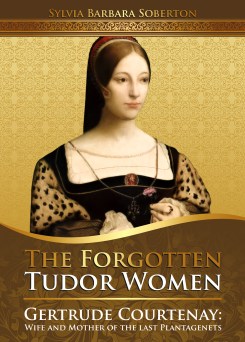 About the Book
 When it comes to studies into the Tudor dynasty, many different approaches have been taken in the past. We have examined every monarch, their spouses, how they lived, what they wore, and the various political events that defined the dynasty. The list is endless to the different studies that have been done with the Tudors, yet there are still new areas of study that are being explored. One of those areas of study is how individuals with disabilities survived in the past. How did society treat those who had disabilities, and what rights did they have according to the laws of the land? In her first non-fiction book, “Disability and the Tudors: All the King’s Fools,” Philippa Vincent-Connolly explores the lives of famous fools and monarchs with disabilities to discover how they were treated by Tudor society.
 When we think about love, we have ideas about how people fall in love through dating and wooing one another. Sweet words and gestures. Flowers and chocolate. Dates at fun venues and romantic dinners. This is a more modern interpretation of romance and love, which was vastly different than the concept of courtly love that was common in royal circles in medieval Europe. What exactly was courtly love, and how did it play a role in the Tudor dynasty? Sarah Gristwood explores this topic in her latest nonfiction book, “The Tudors in Love: The Courtly Code Behind the Last Medieval Dynasty.”
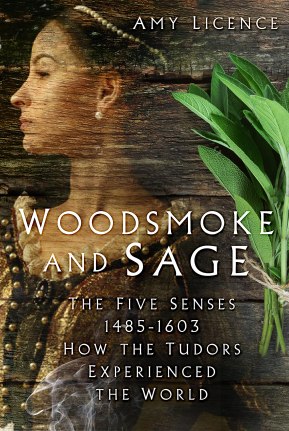 When we study history, we tend to focus on specific dates, certain people, and the stories that transformed countries forever, no matter how much of an impact they made. What is difficult about studying history is understanding how they experienced life. What did they see? How did they communicate? What did they hear during a typical day? What smells wafted through the air? How did their view on how the body worked affected what they ate and how they cured their illnesses? In her latest nonfiction book,” Woodsmoke and Sage: The Five Senses 1485-1603: How the Tudors Experienced the World”, Amy Licence has taken on the challenge of explaining the Tudor world that they knew through their senses.
 The year is 1558, and Queen Mary I is dying. England is engaged in a war between the Reformation and Catholicism. Caught in the middle is an older man named Robin Lewis, who is being taken to London to face his death as a heretic. Fearful that his story may never be told, Robin Lewis tells his captor his tale through the reigns of three Tudor rulers, Henry VIII, Edward VI, and Mary I. Can his story save his life from certain destruction, or is Robin doomed for all eternity? This is the premise of Karen Heenan’s second book in The Tudor Court series, “A Wider World.”
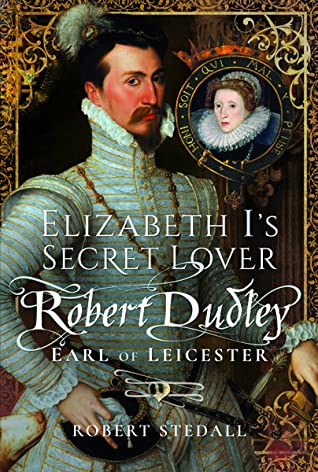 The last Tudor monarch, Queen Elizabeth I, was known for many things, but her main legacy is that she never chose to marry anyone. She was the infamous “Virgin Queen”. However, there were those around her who manage to capture her attention and her admiration for a time. The most famous of these men was Robert Dudley, Earl of Leicester. He was a massive supporter of the arts and the Protestant faith, gaining prestige and praise from his highly exalted monarch. Yet, his life and his relationship with his wives, his enemies, and Elizabeth I was full of dangers and numerous scandals. Who was this man who wooed the heart of the most eligible woman in all of 16th century Europe? Robert Stedall investigates the relationship between these two lovers destined to never marry each other in, “Elizabeth I’s Secret Lover: Robert Dudley, Earl of Leicester”.
 The story of the Tudor dynasty has been told from many different angles. Each monarch has been explored through lenses like social and political history numerous times. However, there is a new approach that is coming into the forefront of historical research and that is the focus on the medical history of the Tudors. Each Tudor monarch, from Henry VII to Elizabeth I, had some sort of bout with illness that would drastically alter the course of their reigns and the future of the dynasty. In Sylvia Barbara Soberton’s latest book, “Medical Downfall of the Tudors: Sex, Reproduction and Succession”, she explores the more intimate aspects of this turbulent dynasty to discover the truth about why they fell.
 In 1547, young Prince Edward is having the time of his life studying and hoping to one day take part in a tournament. He has not a care in the world. That is until his beloved father King Henry VIII passes away, and the 9-year-old boy is now Edward VI, King of England. He must navigate family drama between his older half-sister Mary Tudor and his uncles, Edward and Thomas Seymour while maintaining order throughout the kingdom. To top it all off, he is trying to reform the entire country and convert Catholics into the Protestant faith. His short life and reign are portrayed in Janet Wertman’s third book in The Seymour Saga, “The Boy King”.
 Adventures of a Tudor Nerd