
 A princess born to a king and his second wife lost her title and legitimacy when her father decided that her mother, Anne Boleyn, needed to die. Elizabeth Tudor knows the meaning of resilience as she survived her childhood during her father King Henry VIII’s reign. Now that her father is dead Elizabeth is at the mercy of her half-siblings Edward and Mary, plus any scheming man who wants to marry her and get closer to the crown. Can Elizabeth survive her siblings’ reigns or is she destined to be locked in the Tower to await her ultimate fate like her mother? Janet Wertman explores the life of Elizabeth Tudor in her latest series Regina and the first novel, “Nothing Proved” explores Elizabeth’s turbulent adolescence.
I would like to thank Janet Wertman for sending me a copy of this novel. I have always been a big fan of novels about Elizabeth I and so when I heard that Wertman was writing another Tudor series all about Elizabeth I, I jumped at the chance to read it.
From an early age, Elizabeth Tudor swore she would never marry, especially after seeing how her mother Anne Boleyn, and her numerous stepmothers were treated by her father. Now her father King Henry VIII is dead, her brother Edward VI is King of England, and she is separated from the stepmother that she loved Katherine Parr after several unwanted incidents with Katherine’s husband Thomas Seymour. Elizabeth never got to see her beloved stepmother again and Thomas has his eyes on marrying Elizabeth or possibly taking control of the king. Bad mistakes on both parts, but it does not mean that Elizabeth is safe from scandal as Edward’s council believes that Elizabeth was involved in the plot against the king.
Elizabeth may have survived Edward’s reign, but her step-sister Mary’s reign is a different case. Mary is a devout Catholic who does not trust Elizabeth. She believes that Elizabeth is part of the plots to overthrow Mary and become the next queen of England. These accusations are dangerous and will place Elizabeth in the Tower. Luckily, Elizabeth is not alone as she has her ladies in waiting as well as friends like Robert Dudley and William Cecil, who is the second protagonist in this novel. It was a nice touch to add William Cecil’s point of view because he rarely gets a starring role in historical fiction novels so it was interesting to see his perspective on matters leading up to the moment Elizabeth becomes queen.
I found this an enjoyable novel that explored Elizabeth’s adolescent years which were some of her most turbulent. We can see her signature resilience and the formation of her close-knit circle of allies and friends that will become so important during her reign. If you are a fan of Elizabethan novels, I think you will thoroughly enjoy, “Nothing Proved” book one in the Regina series by Janet Wertman.
 Have you ever had an incident that was so impactful that it defined your entire life from that moment on? For Anne Howard, Countess of Arundel, it was the death of her younger brother, George. She vows vengeance against those who were behind his untimely demise. In the present day, Sarah must return to her godmother’s home, which holds a lot of memories, mostly painful. It is in the halls of this ancient house that Sarah meets Anne through a book of poetry. Can these two women find peace or will the truths bring even more disasters? Clare Marchant tells the stories of these two women, the tragedies and the poetry that unite them, in her latest novel, “The Shadow on the Bridge.”
 When we think about live theater, we often think about big actors, elaborate sets, and glittery costumes. The world of the Tudor theater, especially during the reign of Elizabeth I, was similar in some ways, but there was an element of danger. Richard Shakespeare, an actor in the Lord Chamberlain’s Men company and a former thief, knew the dangers of Tudor theater life better than anyone. When a manuscript is stolen, suspicion lands squarely on Richard’s shoulders. Can Richard clear his name, or will it be his final curtain call? Bernard Cornwell tells the story of Richard Shakespeare and the debut of A Midsummer’s Night Dream in his novel, “Fools and Mortals.”
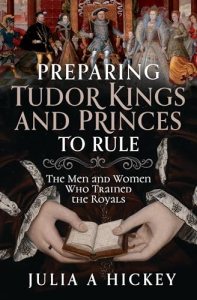 In life, when it comes to a new skill or job, you must be trained to become good at it. The same can be said for the monarchy, which in a sense is a job that encompasses one’s entire life. You have to understand different languages, rhetoric, the arts of dancing, and music, as well as diplomacy and physical activities if you want to rule a nation. It may seem like a lot for one person to handle, but from the moment of their birth, a prince or princess has a team of people behind them to make sure that they are ready to either rule their home country or create an alliance with other nations. The Tudors knew how important educating their future monarchs was for the survival of the dynasty. Julia A. Hickey examines the people behind the teams raising the future Tudor monarchs in her book, “Preparing Tudor Kings and Princes to Rule: The Men and Women Who Trained the Royals.”
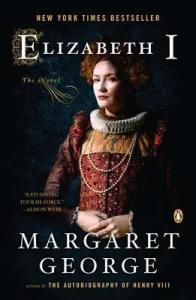 The stories of queens have been told in numerous ways for centuries, but one of the most famous queens in human history is the Virgin Queen, Elizabeth I. The daughter of Anne Boleyn and Henry VIII who famously decided not to marry any man and instead devout her entire life to serve England’s people. That does not mean she was subservient to others she demanded respect and adoration from her subjects. Most stories of Elizabeth I begin in her golden years, but what could a novel about the queen’s silver years tell us about her personality, her reign, and the people who choose to follow or rebel against the famous queen? Margaret George gives her readers an innovative look at the titular queen in her novel, “Elizabeth I.”
 English royal history is filled with fantastic stories of triumphs and tribulations, grand romances, and divorces that shook the foundations of the monarchy. It is also filled with struggles over religion, wars both inside England and with foreign nations, and heartbreaking child losses. We often think about the spouses of the Plantagenets and the Tudors when we think about royal romances, but we shouldn’t forget about the dynasties that came after, like the Stuarts. So how did the Stuart dynasty come to be and how did the unions between monarchs and their significant others affect the dynasty and England? Heather R. Darsie explores this often-overlooked dynasty and the stories of their marriages and romances in her latest book, “Stuart Spouses: A Compendium of Consorts from James I of Scotland to Queen Anne of Great Britain.”
 Have you ever read about a historical figure and wondered what it would be like to interact with them in the present day? How would they deal with modern problems and technology? Could they function in the 21st century or would they become overwhelmed? And even if they could come to the 21st century, how would it affect their timeline and history? This intriguing premise plays out in Maria Vetrano’s novel, “Queen Bess: A Tudor Comes to Save America,” which sees Queen Elizabeth I coming forward about 400 years in time to become the President of the United States in the 2028 election.
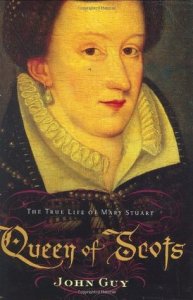 Women rulers in the past have either been praised or pushed down. They are either seen as ideal women or power-hungry villains. One such figure who suffered the worst from having her image raked through the mud for centuries was Mary Stuart, known throughout history as Mary, Queen of Scots. The Queen of Scotland who was married three times, was once the Queen of France, the mother of the future King of both England and Scotland, accused of having a hand in her second husband’s murder, plotted to overthrow Elizabeth I, and was executed for treason. Her story is well known, but what does the archival information tell us about Mary Stuart? John Guy scoured the archives to find the truth about this queen and presented his research in his biography, “Queen of Scots: The True Life of Mary Stuart.”
 As humans, we love a good love story. Tales of courtships, grand confessions of love, over-the-top weddings, and marriages that last decades. These seem like high expectations, especially when we compare these expectations to royal courtships of the past. The majority of royals married and they were more focused on political matches instead of love. However, few chose a different path altogether, they decided to be single. One of the most famous monarchs with a single status was Queen Elizabeth I of England, the Virgin Queen So why did Elizabeth stay single throughout her reign, and how did she navigate her numerous suitors? Carol Ann Lloyd tries to answer these questions in her latest book, “Courting the Virgin Queen: Queen Elizabeth I and Her Suitors.”
 Treason is the crime of betraying one’s country or monarch by trying to overthrow the government or kill a sovereign. While many English dynasties dealt with treason in their ways, the most infamous were the Tudors and how they dealt with the nobility. By the end of 1572, there were no more dukes in England, until 1623 when George Villiers became the Duke of Buckingham. What was classified as treason during the Tudor dynasty and why did the members of the nobility have to die? Helene Harrison hopes to answer these questions in her latest book, “Tudor Executions: From Nobility to the Block.”
 Adventures of a Tudor Nerd