
 When we think about live theater, we often think about big actors, elaborate sets, and glittery costumes. The world of the Tudor theater, especially during the reign of Elizabeth I, was similar in some ways, but there was an element of danger. Richard Shakespeare, an actor in the Lord Chamberlain’s Men company and a former thief, knew the dangers of Tudor theater life better than anyone. When a manuscript is stolen, suspicion lands squarely on Richard’s shoulders. Can Richard clear his name, or will it be his final curtain call? Bernard Cornwell tells the story of Richard Shakespeare and the debut of A Midsummer’s Night Dream in his novel, “Fools and Mortals.”
This is one of those books that I found while going used book shopping. I did not know that Cornwell wrote a novel about Elizabethan England, so I knew I wanted to read it. I wanted to see how well Cornwell could write an Elizabethan novel.
Our main character is Richard Shakespeare (based on the historical figure), the estranged younger brother of William Shakespeare. He is an actor himself, primarily with small roles and women roles, but as he gets older, he wants more prominent male roles. Richard is not exactly thrilled about his brother William’s rising star as William is kind of a jerk in this novel. The Lord Chamberlain’s Men are given a grand opportunity to perform at the wedding of Lord Hundson’s daughter. William has decided to premiere a brand new play called A Midsummer’s Night Dream, which means this novel is full of actors trying to figure out this new production in time.
To top it off, one of William’s newer plays was taken by a disgruntled player to curry favor with another playhouse. William thinks that Richard stole his manuscript, so Richard must do everything in his power to get the play back and restore some semblance of a relationship with his brother. Along the way, he encounters a maid named Silvia, who he falls in love with, and hardcore Protestants who believe that players are sinners in the eyes of the Lord. To top it all off, it seems like William has a book in his possession that is considered dangerous and makes the thugs think he is Catholic. Richard has to focus on getting the manuscript back and rehearsing the new play and try not to get killed.
Richard Shakespeare is one of those characters that is a little rough around the edges, but once you get to know him, he is a loveable person. Cornwell created such a colorful world of the Elizabethan theater that any Tudor or Shakespearean nerd will love. If you want a delightfully unique take on Elizabethan England and the life of the players in the early stages of the English theater, I would suggest you read “Fools and Mortals” by Bernard Cornwell.
 Have you ever had a dream for your life that seemed so impossible that you would do anything to make sure it happened? Whether the matter of age or gender or even circumstances of one’s birth, there is always that one dream that keeps you going even during the most difficult times. Sander Cooke and his best friend Joan Buckler have dreams that seem impossible, especially living in Elizabethan England. Sander wants to stay young so he can continue to act in female roles in plays whereas Joan wants to be a natural philosopher even though she is a woman. Can they achieve their dreams or will they be doomed to fall to greater powers? The story of Sander and Joan is told in Nicole Galland’s latest novel, “Boy.”
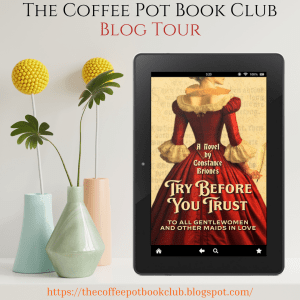 I am pleased to welcome Constance Briones to my blog today to share an excerpt from her novel, “Try Before You Trust: To All Gentlewomen and Other Maids in Love.” I would like to thank Constance Briones and The Coffee Pot Book Club for allowing me to be part of this blog tour.
 Blurb:
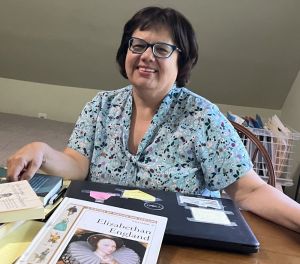 Author Bio:
  The Tudor dynasty was a time of significant political change, but it was also a time of tremendous religious change. Each Tudor monarch had a different view on the divide between Catholics and Protestants. Although we have an idea of what it might have been like during the reign of Mary I, the way Elizabeth I tackled the issue of religion during her reign. One story of how Catholics were treated in the so-called “Golden Age” of Elizabethan England is the story of Margaret Clitherow. She helped hide a couple of Catholic priests and ended up suffering for her actions by being crushed to death. Tony Morgan tells her story and how she became a Catholic martyr in his book, “Power, Treason, and Plot in Tudor England: Margaret Clitherow, an Elizabethan Saint.”
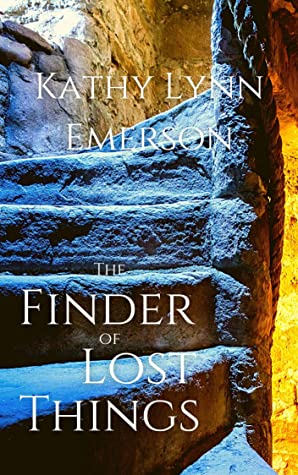 Blanche Wainfleet, a merchant’s wife living in England in 1590, has a reputation for finding items that others have deemed lost. Blanche has a gift for finding mementos important to others, from lost handkerchiefs to pets. However, there is one thing that she is searching for that will prove her greatest challenge yet, finding the truth about her sister’s murder. Blanche’s sister Alison fell in love with a Catholic man and converted to the Catholic faith when there was a war between Catholicism and Protestantism. To uncover the truth, Blanche must infiltrate the Otley family who took Alison in during her final days, but will she discover the truth and come out of the ordeal alive? This is the premise of Kathy Lynn Emerson’s latest novel, “The Finder of Lost Things.”
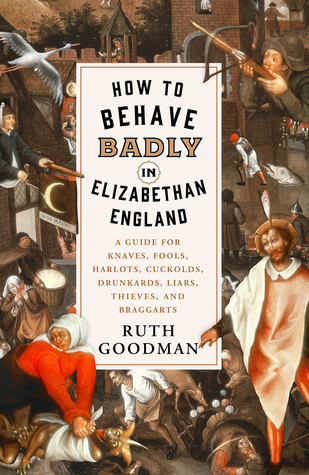 In many books about the different mannerisms and routines of different dynasties, we tend to see how the average person lived in the most prim and proper manner. How they avoided trouble at all costs to provide the best life that they could for their families. Yet, we know that there were those who did not adhere to the rules. They chose to rebel against the natural way of life. Every social echelon had their own rule-breakers, but what were these rules that they chose to break? How are these troublemakers of the past similar and different from our modern-day rebels? Famed experimental archeologist and historian Ruth Goodman takes her readers on a journey through the Elizabethan and the early Stuart eras to show how the drunkards, thieves, and knaves made a name for themselves. The name of this rather imaginative book is “How to Behave Badly in Elizabethan England: A Guide for Knaves, Fools, Harlots, Cuckolds, Drunkards, Liars, Thieves, and Braggarts”.
 Queen Elizabeth I, “the Virgin Queen”, was the daughter of King Henry VIII and his second wife Anne Boleyn. She was the step sister to Edward VI and Mary I. Her story is full of so many twists and turns, starting from the very beginning, that it is almost a miracle that she lived and became queen. So what type of trials and tribulations did Elizabeth go through to become one of the most successful rulers in English history? What was her life like? Anne Somerset decides to explore these questions, and more, in her book, “Elizabeth I”.
 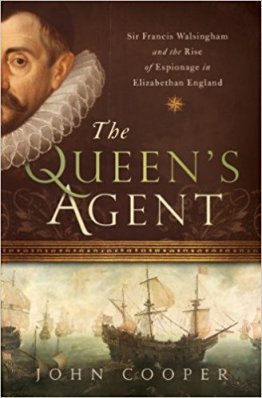 When we think about spies, we often think of modern examples like the ones we see in movies. However, spies and their spymasters have been working hard to protect their countries and their rulers for centuries. For Queen Elizabeth I, the only man she could trust to be her spymaster was Sir Francis Walsingham. But is it fair to call Walsingham as only Elizabeth’s “spymaster”? That is the question that John Cooper tries to answer in his book “The Queen’s Agent: Sir Francis Walsingham and the Rise of Espionage in Elizabethan England”. Who was Sir Francis Walsingham and what did he do to help his queen and his country?
 Adventures of a Tudor Nerd