
 The House of Windsor has been attracting worldwide attention in recent decades with scandals, deaths, weddings, and the birth of royal children. As living symbols of England, the Windsors are seen as an above-average family with numerous jobs and responsibilities. We know their names; King George VI, Queen Elizabeth II, Prince Phillip, Prince (now King) Charles, Princess Diana, and Prince William. We know their stories from the numerous books, tabloids, and documentaries about their lives, but what about their lives when they go home to relax? Gareth Russell peels back the gilded curtain to explore the life of Elizabeth Bowes-Lyon, lovingly known as the Queen Mother, in his latest biography, “Do Let’s Have Another Drink: The Singular Wit and Double Measures of Queen Elizabeth The Queen Mother.”
This is not my usual area of interest, especially for my blog, but I have always wanted to learn more about the House of Windsor. A few years ago, I read “The King’s Speech” about King George VI, and I wanted to learn more about his wife, Queen Elizabeth, The Queen Mother. When Gareth Russell announced that he was writing this biography about the Queen Mother, it sounded enchanting, and I wanted to read it.
This biography is not like your typical biography. It goes in chronological order, but unlike others that include copious details of the person’s life, Russell decided to give his readers a different experience by telling the Queen Mother’s story in 101 vignettes, one for each year of her life. It is a unique and fun way to tell the tale of a member of the royal family, especially Queen Elizabeth the Queen Mother, who lived through both World Wars and saw her husband and daughter become King and Queen of England, respectively.
The short stories of her life as a young Elizabeth Bowes-Lyon were heartfelt and full of personality. I learned some fun facts about her early life, such as George VI had to propose to Elizabeth three separate times until she said yes, to the relief of George’s mother, Queen Mary. Elizabeth had a colorful way of looking at life and was not afraid to speak her mind, especially after a few cocktails or what she would call “drinky-poos.” Her life drastically changed when her brother-in-law Edward VIII abdicated to marry Wallis Simpson, leaving the throne to his brother George VI and Elizabeth, the new King and Queen of England.
As Queen of England and later the Queen Mother, we see her tenacity and humorous side emerge as Elizabeth could be herself. She was a lover of life, and even though she had feuds with members of her family, such as Wallis Simpson and Princess Diana, she truly loved and fought for her family until the very end of her long life.
Russell does a magnificent job telling the story of Queen Elizabeth the Queen Mother thoughtfully and engagingly. The stories included in this book range from utterly hysterical to gut-wrenching, with every other emotion in between. Another masterpiece by Gareth Russell, “Do Let’s Have Another Drink: The Singular Wit and Double Measures of Queen Elizabeth The Queen Mother,” is the perfect gift for fans of the English Royal Family.
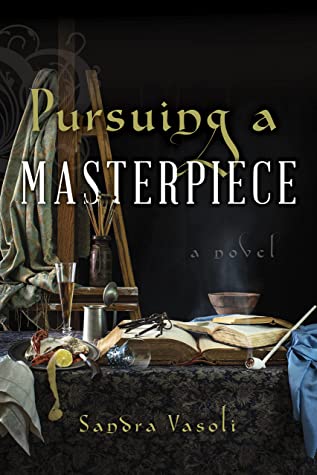 What if you found information about a mysterious portrait that would radically change how we view history forever? Who would you tell? When Zara Rossi entered the Ancient Manuscripts Room at the Papal Archives in Rome, she never imagined how a single letter would change her life and the Tudor community. Each piece of the puzzle unlocks a new story from the past and allows Zara to explore the remarkable tale of this masterpiece. Follow the clues with Zara Rossi to solve this mystery from the past in Sandra Vasoli’s latest book, “Pursuing a Masterpiece: A Novel.”
 The year is 1346, and numerous English ships have landed on the shores of France. King Edward III, his son Edward of Woodstock, and his lords launched the first stage of what would be known as the Hundred Years’ War. Amongst the English royalty, nobility, and regular soldiers, are companies of men who came of their own accord for money and glory. One company of men consists of ten men known as the Essex Dogs, led by Loveday FitzTalbot. They are not like the other groups. They do not fight for money or glory; they fight for each other. In the horrors of war in a foreign land, can the Essex Dogs keep their promise and stay alive? Dan Jones introduces the world to these ten men and the early stage of the Hundred Years’ War in his first historical fiction novel, “Essex Dogs.”
 Three women in one family who shared the same first name saw England change over a tumultuous century. They saw the end of the Plantagenet dynasty and the rise of the Tudors while on the sidelines of great battles. Through heartaches and triumphs, the women of the Woodville family became princesses and queens that would transform the political landscape of England forever. These three women, Elizabeth Woodville, Elizabeth of York, and Elizabeth Grey, were incredible examples of what it meant to be medieval royal women. They are featured in Sarah J. Hodder’s latest book, “The Woodville Women.”
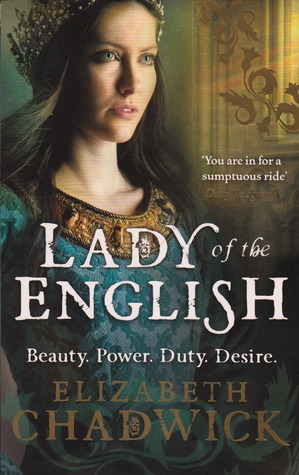 The year 1120 was a horrible year for King Henry I. His only legitimate son William died when his ship, The White Ship, sank in the middle of the night. This tragedy left Henry with one option, his legitimate daughter Matilda, the former Holy Roman Empress, would become Queen of England, and her sons would continue the royal line. Unfortunately, Matilda’s throne was taken by Stephen of Blois, and now Matilda must join forces with her stepmother Her stepmother Adeliza has always stood by Matilda’s side. Still, when she remarries after Henry’s death, Adeliza struggles to support the rightful queen but stays loyal to her new husband, who supports Stephen. Matilda and Adeliza are caught in the middle of the Anarchy in Elizabeth Chadwick’s novel, “Lady of the English.”
 Two queens; one a wife and the mother of kings and the other a virgin who had to fight for the right to rule her country independently. Two women who found friendship and a rivalry between each other with only a sea that divided them and religious discord to drive them apart. Catherine de Medici and Elizabeth I would define what it meant to be female rulers in the 16th century for France and England, respectively. The tales of Elizabeth I and Catherine de Medici have been covered in numerous books, but a joint biography of these two powerhouses is a rarity until now. Estelle Paranque demonstrates how both queens greatly affected each other’s lives in her latest book, “Blood, Fire & Gold: The Story of Elizabeth I and Catherine de Medici.”
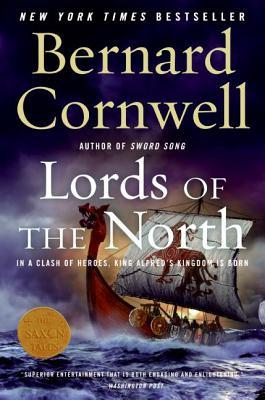 King Alfred and Uhtred have achieved a massive victory over the Danes, and as a reward, Alfred has allowed Uhtred to be free of his allegiance. Now, Uhtred travels north to his home, yet fate throws this hero another curveball. He encounters an enslaved person who claims to be the King of Northumbria named Guthred. This chance meeting sends Uhtred on a journey across the seas against his will and to finally face off against Kjartan the Cruel, who captured his stepsister Thyra. Bernard Cornwell takes his readers on another whirlwind adventure into 9th century England with Uhtred of Bebbanburg in the third novel of the Saxon Stories series, “Lords of the North.”
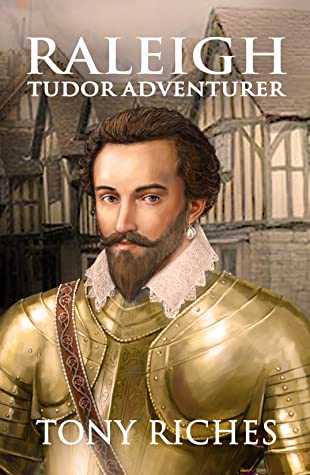 A man who wants to get ahead in any royal court must have an impeccable background and a willingness to serve his monarch no matter the obstacles thrown their way. It takes an extraordinary man who doesn’t have a pristine background to make it in the ruthless world of a royal court, but some men made names for themselves. One such man was an adventurer, a poet, an explorer, and a courtier. He came from humble beginnings and rose to prominence to become known as one of the last true Elizabethans. The man was Sir Walter Raleigh, and his story is told in Tony Riches’ latest novel, “Raleigh: Tudor Adventurer.”
 England is in danger of falling to its Danish invaders. The kingdoms of East Anglia, Northumbria, and Mercia have already fallen; all that stands in the way of complete Danish domination is Wessex and its king Alfred. Yet this king is more of a saint than a warrior, so Alfred desperately needs a man who knows how to fight. A man like Uhtred of Bebbanburg is a skilled warrior even though he doesn’t always see eye to eye with Alfred on matters of faith. When Alfred and his family become fugitives, he must rely on Uhtred to help restore him and his family to ensure Wessex does not fall. This is the premise of book two of The Saxon Stories series by Bernard Cornwell, “The Pale Horseman.”
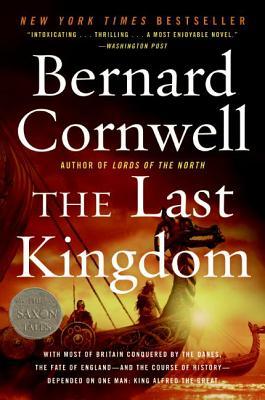 England in the 9th century was a land full of dangers and was deeply divided in the form of four main kingdoms; Northumbria, East Anglia, Mercia, and Wessex. One by one, the kingdoms began to fall to the Danes until there was only Wessex that stood in the way of complete conquest. There was a young man who became a king who stood in the way of the invaders. His name was King Alfred the Great, but he was not alone in his quest to unite all of England. His right-hand man was a Northumbrian nobleman who lost his birthright, was raised by the Danes, and had to choose a side in this conflict. His name was Uhtred of Bebbanburg, and his story begins in the first novel of The Saxon Stories series by Bernard Cornwell, “The Last Kingdom.”
 Adventures of a Tudor Nerd