
 The stories of the men behind the English crown can be as compelling as the men who wore the crown themselves. They were ruthless, cunning, power-hungry, and for many of them, did not last long. However, there were a select few who proved loyal to the crown and lived long and eventful lives. They are not as well known as their infamous counterparts, yet their stories are just as important to tell. One such man was the grandfather of two of Henry VIII’s wives and the great-grandfather of Elizabeth I. He lived through the reign of six kings and led his men to victory at the Battle of Flodden against King James IV of Scotland towards the end of his life. Thomas Howard, 2nd Duke of Norfolk had his fair shares of highs and lows, including imprisonment, but his story is rarely told. That is until now. Kirsten Claiden-Yardley has taken up the challenge to explore the life of this rather extraordinary man in her book, “The Man Behind the Tudors: Thomas Howards, 2nd Duke of Norfolk”.
I would like to thank Pen and Sword Books for sending me a copy of this book. I honestly did not know a whole lot about the Howard family, other than Katherine Howard, so this book sounded intriguing to me.
Claiden- Yardley begins her biography by exploring the rise of Thomas Howard’s family and how his father, John Howard, became a powerful man. What was interesting was the Howard connection to the de Mowbrays and how John used these relations to his advantage to help his growing family find favor with the nobility and the monarchs of the time, including Edward IV and Richard III. She explores the relationship between Thomas and Richard III, including the possibility that Thomas had something to do with the Princes in the Tower.
It was at the Battle of Bosworth Field where things get treacherous for the Howard family. Richard III and John Howard were both killed and Thomas Howard was captured, stripped of his titles, and sent to prison to await Henry VII’s decision on how to handle him. After some time, Thomas not only was released from prison, he became a valuable asset for the Tudor dynasty. He would be a diplomat, a chief mourner for Arthur Tudor’s funeral, and escort two princesses to their weddings in France and Scotland. He worked hard to make sure that his family married well and that they were financially stable.
The Battle of Flodden would be Thomas’ defining moment, even though it was towards the end of his life. Claiden-Yardley takes the time to explain why this battle had to be fought and the details of the battle. I found this extremely interesting to see how Thomas led his men into battle and how he helped stopped a Scottish invasion of England at the age of 70.
Claiden-Yardley has done extensive research into the life of Thomas Howard. I did find her writing a bit dry in some places, but overall, she did what she set out to do. She shed some light on a rather remarkable man who was really behind the curtain during the reigns of quite a few English kings. His loyalty to the crown and his family was unwavering. If you want to read a good biography about Thomas Howard and how the Howard family rose to power during the Tudor dynasty, I would recommend you read, “The Man Behind the Tudors: Thomas Howard, 2nd Duke of Norfolk” by Kirsten Claiden-Yardley.
 Medieval kings are often painted as strong, colorful figures in history. They were warriors who fought to protect their families and countries. Often, we tend to think of men like King Henry V and King Edward IV when it comes to the late medieval kings of England. However, there was a man who was sandwiched between these two pillars of strength. He was the son of Henry V, the king who came before Edward IV, and the man who started the conflict known as the Wars of the Roses. Unlike these two men, Henry VI was a pious peacemaker and is often viewed as a mere man in the background who never measured up to the standards his famous father left behind. His story is often incorporated into other biographies of people of his time; Henry VI has not had a solid biography about his life in a long time. That is until now. Lauren Johnson has taken up the challenge of exploring the life of this often-overlooked monarch in her latest biography, “Shadow King: The Life and Death of Henry VI”.
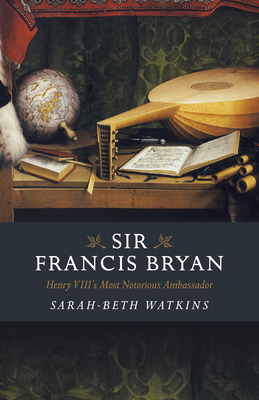 During Henry VIII’s reign, those who were most loyal and the closest to the king did not often last long to enjoy the rewards of his friendship. However, there was one man who stayed in relatively good favor with the king throughout his reign. He was a sailor, a soldier, a diplomat, and acted as an English ambassador mostly in France. He was a cousin to a few of Henry VIII’s wives, a lover of wine, and an infamous womanizer. The name of this rather extraordinary man was Sir Francis Bryan and the story of how he survived the tumultuous reign of Henry VIII is told in Sarah-Beth Watkins’ latest biography, “Sir Francis Bryan: Henry VIII’s Most Notorious Ambassador”.
 There is a new film that has been getting a lot of hype lately and that is based on the story of King Henry V and the Battle of Agincourt. Starring Timothee Chalamet as the main protagonist King Henry V, “The King” on Netflix is the latest historical drama movie that has come out this year. From the trailers and the information that we learned about the film before it was released, I was really intrigued, so I decided to watch it this weekend. Since there were a lot of things I wanted to discuss, I have decided to write a sort of movie review for “The King”.
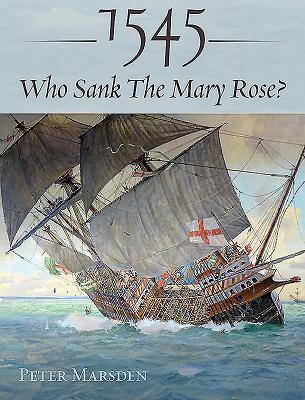 On a calm summer day in July of 1545, a battle was being fought in Solent between the Tudor navy and the French navy. Tragedy struck when the
  The study of the Tudors tends to focus on England as a country of focus, however the Tudors did affect other countries like Spain, France, and Scotland. Many know the story of Mary, Queen of Scots and her relationship with Elizabeth I, but many do not know the tale of her mother, Marie de Guise. Her tale is one of love for her family and her adoptive country of Scotland. It is of loyalty and strength to do what she believed was right. She was a sister, a daughter, a mother, a queen, and a regent of Scotland. Marie’s story tends to be overshadowed by her daughter’s tragic tale, until now. Her story is the main focus of Melanie Clegg’s latest biography, “Scourge of Henry VIII: The Life of Marie de Guise”.
 Henry VII winning at the Battle of Bosworth Field on August 22, 1485, is viewed as the beginning of the Tudor Dynasty. However, the story of the Tudor family goes back centuries in Wales. What we consider the story of the Tudors tends to start with a man named Owen Tudor, a servant, who fell in love and married the dowager Queen of England, Catherine of Valois. Quite a romantic tale, but how much of it is true? Were the Tudors simple folk or did they have a bigger role to play in their native Wales? What roles did Owen and his sons play in the Wars of the Roses? These questions and more are explored in Terry Breverton’s latest biography, “Owen Tudor: Founding Father of the Tudor Dynasty”.
 Strong medieval women who helped lead armies were unusual phenomena. Women like Eleanor of Aquitaine, Isabella of France, and Margaret of Anjou, have been seen as “she-wolves” and their stories have lived on for centuries. They were all queens, but strong women from the past could be of any rank, even though their stories are not celebrated as much. Take, for example, the story of Joanna of Flanders, Countess of Montfort and Richmond, Duchess of Brittany. She was a wife and mother who protected Hennebont Castle in Brittany from the French in 1342 while her husband was held captive. She then leaves her beloved Brittany for the court of Edward III of England and all but disappears from the historical record until her death in 1374. What happened to this extraordinary woman and why did she disappear from the historical records? Julie Sarpy answers these questions and more in her book, “Joanna of Flanders: Heroine and Exile”.
 In recent years, the study of the English conflict known as the “Wars of the Roses” has become rather popular. The Lancasters and the Yorks fighting for the English throne. Only one can be the winner. When we do look at this time period, we tend to focus on the people involved in the battles and the political aspect of the conflict. The battles, how they were fought, and why the conflict started in the first place tend to be pushed to the sideline. That is not the case with this particular book. In Hugh Bicheno’s book, “Battle Royal- The Wars of the Roses: 1440-1462”, the political and military aspects combine with family histories for a comprehensive look into what made this time period so fascinating.
 The deaths of the Duke of York, Earl Salisbury and Edmund Earl of Rutland at the Battle of Wakefield at the end of 1460 marked a changing point for how the Wars of the Roses was fought. Now it was not going to be simply a matter of who was going to be the King of England, but it was a war of revenge. What the Lancastrians did not realize at the time was the fact that these deaths would unleash two men who would mark the destruction of the Lancastrian cause; Edward Duke of York, the future King Edward IV, and Richard Neville Earl of Warwick “the Kingmaker”. In the third book of Conn Iggulden’s Wars of the Roses series called “Bloodline”, Iggulden explores the rise of these two dynamic men and how family matters tore the two best friends apart.
 Adventures of a Tudor Nerd