
 When we think about royal relationships from the past, we do not associate them with love; it is more about cementing power. Princes and kings knew how much was at stake, so they tended to have wives for politics and produce legitimate heirs that would inherit their kingdoms. For matters of love and lust, kings and princes would have mistresses, either of noble birth or lower, on the side. These women have been deemed whores and homewreckers but is that a fair assessment of their legacies? Julia A. Hickey takes a closer look at these misunderstood mistresses in her latest book, “Medieval Royal Mistresses: Mischievous Women who Slept with Kings and Princes.”
Thank you, Pen and Sword Books and Net Galley, for sending me a copy of this book. When I saw this title, it intrigued me, and I was hoping to learn something new.
Hickey covers several hundred years in this book, starting around the year 1000 and ending in 1485. We begin with Queen Emma, Aelfgifu, and the confusion of whether Aelfgifu should be considered a mistress. With these Anglo-Saxon and Norman kings of England, we see many relatively hidden mistresses of William I and Henry I (who had quite a few). We then move to the Plantagenets with Henry II, King John, Edward II, Edward III, and Edward IV. Hickey also pays attention to other affairs in different countries, such as King David of Scotland and the Tour de Neste Affair.
Some of these mistresses would be familiar to readers, such as Isabella of Angouleme, Fair Rosamund, Piers Gaveston, Alice Perrers, Katherine Swynford, Isabella of France and Roger Mortimer, Jane Shore, Eleanor Talbot, and Elizabeth Woodville. Many were new to me, including Princess Nest of Wales, whose abduction started a war, Edith Forne Sigulfson, and Elizabeth Wayte. She even included Eleanor of Aquitaine as one of the mistresses mentioned in this book, which I’m afraid I have to disagree with, as most of this stems from the black legend that has tainted her legacy.
I found the information provided in this book rather intriguing, but my one concern about this book was how it was structured. I wish Hickey had sections marked for each king she mentioned in this book so we could distinguish which mistress was associated with which king or prince.
Overall, I found this book enjoyable and informative. It was a bit repetitive, and there were some arguments that I disagreed with. Still, the fact that Hickey could combine nearly 500 years’ worth of history about relatively hidden royal mistresses is quite admirable. Suppose you want a solid introduction to medieval England’s world of royal mistresses. In that case, I recommend you read “Medieval Royal Mistresses: Mischievous Women who Slept with Kings and Princes” by Julia A. Hickey.
 The year 1120 was a horrible year for King Henry I. His only legitimate son William died when his ship, The White Ship, sank in the middle of the night. This tragedy left Henry with one option, his legitimate daughter Matilda, the former Holy Roman Empress, would become Queen of England, and her sons would continue the royal line. Unfortunately, Matilda’s throne was taken by Stephen of Blois, and now Matilda must join forces with her stepmother Her stepmother Adeliza has always stood by Matilda’s side. Still, when she remarries after Henry’s death, Adeliza struggles to support the rightful queen but stays loyal to her new husband, who supports Stephen. Matilda and Adeliza are caught in the middle of the Anarchy in Elizabeth Chadwick’s novel, “Lady of the English.”
 English kings are some of the most recognizable monarchs in all of European history, and when we think of Kings of England, a few names pop into our minds. Edward, George, and William tend to be popular, but you cannot study English history without Henry. Eight kings of England were Henry, and they would change the history of England forever. These eight kings give us an entire range of what kingship was like in medieval Europe. From men born to be king to opportunists who decided to take the throne as their own, from saints to warrior kings, the Henrys of English history were a colorful group of characters. Each king has had numerous biographies written about him, but there has never been a collection of biographies about the kings named Henry until now. This is “Harry of England: The History of Eight Kings, From Henry I to Henry VIII” by Teresa Cole.
 In human history, when citizens have disagreed with a new law or those in charge, they often stage a protest to show their frustration. When their voices are not heard, people often turn to rebellions and revolts to make sure their opinions matter. We might think that revolution and rebellion as a form of protest are modern ideas, but they go back for centuries. Revolutions and rebellions shaped history, no more so than in the middle ages. In his latest book, “Rebellion in the Middle Ages: Fight Against the Crown,” Matthew Lewis examines the origins of the most famous rebellions in medieval England and how they transformed the course of history.
 If you go to Fontevrault Abbey in France, you will find two rather extraordinary tombs. These tombs belong to King Henry II and Queen Eleanor of Aquitaine, the first King, Queen of the Plantagenet Dynasty, and the Angevin Empire. Their effigies tell us a lot about the couple that was buried side by side. The husband was restless; his model shows him ready to take action at any moment, with his crown upon his head and a scepter in his hand. His queen lays beside him, reading an unknown book. They seem to be prepared to watch over their kingdom and their family even beyond the grave. Those who know English history recognize their names and understand the family drama behind the scenes. We think we know the truth about Henry and Eleanor, but is there more to their story and their feuding family? In Matthew Lewis’s latest dual biography, “Henry II and Eleanor of Aquitaine: Founding an Empire,” he explores the relationship between this dynamic king and queen and how it shaped European and English history forever.
 In the middle of the night on November 25, 1120, screams could be heard from the English Channel. A ship known as The White Ship hit a rock and began to sink. Those on board were the glamorous English elite, including the legitimate son of King Henry I, William Aetheling. In an era where people feared the sea and could not swim, those on board sank to their watery death on that cold winter night that began with such frivolity. No one knew that night that this one disaster at sea would cause a dynastic struggle that would lead to the founding of the infamous Plantagenet dynasty. In his latest book, “The White Ship: Conquest, Anarchy and the Wrecking of Henry I’s Dream”, Charles Spencer takes his readers on a journey to fully understand the impact that this tragedy had on the English royal family.
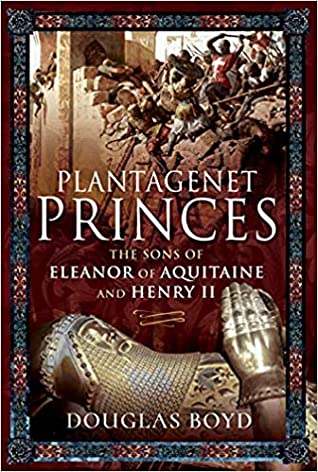 One of the most infamous families in the history of England lasted for over three hundred years and it was filled with numerous princes that fought for their right to rule, much to the chagrin of the Tudor dynasty. The Plantagenet Dynasty was full of scandals and bloodshed, testing the core values of what it meant to be a family and rulers of an emerging country like England. This dynastic clash for power that came to define this dynasty began with Henry II and his sons by his wife Eleanor of Aquitaine. When their father refused to give the boys any true power, which was to be excepted with all princes, his sons waged war against Henry II and their brothers. The stories of these bonds and what ultimately tore them asunder are told in Douglas Boyd’s latest collection of biographies aptly titled, “Plantagenet Princes: The Sons of Eleanor of Aquitaine and Henry II”.
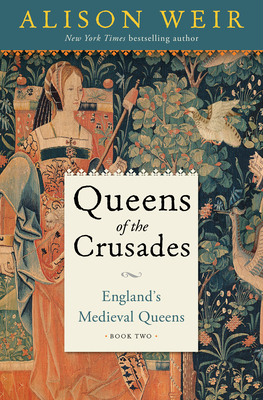 One of the most prominent royal families of English history was the Plantagenets, who reigned for over three hundred years. In the first one hundred years of this family’s infamous history, five kings ruled (the first two are considered kings of the Angevin dynasty): Henry II, Richard I, John, Henry III, and Edward I. These five kings saw England change drastically, but they also participated in the international political landscape of the day, which involved the series of wars that today we simply refer to as the Crusades. The early Plantagenet kings saw much bloodshed and war, but they were not alone in their struggle to keep the dynasty going. These men would not have gotten as far as they did without their wives who stood by their sides. In Alison Weir’s latest installment of England’s Medieval Queens series, “Queens of the Crusades”, she takes a deep dive into the lives of the first five Plantagenet queens to show how remarkable these women truly were to stand beside their husbands during the times of the Crusades in Europe.
 Adventures of a Tudor Nerd