
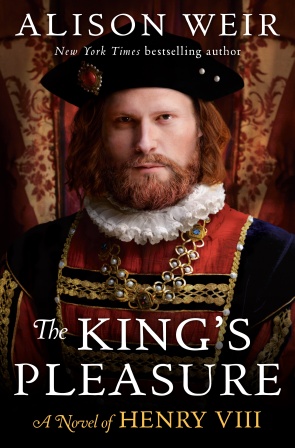
 When we think about the Tudor dynasty, we often focus on the women in King Henry VIII’s life and his children, at least when it comes to novels. Writing about this larger-than-life figure, this notorious king and controversial figure in English history, are usually considered ambitious. Few have attempted to write a book about the king’s entire reign, but Alison Weir has embarked on this endeavor in her latest novel, “The King’s Pleasure: A Novel of Henry VIII.”
I want to thank Ballantine Books and Net Galley for sending me a copy of this novel. I have not read many books about the reign of King Henry VIII, except for “The Autobiography of King Henry VIII” by Margaret George, so when I heard that Alison Weir was writing a novel about the titular king, I knew I had to read it.
Weir begins her novel with a moment that must have been difficult for young Prince Henry or Harry as he is referred to in this book. His brother died recently, and his beloved mother, Elizabeth of York, just died, leaving Henry as King Henry VII’s only heir. Henry does not have the best relationship with his father, but he now must fill the void as the heir apparent after Arthur died, leaving his young wife, Katherine of Aragon, a widow. When King Henry VII died, Henry became King Henry VIII and selected a woman he had fallen for to become his queen, Katherine of Aragon.
The bulk of this novel revolves around the relationships between Henry and his first two wives, Katherine of Aragon and Anne Boleyn. Weir is sympathetic toward Katherine of Aragon’s struggles, whereas her portrayal of Anne Boleyn may come across as a bit harsh. Jane Seymour is portrayed as a quiet and obedient queen, and Anna of Cleves’ focus is more on her looks and how Henry treated her more as a sister than a wife. Katherine Howard is someone Henry falls for hard and is devastated by her downfall, and Katherine Parr is the firebrand reformer who wants to heal Henry’s family at the end of his life.
Weir also touches on the complex political web that Henry was involved in, not just in England but European politics of the 16th century. We also see how Henry interacted with his children and how the emotional weight of all of his decisions weighed on him.
I think for how much of a challenge it is to write a novel about King Henry VIII, Alison Weir has done an admirable job in the king’s portrayal. I don’t necessarily agree with how some of the queens were portrayed, but I did enjoy this novel as a whole. I would suggest reading this novel before the Six Tudor Queens series to understand Henry’s perspective before his wives’ stories. If you have enjoyed the latest books about Henry VIII’s wives and his mother, Elizabeth of York, you should read “The King’s Pleasure: A Novel of Henry VIII” by Alison Weir.
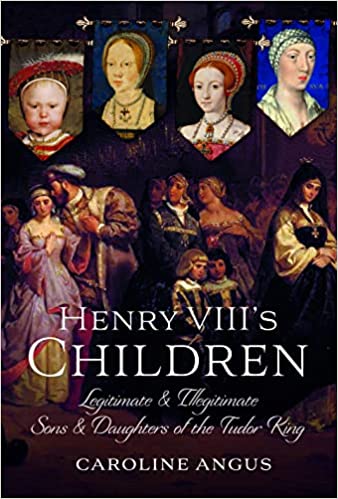 When we think about the title royal children, images of children who get whatever they want, being spoiled with gems and gowns, and ruling kingdoms, they are married to create alliances. In that sense, it would define a life of luxury. However, for the children of King Henry VIII, luxury was not always in their dictionary. What was life like for the legitimate and illegitimate children of Henry VIII? Caroline Angus explores this question in her latest book, “Henry VIII’s Children: Legitimate and Illegitimate Sons and Daughters of the Tudor King.”
 Two kings, two rivals from different countries defined the 16th century. One was the spare to his father’s crown, but when his eldest brother suddenly passed away, he became the next Tudor king. The other was the sole heir to his parent’s large kingdom and would become the Holy Roman Emperor. Wars, the Reformation, and family drama kept these two men, Henry VIII and Charles V, busy and at each other’s throats. They would sometimes join and fight for one another’s causes, showing the importance of international politics. With each new scenario, their relationship would shift, either for the best or the worst. Richard Heath has combined the stories of these two monarchs, these “frenemies,” into one joint biography, “Henry VIII and Charles V: Rival Monarchs, Uneasy Allies.”
 When we think of the word “education,” images of sitting in school rooms for hours, listening to lectures, and doing endless homework pop into our minds. Our modern education system tends to focus on math, science, language arts, and history as the core subjects we study, with music and physical education as something that we in America call an “elective.” But have you ever wondered what education looked like in the past? How did the Tudors pass on their knowledge to future generations? What subjects did the Tudors consider essential, and how did the amount of education you received change depending on your class? Amy McElroy explores these questions in her book, “Educating the Tudors.”
 The struggle to be a king or queen in any country during Europe’s medieval or early modern era was only the beginning. They are either the next in line to the throne and inherit the crown, or they sometimes fight to the death to wear it. After the king or queen settles into ruling their respective countries, the real challenge emerges as they have to deal with rebellions and those who commit treason against their monarch. Take, for example, what happened during the reign of Elizabeth I. We consider her reign the “Golden Age” in English history. Still, she had to deal with numerous rebellions and conspiracies surrounding her viewpoints on religion and how she dealt with her cousin, Mary Queen of Scots. In her first book, “Elizabethan Rebellions: Conspiracy, Intrigue, and Treason,” Helene Harrison takes an in-depth look at each rebellion and how they left a mark on Elizabeth I’s reign.
 The glitzy, glamorous life of the Tudors portrayed in popular TV shows and novels mask the truth of this infamous dynasty. It is more bloody than what has been described. It is filled with grotesque executions, deadly diseases, bloody battles, and bloody battles. What happened to Richard III’s remains? What was Tudor torture like for those unfortunate victims? What were other devious tales at play in 16th-century Europe? Mickey Mayhew has worked hard to answer these questions by combining 45 of the most gruesome stories from this dynasty into one book, “The House of Tudor: A Grisly History.”
 Three women in one family who shared the same first name saw England change over a tumultuous century. They saw the end of the Plantagenet dynasty and the rise of the Tudors while on the sidelines of great battles. Through heartaches and triumphs, the women of the Woodville family became princesses and queens that would transform the political landscape of England forever. These three women, Elizabeth Woodville, Elizabeth of York, and Elizabeth Grey, were incredible examples of what it meant to be medieval royal women. They are featured in Sarah J. Hodder’s latest book, “The Woodville Women.”
 When we think of those who made an impact in history, we tend to think of those who have been born to a married couple and therefore were considered legitimate children, especially when it comes to royal children. However, we know that illegitimate royal children, like William the Conqueror, greatly impacted history. Illegitimate royal children may have been barred from becoming king or queen of their respective countries of birth, but that does not mean they didn’t impact how their home country was governed. One of these children who affected politics during the Tudor dynasty was Arthur Plantagenet, the illegitimate son of Edward IV. In her latest book, “Arthur Plantagenet: Henry VIII’s Illegitimate Uncle,” she explores the life of this man who gives us extraordinary insight into the running of Calais and how Henry VIII treated other family members.
 When we think about the Tudor dynasty, we think about the monarchs who made the dynasty, but we also pay attention to those around the king or queen who sat on the throne. There were families like the Boleyns, the Howards, and the Seymours who stood on the sidelines for a short amount of time, but one family saw the majority of the dynasty through highs and extreme lows. The Dudleys have been seen as a power-hungry family who would do anything to sit on the throne of England, but is there more to their story? In her debut book, “The House of Dudley: A New History of Tudor England,” Joanne Paul explores the lives of this extraordinary family to find the truth about their ambitions and their resilience.
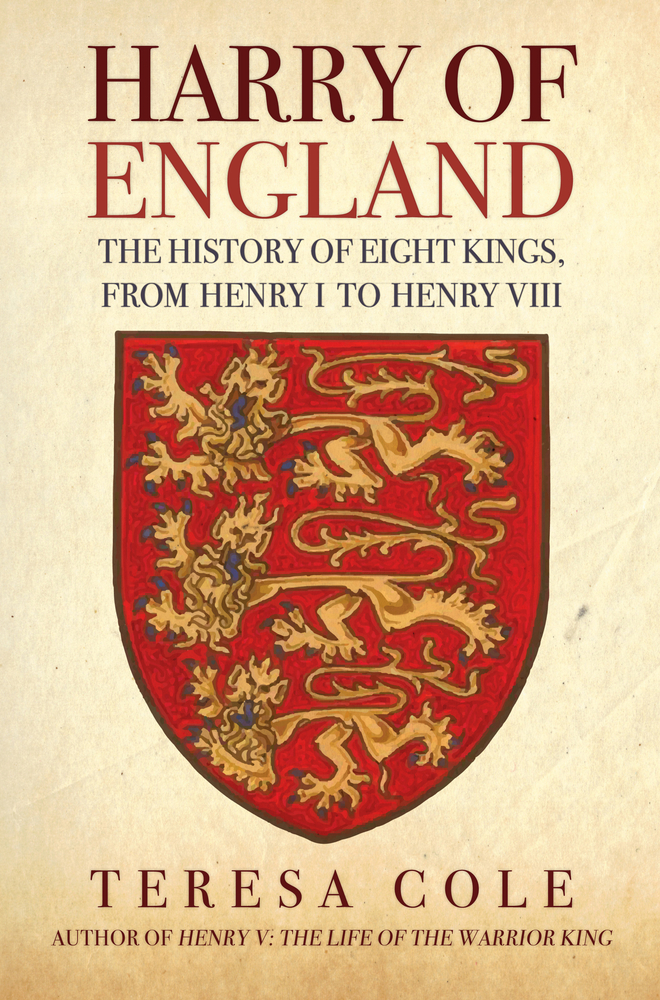 English kings are some of the most recognizable monarchs in all of European history, and when we think of Kings of England, a few names pop into our minds. Edward, George, and William tend to be popular, but you cannot study English history without Henry. Eight kings of England were Henry, and they would change the history of England forever. These eight kings give us an entire range of what kingship was like in medieval Europe. From men born to be king to opportunists who decided to take the throne as their own, from saints to warrior kings, the Henrys of English history were a colorful group of characters. Each king has had numerous biographies written about him, but there has never been a collection of biographies about the kings named Henry until now. This is “Harry of England: The History of Eight Kings, From Henry I to Henry VIII” by Teresa Cole.
 Adventures of a Tudor Nerd