
 Have you ever wondered what it would be like to travel into the past? You could interact with your favorite historical figures and truly understand what they were like. You could dine like a king or a commoner, dress to impress and experience everyday life. There would be risks involved, but any history nerd might jump at the chance to explore the past. One lucky history student named Beth Wickers discovers that a ring in her professor’s office allows her to travel back into the past to visit her favorite historical icon, Anne Boleyn. Can Beth help Anne to survive the dangerous Tudor court of Henry VIII? Follow Beth’s adventures in Tudor England in Phillipa Vincent-Connolly’s first historical fiction novel, “Timeless Falcon- Volume One”.
I would like to thank Phillipa Vincent-Connolly for sending me a copy of this book. I was a bit skeptical at first about a historical fiction novel that involved time travel, but it did sound intriguing so I decided to give it a try.
We are first introduced to Beth Wickers as she is experiencing a typical day at her university, studying and attending lectures by Professor Marshall. She finds herself going into Professor Marshall’s office where she finds an extraordinary ring that allows Beth to go back in time, to 1522. There, she finds herself in the colorful home of the Boleyn family, Hever Castle. It all seems like a fanciful dream, that is until Beth encounters the legend herself, Anne Boleyn.
While their first encounter is indeed memorable, I do have some concerns with it, especially when it comes to the time travel idea. My main concerns are that Beth mentions to Anne that she is from the future and she allows Anne to handle objects from the twenty-first century. This is probably me just being nit-picky, but as someone who is a fan of the idea of time travel, I do have issues when a character from one time period flat out says that they are from the future to someone from the past, not to mention allowing them to interact with objects from the future. My understanding is that with time travel, those from the future should be inconspicuous, but in this case, it does work.
Besides the logistics of time travel, I found this story rather enjoyable. It is a charming tale of when a 21st-century girl is thrown into the Tudor era. Her interactions with the past and how she copes with it all is thrilling as you wonder if she will ever get back to her own time and if she can help those who she holds dear. I love how Connolly creates two believable worlds and a protagonist who is so relatable. Beth’s interactions with her family and friends in her time paralleled the interactions with the Boleyn family. I loved how the Boleyns seemed like another family for Beth; Thomas Boleyn welcoming Beth into his home, kind Lady Boleyn, her complex relationship with the ever-charming George Boleyn, and her friendship with Anne that truly lasts centuries. We also see Beth interacting with other famous figures like Jane Parker, Mary Boleyn, Thomas Wolsey, Katherine of Aragon, and the big man himself, King Henry VIII.
I was not sure about this novel when I first read the description because of the time travel element, however, I think it was a delightful read. I think Beth was such a relatable heroine for so many fellow history nerds who would just want to protect their favorite historical figure from any harm. This book will make you question whether you would make the same decisions that Beth does and whether you can protect the integrity of the past. If you want a historical fiction novel about the Tudors that is fun and unlike any novel you have read before, check out, “Timeless Falcon- Volume One” by Phillipa Vincent-Connolly. I am looking forward to the next volume to see how far Beth will travel into the past.
 One of the most popular Tudor historical fiction series in recent memory has revolved around the enigmatic Thomas Cromwell. Of course, I am talking about the famous
 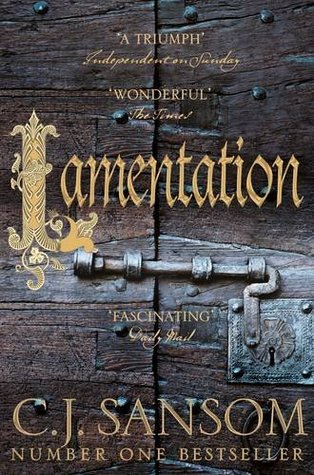 The year is 1546 and England is once again in turmoil. Rumors swirl that the once-mighty King Henry VIII is gravely ill and his councilors, both Protestants and Catholics, are vying for power to see who will help Henry’s young son, Edward when he becomes king. With such distinct factions, those are not Protestant or Catholic, like the Anabaptists, are deemed heretics and they are hunted down. Executions over faith, like the death of Anne Askew, run rampant across London. Those who own books that were deemed “controversial” were under a shroud of suspicion. When Matthew Shardlake’s main supporter, Queen Catherine Parr’s book Lamentation of a Sinner, goes missing, Shardlake must navigate the religious divide carefully to retrieve the missing manuscript before it is discovered. Can Shardlake and his friends save the queen from the heresy hunt in time? The stakes could never be higher in C.J. Sansom’s sixth Shardlake novel, “Lamentation”.
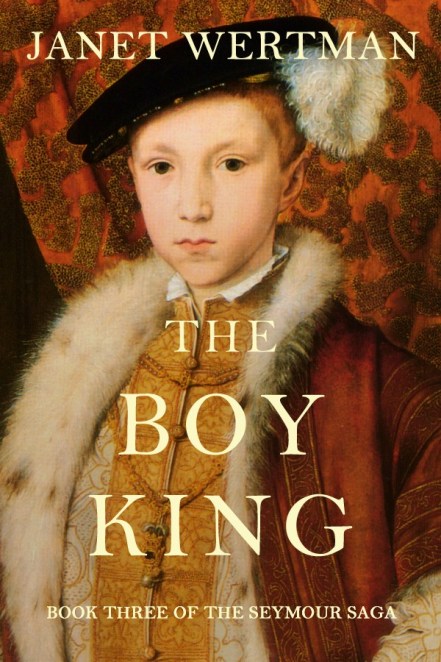 In 1547, young Prince Edward is having the time of his life studying and hoping to one day take part in a tournament. He has not a care in the world. That is until his beloved father King Henry VIII passes away, and the 9-year-old boy is now Edward VI, King of England. He must navigate family drama between his older half-sister Mary Tudor and his uncles, Edward and Thomas Seymour while maintaining order throughout the kingdom. To top it all off, he is trying to reform the entire country and convert Catholics into the Protestant faith. His short life and reign are portrayed in Janet Wertman’s third book in The Seymour Saga, “The Boy King”.
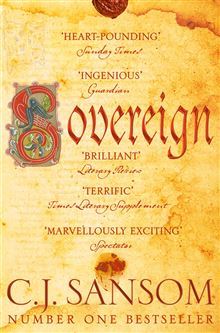 When one thinks about a royal Progress, we often think about the glitz and glam of the royal family traversing the entire country at a leisurely rate to inspire awe for their subjects. However, the Progress of 1541, when Henry VIII and his fifth wife Catherine Howard traveled to the hostile northern part of England, was anything but a casual visit. It was very political as Henry was trying to make the North submit to him after the Pilgrimage of Grace while at the same time he was waiting for a meeting with King James V of Scotland. It is the city of York and during this important Progress that C.J. Sansom shapes his latest adventure with his hunchback lawyer and part-time detective, Matthew Shardlake, in book three of the delightful Shardlake series, “Sovereign”.
 The year 1540 during the reign of Henry VIII was a turbulent time. Henry’s new wife, Anne of Cleves, is not exactly the person who he imagined and his eye is starting to wander to a new woman, Katherine Howard. The reformers are starting to lose favor with the king as they and Catholics alike are being executed for treason. This is the London that Matthew Shardlake, our favorite hunchback lawyer turned detective, calls home. He thinks that he has retired from his detective work and serving Thomas Cromwell, but he is sadly mistaken. His next adventure has twice the number of cases and just as much danger that makes his trip to the monastery in “Dissolution” look easy. In the second book of the Shardlake series, “Dark Fire”, C.J. Sansom turns up the heat, the action, and the danger.
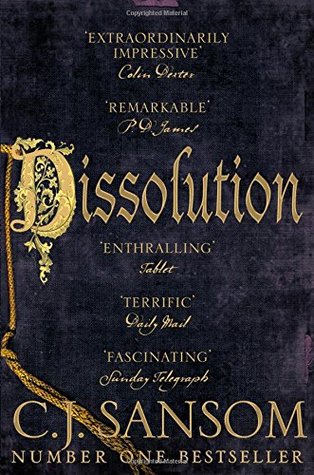 The Tudor dynasty marked tons of changes in society and religious norms. In 1537, the changes are in full force. Anne Boleyn was executed a year earlier and Henry’s third wife, Jane Seymour recently passed away after giving birth to Edward VI. Religious reformers are clashing with the Catholic Church after Henry VIII has declared himself the Supreme Head of the Church of England. Henry VIII’s reign marked the changing point in societal and religious norms, none more so than the dissolution of the monasteries. As monasteries and monks alike adjust to the new ways of life, the monastery at Scarnsea buzzes with activity and murder. Henry VIII’s right-hand man, Thomas Cromwell, sends an unlikely man to investigate the situation; the hunchback reformer lawyer, Matthew Shardlake. This is the world that C.J. Sansom has chosen to create in the first book of his Tudor mystery series, aptly named, “Dissolution”.
 The story and myths of Henry VIII’s second wife, Anne Boleyn, have been debated and dissected for centuries. Was she a cruel and calculating figure who got what she deserved or was she an innocent victim of an evil tyrant of a husband? The funny thing about history is that the truth is never clear cut. Historical figures are human beings, no matter how many centuries separate their lives from our own. They were not all good or all bad, which is the perspective that Claire Ridgway tries to show when she is writing about her favorite figure, Anne Boleyn, either in her books or on her blog, The Anne Boleyn Files. To celebrate the 10th anniversary of the Anne Boleyn Files, Claire Ridgway returns with the latest collection of articles, “The Anne Boleyn Collection III”.
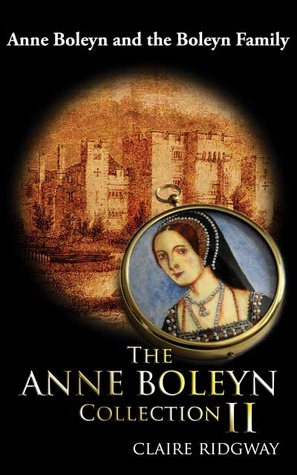 The Boleyn family have been viewed as social climbers, who only desired power and prestige, in history and novels for centuries; their fall from grace was due to their ambitions. But, is this true? Did Anne Boleyn’s family only care about getting to the top by any means necessary? Were they manipulative, cunning, and cruel like they have been portrayed in dramas and novels? Who were the Boleyns and why have they been so maligned in history? In her second book of this series, “The Anne Boleyn Collection II”, Claire Ridgway of The Anne Boleyn Files examines Anne Boleyn and the truth about her family.
 Adventures of a Tudor Nerd