
As many of you know, the first trailer for “The Spanish Princess”, the new miniseries by Starz and based off books by Philippa Gregory, just dropped. This is the story of Catherine of Aragon coming to England to marry Prince Arthur, but when Arthur dies unexpectantly, Catherine must choose between going back to Spain or marrying her dead husband’s brother Henry Tudor, who would become Henry VIII. I have watched the trailer and I have decided to review the trailer.
The Books
This series is “drawn” from two of Philippa Gregory’s books, “The Constant Princess” and “The King’s Curse”. It has been over a year or two since I personally read these books. So before we dive into a review of the trailer, I thought it would be appropriate to look at the summaries of both of these books, which you can find from Philippa Gregory’s website, to see what we might expect to see from this series.
The first book we will look at is “The Constant Princess”:
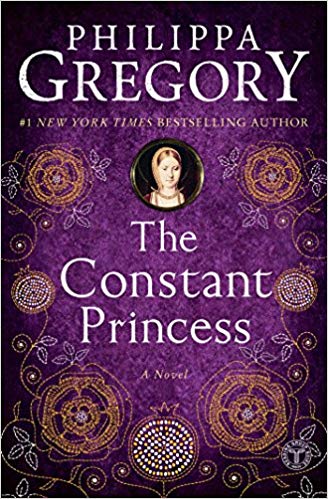 We think of her as the barren wife of a notorious king; but behind this legacy lies a fascinating story. Katherine of Aragon is born Catalina, the Spanish Infanta, to parents who are both rulers and warriors. Aged four, she is betrothed to Arthur, Prince of Wales, and is raised to be Queen of England. She is never in doubt that it is her destiny to rule that far-off, wet, cold land. Her faith is tested when her prospective father-in-law greets her arrival in her new country with a great insult; Arthur seems little better than a boy; the food is strange and the customs coarse. Slowly she adapts to the first Tudor court, and life as Arthur’s wife grows ever more bearable. But when the studious young man dies, she is left to make her own future: how can she now be queen, and found a dynasty? Only by marrying Arthur’s young brother, the sunny but spoilt Henry. His father and grandmother are against it; her powerful parents prove little use. Yet Katherine is her mother’s daughter and her fighting spirit is strong. She will do anything to achieve her aim; even if it means telling the greatest lie, and holding to it.
The second book is “The King’s Curse”:
This is the story of deposed royal Margaret Pole, and her unique view of King Henry VIII’s  stratospheric rise to power in Tudor England. Margaret Pole spends her young life struggling to free her brother, arrested as a child, from the Tower of London. The Tower – symbol of the Tudor usurpation of her family’s throne – haunts Margaret’s dreams until the day that her brother is executed on the orders of Henry VII. Regarded as yet another threat to the volatile King Henry VII’s claim to the throne, Margaret is buried in marriage to a steady and kind Tudor supporter – Sir Richard Pole, governor of Wales. But Margaret’s quiet, hidden life is changed forever by the arrival of Arthur, the young Prince of Wales, and his beautiful bride, Katherine of Aragon, as Margaret soon becomes a trusted advisor and friend to the honeymooning couple. Margaret’s destiny, as an heiress to the Plantagenets, is not for a life in the shadows. Tragedy throws her into poverty and rebellion against the new royal family, luck restores her to her place at court where she becomes the chief lady-in-waiting to Queen Katherine and watches the dominance of the Spanish queen over her husband, and her fall. As the young king becomes increasingly paranoid of rivals he turns his fearful attention to Margaret and her royal family. Amid the rapid deterioration of the Tudor court, Margaret must choose whether her allegiance is to the increasingly tyrannical king, Henry VIII, or to her beloved queen and princess. Caught between the old world and the new, Margaret has to find her own way and hide her knowledge of an old curse on all the Tudors, which is slowly coming true . . .
The Trailer
The trailer for “The Spanish Princess” begins with the introduction of the show’s protagonist, Catherine of Aragon, played by Charlotte Hope, walking outside in her white wedding dress. Her purpose in England was to marry the future King of England in order to make an alliance between England and Spain. I think Charlotte Hope looks the part of Catherine of Aragon. She looks rather regal, a bit shy at first, but she becomes a strong and determined young woman. Plus she has auburn hair; which is the actual hair color Catherine of Aragon was known to have. A huge plus for fans of Catherine of Aragon and her life story.
The first few seconds of the trailer, we are introduced to the important members of the English court. King Henry VII, played by Elliot Cowan, is an older man who seems to dress quite lavishly and who seeks to make England a better country. The one problem that I have with the character of Henry VII is his accent. Though we are not sure what kind of accent he might have had since he was part Welsh and lived in France and Brittany for a time in his life, one would assume he might have some French or Welsh accent, but his accent, from what we can gather, sounds solely English. I might be nit-picking here a bit, but it did bother me a little bit. Always next to Henry’s side is his wife, Elizabeth of York, who is played by Alexandra Moen.
Now we come to the two brothers, Arthur and Henry, or “Harry” as he is called in this series. Prince Arthur, who is played by Angus Imrie, looks very thin and almost sickly in the images that we do see of him. From what we know of Arthur, he was rather healthy, until his death shortly after marrying Catherine. Henry “Harry”, played by Ruairi O’Connor, has that suave and debonaire feel to him. The one problem that many people have, myself included, is the fact that when Catherine and Henry first met, Henry was around 10 or 11 and Catherine was around 16. The trailer makes it seem as though the two were around the same age when they met, which was not the case.
Henry and Catherine developed feelings for each other and Henry wants Catherine to stay and marry him, although she is his brother’s widow. We see two members of the English royal family who are not exactly thrilled with this match. They are Margaret Beaufort, Henry VIII’s grandmother, played by Dame Harriet Walter, and Margaret “Maggie” Pole, played by Laura Carmichael. We also get a look at the ladies of waiting to Catherine of Aragon, Lina, and Rosa, who are played by Stephanie Levi-John and Nadia Parkes respectfully. The series also decided to include Oviedo, played by Aaron Cobham, who falls in love with Lina.
I do enjoy the costumes for this series as they do seem to honor the past. The scenery is intriguing and transports the viewer to the time of the Tudors. The one scene that I did have a slight problem with was the last one in the trailer, which shows Catherine, Lina, and Rosa dressed in black in the cathedral, mourning for Prince Arthur. From what it looks like in the trailer, it is Arthur’s funeral. Lina and Rosa are wailing while Catherine is in the middle, no tears down her face, as she looks stoically at the camera. My issue with this scene is the fact that members of the royal family did not attend his funeral because of the risk of the sweating sickness. If you would like to read more about Prince Arthur’s funeral, Dr. Sean Cunningham, who wrote the book “Prince Arthur: The Tudor King Who Never Was”, wrote a fascinating article for On the Tudor Trail, which you can find below in the sources.
The series also uses nicknames such as “Harry” for Prince Henry, “Maggie” for Margaret Pole, “Charlie” for Charles Brandon and “Meg” Tudor. It is not clear if “Meg” is a combination of Mary and Margaret or if it is just Margaret Tudor. I don’t know why they would choose to go down this route as both Mary and Margaret are important figures, being the sisters of Henry and Arthur Tudor. Another notable absence from the list of characters is Isabella of Castille, Catherine’s formidable mother. We do, apparently, get an appearance from Christopher Columbus, according to the cast list, but not from Catherine’s own mother, who really shaped what kind of woman Catherine would become.
Overall, I did enjoy the trailer. I think it is interesting that Starz decided to combine both the stories of Catherine of Aragon and Margaret Pole into a mini-series. From what was shown in the trailer, it looks like their main focus will be Catherine and Henry so hopefully, we will see more of Margaret later in the show. “The Spanish Princess” looks like it will be an enjoyable show for those who love historical dramas.
What are your thoughts about this trailer and will you watch “The Spanish Princess”?
Sources:
https://www.imdb.com/title/tt8417308/fullcredits?ref_=tt_cl_sm#cast
https://www.philippagregory.com/books/the-constant-princess
 Henry VIII, the king who was notorious for his six marriages. His first three marriages, to Catherine of Aragon, Anne Boleyn, and Jane Seymour, gave Henry VIII his only children that were considered eligible for succession. Catherine of Aragon was his first foreign bride, but he would divorce her to marry Anne Boleyn. Anne Boleyn would later be executed and Jane Seymour would die after giving birth to Henry’s son Edward. Henry wanted to marry again, so his most trusted advisors decided to try for a foreign alliance as well as a new bride for the king. They decided that Anne of Cleves from Germany would be the perfect bride, but it did not work out and Henry decided to divorce her and claim Anne as his “sister”. She is often viewed as Henry’s “lucky wife”, but who was she and what was her life like before and after she met her husband Henry VIII? That is exactly the question that Sarah-Beth Watkins wanted to explore in her latest book, “Anne of Cleves: Henry VIII’s Unwanted Wife”.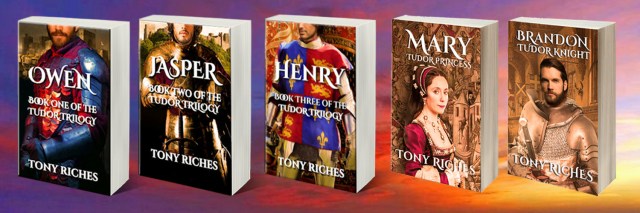

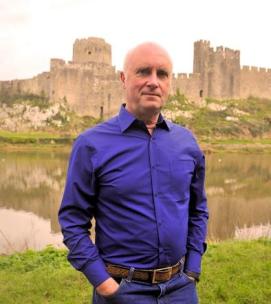 Pembrokeshire, West Wales and is a specialist in the history of the Wars of the Roses and the lives of the early Tudors. For more information about Tony’s books please visit his website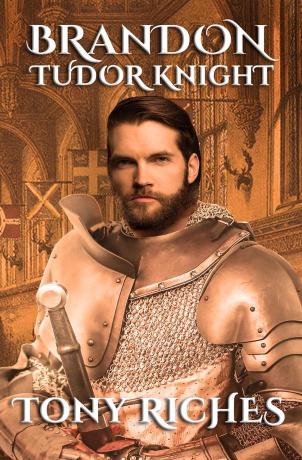
 Henry VIII’s wives were some of the most fascinating women of the Tudor Dynasty. Katherine of Aragon, Henry’s first wife, the mother of Mary I, and the first wife Henry divorced. Anne Boleyn, the mother of Elizabeth I and the first English queen to be executed. Anne of Cleves, the wife Henry did not like and divorced. Katherine Howard, the second wife Henry executed, and Katherine Parr, the wife who outlived Henry. All of these women were unique, however, there was only one who gave Henry the son that he so desperately desired. Her name was Jane Seymour. Her death was well documented since she died shortly after giving birth to Edward, yet we really don’t know who she was or what her life was like. Alison Weir decides to explore Jane’s life in her third book of the Six Tudor Queens series, “Jane Seymour: The Haunted Queen”.
  A knight rescuing a princess and they lived happily ever after. This tends to be a cliché in every romantic fairy tale, but what if it actually happened? Though we do not have many romantic stories in the time of the Tudors because marrying for love was not the norm, one stands out. It is the story of Charles Brandon and Mary Tudor. Mary was the sister of Henry VIII and the Dowager Queen of France. Charles Brandon was one of Henry VIII’s knights and a champion jouster. They would fall in love and eventually marry, much to the chagrin of Mary’s brother, who wanted her to marry to ensure an alliance with another country for England. Charles Brandon, the knight who stole the heart of a former queen, is the focus of Tony Riches’ latest book, “Brandon Tudor Knight”.
 The rise and fall of the Boleyns have been something that has fascinated those who study the Tudor dynasty for centuries. We often view these series of events from the immediate Boleyn family, but what might it have been like for someone who was married to a Boleyn, like Jane Parker Boleyn, the wife of George Boleyn? Jane is often portrayed in literature as a woman who had a tumultuous marriage who sold out her husband when she was interrogated, someone who helped Katherine Howard with her secret liaisons behind Henry VIII’s back, and a woman who suffered from mental illness while in prison. If you take a look at Jane Boleyn’s life from this lens, she sounds like a troubled woman, but what if there was a different side to her? What if she was a good person who loved her husband and his family? That is the Jane Boleyn that Adrienne Dillard wanted to portray in her latest book, “The Raven’s Widow: A Novel of Jane Boleyn”.
  The age of the Tudors has fascinated historians for centuries. As of recently, there has been a shift in how we view historical figures. Historians have been stripping away the more controversial elements that have been ingrained in how we view historical figures to look for the truth. Historical figures like Anne and Mary Boleyn have been placed under the microscope and have been given a closer look in recent years. But what about the men of Boleyn family, Thomas, and George? What were their lives really like? Did they truly desire power and titles so much that they were willing to do anything to get it? Those are the questions that Lauren Mackay decided to explore in her latest book, “Among the Wolves of Court: The Untold Story of Thomas and George Boleyn.”
 The everyday life of those who lived in the past has been an area of fascination for those who study any period in history. We often wonder what it was like to dress like a person in the court of Henry VIII or Elizabeth I, what their diets were like, and how they interacted with one another, either in the royal court or as commoners working everyday to make a living. One of the areas that is always mentioned is the health of a monarch. In the case of the Tudors, when we speak of health, many look to Henry VIII as he had a lot of different medical conditions and accidents that affected his life. What was 16th century medical practices like? How did doctors treat their patients in the time of the Tudors? This has been an area of Tudor life that has not received much attention. That is until now. Seamus O’ Caellaigh gives us an in-depth look at the treatments fit for King Henry VIII from the doctors who actually treated the king in his book, “Pustules, Pestilence and Pain: Tudor Treatments and Ailments of Henry VIII”.
  The Boleyn family is one of the most notable families during the reign of the Tudors. When one thinks about this family, people like Anne Boleyn, Thomas Boleyn, and George Boleyn come to mind. However, another Boleyn and her family story have been emerging from the shadows of history in recent years. That is the story of Mary Boleyn, a mistress of King Henry VIII. Mary Boleyn had a daughter named Catherine Carey, who married Sir Francis Knollys and was the mother of 14 children, including Lettice Knollys. Since Catherine Carey was a direct relation to the Tudors, what might have her life have been like? Adrienne Dillard wanted to give readers a possible view of Catherine Carey’s life in her book, “Cor Rotto: A Novel of Catherine Carey”.
  After the death of Henry VIII and Edward VI, there was an explosion of religious intolerance, not just in England, but in Europe as a whole. Many believe that it was Mary I “Bloody Mary” who really started this trend, however, the fires of hatred between Protestants and Catholics extended further into the reigns of Elizabeth I and James I of England. We often focus on the monarchs and their inner circles during this time and how the religious persecutions affected the decisions that they made. That tells only part of the story, but how did this religious fighting between Protestants and Catholics affect the normal person? What were their lives like? Ken Follett explores this topic in his third book in his historical fiction series, the Kingsbridge Series, “A Column of Fire”.
  Adventures of a Tudor Nerd