Book Review: “The Autobiography of Henry VIII” By Margaret George

ZZZ032590-BKHenry VIII is one of the most notorious kings who ever ruled England. He had six wives, two of which were executed, three legitimate children who would change England forever, and  he decided to break from Rome and create his own church. Henry was such a larger than life figure, yet when it comes to historical fiction, he tends to play a smaller part in books about his six wives and is often portrayed as a villain. Henry doesn’t get to have his own voice, in historical fiction, on some of the most important parts in his life, so Margaret George decided to give him one in her book, “The Autobiography of Henry VIII: With Notes by His Fool, Will Somers,” to explain what could have been going on in his mind during these pivotal moments.

What makes Margaret George’s book unique is the addition of Will Somers, Henry’s fool, who acts as a commentator, and in some cases, acts as the voice of reason after the fact. Will Somers explains some of the most complex issues during Henry’s reign, including what it meant to be king:

To be a King is to be un-ordinary, extraordinary: because we will have it so, we demand it, as we demand our carpenters make smooth-sliding drawers. Much of Henry’s behaviour is incomprehensible if judged as the actions of an ordinary man; as King, it appears in a different light. If a man is consciously trying to be an ideal King, an outsize King, then all the more so. And there can be no wavering, no half-measures. One must be King every instant, while retiring to the privy stool as well as in state audiences. There is no respite: the mask of royalty must gradually supplant the ordinary man, as sugar syrup replaces the natural flavors in candied fruit and flowers. They retain their original outward appearance, but inside are altogether changed in substance. Harry bore this burden easily, and wore his regality with a splendid conviction. What this cost him as a man becomes apparent as one reads on in his journal. (George, 105).  

George’s book begins with a conversation between Will Somers and Catherine Knollys about the actual journal and why he was giving it to Catherine. Henry begins his “autobiography” with his childhood and his relationship with his siblings, especially his brother Arthur, his father Henry VII, and his mother Elizabeth of York. It was interesting to see how Henry might have viewed his relationship with his family, most importantly with his “miserly” father Henry VII. I really do not agree with this view of Henry VII myself, but I think how Henry was portrayed as the second son was very fascinating.

The main part of this book and Henry’s life was his marriages. Starting off with his first wife, Katherine of Aragon, George explores how Henry fell in love with each woman he called, at one point or another, his wife and queen and ultimately each woman’s different fate. What was interesting was that George seemed to play with the myths that surrounded the women in Henry’s life, like Anne Boleyn having a sixth finger and that she was a witch (which are not true at all). The part that surprised me the most about this book was how much he grieved over love lost, especially with Jane Seymour. It showed a softer side to Henry and gave him more of a humanistic element to his story.

Aside for marital and familial elements of Henry’s life, George also explores the religious issues of his reign, as well as Henry’s government. We see how relationships with the Catholic Church sours and how it really affects him as a man. We see how long time friends of Henry’s quickly turn to enemies and how his relationships with other monarchs ebb and flow.

Overall Margaret George gives us a full and complete story of Henry VIII’s life while being entertaining and intriguing. I read this book several years back and I thoroughly enjoyed it and I found myself enjoying it even to this day. George was able to bring Henry VIII and his court to life in a way that made you feel like this “journal” could have been real. If you want a fun, long read about King Henry VIII, I highly suggest you read, “The Autobiography of Henry VIII” by Margaret George.

Book Review: “Elizabeth I” by Anne Somerset

915mqJWdp2L.jpgQueen Elizabeth I, “the Virgin Queen”, was the daughter of King Henry VIII and his second wife Anne Boleyn. She was the step sister to Edward VI and Mary I. Her story is full of so many twists and turns, starting from the very beginning, that it is almost a miracle that she lived and became queen. So what type of trials and tribulations did Elizabeth go through to become one of the most successful rulers in English history? What was her life like? Anne Somerset decides to explore these questions, and more,  in her book, “Elizabeth I”.

Anne Somerset puts Elizabeth’s reign into perspective:

When Elizabeth ascended the throne, her kingdom was weak, demoralized and impoverished. A member of Parliament subsequently recalled how at her accession, England was ‘in war with foreign nations, subject to ignorant hypocrisy and unsound doctrine, the best sort under great persecution, some imprisoned, some driven to exile for their conscience, the treasure… corrupt.’. Under Elizabeth, the nation regained its self-confidence and sense of direction. At a time when the authority of the majority of her fellow monarchs was under threat or in decline, she upheld the interests of the Crown while not encroaching on those of her subjects, restored the coinage, and created a Church which, for all its failings, came close to being truly national. While many European countries were being rent by civil war, insurrection and appalling acts of bloodshed , she presided over a realm which (with the exception of her Irish dominions) was fundamentally stable and united. She herself was proud of the contrast between the condition of her own kingdom and that of others….Besides this, Elizabeth was responsible for raising  England’s international standing, defying the most powerful nation in Christendom, and frustrating Philip II’s attempts to overrun both England and France. (Somerset, 570).  

Anne Somerset begins her book with Elizabeth’s birth, the fall of her mother Anne Boleyn, and the death of her father Henry VIII. She then transitions to where Elizabeth was during the reigns of her step siblings, Edward VI and Mary I, which includes her take on Elizabeth’s relationship with Thomas Seymour and Catherine Parr. Somerset does not spend a lot of time in this part of Elizabeth’s life because her real focus is Elizabeth I and her reign.

Starting with Elizabeth’s coronation and the first year of her reign, Somerset breaks her chapters down by certain years and the different conflicts that occurred during that time. I did appreciate this aspect of her book, but it did make for very long chapters. The middle of her book had a chapter on Elizabeth’s court and culture, which I found quite appropriate since the court was the center of Elizabeth’s world. Somerset included information that tends to be overlooked in other biographies of Elizabeth I. For example, she went into depth about the Ridolfi Plot, which was before the famous Babington Plot, and is often overlooked. It is that attention to detail which I found rather enjoyable.

While I was reading this book, it felt like I was discovering a new side of Elizabeth I, which I loved. I have read many biographies about Elizabeth I since she was my favorite Tudor queen, but this one felt different. I actually learned a lot of new information about Elizabeth and her reign that I did not know. If you want a fresh take on Elizabeth I, her life and her reign, I highly encourage you to read Anne Somerset’s book “Elizabeth I”.

Biography: Margaret Douglas, Countess of Lennox

margaret-douglas-countess-lennox(Born October 8, 1515- Died March 7, 1578)
Daughter of Archibald Douglas, 6th Earl of Angus and Margaret Tudor
Married to Matthew Stewart, 4th Earl of Lennox
Mother of Henry Stuart, Lord Darnley and Charles Stuart, 1st Earl of Lennox

Margaret Douglas was the daughter of the dowager Queen of Scotland Margaret Tudor. She incurred her uncle Henry VIII’s wrath twice; the first time was for her unauthorised engagement to Lord Thomas Howard and the second was in 1540 for an affair with Thomas Howard’s nephew Sir Charles Howard, the brother of Henry’s wife Katherine Howard. Her son Henry Stuart, Lord Darnley, was married to Mary Queen of Scots and was the father of James VI of Scotland (also known as James I of England).

Margaret Douglas was born on October 8, 1515 at Harbottle Castle in Northumberland. Her mother was Margaret Tudor, the Dowager Queen of Scotland and the sister of Henry VIII, and her father was her mother’s second husband Archibald Douglas, 6th Earl of Angus. Margaret Tudor had recently been forced to hand over the Scottish Regency to the Duke of Albany, who had arrived from France, and she was forced to flee to England. Margaret Tudor arrived in London with baby Margaret on May 3, 1516, while her husband was dealing with issues in Scotland. When Albany returned to France on June 6 , 1517, the Queen Dowager was permitted to return and was given limited access to see her son, James V, at Edinburgh Castle. During this time, she had a falling out with her husband and Angus took custody of Margaret Douglas. When Margaret was not living with her father, she stayed with her godfather Cardinal Wolsey.

When Wolsey died in 1530, Lady Margaret was invited to the royal Palace of Beaulieu, where she resided in the household of Princess Mary. Because of her nearness to the English crown, Lady Margaret Douglas was brought up chiefly at the English court in close association with Mary, her first cousin, the future Queen Mary I, who remained her lifelong friend. Margaret would later become first lady-in-waiting to Anne Boleyn and Lady-of-Honour to Princess Elizabeth. Yet, when Margaret became secretly betrothed to Sir Thomas Howard, Anne Boleyn’s uncle and Norfolk’s youngest brother, Henry VIII, in July 1536, placed them both in the Tower. Margaret did fall ill while in the Tower. Margaret was released on October 29, 1537, but Sir Thomas died in the Tower on October 31, 1537.

In 1539, Margaret was part of the group of people who was supposed to meet Anne of Cleves at Greenwich Palace and join her household, but Henry changed his mind and met Anne of Cleves at Rochester instead. In 1540, Margaret was again in disgrace with the King when she had an affair with Lord Thomas Howard’s half-nephew Sir Charles Howard. He was the son of Thomas’ elder half-brother Lord Edmund Howard, and a brother of Henry VIII’s fifth wife, Katherine Howard. Her mother, Margaret Tudor, died at Methven Castle on October 18, 1541 from palsy. Margaret would be one of the few witnesses to King Henry VIII’s last marriage to Katherine Parr, in 1543; Margaret was a close friend to Katherine Parr and would become one of her chief ladies.

In 1544, Lady Margaret married a Scottish exile named Matthew Stewart, 4th Earl of Lennox, who would later became regent of Scotland. Their children were Henry Stuart, Lord Darnley and Charles Stuart. When Mary I became queen in 1553, Margaret returned to court and was given rooms in Westminster Palace. Margaret would be one of the chief mourners at Mary’s funeral in 1558 and when Elizabeth I became queen, Margaret moved to Yorkshire, where her home at Temple Newsam became a center for Roman Catholic intrigue.

Margaret succeeded in marrying her elder son, Lord Darnley, to his first cousin, Mary, Queen of Scots, thus uniting their claims to the English throne. Queen Elizabeth I disapproved of this marriage and had Margaret sent to the Tower of London in 1566. After the murder of Margaret’s son Darnley in 1567, Margaret was released from prison and she was the first to denounce her daughter-in-law, but was eventually later reconciled with her. Her husband assumed the government of Scotland as regent, but was assassinated in 1571. Margaret would never marry again.

In 1574, she again aroused Queen Elizabeth’s anger by marrying her younger son Charles to Elizabeth Cavendish, the daughter of Sir William Cavendish and Bess of Hardwick and the stepdaughter of the Earl of Shrewsbury. She was again sent to the Tower, unlike the Countess of Shrewsbury, but was pardoned after her son Charles’ death in 1576. Margaret would take care of Charles’ daughter Arbella Stuart until her own death on March 7, 1578.

Sources:
https://en.wikipedia.org/wiki/Margaret_Douglas
http://www.maryqueenofscots.net/people/lady-margaret-douglas-countess-lennox/
https://www.britannica.com/biography/Margaret-Douglas-Countess-of-Lennox

Biography: Catherine Carey

800px-Steven_van_der_Meulen_Catherine_Carey_Lady_KnollysAlso known as Catherine Knollys or Lady Knollys.
(Born around 1524- Died January 15, 1569)
Daughter of Mary Boleyn and William Carey.
Married to Sir Francis Knollys.
Mother of Mary Stalker, Sir Henry Knollys, Lettice Knollys, Countess of Essex, William Knollys, 1st Earl of Banbury, Edward Knollys, MP, Sir Robert Knollys, MP, Richard Knollys, MP, Elizabeth Leighton, Lady Leighton, Sir Thomas Knollys, Sir Francis Knollys, MP, Anne West, Lady De La Warr, Catherine, Baroness Offaly, Lady Butler, Maud Knollys and Dudley Knollys.

Catherine Carey was the daughter of Mary Boleyn, the sister of Anne Boleyn, and William Carey. She was the mother of Lettice Knollys and the Chief Lady of the Bedchamber to Queen Elizabeth I.

Catherine Carey was born around 1524 to Mary Boleyn and William Carey. William Carey was from Aldenham in Hertfordshire. He was a Gentleman of the Privy Chamber and Esquire of the Body to Henry VIII. Her parents were married in 1520 and soon after, it is believed that Mary Boleyn started her affair with Henry VIII. Contemporaries have claimed that Catherine Carey was in fact an illegitimate child of Henry VIII, but there is no evidence to support this claim and Henry VIII never acknowledged her as his own child. It is said that Catherine was a witness to Anne Boleyn’s execution, but that is simply not true.

Catherine would become a Maid of Honour for both Anne of Cleves and Katherine Howard. It is believed that Catherine met her future husband Francis Knollys when he was part of the group that welcomed Anne of Cleves to England in November 1539. We do not know if their families arranged the marriage or if the king had a hand in the match, but Catherine and Francis were married on April 26, 1540. The couple had fourteen children, including Lettice Knollys. Francis Knollys was knighted in 1547 and Catherine was called Lady Knollys. During the reign of Mary I, Francis and Catherine took part of their large family and fled to Germany because they were very staunt Protestants.

In January 1559, Catherine and Francis returned to England after the death of Mary I and the succession of Elizabeth I. Sir Francis Knollys was appointed Vice-Chamberlain of the Royal Household and Catherine was made Chief Lady of the Bedchamber. Elizabeth never supported the claim that Catherine was her half sister, but for the ten years that Catherine served Elizabeth, she was seen as one of Elizabeth’s favorites at court and her favorite first cousin. Catherine Carey would die on January 15, 1569 at Hampton Court Palace and she was buried in St. Edmund’s Chapel in Westminster Abbey.

Sources:
https://en.wikipedia.org/wiki/Catherine_Carey

26 April 1540 – The marriage of Catherine Carey and Francis Knollys

Biography: Bess of Hardwick

Bess-of-HardwickAlso known as Elizabeth Cavendish and Elizabeth Talbot, Countess of Shrewsbury
(Born around 1527- Died February 13, 1608)
Daughter of John Hardwick of Derbyshire and Elizabeth Leeke.
Married to Robert Barley (or Barlow), Sir William Cavendish, Sir William St. Loe, and George Talbot, 6th Earl of Shrewsbury.
Mother of Frances Cavendish, Temperance Cavendish, Henry Cavendish, William Cavendish, 1st Earl of Devonshire, Charles Cavendish, Elizabeth Cavendish, Mary Cavendish, and Lucrece Cavendish.

Bess of Hardwick is one of the best known Elizabethans. She was the second wealthiest woman in England, the grandmother to a claimant to the throne, known for building the most spacious and modern stately home in England, and was a former jailer to Mary Queen of Scots. She rose from the yeomen gentry to one of the people inside Elizabeth I’s inner circle.

Bess of Hardwick was born around 1527 to John Hardwick of Derbyshire and his wife Elizabeth Leeke. The Hardwicks did not hold prestigious offices and the highest office that they ever achieved was esquire. John Hardwick died at the age of 40 and Bess’s mother remarried. When Bess was twelve years old, it is said that she went to live with the Zouche family at Condor Castle in Derbyshire, where it is believed she learned how to be a Lady in Waiting. There are also rumors this is where she met her first husband Robert Barley (or Barlow); they married in 1543 but Robert died a year later in December 1544. We do not know if they in fact lived together because they were so young. There was an issue about the dowry that Bess should have received; Bess took the matter to court and it took several years to finally give Bess her portion of the Barley(Barlow) estates and inheritance.

After her first husband’s death, Bess had moved to live as a serving gentlewoman with the Duke and Duchess of Suffolk, parents of Lady Jane Grey, at Bradgate Park, Leicestershire, where she befriended Duchess, Frances Brandon, niece of Henry VIII. It was at Bradgate Park where Bess met her second husband Sir William Cavendish, who was twice the age of Bess. They married on August 20, 1547 and they had eight children: Frances Cavendish, Temperance Cavendish, Henry Cavendish, William Cavendish, 1st Earl of Devonshire, Charles Cavendish, Elizabeth Cavendish, Mary Cavendish, and Lucrece Cavendish. William’s fortune had been made following the Dissolution of the Monasteries and possibly acting on Bess’s advice, Sir William sold his lands in the south of England and bought the Chatsworth estates in her home county of Derbyshire. When Sir William Cavendish died on October 25, 1557 after ten years of marriage, Bess became a widow for a second time and she was now deep in debt.

Bess had to marry again to take care of the debts from Sir William Cavendish so in 1559, she married Sir William St. Loe and became Lady St. Loe. He was Captain of the Guard to Queen Elizabeth I and Chief Butler of England. Bess was made a Lady of the Private Chamber to Elizabeth I as a wedding present. Sir William St. Loe owned a lot of large estates and when he died of mysterious circumstances in either 1564 or 1565, his brother tried to gain possession of all of the St. Loe inheritance. Bess had to take care of her 6 kids, plus St. Loe’s two daughters, who were at this point grown women, so she took her case to court and won. Bess became the second wealthiest woman in England after Elizabeth I with the possession of the St. Loe inheritance.

Bess did not remarry until 1568 to her last husband George Talbot, 6th Earl of Shrewsbury and she became Countess of Shrewsbury. In order to combine the families even further, , two of his children were married to two of hers in a double ceremony in February 1568: Bess’s daughter Mary Cavendish was given in marriage to Shrewsbury’s eldest son Gilbert; while Bess’s son, Sir Henry Cavendish married Shrewsbury’s daughter Lady Grace Talbot.

During 1568 there was a major shake-up happening in Scotland. Rebel Scottish lords rose up against Mary, Queen of Scots, imprisoned her, and forced her to abdicate in favor of her one-year-old infant son, James. In May 1568, Mary escaped captivity in Scotland, and fled south towards England, seeking the protection of her cousin, Queen Elizabeth. This not go well for Mary as she was imprisoned in May 18, 1568 at Carlisle Castle. Elizabeth did not feel that Mary was secure and in 1569, Mary was transferred into the care of the Earl and Countess of Shrewsbury. She would stay in there custody for over 15 years. Bess would become one of Mary’s companions, working with her on embroidery and textile projects. In fact, all of Mary’s work later became part of Bess’s historical collection at Hardwick Hall.

In 1574 Bess arranged a marriage between one of her daughters and the son of the Countess of Lennox. This was a significant match for Bess because the Countess of Lennox was Margaret Douglas, a member of the royal family, being the daughter of Margaret Tudor, Queen Dowager of Scotland and sister of Henry VIII, and therefore, also Queen Elizabeth’s first cousin. In this match, the bride was Bess’s daughter, Elizabeth Cavendish, and the groom was Charles Stuart, who was himself also the first cousin of Mary, Queen of Scots and was the younger brother of Henry Stuart, Lord Darnley who had been married to Mary until his death.. The marriage ceremony took place without the knowledge of Shrewsbury, who, declined to accept any responsibility. Due to the Lennox family’s claim to the throne, the marriage was considered potentially treasonable, since Queen Elizabeth’s consent had not been obtained. The Countess of Lennox, went to the Tower for several months, and Bess was ordered to London to face an official inquiry, but she ignored the summons, and remained in Sheffield until the row died down. The child of the marriage was Arbella Stuart, who had a claim to the thrones of Scotland and England as the second cousin to King James VI of Scotland.

After her husband’s death in 1590, Bess became the Dowager Countess of Shrewsbury. Bess of Hardwick would on February 13, 1608 at the age of 81.

Sources:
https://en.wikipedia.org/wiki/Bess_of_Hardwick
http://www.maryqueenofscots.net/people/bess-hardwick-countess-shrewsbury/

Bess of Hardwick: The Second Wealthiest Woman in Tudor England (After the Queen)

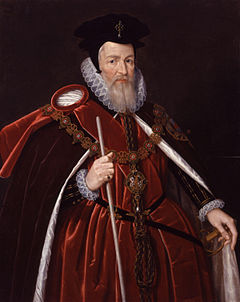
Biography: William Cecil, 1st Baron Burghley

240px-William_Cecil,_1st_Baron_Burghley_from_NPG_(2)(Born September 13, 1520- Died August 4, 1598)
Son of Sir Richard Cecil and Jane Heckington.
Married to Mary Cheke and Mildred Cooke.
Father of Thomas Cecil, 1st Earl of Exeter, Frances Cecil, Anne Cecil, Countess of Oxford, Robert Cecil, 1st Earl of Salisbury, and Elizabeth Cecil-Wentworth.
William Cecil was one of Elizabeth I’s closest advisors who was by her side during some of the most difficult decisions during her reign.

William Cecil was born on September 13, 1520 in Bourne, Lincolnshire, to Sir Richard Cecil, the owner of Burghley Castle, and his wife Jane Heckington. William was the couple’s only son and he was put to school first at Grantham and then at Stamford. In May 1535, at the age of fourteen, he went up to St John’s College, Cambridge, where he was brought into contact with the top tutors of the time, Roger Ascham and John Cheke, and acquired an unusual knowledge of Greek. He also acquired the affections of Cheke’s sister, Mary, and was in 1541 removed by his father to Gray’s Inn, without, after six years’ residence at Cambridge, having taken a degree. Four months later, Cecil married Mary Cheke.

The only child of this marriage, Thomas, the future earl of Exeter, was born in May 1542, and in February 1543, Mary Cheke died. Cecil would marry again three years later, on December 21, 1546, to Mildred Cooke, who ranked among Lady Jane Grey and Elizabeth I as one of the most learned ladies in all of England. Mildred’s sister Anne was the wife of Sir Nicholas Bacon and the mother of Sir Francis Bacon.

In 1542, for defending royal policy, Cecil was rewarded by Henry VIII with a place in the Court of Common Pleas, which was a court of five members of the king’s council that heard the pleas of the people. A year later, in 1543, he first entered Parliament, but but his name does not show up on parliamentary records until 1547, when he was elected for the family borough of Stamford. Earlier in 1547, he had accompanied Protector Somerset( Edward Seymour) on his Pinkie campaign, being one of the two “judges of the Marshalsea,” i.e. in the courts-martial; the other judge was William Patten.

In 1548, Cecil became a private secretary for Edward Seymour, the Lord Protector, as well as work as a clerk at the court of requests, that was set up to hear poor men’s complaints. In 1549, Somerset experienced his first fall from power and Cecil was sent to the Tower of London for a brief time. Three months later, Cecil was able to ingratiate himself with John Dudley, earl of Warwick and he was released from prison. On September 5, 1550 Cecil was sworn in as one of King Edward’s two secretaries of state and in April 1551, Cecil became chancellor of the Order of the Garter.

During this time, Edward VI was extremely ill. To protect the Protestant government from the accession of a Catholic queen, Warwick forced King Edward’s lawyers to create an instrument setting aside the Third Succession Act on June 15, 1553, which barred both Elizabeth and Mary, from the throne, in favour of Lady Jane Grey. Cecil resisted for a while, but at Edward’s royal command he signed it. Cecil was not a huge fan of this idea and when Warwick marched against Mary Tudor, Cecil decided to switch sides and join Mary’s cause. Mary did not punish Cecil for his earlier support of Lady Jane Grey and Mary debated keeping him on as her Secretary of State. Cecil declined the offer because of his Protestant beliefs. Unlike other Protestants, Cecil stayed in England, but he did do some minor tasks for Mary and helped escort Cardinal Pole to England. He was elected to Parliament as knight of the shire for Lincolnshire probably in 1553 , 1555 and 1559 and for Northamptonshire in 1563. Cecil did oppose one of Mary’s policies in 1555 that was a bill that proposed to strip the Protestant exiles of their property.

Cecil was able to meet with Elizabeth starting in 1550 when he became Surveyor of her properties. During Mary’s reign, Cecil would visit Elizabeth in secret and he was one of the first to flock to Elizabeth in Hatfield in November 1558. The day after Mary’s death was the day of Elizabeth’s accession and Cecil was already working hard to establish good relationships with European leaders for Elizabeth. Elizabeth decided to make Cecil her Secretary of State, which was a wise choice. It is said that “No prince in Europe had such a counsellor as she [Elizabeth] had of him[Cecil].”( Somerset, 64).

His first major diplomatic achievement was to persuade a reluctant queen to intervene in Scotland and conclude the Treaty of Edinburgh (1560), which removed French forces from Scotland. His gift for compromise facilitated the church settlement in 1559; his financial sense, the recoinage in 1561. Elizabeth’s flirtation with Robert Dudley, however, weakened Cecil’s position. Despite threats of resignation and opposition to Robert Dudley, Cecil retained Elizabeth’s trust and was rewarded with the lucrative mastership of the Court of Wards in 1561.

Decision on the succession was necessary to settle policies. While Cecil wanted to thwart Dudley, he sympathized with Protestant efforts in Parliament to make Elizabeth marry. He resisted Mary Stuart’s claims to succeed but recommended the Habsburg suitor, the Archduke Charles. Dudley, capturing the initiative, backed an ill-fated expedition to France to aid the Huguenots, which ended in the Treaty of Troyes, became a councillor, and in 1564 became earl of Leicester. On the defensive, Cecil restored the balance by introducing Thomas Howard, 4th duke of Norfolk, into the council.Cecil was in favor of having Robert Dudley marry Mary Queen of Scots to unite England and Scotland, but the marriage did not happen as Mary married Lord Darnley in 1565.

Mary Stuart’s flight to England in 1568 embarrassed Cecil; although it opened diplomatic opportunities in Scotland, it led to Norfolk’s plan to marry the widowed queen of Scots. Norfolk opposed Cecil over Mary’s fate, over secret aid to the Huguenots, and over policy toward Spain. Resenting the threat of the Duke of Alba’s Spanish army in the Netherlands, Cecil nearly precipitated war in December 1568 by instigating the seizure of ships carrying bullion to Alba, who retaliated by closing Antwerp to English trade. Leicester joined Norfolk, and they prepared to oust Cecil; but they faltered before the Queen’s support for her secretary.

On February 25, 1571 Cecil was raised to the peerage as Baron Burghley of Burghley; the fact that he continued to act as secretary after his elevation illustrates the growing importance of that office, which under his son became a secretaryship of state.Meanwhile, the papal bull of 1570, deposing Elizabeth, confirmed Cecil in his defense of the Elizabethan church. The intrigue called the Ridolfi Plot, a planned Spanish invasion of England to put Mary Stuart on the throne, led to Norfolk’s execution in 1572. Cecil’s rebuff to Spain was underlined by the Treaty of Blois with France in 1572. Neither French influence in the Netherlands nor the St. Bartholomew’s Day Massacre deterred Cecil from the French alliance; but he also soothed Spain, and the embargo on trade with Antwerp was lifted. In Scotland he settled the regency; but he failed to persuade the Scots to try to depose their queen, who remained a focus of Catholic intrigue in her English prison.

In the 1570s Leicester, supported by Francis Walsingham, who became a secretary in 1573, courted Puritan support; agitated for aid to William of Orange, Protestant leader of the rebels in the Netherlands; and favoured negotiations with France. Cecil restraining the French and trying to avoid open commitment to the rebels, pursued a policy that, in advocating nominal Spanish dominion over the Netherlands that was enjoying its traditional liberties, ignored Philip II’s obvious intentions. Cecil failed to reach a settlement in 1576 and finally joined Leicester in urging Elizabeth to act on behalf of Orange. Rather than fight openly, Elizabeth tried to utilize French influence in the Netherlands by marriage negotiations with the Duke of Anjou.

The assassination of William of Orange in 1584 and the knowledge of a planned French landing at Arundel led Cecil to take measures to protect the Queen’s life and to incline toward war against Spain. His hesitation over the costs of war and trying to explore peace options, created ill will with Leicester. But by 1585 Cecil supported Leicester’s expedition to the Netherlands and Sir Francis Drake’s voyage to the Caribbean. In 1586, on Walsingham’s revelation of the Babington plot Cecil pressed to ensure the trial of Mary Stuart and her execution in 1587. His initiative put him in disgrace with Elizabeth.

Under the growing threat of the Spanish Armada in 1587, Cecil discussed matters with Parma, courted Henry of Navarre and James VI of Scotland, and kept a sharp eye on the Irish and English Catholics. His diplomatic, military, naval, and financial preparations proved just adequate in 1588 to defeat the Armada. These were his strengths that made Cecil such a strong Secretary of State for Elizabeth I. William Cecil died at his home on August 4, 1598, leaving his son Robert to become Elizabeth’s principal advisor.

Sources:
https://en.wikipedia.org/wiki/William_Cecil,_1st_Baron_Burghley
http://www.luminarium.org/encyclopedia/burghley.htm
https://www.britannica.com/biography/William-Cecil-1st-Baron-Burghley
Somerset, Anne. Elizabeth I. New York: St. Martins Press, 1992.

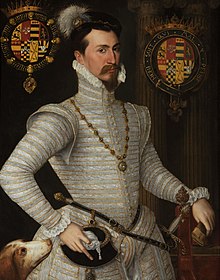
Biography: Robert Dudley, 1st Earl of Leicester

220px-Robert_Dudley_Leicester(Born June 24, 1532- Died September 4, 1588)
Son of John Dudley, 1st Duke of Northumberland and Jane Guildford
Married to Amy Robsart and Lettice Knollys. (He did have a mistress named Douglas Sheffield).
Father of Sir Robert Dudley and Robert Dudley, Lord Denbigh.
Robert Dudley was known as one of Elizabeth I’s favorites at court. He tried to convince Elizabeth for 20 years to marry him, but it failed.

Robert Dudley was born on June 24, 1532 to John Dudley, 1st Duke of Northumberland and his wife Jane Guildford. Robert was the fifth child out of thirteen. Robert was tutored by John Dee, Thomas Wilson, and Roger Ascham and was taught how to be a courtier in the courts of Henry VIII and Edward VI. Robert had a certain knack for foreign languages and writing. In 1549, he participated in ending the Kett’s Rebellion, and this is where it is alleged that he met his first wife Amy Robsart, the daughter and heiress of Sir John Robsart, a gentleman farmer from Norfolk. The couple was married on June 4, 1550 in the presence of King Edward VI at Sheen Palace. It is believed that this marriage was a love match, but the couple depended heavily on the gifts from John Dudley, since he was the de facto ruler of England from 1550 until 1553 because Edward VI was very ill.

On July 6, 1553, King Edward VI died. Edward decided to not listen to his father’s Act of Succession and removed Mary and Elizabeth from the line of succession in order to place his cousin Lady Jane Grey on the throne. Lady Jane Grey was married to John Dudley’s son Guilford Dudley. John Dudley raised an army for Lady Jane Grey to face off against Mary to prevent her from becoming queen, but it failed and Jane’s reign ended on July 19th. Robert Dudley was put in the Tower of London and condemned to death, just like his brothers and his father, who were executed. Robert Dudley was in the Tower the same time that Elizabeth was imprisoned there for her alleged involvement in the Wyatt Rebellion. In February 1554, Guildford Dudley was executed and in the autumn, the surviving brothers, Robert and Ambrose, were released from prison. Later that year, Ambrose and Robert were welcomed to participate at a tournament to celebrate Anglo-Spanish friendship.

In 1557, Robert and Amy were able to allowed to repossess some of their former lands, and in March of the same year Dudley was at Calais where he was chosen to deliver personally to Queen Mary the happy news of Philip’s return to England. Ambrose, Robert, and Henry Dudley, the youngest brother, fought for Philip II at the Battle of St. Quentin in August 1557 where Henry Dudley was killed. During the first parliament of 1558, Mary I restored Robert Dudley and his siblings titles and they were able to return to court. Mary I would die on November 17, 1558.

On November 18, 1558, Robert Dudley was there to witness Elizabeth’s accession. He was at Hatfield to see Elizabeth receive the Great Seal and the same day, he was created Master of the Horse the same day. The Master of the Horse was a very prestigious position that required much personal attendance on the Queen, as well as organizing her public appearances, progresses, and her personal entertainment. This was a title that suited Robert very well and because he did a great job at this position, Elizabeth lavished titles and honors on him. In April 1559, Robert Dudley was made a Knight of the Garter. Elizabeth spent a lot of time with Dudley and the rumors began to spread that the two were lovers. There were even threats on Dudley’s life and rumors that Elizabeth had a child by Dudley.

Elizabeth would not let Dudley leave her side at court. They acted very much like a married couple. However, there was another person in the middle of this relationship between Elizabeth and her favorite and that was Dudley’s wife Amy Robsart. On September 8, 1560, Amy was found at the bottom of a staircase at Cumnor Place near Oxford with her neck broken. Many speculated that Dudley had his wife killed in order to marry the queen or that she committed suicide, but recent research has shown that it was probably an accident.

In 1561, Dudley wanted to get away and seek military adventures abroad, but Elizabeth would not let him leave. In 1562 when Elizabeth fell ill with smallpox, she said that if she was to die, she wanted Dudley to become Protector of the Realm; Elizabeth did recover so Dudley never became the Protector, but he did become a privy councilor. Dudley still wanted to be involved in foreign affairs and he did get his chance, but probably not the way he wanted. In 1563, Elizabeth offered Dudley as a suitor for Mary Queen of Scots. Both Dudley and Mary Queen of Scots were not convinced about Elizabeth’s sincerity so she decided to make Dudley more appealing to Mary. Elizabeth made Dudley the Earl of Leicester in 1564. Dudley soon realized that his chances for marrying Elizabeth were dwindling fast, but he was still hopeful that she would chose to marry him.

In July 1575, Dudley staged an elaborate 19- day festival that was meant to be his last proposal for the queen’s hand, but it failed. It was in 1569 when Dudley began his affair with Douglas Sheffield, who was a young widow from the Howard family. Dudley refused to marry her, but the couple did have a child in 1574 named Robert Dudley, named after his father.

Dudley would marry again to Lettice Knollys. Lettice Knollys was the wife of Walter Devereux, 1st Earl of Essex, and first cousin once removed of Queen Elizabeth on her mother’s side. Leicester had flirted with her in the summer of 1565, causing an outbreak of jealousy in the Queen. After Lord Essex went to Ireland in 1573, they possibly became lovers. In July 1576 Essex returned to Ireland, where he died of dysentery in September.

On September 21, 1578, Dudley secretly married Lettice Knollys. He did not dare to tell the Queen of his marriage; nine months later Dudley’s enemies at court acquainted her with the situation, causing a furious outburst. Dudley’s hope of an heir was fulfilled in 1581 when another Robert Dudley, styled Lord Denbigh, was born.The child died aged three in 1584, leaving his parents devastated. Dudley was a concerned parent to his four stepchildren,and in every respect worked for the advancement of Robert Devereux, 2nd Earl of Essex, whom he regarded as his political heir.

Elizabeth never accepted the marriage. She never could forgive Lettice Knollys and banished her from court. Dudley was able to return to his queen’s side at court. In 1585, Dudley was made commander of the English forces in the Netherlands. The Netherlands were revolting against the rule of Philip II, and the English were helping the Dutch in their campaign. Robert stayed in the Netherlands until 1587, although he did return to England during the Mary Queen of Scots crisis of 1586- 1587, and was present in England when Mary was executed. English involvement in the Netherlands was not particularly successful, and when he did return permanently, he received a lot of criticism for his actions there. Although Elizabeth herself had not always been pleased by what he had done, she would not hear a word said against his efforts there.

In 1588, when the Spanish sent their fleet against England , Dudley was put in charge of the land army, and he organized Elizabeth’s famous visit to Tilbury. However, by now he was not a well man, probably suffering from stomach cancer, and his days were numbered. Following the defeat of the Armada, he travelled to Buxton to try and take the healing waters there, but he never made it. He died at his house in Oxfordshire on September 4, 1588. Elizabeth deeply grieved over the death of one of her favorites at court and a close friend.

Sources:
http://www.elizabethi.org/contents/queensmen/robertdudley.htm
https://en.wikipedia.org/wiki/Robert_Dudley,_1st_Earl_of_Leicester

Click to access robert-dudley-earl-of-leicester4.pdf

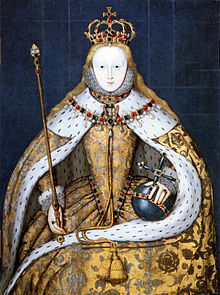
Biography: Queen Elizabeth I

220px-Elizabeth_I_in_coronation_robes(Born September 7, 1533- Died March 24, 1603)
Daughter of King Henry VIII and Anne Boleyn.
Sister to King Edward VI and Queen Mary I
Elizabeth was known as the “Virgin Queen” because she never married and she never had a child. Elizabeth was one of the greatest rulers in English history.

Elizabeth I was born on September 7, 1533 to Henry VIII and his second wife Anne Boleyn at Greenwich Palace. At birth, Elizabeth was declared heir presumptive to the throne of England. Her older half-sister, Mary, had lost her position as a legitimate heir when Henry annulled his marriage to Mary’s mother, Catherine of Aragon, to marry Anne, with the intent to sire a male heir and ensure the Tudor succession. However, things didn’t go as planned. Anne never was able to give birth to the desired son that Henry wanted. Anne would later be accused of adultery and treason. On May 19, 1536, Anne Boleyn was executed; Elizabeth was two years old at the time and she was declared illegitimate, just like her step-sister Mary.

Henry VIII married Jane Seymour shortly after Anne Boleyn’s execution. Jane gave birth to Elizabeth’s step-brother Edward, but died shortly afterward. Elizabeth’s father would marry three more times; Anne of Cleves who was divorced; Katherine Howard who was beheaded; and finally Katherine Parr. During this time, Elizabeth met Catherine “Kat” Ashley who was appointed Elizabeth’s governess in 1537 and remained with Elizabeth until her death in 1565. William Grindal became her tutor in 1544 and after his death in 1548, Roger Ascham became Elizabeth’s tutor. Elizabeth received a very good education and she loved to learn. Elizabeth’s life was somewhat normal at this point, but life was about to change drastically.

Henry VIII died on January 28, 1547, when Elizabeth was 13, leaving the throne to his nine year old son Edward VI. Before Henry VIII died, he reinstated his daughters to the line of succession so after Edward VI, Mary would become queen and then Elizabeth. Shortly after Henry VIII’s death, his last wife Katherine Parr married Thomas Seymour, the brother of Jane Seymour and Edward Seymour, Edward VI’s Lord Protector. Elizabeth moved in with Katherine Parr and Thomas Seymour at their home in Chelsea where, it is alleged, Thomas Seymour would act inappropriately towards Elizabeth, including bursting into her bedroom while she was barely dress, slap her on the bottom, and one time, shred Elizabeth’s dress. In May 1548, Elizabeth was dismissed from Katherine’s household; Katherine Parr died from childbirth on September 5, 1548 which allowed Thomas to pursue Elizabeth as his wife, but it failed. Thomas was accused of trying to kidnap Edward VI, charged with treason and executed on March 20, 1549. Elizabeth was interrogated during the investigation into Thomas, but she never admitted anything about the nature of their relationship.

Edward VI would die on July 6, 1553, at the age of 15. Under Henry VIII’s Act of Succession, the crown should have passed onto Mary, however Edward did not like that she was Catholic, so before he died, he issued an act that named his heir as Lady Jane Grey. Lady Jane Grey would only be queen for nine days since Mary brought an army to place her on the throne. On August 3, 1553, Mary rode into London with Elizabeth by her side. On the outside, it looked like Mary and Elizabeth had reconciled, however they were pulling farther apart.

Mary and Elizabeth kept butting heads over religion, Mary being Catholic and Elizabeth being Protestant. Mary’s popularity began to wan with her people when she announced in 1554 that she wanted to marry Philip II of Spain, a devout Catholic. That same year in January and February, a man by the name of Thomas Wyatt staged a rebellion to put Elizabeth on the throne instead of Mary, which failed. Wyatt was beheaded and Elizabeth was interrogated. She was imprisoned in the Tower of London on March 18th; she would later be transferred to Woodstock on May 22nd where she spent a year under house arrest in the custody of Sir Henry Bedingfield.

Elizabeth returned to court on April 17, 1555 to help Mary with the final stages of her pregnancy. However, months passed and it turned out that it was a false pregnancy. As Mary fell ill, Philip II started to consult with Elizabeth on how to run the country, and in October 1558, Elizabeth began to formulate her own court. On November 6, Mary recognized Elizabeth as her heir and on November 17, 1558, Mary I died and Elizabeth I succeeded to the throne.

Elizabeth I became Queen of England at the age of 25. She was crowned in an elaborate ceremony on January 15, 1559, which was cold winter day; Elizabeth would get sick shortly after her coronation, but once she recovered, she made William Cecil, later Baron Burghley, her Chief Minister. Elizabeth had two pressing matters to solve when she first became queen, resolving the matters of religious division in England and who she would marry. With the religious division, she sought to strike a balance, so that even though Protestantism became the national religion, those who wanted to hear the Roman Catholic mass were able to do so in private. Elizabeth became the Supreme Governor of the Church of England.

The other issue that plagued Elizabeth during her reign was who she was going to marry. There were many candidates, foreign and English suitors, but Elizabeth would not commit herself to one man, instead she decided to remain single and considered herself the mother of the English people. The man who probably had the best chance of marrying Elizabeth was Robert Dudley. Dudley was the brother of Guilford Dudley, the husband of Lady Jane Grey. He was married to Amy Robsart, but she died of a fall in 1560 and Dudley was accused of her murder. He was created the Earl of Leicester in 1564. Dudley remarried in 1578 to one of Elizabeth’s Maid of the Privy Chamber, Lettice Knollys. This made Elizabeth angry and she banished Lettice from court. Dudley would die in 1588, shortly after the defeat of the Spanish Armada. Robert Dudley tried for over 20 years to convince Elizabeth to marry him and it resulted in a close friendship, but nothing more.

The other serious contender for the Queen’s hand was Francis, Duke of Anjou, who Elizabeth called her “frog”, heir to the French throne. But again, political considerations made the match ultimately impossible. Other suitors included King Philip II of Spain, King Eric XIV of Sweden, Archduke Charles of Austria, and Henry Duke of Anjou (the duke before Francis). Elizabeth had numerous favorites at her court including Sir Christopher Hatton, Robert Devereux earl of Essex, and Walter Raleigh, just to name a few. The problem was that Elizabeth decided not to marry nor would she declare a successor, even when she contracted smallpox in October 1562 and she thought she might die.

Elizabeth’s refusal to marry or name a successor led to one of the most defining conflicts of Elizabeth’s reign. Catholics viewed Elizabeth as illegitimate and had no right to the throne. To them, Mary Queen of Scots, Elizabeth’s cousin, had a better claim to the throne. Mary was the granddaughter of Henry VIII’s sister Margaret. Elizabeth was persuaded to send a force into Scotland to aid the Protestant rebels, and though the campaign was inept, the resulting Treaty of Edinburgh of July 1560 removed the French threat in the north.When Mary returned to Scotland in 1561 a to take up the reins of power, the country had an established Protestant church and was run by a council of Protestant nobles supported by Elizabeth. Mary refused to ratify the treaty which denied Mary the right to succeed to the English throne.

In 1563 Elizabeth proposed her own suitor, Robert Dudley, as a husband for Mary, without asking either of the two people concerned. Both proved unenthusiastic, and in 1565 Mary married Henry Stuart, Lord Darnley, who carried his own claim to the English throne. The marriage was the first of a series of errors of judgement by Mary that handed the victory to the Scottish Protestants and to Elizabeth. Darnley quickly became unpopular and was murdered in February 1567 by conspirators almost certainly led by James Hepburn, 4th Earl of Bothwell. On May 15, 1567, Mary married Bothwell, arousing suspicions that she had been in on the murder of Lord Darnley. This lead to Mary’s fall from grace and she was held captive starting in July 1567.

Forced to flee her own country, having abdicated her throne in favour of her infant son, James, Mary landed in England in May 1568, seeking Elizabeth’s help in restoring her to her kingdom. Because the matter of Darnley’s death was unresolved, Elizabeth placed Mary in prison for around 20 years. Of course, this angered the Catholics who saw Mary as the figurehead of their cause, so there were plots and plans to get Mary out of prison and place her on the throne instead of Mary. The largest plot was the Babington Plot of the summer of 1586, which laid out plans for Elizabeth’s execution and Spain’s invasion of England. Since Mary knew of the plans, she was tried and found guilty of treason. Elizabeth was very reluctant to sign the death warrant, but eventually she did. Mary Queen of Scots was executed on February 8, 1587 at Fotheringhay Castle; her son James VI was declared Elizabeth’s heir to the throne.

Another huge challenge for Elizabeth was her relationship with Spain and her former brother-in-law, Philip II. With the discovery of the new world and the age of exploration in full force, piracy was becoming more popular. In 1572, Sir Francis Drake decided to plunder Spanish ships in Central and South America. In 1577, Drake was introduced to Elizabeth and she unofficially encouraged his activities against the Spanish. In December 1577, Drake travelled around the world plundering Spanish ships; he returned to England in September 1580 as a national hero and in April 1581, he was knighted.

By 1588, Elizabeth and Philip were considered enemies. Philip had spoken of invading England and dethroning Elizabeth for years, but the execution of the Queen of Scots gave him an added incentive. In July 1587, Philip received a treaty from the pope that gave his approval on the conquest of England. Now he could claim the English throne for himself and dethrone Elizabeth to restore England to Catholicism. In 1587, Drake was able to lead a successful raid against Cadiz, which delayed the Spanish Armada from invading by a year. In the summer of 1588 he sent his mighty Armada fleet against England. But by superior tactics, ship design, and sheer good fortune, the English defeated them. This was one of Elizabeth’s biggest achievements and made Elizabeth extremely popular in England.

In Ireland, there was a revolt against the English, led by Hugh O’Neill, Earl of Tyrone. In spring 1599, Elizabeth sent Robert Devereux, 2nd Earl of Essex, to put the revolt down. To her frustration,he made little progress, even though he begged to go there, and returned to England in defiance of her orders. He was replaced by Charles Blount, Lord Mountjoy, who took three years to defeat the rebels. Essex thought that when he returned to England, he would be treated like a hero, but he was treated with contempt. This made Essex upset and in February 1601, the earl tried to raise a rebellion in London. He intended to seize the queen but few rallied to his support, and he was beheaded on February 25, 1601.

After Essex’s death, Elizabeth’s health began to deteriorate. She would die at the age on 69 on March 24, 1603 at Richmond Palace. Elizabeth was interred in Westminster Abbey, in a tomb shared with her half-sister, Mary I.

Sources:
https://en.wikipedia.org/wiki/Elizabeth_I_of_England#Mary,_Queen_of_Scots
http://www.elizabethi.org/contents/biography/
https://www.biography.com/people/queen-elizabeth-i-9286133
Ashley, Michael. A Brief History of British Kings & Queens. Philadelphia, PA: Running Press, 2008.

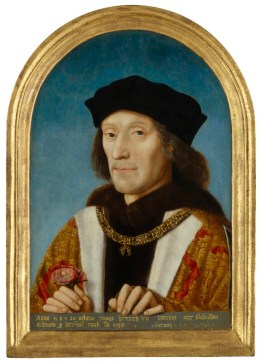
Biography: King Henry VII

mw03078(Born January 28, 1457- Died April 21, 1509). Son of Margaret Beaufort and Edmund Tudor, 1st Earl of Richmond. Married to Elizabeth of York. Father of Arthur, Prince of Wales, Margaret, Queen of Scots, Henry VIII, King of England and Mary, Queen of France. Henry VII went from an exile to the founder of one of the most powerful dynasties in all of English history, the Tudor Dynasty.
Henry Tudor, later Henry VII, was born at Pembroke Castle to Margaret Beaufort and Edmund Tudor, 1st Earl of Richmond on January 28, 1457. Henry never met his father Edmund because he died three months before Henry was born. His grandfather, Owen Tudor, was married to Katherine of Valois which made Henry’s father half brother of King Henry VI. Henry’s mother was the great granddaughter of John of Gaunt and his third wife Katherine Swynford. Henry’s mother Margaret Beaufort was only 13 when she gave birth to Henry and because his father died, his uncle Jasper Tudor took care of him.

Life was stable for Henry Tudor for a few years, until Edward IV won the crown in 1461, sending Henry’s uncle Jasper into exile and the title of Earl of Pembroke as well as Pembroke Castle and the wardship of Henry went to a Yorkist supporter William Herbert. Henry stayed with William Herbert until 1469, when the Earl of Warwick Richard Neville switched sides to the Lancastrians and had Herbert executed. Warwick restored Henry VI to the throne in 1470, Jasper came back from exile, and Henry was allowed to go to court.

This return of Henry VI would not last long as Edward IV was restored to the throne and Warwick was killed. Henry and Jasper tried to gather more support for the Lancastrian cause but they got caught in a bad storm in the English Channel while escaping from Tenby. They landed in Brittany where they sought the protection of Francis II, Duke of Brittany, which he did give to them. The Lancastrians along with Jasper and Henry, were housed at the Château de Suscinio in Sarzeau. Edward IV tried his best to apprehend Jasper and Henry but he failed to do so. Edward IV died on April 9, 1483, leaving his throne to his young son Edward V. After a few weeks, Edward V and his siblings were declared illegitimate and the throne was passed onto Edward V’s uncle Richard Duke of Gloucester, who became Richard III. Edward V and his brother Richard Duke of York were never seen again.

Henry’s mother Margaret Beaufort saw an opportunity for her son to become king. During this time Margaret was plotting with Elizabeth Woodville to arrange a marriage between Henry and Elizabeth Woodville eldest daughter, Elizabeth of York. Henry and Jasper tried to invade England in October 1483, but they were forced to go back to Brittany. It was in December 1483 that Henry made an oath in Rennes, France to marry Elizabeth of York when he became King of England. When the Duke of Brittany got very ill in 1484, his treasurer Pierre Landais made a deal with Richard III to give over Henry and Jasper Tudor in exchange for 3,000 English archers to defend a French attack. A bishop in Flanders John Morton heard about the deal and warned Henry and Jasper just before Landais could reach them. Henry and Jasper fled into France where King Charles VIII allowed them to stay until Duke Francis II felt better.
Henry and Jasper Tudor made their way back to England in August 1485, where they faced off against Richard III at the Battle of Bosworth Field on August 22, 1485. Richard III was defeated and Henry became Henry VII. Henry was crowned king on October 30, 1485 and he would marry Elizabeth of York the following year on January 18, 1486. The couple had their first child, Arthur, on September 20, 1486. Henry and Elizabeth would have 4 children who would survive into adulthood; Arthur Tudor, Margaret Tudor, Henry Tudor, and Mary Tudor. During 1487, a young man named Lambert Simnel, claimed that he was the earl of Warwick, Elizabeth’s cousin, so Henry VII had the real earl of Warwick taken from the Tower and paraded through London. It was at the last battle of the Wars of the Roses, the Battle of Stoke Field on June 16, 1487 that Lambert Simnel was defeated. Henry decided to let the boy live and gave him a job at the castle.

In 1490, a young man named Perkin Warbeck, appeared and claimed to be Richard Duke of York. Warbeck won the support of Edward IV’s sister Margaret of Burgundy and James IV of Scotland. In September 1497 Warbeck landed in Cornwall with a few thousand troops, but was soon captured. He was allowed to live in the court and his wife Lady Catherine Gordon was made one of the ladies in waiting for Elizabeth of York. Warbeck tried to escape and it landed him in the Tower of London, close to Edward Plantagenet, 17th Earl of Warwick, son of the late George, Duke of Clarence. Warbeck and Warwick plotted to escape the Tower, but the plan was uncovered and both men were charged with treason. Perkin Warbeck was hanged at Tyburn on November 23, 1499.

Henry VII was a cautious man and decided that it was better to make alliances through marriages than to launch into expensive wars, like his predecessors. Henry VII was one of the first European monarchs to recognise the importance of the newly united Spanish kingdom under Isabella of Castile and Ferdinand of Aragon and concluded the Treaty of Medina del Campo, by which his son, Arthur Tudor, was married to Catherine of Aragon. He also concluded the Treaty of Perpetual Peace with Scotland, which betrothed his daughter Margaret to King James IV of Scotland. Henry VII hoped to break the Auld Alliance between Scotland and France through the marriage of Margaret to the Scottish king, but it did not happen. Henry was also able to form alliances with Pope Innocent VIII and Holy Roman Emperor Maximilian I.

On November 14, 1501, Arthur Tudor married Katherine of Aragon. The following year, tragedy hit hard as Arthur died on April 2, 1502. His son’s death hit Henry hard and it was his wife Elizabeth of York who consoled him and convinced him that he still had Henry, his youngest son, as his heir and that they were still young enough to have children. Henry VII wanted to maintain the Spanish alliance. He therefore arranged a papal dispensation from Pope Julius II for Prince Henry to marry his brother’s widow Katherine. Elizabeth would have one more child, a girl named Katherine, on February 2, 1503, but the baby would not live long. Elizabeth of York would die on her 37th birthday, on February 11, 1503. Henry would grieve over the loss of his wife and son the rest of his life. He retreated to Richmond Palace, which was the former Sheen Palace but it was badly damaged in a fire in 1497 and rebuilt. Henry’s health failed him and he would die on April 21, 1509 at Richmond Palace. His only son Henry Tudor succeeded his father and became Henry VIII.

Biography: Elizabeth of York

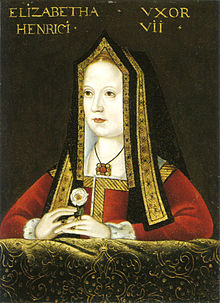
220px-Elizabeth_of_York_from_Kings_and_Queens_of_England(Born February 11, 1466- Died February 11, 1503). Daughter of King Edward IV and Elizabeth Woodville. Married to King Henry VII. Mother of Arthur, Prince of Wales, Margaret, Queen of Scots, Henry VIII, King of England and Mary, Queen of France.
Elizabeth of York was the daughter, niece, sister, wife and mother of kings. It was through her marriage with Henry VII that helped create the Tudor Dynasty.

Elizabeth of York was the eldest child of Edward IV and Elizabeth Woodville. She was born at the Palace of Westminster on February 11, 1466. She was christened at Westminster Abbey; her godparents were Jacquetta of Luxembourg, Duchess of Bedford, Cecily Neville, Duchess of York, and Richard Neville 16th Earl of Warwick. When she was three years old in 1469, she was briefly betrothed to George Neville, the nephew of Richard Neville, but it did not go far since his uncle would die two years later. In 1475, Louis XI agreed to arrange a marriage between nine year old Elizabeth of York to his son, Charles, the Dauphin of France; in 1482, Louis decided not to go along with the promised wedding.

Elizabeth’s world drastically changed forever when her father, Edward IV, suddenly died on April 9, 1483. Her young brother Edward V was proclaimed king and her uncle Richard Duke of Gloucester was named Lord Protector. On April 29, as previously agreed, Richard and his cousin, the Duke of Buckingham, met Queen Elizabeth’s brother, Anthony Woodville, 2nd Earl Rivers, at Northampton. The young king himself had been sent to Stony Stratford. Richard had Earl Rivers, his nephew Richard Grey and his associate, Thomas Vaughan, arrested. They were taken to Pontefract Castle, where they were executed on June 25 on the charge of treason against the Lord Protector after appearing before a tribuna. Richard took the young king under his protection, escorted him to London, and placed him in the Tower for his protection. After hearing about what had happened, Elizabeth Woodville took her children, including Elizabeth of York, her other daughters, her youngest son Richard Duke of York, and fled to sanctuary in Westminster Abbey. Elizabeth Woodville tried to keep her son Richard Duke of York away from Richard Duke of Gloucester, but she eventually did give up her son. We do not know how Elizabeth of York reacted to these events.

In early June of 1483, the marriage between Elizabeth’s parents, Edward IV and Elizabeth Woodville, was declared invalid because it is said that Edward IV had entered into a pre-contract marriage with Lady Eleanor Butler before he married Elizabeth Woodville. This meant that any children of Edward IV and Elizabeth Woodville were considered illegitimate, including Edward V, Richard Duke of York and Elizabeth of York. Since the children of George Duke of Clarence were barred from succession because of their father’s treason and execution, the next in line to the throne was Richard Duke of Gloucester. Richard was crowned King Richard III on July 6, 1483 and Elizabeth’s brothers disappeared. Some say that they were murdered, others say they escaped, but at this point we do not know what happened to Edward V and Richard Duke of York.

Elizabeth’s mother Elizabeth Woodville was now known as Elizabeth Grey and she decided to side with the Duke of Buckingham and Margaret Beaufort to put Margaret’s son Henry Tudor on the throne. Henry Tudor was the closest male Lancastrian heir and in order to cement this new alliance, Elizabeth Woodville and Margaret arranged that Henry would marry Elizabeth of York. Buckingham’s rebellion against Richard would fail and he would be killed on November 2, 1483. In December 1483, Henry Tudor made an oath in Rennes, France that he would marry Elizabeth of York when he became King of England. In January 1484, the act known as Titulus Regius was passed by Parliament, which confirmed under law that the marriage between Edward IV and Elizabeth Woodville was invalid.

On March 1, 1484, Elizabeth Woodville and her daughters left sanctuary after Richard III promised not to harm them and to arrange marriages for all of Elizabeth’s daughters. There were rumors that after Anne Neville in March 1485, Richard III’s wife, died that he was seeking to marry Elizabeth of York, but there is no evidence to support this claim. Soon after Anne Neville’s death, Richard III sent Elizabeth away from court to the castle of Sheriff Hutton and opened negotiations with King John II of Portugal to marry his sister, Joan, Princess of Portugal, and to have Elizabeth marry their cousin, the future King Manuel I of Portugal.

These marriage arrangements did not come to fruition. Elizabeth of York stayed at Sheriff Hutton during August 1485, when Henry Tudor invaded England and on August 22, 1485 when Richard III fell at the Battle of Bosworth Field and Henry Tudor became King. Henry did keep his promise and married Elizabeth of York on January 18, 1486. The couple’s first child, Arthur, was born on September 20, 1486.

During 1487, a young man named Lambert Simnel, claimed that he was the earl of Warwick, Elizabeth’s cousin, so Henry VII had the real earl of Warwick taken from the Tower and paraded through London. It was at the last battle of the Wars of the Roses, the Battle of Stoke Field on June 16, 1487 that Lambert Simnel was defeated. Henry decided to let the boy live and gave him a job at the castle. Elizabeth was crowned on November 25, 1487 and she would have seven children total, four survived into adulthood; Arthur, Henry, Margaret and Mary. Although Elizabeth had a strong claim to the throne, she did not seek to become queen regnant.
In the early 1490s, another threat to the peace emerged with the contention that Elizabeth’s younger brother, Richard, Duke of York, was still alive. Her aunt, Margaret of York, Dowager Duchess of Burgundy and James IV of Scotland, were sponsoring a young man, later revealed to be a youth named Perkin Warbeck. Warbeck received wide-spread support from amongst Yorkists, who did not like Henry VII. Ultimately, however, Warbeck could not command enough support at home or abroad, to mount a successful challenge and in 1497, he was captured.

Warbeck’s wife Lady Catherine Gordon was made one of the ladies-in-waiting for Queen Elizabeth of York. In June 1498, Warbeck was forced to make two public appearances at Westminster and Cheapside, where he admitted that he was not Richard Duke of York and that Margaret of Burgundy was to blame for the entire scheme. Henry VII was kind to Warbeck at the beginning, allowing him to live at court, but Warbeck tried to escape and it landed him in the Tower of London, close to Edward Plantagenet, 17th Earl of Warwick, son of the late George, Duke of Clarence. Warbeck and Warwick plotted to escape the Tower, but the plan was uncovered and both men were charged with treason. Perkin Warbeck was hanged at Tyburn on November 23, 1499. We don’t know if Elizabeth of York ever met Warbeck.

Elizabeth was a very pious woman and was very dedicated to her children’s wellbeing. Elizabeth was very involved in the marriage negotiations for her two eldest children, Arthur and Margaret, Arthur to Katherine of Aragon, daughter of Isabella I of Castile and Ferdinand II of Aragon, and Margaret to James IV of Scotland. Elizabeth helped convince Katherine’s parents that she would be well taken care of and with Margaret’s marriage, Elizabeth was concerned that she was getting married at such a young age.

In November 1501, Katherine of Aragon arrived in England and Elizabeth was part of the celebrations of the marriage. The following year, tragedy hit hard as Arthur died on April 2, 1502. This was a tragic loss for Henry and Elizabeth because this meant that there was only one heir to save the Tudor Dynasty, the young Henry Tudor. While Henry was grieving, it is said that Elizabeth comforted him and told her husband that they were still young enough to have more children. Later, Elizabeth would break down and it was Henry who consoled his wife. Elizabeth would have one more child, a girl named Katherine, on February 2, 1503, but the baby would not live long. Elizabeth of York would die on her 37th birthday, on February 11, 1503.