
 When we think of those who made an impact in history, we tend to think of those who have been born to a married couple and therefore were considered legitimate children, especially when it comes to royal children. However, we know that illegitimate royal children, like William the Conqueror, greatly impacted history. Illegitimate royal children may have been barred from becoming king or queen of their respective countries of birth, but that does not mean they didn’t impact how their home country was governed. One of these children who affected politics during the Tudor dynasty was Arthur Plantagenet, the illegitimate son of Edward IV. In her latest book, “Arthur Plantagenet: Henry VIII’s Illegitimate Uncle,” she explores the life of this man who gives us extraordinary insight into the running of Calais and how Henry VIII treated other family members.
I want to thank Pen and Sword Books and NetGalley for sending me a copy of this book. I have enjoyed the previous books I read by Sarah-Beth Watkins, and when I heard that she was writing a new book about Arthur Plantagenet, I was thrilled to read it. I have only heard about Arthur Plantagenet as a side character in other biographies and novels during Henry VIII’s reign, so I was looking forward to learning more about this man.
Watkins begins by exploring the possible birth dates and Arthur’s birth mother, which is a difficult challenge because Edward IV was known for having several mistresses that we know about and probably others who have remained secrets in history. While some illegitimate children were not acknowledged by their royal fathers, it looks like Edward IV accepted Arthur and allowed him to have a good education that would have followed his legitimate sons’ education regime. After the shocking death of Edward IV and the reign of Richard III, we see Arthur establishing himself in the court of Henry VII and Elizabeth of York; we have records of Elizabeth of York taking care of her illegitimate half-brother. Arthur was so close to Elizabeth of York that he attended her funeral.
Arthur’s rise during the reign of Henry VIII focuses on this title. We see how Arthur started as a Spear of Honour and worked his way up to Viscount Lisle after Charles Brandon became Duke of Suffolk. He was a Knight of the Garter, the Vice Admiral of the Tudor Navy, and finally became Lord Deputy of Calais. Arthur was married twice to Elizabeth Grey and Honor Greenville, and although Elizabeth was the one who gave Arthur his daughters, Honor was the one who we know the most about because of the Lisle Letters.
With the title of Lord Deputy of Calais came significant responsibilities for taking care of France’s last remaining English city. Arthur Plantagenet had to deal with your average repairs, preparing the town for battle, civil disputes, religious quarrels, and plots against King Henry VIII. The time that Arthur and Honor were in Calais was a tumultuous time for England and Henry, and we get to see how Arthur felt about these issues, like the Pole family drama, through his Lisle letters. The connection with the Pole family led Arthur to become a prisoner in the Tower of London for two years as he was connected to the Botolf plot to take the city of Calais for the Pope.
Watkins brings the life of Arthur Plantagenet to the forefront and gives this hidden illegitimate Plantagenet his time to shine. It was a fascinating read, especially learning about how Calais was maintained and about the Botolf plot, which I had never heard about before reading this book. If you want an excellent book that introduces the life of Arthur Plantagenet and his role during the reign of King Henry VIII, I would highly recommend you read “Arthur Plantagenet: Henry VIII’s Illegitimate Uncle” by Sarah-Beth Watkins.
 The year is 1522, and London is in a jovial mood. King Henry VIII and his wife Catherine of Aragon are to play host to the Holy Roman Emperor Charles V as he visits England. As one of King Henry VIII’s most loyal advisors, Cardinal Wolsey had the great honor of hosting a grand masque featuring King Arthur and the Black Knight for the distinguished company. Unfortunately, as preparations for the luxurious masque are in full swing, Wolsey’s historian is horrifically murdered. The only one who can solve the case is Anthony Blanke, the son of John Blanke, the trumpeter before the masque is ruined, and Henry VIII discovers the truth. The story of this case is told in Steven Veerapen’s latest novel, “Of Blood Descended.”
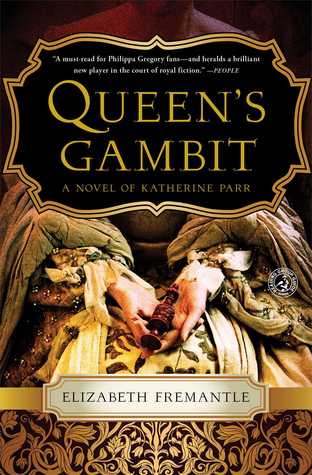 To be married to a king may seem like a dream, but reality can be cruel. Take the wives of Henry VIII. After saying ” I do,” each wife had to deal with complex challenges after saying “I do.” We all know the poem; divorced, beheaded, died, divorced, beheaded, survived, but does that define these queens? After the death of her second husband, Katherine Parr must choose between Henry VIII and Thomas Seymour, the man who has captured her heart. She must navigate love, court intrigues, and the treacherous religious landscape of England in the 1540s to survive. Katherine’s life as Queen of England and how close she came to a disastrous fall from grace are explored in Elizabeth Fremantle’s first novel, “Queen’s Gambit: A Novel of Katherine Parr.”
 When we think about the Tudor dynasty, we think about the monarchs who made the dynasty, but we also pay attention to those around the king or queen who sat on the throne. There were families like the Boleyns, the Howards, and the Seymours who stood on the sidelines for a short amount of time, but one family saw the majority of the dynasty through highs and extreme lows. The Dudleys have been seen as a power-hungry family who would do anything to sit on the throne of England, but is there more to their story? In her debut book, “The House of Dudley: A New History of Tudor England,” Joanne Paul explores the lives of this extraordinary family to find the truth about their ambitions and their resilience.
 English kings are some of the most recognizable monarchs in all of European history, and when we think of Kings of England, a few names pop into our minds. Edward, George, and William tend to be popular, but you cannot study English history without Henry. Eight kings of England were Henry, and they would change the history of England forever. These eight kings give us an entire range of what kingship was like in medieval Europe. From men born to be king to opportunists who decided to take the throne as their own, from saints to warrior kings, the Henrys of English history were a colorful group of characters. Each king has had numerous biographies written about him, but there has never been a collection of biographies about the kings named Henry until now. This is “Harry of England: The History of Eight Kings, From Henry I to Henry VIII” by Teresa Cole.
 The Tudor dynasty was full of colorful characters and events that defined the era. Their lives were full of love affairs, marriages, births, wars, tragedies, and triumphs. In numerous books about these monarchs and this period in history, we have seen the significant events that defined the era, but what about lesser-known social events that these monarchs participated in. The bulk of the research into this dynasty focuses on those who ruled, from Henry VII to Elizabeth I, because their lives give us a brilliant insight into what it was like to live in the glittery Tudor court. In “The Tudor Socialite: A Social Calendar of Tudor Life,” Jan-Marie Knights gives her readers a glimpse into the social calendar of the Tudor rich and famous.
 When we study the past, the stories of queens often begin when they marry their prince or the king. We don’t see their formative years unless they are extraordinary. One of the more extraordinary queens in English history was Anne Boleyn, a woman who was able to capture the heart of King Henry VIII, divide her nation, and gave birth to the legendary Queen Elizabeth I. We all know how the story of Anne Boleyn ends, but how did she become the woman who would one day be Queen of England? Hever Castle currently has an exhibition about Anne Boleyn’s formative years. This corresponding book, “Becoming Anne: Connections, Culture, Court” by Owen Emmerson and Kate McCaffrey, gives readers an in-depth look into her early years.
 During medieval wars, one’s fate is often determined by the spin of the Wheel of Fortune, even for those who did not fight a single battle. One could be living a life of luxury, stability reigning supreme, and is destined to marry a foreign king or prince, but when the wheel begins to spin, all seems lost, and the things that once were as good as guaranteed fall by the wayside. This description could fit any number of stories from the past. Still, the one highlighted in this particular novel is the story of the eldest daughter of King Edward IV and Elizabeth Woodville and the first Tudor queen. In the first book of her latest book series, “The Last White Rose: A Novel of Elizabeth of York,” Alison Weir shows how one woman was able to ride the highs and lows of life to secure her family’s legacy and transform English history forever.
 When we think of famous artists in the 15th and 16th centuries, we focus on the great European masters. Michelangelo, Leonardo da Vinci, and Albrecht Durer tend to come immediately to mind. However, one man from Augsburg, Germany, revolutionized how we viewed the Tudor dynasty through portraiture: Hans Holbein the Younger. Many are familiar with his famous works of art and how they influenced how the Tudors have been perceived for centuries, but the man behind the masterpieces has been overlooked. His story and how art was understood in the 16th century is told in Franny Moyle’s latest biography, “The King’s Painter: The Life of Hans Holbein.”
 In any dynasty, those closest to the throne are the most at risk of dealing with suspicions and conspiracies. Those who were not next in line for the throne were seen as threats, especially those whose bloodline was a bit stronger than those who sat on the throne. The Tudor dynasty’s biggest threat was the few Plantagenets who still lived at court. The family that had the most Plantagenet blood in their veins and poised the most significant threat was the Pole family. However, one woman who was very close to Henry VIII and his family married a man who had Plantagenet blood in his veins. Her name was Gertrude Courtenay, the Marchioness of Exeter, and her story is finally getting the light it deserves in Sylvia Barbara Soberton’s latest book, “The Forgotten Tudor Women: Gertrude Courtenay: Wife and Mother of the Last Plantagenets.”
 Adventures of a Tudor Nerd