
 Today, I am pleased to welcome Carol McGrath to the blog to discuss Tudor hygiene as part of the Sex and Sexuality in Tudor England blog tour. I would like to thank Carol McGrath and Pen and Sword Books for allowing me to be part of this tour.
Did Tudors smell whiffy? Did they care about personal hygiene? It may surprise you that the Tudors cared about cleanliness despite the fact many did not bathe regularly. Henry VIII frequently took baths and had a new bathhouse constructed at Hampton Court for his personal use and a steam bath at Richmond Palace. This new bath was made of wood but lined with a linen sheet to protect his posterior from catching splinters. It was a marvellous feat of Tudor engineering and allowed water to flow into it from a tap fed by a lead pipe bringing water from a spring over three miles distant from the palace. Tudor engineers were clever enough to pass the pipe underneath the Thames river bed using gravity to create strong water pressure to spurt up two floors into the royal bathroom.
It was important to most Tudors not to stink and particularly important not to smell unpleasant when contemplating relations with a lover. Stinking like a beast was totally unacceptable to a Tudor because, ideally, humans should smell sweet. Of course, the Tudor world was less sanitized than our world. Even so, people were not unaware of bad smells around them, and they actually feared nasty pongs. Medicine taught that disease spread through miasma or foul-smelling airs. Importantly, Tudors also believed that sweet smells could be a key indicator of a person’s moral state, never mind that smelling sweet could help attract a lover.
 Bathing for most Tudors meant a dip in the river. For those dwelling in towns, bathing facilities such as bathhouses existed during the first few decades of the era. Crusaders had brought the habit of bathing back from the East, thereby making the idea of bathhouses popular.
Hygiene meant both cleaning oneself and one’s clothes regularly. Just as the Church clamped down on sexual freedoms, it had opinions on bathing: heat could inflame the senses, and washing nude was a sign of vanity, even sexual corruption, so they often wore shirts while bathing. You could scent a bath with flowers and sweet green herbs to help cure ailments, therefore attaching a medicinal element to the practice. Exotic perfumes such as civet and musk were used in soaps, as well as rose water, violet, lavender, and camphor. For those who could afford scented soaps, they certainly were available.

Where public bathhouses went, sex soon followed, so it is no wonder the ever-critical Church complained. Tudor brothels were called ‘stews’ and ‘to lather up’ was an early sixteenth-century slang phrase for ejaculation which came from the notion that one could stew in hot water and steam within a bathhouse. As recently as the previous century, the City of London officially recognized the borough of Southwark as having the highest concentration of bathhouses in London. Ironically, this was an area owned by the Bishop of Winchester, and since many bathhouses were also brothels, their sex workers acquired the alternative name of Winchester Geese.
As the sixteenth century continued, bathing fell into decline as new medical advice suggested it weakened the body. Cleaning the skin left it open to infection. This was considered an outside agency that drifted in the air like spores and which rose from places of putrefaction. The skin’s pores were one body area through which these nasty spores could enter, so medical advice determined that the skin needed to be preserved as a barrier. Pores were a secondary route into the body, and the filth produced by the body must be removed completely and quickly to avoid reabsorption. It became important to wash your shirt and change it frequently to keep clean.
Linen shirts, smocks, under-breeches, hose, collars, coifs, and skull caps allowed the total body coverage. As a fabric, linen was very absorbent. It drew sweat and grease from the skin into the weave of the cloth. Since linen acted like a sponge, the Tudors thought it would draw out waste products from the body and improve the body’s circulation, strengthen the constitution and even restore the balance of the humours.

Laundresses were popular during Tudor times, not just to keep linen washed but because the washerwomen were easily connected with sex. They were badly paid, so sex work was a way to subsidize their income in many cases. Washerwomen sometimes became known as ‘lavenders.’ The word lavender comes from the Latin lavare to wash, and the word to launder derives from these sweet-smelling flowers. Lavender grows all over Europe, and as it was cheap and readily available, it was used widely when washing clothing. The sixteenth-century poem Ship of Fools contains the following lines:
Thou shalt be my lavender Laundress.
To Wash and keep all my gear
Our two beds together shall be set
Without any let.
People used linen to scrub the body. The Tudor Gentleman, Sir Thomas Elyot, wrote a book in 1534 called The Castel of Health. He suggests an early morning hygiene regime to ‘rubbe the body with a course lynnen clothe, first softly and easilye, and after that increase more and more, to a hard and swift rubbynge, untyll the flesh do swelle and to be somewhat ruddy and that not only down ryghte, but also overthrart and round.’ Rubbing vigorously after exercise could draw the body’s toxins out through open pores, and the rough linen cloth would carry them away. Most people only owned two or three sets of underwear. Listed underwear occasionally turned up in Tudor inventories, and linens would often be recorded in wills as bequeathed to others.
Ruth Goodman, a well-known social historian, once followed a Tudor body cleansing regime for a period of three months while living in modern society. No one complained or even noticed a sweaty smell. She wore natural fibre on top of the linen underwear but took neither a shower nor a bath for the whole period. When she recorded The Monastery Farm for television, she only changed her linen smock once weekly and her hose three times over six months, and she still did not pong. Tudor England was not a place where everyone smelled as sweetly as most people who shower daily today, but its people generally managed not to stink. Of course, the past did smell differently. Even so, being clean and sweet-smelling did matter to many Tudors.
 Carol McGrath
Following a first degree in English and History, Carol McGrath completed an MA in Creative Writing from The Seamus Heaney Centre, Queens University Belfast, followed by an MPhil in English from the University of London. The Handfasted Wife, the first in a trilogy about the royal women of 1066, was shortlisted for the RoNAS in 2014. The Swan-Daughter and The Betrothed Sister complete this highly acclaimed trilogy. Mistress Cromwell, a best-selling historical novel about Elizabeth Cromwell, wife of Henry VIII’s statesman, Thomas Cromwell, republished by Headline in 2020. The Silken Rose, first in a Medieval She-Wolf Queens Trilogy featuring Ailenor of Provence, was published in April 2020 by the Headline Group. This was followed by The Damask Rose. The Stone Rose will be published in April 2022. Carol writes Historical non-fiction as well as fiction. Sex and Sexuality in Tudor England will be published in February 2022. Find Carol on her website:
Follow her on amazon @CarolMcGrath
 When one studies a specific dynasty, we tend to focus on the stories of those who rule their respective countries and explore the men who influenced the king’s decisions. A dynasty’s legacy tends to be viewed from the military and legal victories of the men, but just as important are the women who stood beside the king. Royal women tend to be considered side characters of the dynasty who were only crucial for their inheritance, who they married, and the children they could produce. But if we focused on the story of the royal women in a specific dynasty, what could we learn about the dynasty? Amy Licence took this concept to explore women’s voices and decided to tackle the Tudor dynasty in her latest book, “Tudor Roses: From Margaret Beaufort to Elizabeth I.”
 For a woman from the past to leave a mark in history books, she had to have lived an extraordinary life. Some have notorious reputations, or they were considered women of immaculate character. In Foxe’s Book of Martyrs, there was one who was “a woman of noble wit.” She was the daughter of an ancient gentry family who had connections with the court of Henry VIII. Her large family would navigate political turmoil and religious reformations to survive. The name of this wife and mother was Katherine Raleigh, and her tale is told in Rosemary Griggs’ debut novel, “A Woman of Noble Wit.”
 A Woman of Noble Wit
 Author Bio:
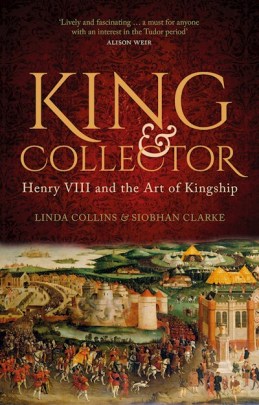 When we think of the legacy of King Henry VIII, a few descriptions come to mind—married six times, father of three children who would be the king and queens of England one day. We often see him as a man conflicted with religious changes and someone who could be tyrannical when dispatching his enemies and those closest to him. We don’t usually associate Henry VIII with a collector and patron of fine art, but his collection would help bring the Royal Collection to life. The artwork that Henry VIII commissioned and collected tells how he wanted to be viewed by the world. In “King and Collector: Henry VIII and the Art of Kingship,” Linda Collins and Siobhan Clarke peel back the layers of Tudor propaganda to show the truth about King Henry VIII and the artists who made his ideal image.
 Today, I am pleased to welcome Sylvia Barbara Soberton back to discuss another forgotten Tudor woman, Gertrude Courtenay, who is the subject of her latest book, “The Forgotten Tudor Women: Gertrude Courtenay. Wife and Mother of the last Plantagenets”.
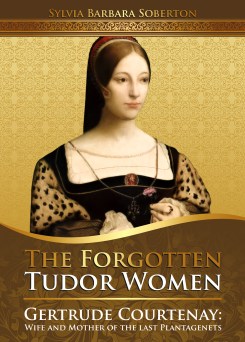 About the Book
 When it comes to studies into the Tudor dynasty, many different approaches have been taken in the past. We have examined every monarch, their spouses, how they lived, what they wore, and the various political events that defined the dynasty. The list is endless to the different studies that have been done with the Tudors, yet there are still new areas of study that are being explored. One of those areas of study is how individuals with disabilities survived in the past. How did society treat those who had disabilities, and what rights did they have according to the laws of the land? In her first non-fiction book, “Disability and the Tudors: All the King’s Fools,” Philippa Vincent-Connolly explores the lives of famous fools and monarchs with disabilities to discover how they were treated by Tudor society.
 When we think about love, we have ideas about how people fall in love through dating and wooing one another. Sweet words and gestures. Flowers and chocolate. Dates at fun venues and romantic dinners. This is a more modern interpretation of romance and love, which was vastly different than the concept of courtly love that was common in royal circles in medieval Europe. What exactly was courtly love, and how did it play a role in the Tudor dynasty? Sarah Gristwood explores this topic in her latest nonfiction book, “The Tudors in Love: The Courtly Code Behind the Last Medieval Dynasty.”
 When we study history, we tend to focus on specific dates, certain people, and the stories that transformed countries forever, no matter how much of an impact they made. What is difficult about studying history is understanding how they experienced life. What did they see? How did they communicate? What did they hear during a typical day? What smells wafted through the air? How did their view on how the body worked affected what they ate and how they cured their illnesses? In her latest nonfiction book,” Woodsmoke and Sage: The Five Senses 1485-1603: How the Tudors Experienced the World”, Amy Licence has taken on the challenge of explaining the Tudor world that they knew through their senses.
 The year is 1558, and Queen Mary I is dying. England is engaged in a war between the Reformation and Catholicism. Caught in the middle is an older man named Robin Lewis, who is being taken to London to face his death as a heretic. Fearful that his story may never be told, Robin Lewis tells his captor his tale through the reigns of three Tudor rulers, Henry VIII, Edward VI, and Mary I. Can his story save his life from certain destruction, or is Robin doomed for all eternity? This is the premise of Karen Heenan’s second book in The Tudor Court series, “A Wider World.”
 We all know about the man who would become King Henry VIII. We know about his love life and his ever-changing views on religious reform, yet a side of the infamous king rarely explored; his love of music. Henry’s court in literature is often viewed through the lenses of those who held power in government and the lady’s maids, but what if it was considered from a different perspective? What if it was viewed from the perspective of one of the performers of King Henry VIII’s court? What might their experiences have been like singing their hearts out for the rich and glamorous? Karen Heenan tries to give her readers a better look into the world of Music with Bess, the titular character of her first novel in The Tudor Court series, “Songbird.”
 Adventures of a Tudor Nerd