Guest Post: “Excerpt from ‘The Will of God’ by Julian de la Motte”

I am pleased to welcome Julian de la Motte to my blog to share an excerpt from his novel, “The Will of God.” I would like to thank The Coffee Pot Book Club and Julian de la Motte for allowing me to be part of this blog tour.

Excerpt:

And so there had been, far more than a ‘little something’ in fact. Grandesmil was carrying in his panniers documents that entitled him to vast swathes of new lands in the Cotentin, and he was carrying in his head visions of the likely reaction to William’s death of certain of his more immediate family. And thus, to Robert, his eldest son: The boy had been with the King of France for four years now. Kept on a short leash and harboured by William’s greatest enemy, a boy caught in rebellion and open defiance of his father. To Robert, then, full pardon and restitution and the bestowing of the Duchy of Normandy for himself, but no Crown of England.

And thus, to Odo, his half-brother. A man so steeped in sin and villainy and treachery that he could no longer personally enjoy his former high estate. While he languished under close but comfortable confinement for his unchurchly crimes, the bounty of Kent, his bishopric of Bayeux, and a score of other properties and estates had gone, untasted by him and savoured by others. To Odo, then, forgiveness and a return of all his former glories and previous estate. To his problematic and scandalous second son William, called Rufus for his red hair and high complexion, the great prize of the Kingdom of England itself and all that it brought, good and bad. To Henry, his youngest and avaricious son, the sum of the weight of five thousand pounds of silver, to make of it what he would.

It was ever the fate of younger sons to make of themselves what they could. That, after all, was what the wild lands of Spain, of Italy, and Sicily and the possessions of the Byzantines were for, so that determined men with horses and swords could take and make of them what they could. But the strange and cold and calculating boy would not embark upon the world empty-handed.

Blurb: 

“Deus Lo Vult!” 

Gilles is the natural son of the Earl Waltheof, executed by William the Conqueror for supposed treachery. Raised in Normandy by Queen Matilda of England, Gilles is a young servant of Robert, Duke of Normandy, when the first call for a Holy War against the infidel and the liberation of Jerusalem is raised in Christendom. Along with thousands of others, inspired by a variety of motives, intense piety mixed with a sense of adventure and the prospects of richness, Gilles becomes a key and respected follower of the Duke of Normandy and travels through France and into Italy to the point of embarkation for Constantinople and the land of the Greeks. 

In this epic first phase of a long and gruelling journey, Gilles begins to discover a sense of his strengths and weaknesses, encounters for the first time the full might and strength of the Norman war machine and achieves his much coveted aim of knighthood, as well as a sense of responsibility to the men that he must now lead into battle. 

The Will of God is the literal translation of the Latin phrase “Deus Lo Vult,” a ubiquitous war cry and a commonly offered explanation of all the horrors and iniquities unleashed by the First Crusade of 1096 to 1099, when thousands of Europeans made the dangerous and terrifying journey to the Holy Land and the liberation of Jerusalem. It is the first of two books on the subject. 

Praise for The Will of God: 

“De la Motte has superpowers as a writer of historical fiction; he’s a warhorse of a writer bred to stun and trample the literary senses. You won’t stop turning the pages of The Will of God.”  

~ Charles McNair, Pulitzer Prize nominee and author of Land O’Goshen 

Buy Link: 

Universal Buy Link:  https://geni.us/uXe6u  

Author Bio

Julian de la Motte is a Londoner. He graduated from the University of Wales with a degree in Medieval History. He was further awarded a Master of Arts qualification in Medieval English Art from the University of York.  


He studied and taught in Italy for nearly four years before returning to the U.K. and a career as a teacher, teacher trainer, and materials designer before taking up a new role as the Director of Foreign Languages and of English as a Foreign Language. 


Married and with two grown-up children, He is now extensively involved in review writing and historical research, primarily on medieval history. 


The Will of God” [the first of two books on the subject of the First Crusade] is his third novel. 

Author Links

Website: www.historiumpress.com/julian-de-la-motte  

Facebook: https://www.facebook.com/julian.delamotteharrison.3  

Amazon Author Page: https://www.amazon.com/stores/author/B08XWMRPYK  

Goodreads: https://www.goodreads.com/author/list/20873400.julian_de_la_Motte  


Book Review: “Marguerite: Hell Hath No Fury” by Judith Arnopp

I would like to thank The Coffee Pot Book Club and Judith Arnopp for sending me a copy of this novel. I have enjoyed her novels about Margaret Beaufort, so when I heard that she was writing a novel about Margaret of Anjou, I was intrigued to see what she could add to her story.

Arnopp begins with Marguerite on the verge of leaving her beloved France to become the new Queen of England. She is to be the bride of the son of King Henry V, King Henry VI. She imagines that her new husband will be similar to his father, a warrior, and that Marguerite will be able to stop the Hundred Years’ War between France and England. Instead, she is married to Henry VI, a man who is extremely devout to his faith, and lives in an England that hates Marguerite. It’s not the picture-perfect situation, but Marguerite tries to make the best of it, including falling in love not only with her husband but also with Somerset and Exeter, men loyal to her husband.

In time, Marguerite does indeed become a mother to Prince Edward, the Lancastrian heir, but it is then that her life truly begins to fall apart. A few months before, King Henry VI fell ill and remained that way for the rest of his life. Marguerite tried to become the Protector of the Realm, but the position went to Richard, Duke of York. Rivalries would turn deadly, and the Lancastrians would face the Yorkists on the battlefield. With the king incapacitated, Marguerite must be a mother, wife, queen, and general to make sure that the Lancastrian cause survives and her family can live to fight for the crown that is rightfully theirs.

This was a very good novel about a woman who was trying to keep her family and her country together while finding love. Arnopp does a great job exploring what life must have been like for Marguerite in a turbulent time. If you want a novel that explores what life was like for the Lancastrian queen during the Wars of the Roses, I recommend you read “Marguerite: Hell Hath No Fury” by Judith Arnopp. 

Blurb: 

Marguerite: Queen of England 

From the moment Henry VI’s new queen, Marguerite of Anjou, sets foot on English soil, she is despised by the English as a foreigner and blamed for the failures of the Hundred Years’ War in France. 

 Her enemies impede her role as the king’s consort, and when Henry sinks into apparent madness, her bid to become regent is rejected. Marguerite must fight, not only for her position but to maintain Henry’s possession of the crown.  

The ambitious Duke, Richard of York, seizes control of the country, thrusting Marguerite aside and inflating the mutual hatred between the houses of York and Lancaster. But the queen refuses to relinquish power and fights determinedly for the rights of her son, Edward of Lancaster. 

The long and bitter civil conflict, which come to be known as the War of the Roses, commences. 

Buy Link: 

Universal Buy Link: https://mybook.to/mhhnf  

This title is available to read on #KindleUnlimited. 

Author Bio

A lifelong history enthusiast and avid reader, Judith holds a BA in English / Creative Writing and a Master’s in Medieval Studies. She lives on the coast of West Wales, where she writes both fiction and non-fiction. She is best known for her novels set in the Medieval and Tudor period, focusing on the perspective of historical women, but recently she has written a trilogy from the perspective of Henry VIII himself. 

Judith is also a founder member of a re-enactment group called The Fyne Companye of Cambria, which is where and why she began to experiment with sewing historical garments. She now makes clothes and accessories both for the group and others. She is not a professionally trained sewer but, through trial, error, and determination, has learned how to make authentic-looking, if not strictly historically accurate, clothing. A non-fiction book about Tudor clothing, How to Dress like a Tudor, was published in 2023 by Pen and Sword. 

She runs a small seaside holiday let in Aberporth and when she has time for fun, likes to garden and restore antique doll’s houses. You can find her on most social media platforms. 

Her novels include: 

A Song of Sixpence: The Story of Elizabeth of York 

The Beaufort Chronicle: the life of Lady Margaret Beaufort (three-book series) 

The Henrician Chronicle: comprising: 

A Matter of Conscience: Henry VIII, the Aragon Years (Book One of The Henrician Chronicle) 

A Matter of Faith: Henry VIII, the Days of the Phoenix (Book Two of The Henrician Chronicle) 

A Matter of Time: Henry VIII, the Dying of the Light (Book Three of The Henrician Chronicle) 

The Kiss of the Concubine: A Story of Anne Boleyn 

The Winchester Goose: at the court of Henry VIII 

Intractable Heart: The Story of Katheryn Parr 

Sisters of Arden: on the Pilgrimage of Grace 

The Heretic Wind: The Life of Mary Tudor, Queen of England 

Peaceweaver 

The Forest Dwellers 

The Song of Heledd 

The Book of Thornhold 

A Daughter of Warwick: The Story of Anne Neville, Queen of Richard III 

Marguerite: Hell Hath no Fury! 

Author Links

Website: http://www.judithmarnopp.com/ 

Blog: http://www.juditharnoppnovelist.blogspot.co.uk/  

Twitter / X: https://twitter.com/JudithArnopp  

Facebook: https://www.facebook.com/thetudorworldofjuditharnopp  

Instagram: https://www.instagram.com/tudor_juditharnopp/  

Threads: https://www.threads.net/@tudor_juditharnopp  

Bluesky: https://bsky.app/profile/jarnopp.bsky.social  

Pinterest: https://www.pinterest.co.uk/jarnopp/  

Book Bub: https://www.bookbub.com/profile/judith-arnopp  

Amazon Author Page: http://author.to/juditharnoppbooks  

Goodreads: https://www.goodreads.com/author/show/4088659.Judith_Arnopp  

Book Review: “Sinners” by Elizabeth Fremantle

The year is 1599 in Rome, Italy. A young rich woman stands in front of an executioner’s block. She is a mother, a daughter, a sister, a lover, and a killer. Her victim was her father, a man who made her life and the lives of her family members a living hell. When she falls in love with one of her father’s spies, she believes that it is a way out. However, the path she chooses to embark on will bring deadly consequences. What is the truth surrounding this case, and is Beatrice Cenci a cold-blooded murderer or a victim looking for her freedom? Elizabeth Fremantle explores the life of Beatrice Cenci and the circumstances of this crime in her latest novel, “Sinners.”

When I heard that Elizabeth Fremantle had a new novel coming out soon, I jumped at the chance to read it. I loved “Disobedient” and “Queen’s Gambit,” so I was excited to see what story she would tell in this novel. I had never heard of Beatrice Cenci before reading this novel, which was a thrilling prospect, as it allowed me to discover a new historical figure.

We begin with Beatrice as a young girl being forced to leave the convent where she received her education. Her father, Francesco Cenci, had just remarried, and Beatrice had a new stepmother named Lucrezia. We then jump forward twelve years to the Palazzo Cenci in Rome. Beatrice found the body of her brother Rocco, who was killed by the Orestesi, the mortal enemy of the Cenci. After the funeral, Francesco decides to move to La Rocca, a fortress which is more of a prison than a home.

Francesco becomes paranoid and even more possessive of his family, especially Beatrice, who should have been married by now. Instead, Beatrice is trapped in her grief and fears her father. But, there is a glimmer of hope for Beatrice as she finds her soul mate in the castle keeper and spy for her father, Olimpio. Unfortunately, the glimmer can only last for a moment as Francesco’s paranoia reaches a fever pitch and a plan is hatched to rid the family of Francesco forever. Even with the death of Francesco, the family is not out of danger as they must deal with the consequences of their plan.

This is another grippingly beautiful and tragic novel written by Elizabeth Fremantle. Beatrice Cenci’s story was heartbreaking and heavy, but it was a stunning read. I found myself feeling so sympathetic towards Beatrice and Olimpio, even though she did commit a heinous crime. “Sinners” by Elizabeth Fremantle is a binge-worthy read that will have you on the edge of your seat the entire time and will give you a better understanding of the treacherous time and Beatrice Cenci, a woman trapped in an impossible situation. An absolute must-read for any fan of historical fiction.

Guest Post: “Spotlight for ‘A Shape on the Air’ by Julia Ibbotson”

Today, I am pleased to welcome Julia Ibbotson back to my blog to share a blurb for her novel, “A Shape on the Air.” I would like to thank The Coffee Pot Book Club and Julia Ibbotson for allowing me to participate in this blog tour. 
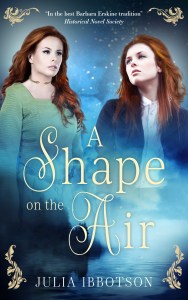
Blurb: 

Can echoes of the past threaten the present? They are 1500 years apart, but can they reach out to each other across the centuries? One woman faces a traumatic truth in the present day. The other is forced to marry the man she hates as the ‘dark ages’ unfold.

How can Dr Viv DuLac, medievalist and academic, unlock the secrets of the past?  

Traumatised by betrayal, she slips into 499 AD and into the body of Lady Vivianne, who is also battling treachery. Viv must uncover the mystery of the key that she unwittingly brings back with her to the present day, as echoes of the past resonate through time. But little does Viv realise just how much both their lives across the centuries will become so intertwined. And in the end, how can they help each other across the ages without changing the course of history? For fans of Barbara Erskine, Pamela Hartshorne, Susanna Kearsley, and Christina Courtenay. 

Buy Link:  

Universal Buy Link: https://myBook.to/ASOTA 

This title is available to read on #KindleUnlimited. 

Author Bio

Julia Ibbotson is fascinated by the medieval world and the concept of time. She is the author of historical mysteries with a frisson of romance. Her books are evocative of time and place, well-researched and uplifting page-turners. Her current series focuses on early medieval time-slip/dual-time mysteries.  

Julia read English at Keele University, England, specialising in medieval language/literature/history, and has a PhD in socio-linguistics. After a turbulent time in Ghana, West Africa, she became a school teacher, then a university academic and researcher. Her break as an author came soon after she joined the RNA’s New Writers’ Scheme in 2015, with a three-book deal from Lume Books for a trilogy (Drumbeats) set in Ghana in the 1960s. 

She has published five other books, including A Shape on the Air, an Anglo-Saxon timeslip mystery, and its two sequels, The Dragon Tree and The Rune Stone. Her latest novel is the first of a new series of Anglo-Saxon dual-time mysteries, Daughter of Mercia, where echoes of the past resonate across the centuries.  

Her books will appeal to fans of Barbara Erskine, Pamela Hartshorne, Susanna Kearsley, and Christina Courtenay. Her readers say: ‘Julia’s books captured my imagination’, ‘beautiful storytelling’, ‘evocative and well-paced storylines’, ‘brilliant and fascinating’, and ‘I just couldn’t put it down’. 

Author Links

Website: https://juliaibbotsonauthor.com 

Twitter / X: https://twitter.com/@juliaibbotson 

Facebook: https://www.facebook.com/JuliaIbbotsonauthor 

Instagram: https://www.instagram.com/julia.ibbotson 

Bluesky:  https://bsky.app/profile/juliaibbotson.bsky.social 

Pinterest: https://www.pinterest.co.uk/juliai1 

Amazon Author Page: https://Author.to/JuliaIbbotsonauthor 

Goodreads: https://goodreads.com/juliaibbotson 


Book Review: “Margaret of Austria: Governor of the Netherlands and Early 16th-Century Europe’s Greatest Diplomat” by Rozsa Gaston

The 16th century was dominated by powerful women who left their indelible mark on European history. Take, for example, the aunt of Charles V, the Holy Roman Emperor. No, not Catherine of Aragon, the first wife of Henry VIII. I am talking about a woman who was the daughter of Emperor Maximilian I, was married three times, had no children, and helped raise her nephew Charles V, was an essential part of the Ladies’ Peace, taught Anne Boleyn how to live at court, and was a patroness of the arts and literature. Of course, I am talking about Margaret of Austria, the Governor of the Netherlands. A formidable woman who saw much change and chose to be part of politics, even though she was a woman. Her remarkable story is told in Rozsa Gaston’s novel, “Margaret of Austria: Governor of the Netherlands and Early 16th-Century Europe’s Greatest Diplomat.”

I would like to thank Rozsa Gaston for sending me a copy of this novel. I am someone who is always looking for a new aspect of the 16th century. I have heard about Margaret of Austria from other books about Anne Boleyn and the 16th century, but I did not know much about this woman. When Gaston asked if I would like to read and review her novel, I jumped at the chance to read it and learn more about her.

Gaston begins her novel with a chart of important figures that would be featured in this story, which was helpful for me as a reader. Then, we get some basic background information about Margaret of Austria, the daughter of Maximilian I of Austria and Mary of Burgundy (known as Mary the Rich). Margaret’s brother was Philip the Handsome, who was expected to inherit their father’s throne. Margaret was destined to be a bride for King Charles VIII of France, so she left her native Netherlands for France at a young age. Our story begins with Charles VIII rejecting poor Margaret because he was already married to Anne of Brittany. Rejected, Margaret goes home, where another marriage is arranged. Her brother Philip would marry Juana of Castile, and Margaret would travel to Spain to marry Juan, Prince of Asturias. This marriage would not last long as Juan would die young.

Her final marriage would be to Philibert of Savoy, which turned into a love match, but Philibert would die a few years into their marriage. Heartbroken, Margaret goes to live with Philip and Juana, which is a mistake because they are constantly at odds. When Philip dies unexpectantly, Juana, no matter how her mental state may be, rules Castile while her eldest son Charles lives with Margaret. Margaret becomes the Governor of the Netherlands for Charles until he is old enough to rule. For the remainder of her life, politics would play a major part in Margaret’s life as she saw issues like the Great Matter, the Sack of Rome, the League of Cambrai, the rise of Martin Luther, and the Ladies’ Peace.

Margaret of Austria was such a powerful woman who would do anything for her family and her beloved Netherlands. To stand toe to toe with some of these major political figures as a woman during the 16th century took guts, but Margaret showed how formidable she was. Gaston does an excellent job telling Margaret’s story, so much so that I want to read more books about her life. Suppose you want to learn more about the life of Margaret of Austria. In that case, I highly recommend you read “Margaret of Austria: Governor of the Netherlands and Early 16th-Century Europe’s Greatest Diplomat” by Rozsa Gaston.

Book Review: “Thus with a Kiss I Die” by Christina Dodd

We all know the story of Romeo and Juliet. Two crazy kids in love, whose families hated each other they decided to make the ultimate sacrifice and die for each other. One of the greatest tragic love stories of all time. But what if it didn’t end in tragedy? What if Romeo and Juliet had their happy ending and had a large family? In this version of Verona, Romeo and Juliet have a large family, and their eldest daughter Rosaline is the most beautiful, headstrong girl in all of Verona. Unfortunately, Rosaline (Rosie) has got herself in quite a mess with an unwanted prince fiancé, a ghost who only she can see, and a murder investigation. Can Rosie solve the case and figure out her love life before things go horribly wrong? This is the premise of the second book of the Daughter of Montague series by Christina Dodd called “Thus with a Kiss I Die.”
I would like to thank Kensington Publishing and Net Galley for sending me a copy of this novel. While I have not read the first book in this series, I thought the idea of Romeo and Juliet surviving and having a family was such a fun concept. Sometimes you just need a book that is based on a historical work of fiction as a way to escape reality, and that’s okay.

We begin where the first book in the series, “A Daughter of Fair Verona,” left off. Rosie is waiting in a garden for her one true love, Lysander, but her plans are foiled when the Prince of Verona, Escalus, kisses Rosie. Now, she is engaged to a prince. She should be thrilled, but Rosie is trying to think of every possible way to get out of this arrangement. Meanwhile, Rosie and her family are invited to dinner with the Prince and his family, which includes his Nonna Ursula and his young sister, Princess Isabella. Escalus (known as Cal in his family) is an orphan prince. His father was killed by an unknown assassin, and his mother died in a convent while giving birth to Princess Isabella.

While exploring the palace, Rosie hears a voice and discovers that it belongs to the ghost of Prince Escalus the Elder, Cal’s father. He wants Rosie to figure out who killed him, which kicks off the mystery portion of this book. On top of all of this, Juliet is about to give birth. Rosie has her hands full while she is trying to figure out her love life and solve a murder mystery before she is murdered or married to the prince.

This was a fun read that is more modern than historical, with the dialogue. Sure, it’s set in 16th-century Verona with Romeo and Juliet as side characters, but you could place Rosie and Cal in a modern setting and it would work just as well. Overall, I found this an absolute joy and a great escape. If you want a historical fiction novel with a unique twist, a murder mystery, and a love triangle, I suggest you read “Thus with a Kiss I Die” by Christina Dodd.

Book Review: “The Daughter of Time” by Josephine Tey

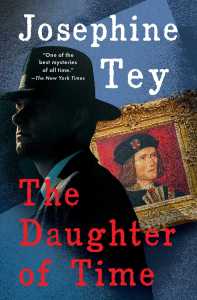
Have you ever read about a historical mystery that captivated you so much that you spent your available free time trying to solve the case? Who was the man in the iron mask? Were the casket letters real? Who built Stonehenge and why? And yet, one of the greatest mysteries in all of history revolves around two missing princes who were last seen in the Tower of London. Nearly five hundred years later, an inspector from Scotland Yard named Alan Grant decides to take on the case. Can the inspector solve the ultimate cold case? Josephine Tey tells the tale of the detective and the mystery of the Princes in the Tower in her most famous novel, “The Daughter of Time.”

I have heard of this novel since I started my blog, but I never read it until now. I decided that it was time after it was announced that there was going to be a play adaptation of this novel. All I knew about this book was that it had something to do with the Princes in the Tower and Richard III, but I did not know the extent.

Tey begins with a bored Inspector Alan Grant staring at the ceiling as he lies immobilized in a hospital recovering from a broken leg. He has a stack of books to read, given to him by the nurses nicknamed the Midget and the Amazon, but none of them have caught his interest. One day, his actress friend Marta Hallard comes for a visit and convinces Grant to investigate a historical mystery. She brings copies of historical portraits, and Grant’s attention immediately goes to the one of Richard III. This portrait will propel Grant to investigate the mystery of the Princes in the Tower and prove Richard III’s innocence.

While I do see why this book is so beloved by Ricardians, it took me a while to get used to the dialogue in this novel, as I don’t read books from the 1950s. It was interesting to see the logic of Grant’s arguments for Richard III to be proved innocent, as someone who has no connection to history, but as an inspector. Personally, my favorite character in this novel is Brent Carradine, an American history student who helps Grant with his investigation.

Overall, it was a decent novel that investigates the disappearance of the Princes in the Tower from the perspective of someone who is not a history nerd. It is a well-researched novel for the information that was available at the time, which will appeal to novices and experts alike. If you want a novel with a different approach to the Princes in the Tower, I recommend you read “The Daughter of Time” by Josephine Tey.

Guest Post: “Spotlight for ‘Bess-Tudor Gentlewoman’ by Tony Riches

I am pleased to welcome Tony Riches to my blog to share a blurb for his latest novel, “Bess-Tudor Gentlewoman.” I would like to thank Tony Riches and The Coffee Pot Book Club for allowing me to participate in this blog tour. 
Blurb: 

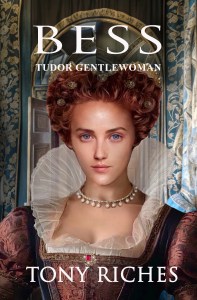
Bess Throckmorton defies her notorious background and lack of education to become Queen Elizabeth’s Gentlewoman and trusted confidante. 

Forced to choose between loyalty and love, duty and desire, will she risk her queen’s anger by marrying adventurer Sir Walter Raleigh without permission? 

Entangled in a web of intrigue, from the glittering Palace of Whitehall to the cells of the Tower of London, Bess endures tragedy and injustice, becoming a resilient, determined woman who takes nothing for granted. 

Can she outwit her enemies, protect her family, and claim her destiny in a world where women are pawns and survival is a game of deadly consequences? 

This is the true story of the last of the Elizabethans, which ends the story of the Tudor dynasty – and introduces their successors, the Stuarts. 

Buy Link: 

Universal Buy Link: https://mybook.to/BESS  

This title is available to read on #KindleUnlimited. 

Author Bio: 

Tony Riches is a full-time UK author of Tudor historical fiction. He lives with his wife in Pembrokeshire, West Wales, and is a specialist in the lives of the early Tudors. 

As well as his Elizabethan series, Tony’s historical fiction novels include the best-selling Tudor trilogy and his Brandon trilogy (about Charles Brandon and his wives). 

For more information about Tony’s books, please visit his website, and his blog, The Writing Desk, and find him on social media. 

Author Links

Website: https://www.tonyriches.com/  

Blog: http://tonyriches.blogspot.co.uk/  

Twitter / X: https://twitter.com/tonyriches  

Facebook: https://www.facebook.com/tonyriches.author/  

Instagram: https://www.instagram.com/tonyriches.author/  

Bluesky: https://bsky.app/profile/tonyriches.bsky.social  

Amazon Author Page: https://www.amazon.co.uk/stores/Tony-Riches/author/B006UZWOXA  

Goodreads: https://www.goodreads.com/author/show/5604088.Tony_Riches  


Book Review: “The Shakespeare Secret” by DJ Nix

Everyone knows the story of William Shakespeare—the famed poet, actor, and playwright who revolutionized English literature forever. There have been a series of debates about whether or not Shakespeare truly wrote the plays or someone else did. Well, what if a group of women employed William Shakespeare as a sort of spokesperson for their plays? Can this group of women survive to write another day? This is the premise of DJ Nix’s novel. “The Shakespeare Secret.”
I would like to thank Alcove Press and Net Galley for sending me a copy of this novel. I have not read a lot of novels about the writing of Shakespeare’s plays, but I have heard the many theories on who actually wrote them. When I saw that this novel would focus on a group of women as the so-called authors of the plays, it was such a fun idea that I decided to give it a go.

So, just who were these three women who were the authors of the plays? We begin with Mary Herbert, Countess of Pembroke, who has just returned to the court of Queen Elizabeth I after a three-year absence. She is not one for court life, but she soon finds herself enjoying the company of others below her station. Take, for example, Emilia Bassano, a court musician and mistress to Lord Chamberlain, Baron Hunsdon. And then we have Jane Daggett, the new Mistress of the Wardrobe for the Queen’s Men, a company that was the starting point for a young Will Shakespeare. One fateful day, these three women met and decided to write a play, which would become known as The Taming of the Shrew. Since this was a group of women writing a play, they needed a man to act as their spokesperson to make sure that their play would be performed. Enter young Will Shakespeare, who wanted to make a name for himself.

It seems like such an innocent prospect, that is, until Robert Cecil and his spy Hardwood catch wind of what they think is a Catholic plot against Queen Elizabeth I. Talk about making a mountain out of a molehill. Now, Mary, Emilia, and Jane must escape suspicion while navigating life, love, and playwriting, with Will along for the ride. This was a relatively predictable plot, and I felt a bit bored by the middle of this novel. While the characters are well written, it is hard for me to imagine this group of women together and using the formal Shakespearean dialogue. Other than the few historical characters and locations, it does not feel like Elizabethan England (especially with the mention of tea).

Overall, it’s an okay novel, but it could have been better. The premise had a lot of potential, but it kind of turned into a sappy ending, which is not a bad thing, but I wanted more. If you want a novel about the alternative history of the writing of the early Shakespearean plays, you might enjoy “The Shakespeare Secret” by DJ Nix.

Guest Post: “Snippet from ‘Lady of the Quay’ by Amanda Roberts”

Eating alone at the vast table, which could seat a dozen people with ease, did nothing to improve my attitude or my mood, and I vowed that unless I was entertaining, I would take my meals in my closet from now on. Yes, I had to try to think of it as my closet now. I retired there after I had eaten, and although I relished the silence, I was not yet comfortable with the void that my father’s absence left in the space. With the shutters closed to deny the outside world, I settled by the fire and tried to cocoon myself in memories of him, but I could no longer trust my own mind. To keep secrets had not been in his nature, and yet that is what he had done. And these were not just any old secrets; they were big, black, ugly ones. How was I supposed to reconcile the man I thought I had known so well with the person I was now discovering? He had been the pivot of my existence for most of my life, my moral and spiritual guide, and a person respected by all who knew him, but who was he really? 

Blurb: 

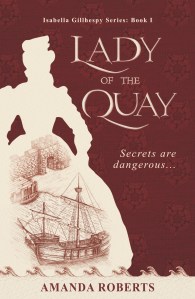
Knowing she is innocent is easy … proving it is hard. 

1560, Berwick-upon-Tweed, northern England 

Following the unexpected death of her father, a series of startling discoveries about the business she inherits forces Isabella Gillhespy to re-evaluate everything she understands about her past and expects from her future. 

Facing financial ruin, let down by people on whom she thought she could rely, and suspected of crimes that threaten her freedom, Isabella struggles to prove her innocence. 

But the stakes are even higher than she realises. In a town where tension between England and her Scottish neighbours is never far from the surface, it isn’t long before developments attract the interest of the highest authority in the land, Sir William Cecil, and soon Isabella is fighting, not just for her freedom, but her life. She must use her wits and trust her own instincts to survive. 

Lady of the Quay introduces an enticing new heroine who refuses to be beaten, even as it becomes clear that her life will never be the same again. 

From the author of the award-winning ‘The Woman in the Painting’. 

Buy Link: 

Universal Buy Link: https://books2read.com/u/317rQa  

This title is available to read on #KindleUnlimited. 

Author Bio: 

Amanda Roberts has worked as an Editor in business-to-business magazines for over 30 years, specialising in out-of-home coffee, vending and foodservice/catering, including Editor of the global gastronomy title: ‘Revue internationale de la Chaîne des Rôtisseurs’. 

She currently freelances, editing UK-based healthcare titles – HEFMA Pulse, Hospital Food + Service and Hospital Caterer. She is a member of the Society of Authors, the Historical Novel Society and West Oxfordshire Writers. She also volunteers for Tea Books (part of Age UK) to run a book club/reading group for elderly people in the community. 


Author Links: 


Website: https://amandarobertsauthor.co.uk/  

Facebook: https://www.facebook.com/profile.php?id=100095191090333  

Instagram: https://www.instagram.com/amanda_roberts_author/  

Book Bub: https://www.bookbub.com/books/lady-of-the-quay-isabella-gillhespy-series-book-1-by-amanda-roberts  

Amazon Author Page: https://www.amazon.com/stores/Amanda-Roberts/author/B00N0RQBAI   

Goodreads: https://www.goodreads.com/book/show/231816264-lady-of-the-quay