Guest Post: “Spotlight for ‘The Rune Stone’ by Julia Ibbotson”

I am pleased to welcome Julia Ibbotson to my blog to share the blurb for her novel, “The Rune Stone.” I want to thank Julia Ibbotson and The Coffee Pot Book Club for allowing me to participate in this blog tour.
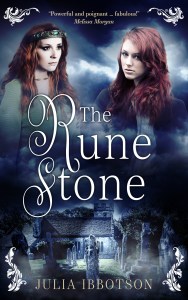
Blurb: 

A haunting time-slip mystery of runes and romance 

When Dr Viv DuLac, medievalist and academic, finds a mysterious runic inscription on a Rune Stone in the graveyard of her husband’s village church, she unwittingly sets off a chain of circumstances that disturb their quiet lives in ways she never expected. 

She, once again, feels the echoes of the past resonate through time and into the present. Can she unlock the secrets of the runes in the life of the 6th century Lady Vivianne and in Viv’s own life? 

Again, lives of the past and present intertwine alarmingly as Viv desperately tries to save them both without changing the course of history. 

For fans of Barbara Erskine, Pamela Hartshorne, Susanna Kearsley, and Christina Courtenay. 

Praise for Julia Ibbotson:

(for A Shape on the Air) “In the best Barbara Erskine tradition …I would highly recommend this novel” –Historical Novel Society 

(for the series) “Julia does an incredible job of setting up the idea of time-shift so that it’s believable and makes sense” – book tour reviewer 

(for The Rune Stone) “beautifully written”, “absorbing and captivating”, “fully immersive”, “wonderfully written characters”, “a skilled storyteller” – Amazon reviewers

“Dr Ibbotson has created living, breathing characters that will remain in the reader’s mind long after the book is read … The characters are brought to life beautifully with perfect economy of description … fabulous!” – Melissa Morgan. 
 

“A rich and evocative time-slip novel that beautifully and satisfyingly concludes this superb trilogy. The story is woven seamlessly and skillfully between the past and the present, and the reader is drawn deeply into both worlds.  Her portrayal of the 6th century and its way of life are authoritative, vivid and memorable.” – Kate Sullivan. 

Buy Link: 

Universal Buy Link:  https://myBook.to/TRS 

This title is available to read on #KindleUnlimited. 

Author Bio

Julia Ibbotson is fascinated by the medieval world and the concept of time. She is the author of historical mysteries with a frisson of romance. Her books are evocative of time and place, well-researched, and uplifting page-turners. Her current series focuses on early medieval time-slip/dual-time mysteries.  

Julia read English at Keele University, England, specializing in medieval language/ literature/ history, and has a PhD in sociolinguistics.  

After a turbulent time in Ghana, West Africa, she became a school teacher, then a university academic and researcher. Her break as an author came soon after she joined the RNA’s New Writers’ Scheme in 2015, with a three-book deal from Lume Books for a trilogy (Drumbeats) set in Ghana in the 1960s.  

She has published five other books, including A Shape on the Air, an Anglo-Saxon timeslip mystery, and its two sequels, The Dragon Tree and The Rune Stone. Her work in progress is a new series of Anglo-Saxon mystery romances, beginning with Daughter of Mercia, where echoes of the past resonate across the centuries.  

Julia’s novels will appeal to fans of Barbara Erskine, Pamela Hartshorne, Susanna Kearsley, and Christina Courtenay. Her readers say: ‘Julia’s books captured my imagination’, ‘beautiful story-telling’, ‘evocative and well-paced storylines’, ‘brilliant and fascinating,’ and ‘I just couldn’t put it down’. 

Author Links

Amazon Author page: Author.to/JuliaIbbotsonauthor 

Author website & blog: www.juliaibbotsonauthor.com 

Facebook (author):  https://www.facebook.com/JuliaIbbotsonauthor 

Twitter:  https://twitter.com/JuliaIbbotson 

Instagram: https://www.instagram.com/julia.ibbotson 

Pinterest:  http://pinterest.com/juliai1/ 

Goodreads author page:  https://www.goodreads.com/juliaibbotson 

Bluesky: https://bsky.app/profile/juliaibbotson.bsky.social

Book Review: “The Shadow on the Bridge” by Clare Marchant

Have you ever had an incident that was so impactful that it defined your entire life from that moment on? For Anne Howard, Countess of Arundel, it was the death of her younger brother, George. She vows vengeance against those who were behind his untimely demise. In the present day, Sarah must return to her godmother’s home, which holds a lot of memories, mostly painful. It is in the halls of this ancient house that Sarah meets Anne through a book of poetry. Can these two women find peace or will the truths bring even more disasters? Clare Marchant tells the stories of these two women, the tragedies and the poetry that unite them, in her latest novel, “The Shadow on the Bridge.”

I would like to thank Boldwood Books and Net Galley for sending me a copy of this novel. I liked the cover and when I read the description, it caught my eye. I have had Clare Marchant on my blog for a guest post, but I have yet to read her novels, so I decided to take a chance. I was not familiar with the story of Anne Howard, Countess of Arundel, so I was excited to read her story.

We begin with Anne Howard, born Anne Dacre, and her family at Barnhamcross Hall. She takes care of her young brother George, who is supposed to become the 5th Baron Greystoke. However, tragedy strikes when George falls from his rocking horse. It seems like a tragic accident, but Anne soon discovers that it was done deliberately. While Anne is married to Philip Howard, she secretly plans revenge against her father-in-law, the Duke of Norfolk. Anne Howard is known for her poetry, so she uses her skills with a quill to uncover a plot a bit closer to home.

Sarah, in the modern day, is a woman full of remorse and guilt. She has accepted to visit her godmother Cordelia at her home of Barnhamcross Hall, which holds many secrets and sorrows. Sarah knows what it means to lose a loved one as she lost her sister, Emily. Her parents blamed her, and they are no longer in her life. Cordelia is dying, and she wants to leave her home to Sarah. Sarah agrees to stay and help with organizing the estate, and while doing so, she finds a book of poetry from the past. It is through the story of Anne and George that Sarah finds the strength to confront her past.

This was a delightful read full of discovery, suspense, and healing. It was very well-balanced and gave a new perspective to the Howard family. It was such a gripping read that I want a sequel with the same characters because I became attached to them. I am looking forward to reading more novels by Clare Marchant. If you want a fun dual timeline escape that explores a lesser-known Tudor woman, I highly recommend you read, “The Shadow on the Bridge” by Clare Marchant.

Book Review: “Fools and Mortals” by Bernard Cornwell

When we think about live theater, we often think about big actors, elaborate sets, and glittery costumes. The world of the Tudor theater, especially during the reign of Elizabeth I, was similar in some ways, but there was an element of danger. Richard Shakespeare, an actor in the Lord Chamberlain’s Men company and a former thief, knew the dangers of Tudor theater life better than anyone. When a manuscript is stolen, suspicion lands squarely on Richard’s shoulders. Can Richard clear his name, or will it be his final curtain call? Bernard Cornwell tells the story of Richard Shakespeare and the debut of A Midsummer’s Night Dream in his novel, “Fools and Mortals.”

This is one of those books that I found while going used book shopping. I did not know that Cornwell wrote a novel about Elizabethan England, so I knew I wanted to read it. I wanted to see how well Cornwell could write an Elizabethan novel.

Our main character is Richard Shakespeare (based on the historical figure), the estranged younger brother of William Shakespeare. He is an actor himself, primarily with small roles and women roles, but as he gets older, he wants more prominent male roles. Richard is not exactly thrilled about his brother William’s rising star as William is kind of a jerk in this novel. The Lord Chamberlain’s Men are given a grand opportunity to perform at the wedding of Lord Hundson’s daughter. William has decided to premiere a brand new play called A Midsummer’s Night Dream, which means this novel is full of actors trying to figure out this new production in time.

To top it off, one of William’s newer plays was taken by a disgruntled player to curry favor with another playhouse. William thinks that Richard stole his manuscript, so Richard must do everything in his power to get the play back and restore some semblance of a relationship with his brother. Along the way, he encounters a maid named Silvia, who he falls in love with, and hardcore Protestants who believe that players are sinners in the eyes of the Lord. To top it all off, it seems like William has a book in his possession that is considered dangerous and makes the thugs think he is Catholic. Richard has to focus on getting the manuscript back and rehearsing the new play and try not to get killed.

Richard Shakespeare is one of those characters that is a little rough around the edges, but once you get to know him, he is a loveable person. Cornwell created such a colorful world of the Elizabethan theater that any Tudor or Shakespearean nerd will love. If you want a delightfully unique take on Elizabethan England and the life of the players in the early stages of the English theater, I would suggest you read “Fools and Mortals” by Bernard Cornwell.

Book Review: “The Queen and the Countess” by Anne O’Brien

Medieval wars were not just fought on the battlefield. They also fought in court through marriage alliances and politics. While we often think about wars and men, we should also consider the women who played their parts either in exile or glistening palaces. We often think about medieval queens like Margaret of Anjou as these strong women who fought in their ways, but we have to consider the wife of Richard Neville Earl of Warwick, known as the Kingmaker; her name was Anne Beauchamp Countess of Warwick. The relationship between Margaret of Anjou and Anne Beauchamp has not been discussed much until now. Anne O’Brien tells the stories of these two women and the wars that bound them together in her latest novel, “The Queen and the Countess.”

I want to thank Orion Publishing and Net Galley for sending me a copy of this novel. What attracted me to this novel was the cover at first and then the description. I love reading novels about the Wars of the Roses, so when I saw it was a novel featuring both Margaret of Anjou and Anne Beauchamp Countess of Warwick, it was a must read for me.

We begin in the year 1480 as both Margaret and Anne reflect on their lives while they are in exile. Then, we get a flashback to the famous Love Day “celebration” of 1458, when members of the Lancaster and York families joined hands as a way to try to mend the rift that was bound to tear the country apart. It is the idea of King Henry VI that his wife, Margaret of Anjou, joins hands with the Duke of York. It is a complete and utter failure as the Wars of the Roses kick off in full force. Since the King is very weak, it is Margaret who must take the reigns of government to protect the Lancaster family and the throne for not only her husband but also for their only son, Prince Edward.

On the other side of the conflict is Anne Beauchamp Countess of Warwick, the wife of Richard Neville, Earl of Warwick, also known as the King Maker. She is the mother of two daughters, Isabel and Anne, but she desires a son. Being on the rebellious Yorkist side means that Anne is directly an enemy of Margaret of Anjou, but something remarkable happens: the two women form a thorny friendship. For over twenty years, the relationship between Anne and Margaret ebbs and flows as the crown passes from Henry VI to Edward IV like a ping-pong ball. Both Anne and Margaret understand what it means to lose their husbands and children whom they love; they know the glory of victory, the terror of defeat, and the uncertainty of being in exile.

I enjoyed this novel very much. It gave more depth and heart to the conflict as a whole, as well as a better understanding of both women. Anne O’Brien was able to create such dynamic characters and a thrilling novel that any fan of medieval novels will enjoy. If you are a fan of novels set during the Wars of the Roses featuring strong women, I highly suggest you read, “The Queen and the Countess” by Anne O’Brien.

Book Review: “Boy” by Nicole Galland

Have you ever had a dream for your life that seemed so impossible that you would do anything to make sure it happened? Whether the matter of age or gender or even circumstances of one’s birth, there is always that one dream that keeps you going even during the most difficult times. Sander Cooke and his best friend Joan Buckler have dreams that seem impossible, especially living in Elizabethan England. Sander wants to stay young so he can continue to act in female roles in plays whereas Joan wants to be a natural philosopher even though she is a woman. Can they achieve their dreams or will they be doomed to fall to greater powers? The story of Sander and Joan is told in Nicole Galland’s latest novel, “Boy.”

I want to thank William Morrow and NetGalley for sending me a copy of this novel. The cover caught my eye first, and I was impressed by its simplicity. Then, I read the description, and I knew it was right up my alley. I don’t read a lot of novels about Elizabethan theater life or natural philosophy, so I was excited to see how she could incorporate these ideas into one cohesive novel.

We begin with Alexander ‘Sander” Cooke who is one of the best boy players in the Chamberlain’s Men. He can get any female part that he wants that is written by William Shakespeare. Sander is renowned for his beauty and his acting skills, but he knows that his youth will not last forever so he is working feverishly to create connections at court. Meanwhile, Sander’s friend Joan just wants an opportunity to show that she can study just like a man can. She has no formal education, but she wants to study in the halls of the Barber-Surgeons and with natural philosophers.

It seems that both Sander and Joan’s problems are solved when Sander is introduced to Sir Francis Bacon, a natural philosopher. Sander comes up with a scheme for Joan to converse with Bacon, but Joan must dress as a male servant. While Joan has to deal with masquerading as a man, Sander has his issues as he is close to Robert Devereux Earl of Essex, and his sister Lady Penelope Rich. While there are areas of love, danger, and intrigue, what grabbed my attention was how revolutionary some of the scientific and philosophical experiments made me think about their discussions in depth. It was refreshing and innovative in its approach with the historical figures we all know from this period of the past taking more of a back seat.

This was an evocative novel that gave even more depth to an already rich period of the past. It shows the lives of the common people striving for better lives and how to better the world around them through the arts or scientific discoveries. I did not know what to expect when I first selected this book, but I am so glad I read it. If you want a novel with a fresh take on Elizabethan England, I highly suggest you read “Boy” by Nicole Galland.

Guest Post: “Audiobook Extract from ‘A Woman’s Lot’ by Carolyn Hughes

I am pleased to welcome Carolyn Hughes back to my blog to share an audiobook extract from her novel, “A Woman’s Lot.” I want to thank The Coffee Pot Book Club and Carolyn Hughes for allowing me to be part of this blog tour.

Audiobook Extract

The following link is the extract for the audiobook for “A Woman’s Lot” by Carolyn Hughes, narrated by Alex Lee. 

https://soundcloud.com/cathie-dunn/a-womans-lot-agnes-by-carolyn-hughes

Blurb: 

How can mere women resist the misogyny of men?

1352. In Meonbridge, a resentful peasant rages against Eleanor Titherige’s efforts to build up her flock of sheep. Susanna Miller’s husband, grown melancholy and ill-tempered, succumbs to idle gossip that his wife’s a scold. Agnes Sawyer’s yearning to be a craftsman is met with scorn. And the village priest, fearful of what he considers women’s “unnatural” ambitions, is determined to keep them firmly in their place. 

Many men hold fast to the teachings of the Church and fear the havoc the “daughters of Eve” might wreak if they’re allowed to usurp men’s roles and gain control over their own lives. 

Not all men in Meonbridge resist the women’s desire for change – indeed, they want it for themselves. Yet it takes only one or two misogynists to unleash the hounds of hostility and hatred… 

If you enjoy immersive historical fiction with a strong authentic feel, set in a time of change and challenge, especially for women, you’ll love A Woman’s Lot, the second MEONBRIDGE CHRONICLE. Find out for yourself if Meonbridge’s “unnatural” women stand up to their abusers! 

Praise: 

This book exceeded all my expectations. I did not read this story. I lived it!”  

~ The Coffee Pot Book Club 


“A treat for all the senses…totally true to its time and setting…”  

~ Being Anne  


I didn’t so much feel as if I were reading about medieval England as experiencing it first hand.” 

~ Linda’s Book Bag 


An absorbing account of the times.” 

~ Historical Novel Society 

Buy Link: 

Universal Buy Link: https://books2read.com/u/4jzKJY  

This title is available to read on #KindleUnlimited. 

Audiobook Links: 

Audible: https://buff.ly/4gw1xs3  

Audible UK: https://www.audible.co.uk/pd/A-Womans-Lot-Audiobook/B0DW4HR5HW  

Audible US: https://www.audible.com/pd/A-Womans-Lot-Audiobook/B0DW4FZLCZ  

Author Bio

Carolyn Hughes has lived much of her life in Hampshire. With a first degree in Classics and English, she started working as a computer programmer, which was a very new profession. But it was technical authoring that later proved her vocation, word-smithing for many different clients, including banks, an international hotel group, and medical instruments manufacturers. 

Although she wrote creatively on and off for most of her adult life, it was not until her children flew the nest that writing historical fiction took center stage. But why historical fiction? Serendipity! 

Seeking inspiration for what to write for her Creative Writing Masters, she discovered the handwritten draft, beginning in her twenties, of a novel, set in 14th-century rural England… 


Intrigued by the period and setting, she realized that, by writing a novel set in the period, she could learn more about the medieval past and interpret it, which seemed like a thrilling thing to do. A few days later, the first Meonbridge Chronicle, Fortune’s Wheel, was underway. 


Six published books later (with more to come), Carolyn does now think of herself as an Historical Novelist. And she wouldn’t have it any other way… 


Author Links


Website: https://carolynhughesauthor.com  

Twitter: https://x.com/writingcalliope  

Facebook: https://facebook.com/CarolynHughesAuthor  

Bluesky: https://carolynhughes.bsky.social  

Book Bub: https://www.bookbub.com/authors/carolyn-hughes 

Amazon Author Page: https://www.amazon.co.uk/stores/Carolyn-Hughes/author/B01MG5TWH1  

Goodreads: https://www.goodreads.com/author/show/16048212.Carolyn_Hughes  


Book Review: “The Duty of Women” by Caroline Willcocks

The Tudor court during the reign of King Henry VIII was a treacherous place to be, even for the humble female musician. It was full of men and women vying for a position of power, and they were ready to give anything and everything for that power. This is the world that Kat Cooke finds herself in. After faithfully serving Queen Katherine of Aragon for years, she must switch her loyalties to Anne Boleyn, but when things get dangerous, where will Kat’s loyalties lie? Can Kat survive such turbulent times or sacrifice everything she holds dear? Kat’s story is told in the second book of Caroline Willcocks’ Tudor Queens series, “The Duty of Women.”

I want to thank Atmosphere Press and NetGalley for sending me a copy of this novel. While I have not read the first book in this series, “Of Aragon,” I did want to read this book because the premise sounded intriguing, and I have seen this book floating around on social media. I have not read any books by Caroline Willcocks, so I was looking forward to seeing what her writing style and approach to the Tudors was like.

Kat Cooke is an adopted foundling living in the court of Henry VIII. She is a married woman, and throughout she tells her story to her daughter. It should be noted that Kat is not an ordinary adopted foundling; she is the daughter of Katherine of Aragon and Henry VIII, who was believed to have been born stillborn, which was revealed in book one of this series. Having Kat in the court as the unknown child of Katherine of Aragon and Henry VIII adds depth to her character as Kat is both inside and outside the court circle. We enter the story with Queen Katherine of Aragon away from court and Anne Boleyn starting to create her influence over the court. It is at the height of the Great Matter, and we get a chance to see Thomas Cromwell working with Kat’s husband, Will, to put Anne Boleyn on the throne while dismantling the Catholic church in England.

It is through Kat’s story to her daughter that we get to see how the court interacts with one another during this tumultuous time. Willcocks portrays the relationship between Anne Boleyn and Jane Seymour as a Mean Girls situation. We also get to see the relationship between Anne and Henry, Anne and Cromwell, and Sir Thomas Wyatt’s affection for Anne. Although Sir Thomas Wyatt and Anne Boleyn never were a couple, Kat and Thomas do develop quite an interesting relationship that will shape her entire future and shake her relationship with Will forever.

Overall, I think this was a decent book with a unique take on the story of the Great Matter, the rise and fall of Anne Boleyn, and the short reign of Jane Seymour. The story of Kat and Will Cooke is fresh and welcoming when compared to other Tudor novels. I am interested in reading the first book in this series and the other books in the series when they are published. I think if you want a fresh take on the Great Matter, “The Duty of Women” and the Tudor Queens series by Caroline Willcocks should be something you check out.

Book Review: “A Tapestry of Treason” by Anne O’Brien

The medieval world could be a treacherous place to live in, especially when it comes to life in the medieval court. There was so much backstabbing and men reaching for titles and crowns that were not given to them. Take, for example, the House of York. Now, we will assume that their desire for the throne truly came to fruition during the period known as the Wars of the Roses in the 15th century. However, the sons and the daughter of Edmund of Langley and Isabella of Castile were fiercely loyal to those they served and were ruthless to those who they deemed as their enemies. This is the world that Constance of York, Lady Despenser, is raised in, but when her world is turned upside down, will she choose to stay on the sideline, or will she scheme with her family and fight for what they believe is right? Constance’s story is woven together in Anne O’Brien’s novel, “A Tapestry of Treason.”

I did have Anne on my blog with a guest post for her novel, “The Queen’s Rival,” and read it, which was a lot of fun, so I decided that I wanted to read more of her novels. I didn’t know a lot about Constance of York before this book, so I was excited to see she would tell Constance’s story.

We begin our tale in 1399 when Richard II sits on the throne, and the House of York is riding high. Constance of York is married to Thomas Lord Despenser, and her family, led by her father Edmund Langley, are sitting in good favor of their cousin, the king. However, things do not stay the same for long as Henry Bolingbroke comes back from exile to take back his Lancastrian titles and lands, but he ends up taking the throne as Henry IV and imprisoning Richard II. Well, Constance and her family simply cannot have an usurper take the throne from their cousin. So, a plan is hatched with Constance’s husband, Thomas, at the center to try and free Richard II from his captivity. To say this failed massively would be an understatement, as it led to the execution of Thomas Lord Despenser. 

As a widow, Constance hopes to live a normal life, especially after she falls in love with Edmund Holland, Earl of Kent. He wishes to marry Constance, but her family gets in the way of this love match. Constance is asked to help with a scheme to put one of the Mortimer boys on the throne and overthrow King Henry IV, but to do so, Constance must free the boys from their captivity. Constance agreed, and I wanted to scream at her. She throws away her chance at happiness for a plot that was easily foiled, and Constance ends up imprisoned herself. She loses the one real chance at marrying the man she truly loves as he marries another, and to top it all off, she ends up pregnant with his child. 

While Constance of York was not a main character that I particularly enjoyed, O’Brien’s writing style is engaging, and it shows how tumultuous this period was for those closest to the throne. Overall, I enjoyed this novel and I am looking forward to reading more novels by Anne O’Brien. If you are like me and want to read a novel about a time in medieval England that’s not discussed much, I would suggest you read, “A Tapestry of Treason,” by Anne O’Brien.

Guest Post: “The Percies and the Battle of Shrewsbury” by Mercedes Rochelle

I am pleased to welcome Mercedes Rochelle back to my blog to share an article about the Percy family and the Battle of Shrewsbury as part of the blog tour for her novels The Usurper King and The Accursed King. I want to thank Mercedes Rochelle and The Coffee Pot Book Club for allowing me to be part of this blog tour.

The Percies were such a powerful force in the North they practically acted like rulers in their own kingdom. For much of Richard II’s reign and the beginning of Henry IV’s, Earl Henry Percy and his son, Sir Henry (nicknamed Hotspur) alternated between the wardenships of the East Marches and the West Marches toward Scotland. They were experienced in dealing with the tempestuous Scots, and their retainers were fiercely loyal. When Henry IV returned from exile and began his campaign that led to the throne, the Percies were his staunchest supporters; they provided a large portion of his army. Henry Percy was directly responsible for persuading King Richard to turn himself over to Henry Bolingbroke—the beginning of the end of Richard’s fall. 

Caption: Froissart Chronicles by Virgil Master, Source: Wikimedia 

Naturally, this was not done out of sheer kindness. Henry Percy expected to be amply rewarded for his services, and at the beginning he was. But the king was uncomfortable about the potential threat of this overweening earl. He soon began to promote his brother-in-law, Ralph Neville the Earl of Westmorland as a counterbalance, chipping away at Percy’s holdings and jurisdictions. Additionally, the Percies felt that they were not being reimbursed properly for their expenses; by 1403 they claimed that the king owed them £20,000—over £12,000,000 in today’s money. But even with all this going on, it’s likely that the earl may have contained his discontent, except for the belligerence of his impetuous son.  

One possible catalyst was Hotspur’s refusal to turn over his hostages taken at the Battle of Homildon Hill. This battle was a huge win for the Percies in 1402, where so many leaders were taken—including the Earl of Douglas—that it left a political vacuum in Scotland for many years to come. Once he learned of this windfall, King Henry insisted that the Percies turn over their hostages to the crown. It was his right as king—even if it was against the code of chivalry— though his highhanded demand was probably not the wisest choice, considering the circumstances. There were many possible reasons he did so. He was desperately short of funds—as usual. It’s possible he may have wanted to retain the prisoners as a means of ensuring Scottish submission. Earl Henry agreed to turn over his hostages, but Hotspur absolutely refused to surrender Archibald Douglas, letting his father take the king’s abuse. One can only imagine that all was not well in the Percy household, either. 

There was more at stake. The king had just returned from a humiliating fiasco in Wales, where he had campaigned in response to the English defeat at Pilleth, where Edmund Mortimer was captured by the Welsh. Mortimer was the uncle of the eleven-year-old Earl of March, considered by many the heir-presumptive to the throne (and in Henry’s custody). Edmund was also the brother of Hotspur’s wife. By the time Henry demanded the Scottish hostages, it was commonly believed that the king had no intention of ransoming Mortimer; after all, he was safely out of the way and couldn’t champion his nephew’s cause. This rankled with Hotspur, and it is possible that he thought to use Douglas’s ransom money to pay for Mortimer’s release himself. 

Hotspur finally rode to London in response to the king’s demands, but he went without Douglas. Needless to say, this immediately provoked an argument. When Hotspur insisted that he should be able to ransom his brother-in-law, Henry refused, saying he did not want money going out of the country to help his enemies. Hotspur rebutted with, “Shall a man expose himself to danger for your sake and you refuse to help him in his captivity?” Henry replied that Mortimer was a traitor and willingly yielded himself to the Welsh. “And you are a traitor!” the king retorted, apparently in reference to an earlier occasion when Hotspur chose to negotiate with Owain Glyndwr rather than arrest him. Allegedly the king struck Percy on the cheek and drew his dagger. Of course, attacking the king was treason and Hotspur withdrew, shouting “Not here, but in the field!” All of this may be apocryphal, but it is certainly powerful stuff. 

The whole question of Mortimer’s ransom became moot when he decided to marry the daughter of Glyndwr and openly declare his change of loyalties on 13 December 1402. No one knows whether Hotspur’s tempestuous interview with King Henry happened before or after this event; regardless, a bare minimum of eight months passed before Shrewsbury. Were they planning a revolt all this time? It is likely that early in 1403 one or both of the Percies were in communication with the Welsh. Owain Glyndwr was approaching the apex of his power, and a possible alliance between him, Mortimer, and the Percies could well have been brewing. It would come to fruition later on as the infamous Tripartite Indenture (splitting England’s rule between them), but by then Hotspur was long dead. 

Caption: BnF MS Franc 81 fol. 283R Henry IV and Thomas Percy at Shrewsbury from Jean de Wavrin- Creative commons license 

No one has been able to satisfactorily explain just why the Percies revolted against Henry IV. Most of the evidence points to their self-aggrandizement. And looking at the three years following his coronation, it became evident that King Henry was not willing to serve as their puppet, nor was he willing to enhance their power at the expense of the crown. The Percies’ ambitions were thwarted by the king’s perceived ingratitude, and the consensus of modern historians is that they hoped to replace him with someone more easily manipulated. 

There was one more Percy involved in all this: Thomas, younger brother of Earl Henry and uncle to Hotspur. He was probably the most able—if the least flamboyant—member of the Percy clan in this period. From soldier to commander, Admiral of England to Ambassador, Captain of Calais, Justiciary of South Wales, he made it all the way to Steward of the Royal Household. And that wasn’t all. He was also Earl of Worcester, which almost made him an equal to his brother, the great Earl of Northumberland.  

His involvement in the Shrewsbury uprising was puzzling. He had much to lose and nothing to gain. Shakespeare notwithstanding, I don’t really think Thomas was the motivating force behind the rebellion that led to the Battle of Shrewsbury. It’s true that his fortunes were waning; the king had recently replaced him as Lieutenant of Wales with the sixteen-year-old Prince Henry. Whether the Percies won or lost the battle, there’s a better-than-even chance that he would rise and fall along with them, whether he participated in the rebellion or not. Was that enough to push him over the edge? I suspect that his affection for Hotspur had a lot to do with it, and in the end, it’s likely he couldn’t conceive of fighting against his own kin. Poor Thomas lost his head the day after the battle, paying a high price for his loyalty. 

THE USURPER KING by Mercedes Rochelle 

Book 4 of The Plantagenet Legacy 

Blurb: 

From Outlaw to Usurper, Henry Bolingbroke fought one rebellion after another. First, he led his own uprising. Then he captured a forsaken king. Henry had no intention of taking the crown for himself; it was given to him by popular acclaim. Alas, it didn’t take long to realize that having the kingship was much less rewarding than striving for it. Only three months after his coronation, Henry IV had to face a rebellion led by Richard’s disgruntled favorites. Repressive measures led to more discontent. His own supporters turned against him, demanding more than he could give. The haughty Percies precipitated the Battle of Shrewsbury which nearly cost him the throne—and his life. 

To make matters worse, even after Richard II’s funeral, the deposed monarch was rumored to be in Scotland, planning his return. The king just wouldn’t stay down and malcontents wanted him back. 

THE ACCURSED KING by Mercedes Rochelle 

Blurb: 

What happens when a king loses his prowess? 

The day Henry IV could finally declare he had vanquished his enemies, he threw it all away with an infamous deed. No English king had executed an archbishop before. And divine judgment was quick to follow. Many thought he was struck with leprosy—God’s greatest punishment for sinners. From that point on, Henry’s health was cursed and he fought doggedly on as his body continued to betray him—reducing this once great warrior to an invalid. 

Fortunately for England, his heir was ready and eager to take over. But Henry wasn’t willing to relinquish what he had worked so hard to preserve. No one was going to take away his royal prerogative—not even Prince Hal. But Henry didn’t count on Hal’s dauntless nature, which threatened to tear the royal family apart.

Buy Links: 

Universal Buy Links: 

The Usurper King: https://books2read.com/u/3nkRJ9  

The Accursed King: https://books2read.com/u/b5KpnG  

The Plantagenet Legacy Series Links: 

Amazon US Series Link 

Amazon UK Series Link 

All titles in the series are available to read on #KindleUnlimited. 

Author Bio

Mercedes Rochelle is an ardent lover of medieval history and has channeled this interest into fiction writing. She believes that good Historical Fiction, or Faction as it’s coming to be known, is an excellent way to introduce the subject to curious readers. 

Her first four books cover eleventh-century Britain and events surrounding the Norman Conquest of England. Her new project is called “The Plantagenet Legacy” taking us through the reigns of the last true Plantagenet King, Richard II, and his successors, Henry IV, Henry V, and Henry VI. She also writes a blog: HistoricalBritainBlog.com to explore the history behind the story.  

Born in St. Louis, MO, she received by BA in Literature at the University of Missouri St.Louis in 1979 then moved to New York in 1982 while in her mid-20s to “see the world”. The search hasn’t ended! 

Today she lives in Sergeantsville, NJ with her husband in a log home they had built themselves. 

Author Links

Website: https://mercedesrochelle.com/   

Twitter: https://x.com/authorrochelle  

Facebook: https://www.facebook.com/mercedesrochelle.net  

Book Bub:  https://www.bookbub.com/authors/mercedes-rochelle  

Amazon Author Page:  https://www.amazon.com/stores/Mercedes-Rochelle/author/B001KMG5P6  

Goodreads: https://www.goodreads.com/author/show/1696491.Mercedes_Rochelle

Book Review: “The Secrets of the Rose” by Nicola Cornick

Have you ever researched one person from the past for an assignment and found yourself gravitating toward another historical figure from a different era? Hannah Armstrong knows this feeling very well. She returns to her home in Bamburgh to write a biography about Grace Darling but is instead pulled towards an equally fascinating story of a Jacobite rebel. Dorothy Forster is a young woman who is trying to keep her family together as the world around her changes drastically. Can Dorothy protect her loved ones while fighting for her country and can Hannah find the truth hidden for far too long before it’s too late? Two tales of courage, strength, and love are told in Nicola Cornick’s latest novel, “The Secrets of the Rose.”

I want to thank Boldwood Books and Net Galley for sending me a copy of this novel. I have been enjoying Nicola Cornick’s blend of modern-day and stories of the past to create thrilling novels, so when I heard that she had a new one coming out this year, I knew I wanted to read it. When I saw that it took place during the Jacobite Rebellion, it intrigued me because it is a period of English history that I am not familiar with and I wanted to learn more.

Let’s start with our friend from the past, Dorothy Forster. She was the daughter of Sir William Forster, the sister of Thomas and Nicholas Forster, and the niece of Lord Crewe. Dorothy is a strong independent young lady who does not want to get married and instead help her ailing father. It was a peaceful life until Earl Derwentwater convinced her brothers Thomas and Nicholas to the Jacobean cause to return Prince James Stuart to the throne, culminating in the Jacobite Rebellion of 1715. To top it all off, Dorothy finds out that her family, primarily the women in her family, are the Keepers of the Rose, a mythical talisman that both sides believe will make sure their victory is assured. When Dorothy’s brothers are taken prisoner, she must choose whether to leave her father and her beloved blacksmith John Armstrong, and travel to London or stay where it is safe.

Flash forward to the modern-day with Hannah Armstrong, a historian who came back home to study her latest subject, Grace Darling, a Victorian woman who saved her family and others from a shipwreck. It’s been many years since Hannah has been home and there is a lot of tension once she arrives. Her step-mother Diana is hiding both medical and personal secrets from Hannah and her friends Alice and Aaron welcomes Hannah back with open arms. However, her estranged brother Brandon lurks in the shadows, searching for a particular portrait of Dorothy Forster and the Rose. Hannah has to piece the clues together while balancing her crazy social and romantic life before it is too late.

I found this a rather enjoyable novel and it was so fascinating to learn about not only Dorothy Forster and the Jacobite Rebellion but Grace Darling and her daring rescue. It was a thrilling romantic read full of twists, turns, and callbacks to Cornick’s previous novels. I hope that this novel will inspire more authors to explore the Jacobite Rebellion. If you want a novel that explores a moment in English history that does not get much attention with dynamic characters, I suggest you read, “The Secrets of the Rose” by Nicola Cornick.