Guest Post: Spotlight for “The Dragon Tree” by Julia Ibbotson

I am pleased to welcome Julia Ibbotson to my blog today to share a spotlight for her novel, “The Dragon Tree.” I want to thank Julia Ibbotson and The Coffee Pot Book Club for allowing me to be part of this blog tour. 

Blurb: 

A haunting medieval time-slip (#2 in the Dr. DuLac series, the sequel to A Shape on the Air, but can be read as a stand-alone) 

Echoes of the past resonate through time and disturb medievalist Dr Viv DuLac as she struggles with misfortune in the present. She and Rev Rory have escaped to the island of Madeira on secondment from their posts, yet they are not to find peace – until they can solve the mystery of the shard of azulejo and the ancient ammonite. Viv’s search brings her into contact with two troubled women: a noblewoman shipwrecked on the island in the 14th century and a rebellious nun at the island convent in the 16th century. As Viv reaches out across the centuries, their lives become intertwined, and she must uncover the secrets of the ominous Dragon Tree in order to locate lost artifacts that can shape the future. 

For fans of Barbara Erskine, Pamela Hartshorne, Susanna Kearsley, and Christina Courtenay. 

“The idea of being able to ‘feel’ what happened in the past is enticing … The sense of the island is wonderful … Julia brings it to life evocatively.”
~ Joanna Barnden 

 “Julia does an incredible job of setting up the idea of time-shift so that it’s believable and makes sense.”
~ book tour reviewer 

“… an engaging and original time-slip novel that keeps the reader turning the pages…the characters are authentic and the mystery is neatly woven between the centuries … seamless time transitions …”
~ Melissa Morgan  

Buy Links: 

This title is available to read on #KindleUnlimited. 


Universal Buy Link:  https://mybook.to/TDT 

Author Bio

Julia Ibbotson is fascinated by the medieval world and the concept of time. She is the author of historical mysteries with a frisson of romance. Her books are evocative of time and place, well-researched, and uplifting page-turners. Her current series focuses on early medieval time-slip/dual-time mysteries. Julia read English at Keele University, England, specializing in medieval language/literature/history, and has a PhD in socio-linguistics. 

After a turbulent time in Ghana, West Africa, she became a school teacher, and then a university academic and researcher. Her break as an author came soon after she joined the RNA’s New Writers’ Scheme in 2015, with a three-book deal from Lume Books for a trilogy (Drumbeats) set in Ghana in the 1960s. She has published five other books, including A Shape on the Air, an Anglo-Saxon timeslip mystery, and its two sequels The Dragon Tree and The Rune Stone

Her work in progress is a new series of Anglo-Saxon mystery romances, beginning with Daughter of Mercia, where echoes of the past resonate across the centuries. Her books will appeal to fans of Barbara Erskine, Pamela Hartshorne, Susanna Kearsley, and Christina Courtenay. Her readers say: ‘Julia’s books captured my imagination’, ‘beautiful storytelling’, ‘evocative and well-paced storylines’, ‘brilliant and fascinating’, and ‘I just couldn’t put it down’. 

Author Links

Website: https://juliaibbotsonauthor.com  

Twitter:   https://x.com/JuliaIbbotson  

Facebook: https://www.facebook.com/JuliaIbbotsonauthor  

LinkedIn:  https://www.linkedin.com/in/dr-julia-ibbotson-62a5401a/  

Instagram: https://instagram.com/julia.ibbotson  

Pinterest:   http://www.pinterest.co.uk/juliai1  

Book Bub: https://www.bookbub.com/authors/julia-ibbotson  

Amazon Author Page:  https://Author.to/JuliaIbbotsonauthor  

Goodreads:   https://www.goodreads.com/juliaibbotson  

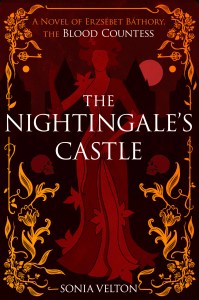
Book Review: “The Nightingale’s Castle” by Sonia Velton

A castle looms in the distance and the owner, a glamourous countess, has asked for fair maidens from the surrounding areas to work for her. But this is not an ordinary castle and this was not a benevolent countess. The rumors say if you enter the castle, you will never return as the infamous Blood Countess Erzsebet Bathory will kill you and bathe in your blood. A rather gruesome tale that has been told for centuries, but how true is this story? What truly happened in the Countess’s castle and what was the countess like? Sonia Velton hopes to answer these questions in her novel about Erzsebet Bathory’s life, entitled “The Nightingale’s Castle.”

I want to thank Harper Perennial and Net Galley for sending me a copy of this novel. I have heard about Elizabeth Bathory the Blood Countess, but just the dark tales about how she killed virgins and bathed in their blood to keep her youth. Sadly, I don’t know much about the woman herself and the circumstances around her life that made the charges around her so extreme.

We begin with a scene in the future from a court case where we see a mysterious girl listing the names of the accomplices who helped the countess, namely Janos Ficzko Ujvary, Ilona Jo Nagy, Dorottya (Dorka) Szentes, and Katalin Beneczky. The mysterious figure also reveals that there is a ledger that she claims lists the names of every victim of the countess, which totals hundreds of young ladies. Then, we jump to the main story with two servants of the countess, Dorka, and Fickzo, looking for a new woman to work at Cachtice Castle, which they find in Boroka Libalany, the adopted daughter of the town doctor Jozsef. It is at the castle where Boroka meets another girl named Suzanna and the two girls form a sort of friendship as they work in the laundry.

Things seem to be going well for Boroka and Suzanna until they realize that there is something off about this castle. While Boroka meets Countess Erszebet Bathory and gets to interact with her court of young noble ladies, Suzanna sees the darker side of the castle. I do appreciate that each one of the accomplices of the countess gets their unique backstories on how they met Erszebet Bathory. As Boroka gets closer to the countess and earns her trust as a stand-in for her portrait by Valentino, she discovers an intricately craved box and a journal inside that tells the story of Boroka’s birth mother, however the context of the box changes for those who open it. While I do enjoy learning more about Boroka’s familial connection to the countess, the magical box element almost felt unnecessary as she could have easily found the diary in the countess’s library and it would have had the same effect for Boroka.

Finally, we get to see how the case against Erszebet Bathory and her accomplices occurred. Gyorgy Thurzo Count Palatine of Hungary joins with King Matthias of Hungary to create a case against the countess. We get to see the arrest of the countess and her accomplices, the trial, and the aftermath of this case on the entire cast of characters, but especially Boroka.

As this was the first novel that I have read set in late 16th/ early 17th century Hungary and that was about Erszebet Bathory “the Blood Countess,” I found this novel extremely engrossing. It was a haunting yet stunning story filled with so many twists and turns that I did not want it to end. If you want a riveting retake on the life of the infamous Blood Countess, I highly recommend you read, “The Nightingale’s Castle” by Sonia Velton.

Book Review: “The Lady Rochford Saga Part 2: Tourmens de Mariage” by Danielle Marchant

Marriage has been an integral part of life for centuries. It has been used to create strong alliances and cement love matches. However, once the wedding ceremony is finalized, the facade often fades and the truth about the families is revealed. Jane Parker finally marries the love of her life, George Boleyn, but she soon realizes that her new family is full of ambition, especially her new sister-in-law Anne Boleyn. As one of the greatest marriages of the 16th century is beginning to fall apart, can a new romance be waiting in the wing to rock England and all of Europe to its core and whose side will Jane join in the end? Danielle Marchant continues her exploration of Jane Parker Boleyn, Lady Rochford’s life in her novel, “The Lady Rochford Saga Part 2: Tourmens de Mariage.”

I’d like to thank Danielle Marchant for sending me a copy of this novel. I enjoyed the first novel in this series, “Into the Ranks of the Deceived,” so I wanted to see how Marchant would continue this series and where book two would end. 

We begin with Catherine of Aragon attending the Blackfriars to discuss her marriage with Henry VIII. He wants the marriage dissolved because Catherine was married to his brother Prince Arthur Tudor and that is why they cannot have any living male children. Obviously, Catherine disagrees and is fighting for her marriage, which gains the respect of Jane Parker. However, Anne is not interested in the affairs of the queen and instead has her heart set on marrying Henry Percy. This does not work out for Anne as Cardinal Wolsey finds out and decides to put a stop to their engagement, which creates animosity between Anne and Wolsey. 

While Anne is trying to figure out her love life, we see Mary Boleyn become a mother of two while dealing with the death of her husband William Carey. Jane must navigate these complex issues of her new family while she enters a new chapter of her life when she marries the love of her life, George Boleyn. However, Jane’s married life is not all sunshine and rainbows and she realizes that they are having problems conceiving a child. I think the story of this second novel was good, but I think it should have covered a bit more ground and possibly gone to the marriage of Anne Boleyn and Henry VIII so that the third book could focus on the fall of Anne and George Boleyn and hopefully show a glimpse of Jane’s fall from grace.

Overall, I think it was a decent novel that shows the softer side of Jane and George’s relationship which is sometimes lacking in other novels. I think it was a bit short for the material that I hoped she would cover in this series since there is so much to Jane’s story, but I think she can create a story with believable characters that you don’t want to stop reading. If you have enjoyed the first book in this trilogy, I think you should read, “The Lady Rochford Saga Part 2: Tourmens de Mariage” by Danielle Marchant.

Book Review: “The City of Tears” by Kate Mosse

Weddings are supposed to be happy occasions to unite two families through the bonds of love, at least in our more modern sense of the ceremony. However, in the past, weddings were ceremonies that would unite families through contracts to create powerful alliances—hardly a romantic endeavor. One of the grandest weddings of the 16th century was meant to unite France, which led to bloodshed between Catholics and Huguenots. Minou Joubert and her family are invited to the wedding of Marguerite de Valois and Henri of Navarre in Paris, but the decision to attend the lavish event leads her family on a path full of tears and heartbreak. The story of the Joubert family’s struggle to fight for the faith they strongly believe in and to unite their broken family is masterfully told in Kate Mosse’s novel, “The City of Tears.”

This is a book that I found when I was going used book shopping one day. I had heard about Kate Mosse and her novels, so I wanted to give them a try. I didn’t realize that it was the second book in a series until after I brought it home, but the premise of this novel was so intriguing that I couldn’t wait to read it. So I decided to read the books out of order to see if this would be a series that I would enjoy reading.

We begin our tale with one of the Joubert descendants from the 1800s going to the house that her ancestors lived in in Amsterdam. I am not sure where this particular storyline will lead, but I am excited to find out. We then join the family Joubert in the year 1572 as they are debating whether or not to go to Paris for the royal wedding; even though it is a great honor to receive an invitation, the problem is that the Jouberts are a Huguenot family. Their mortal enemy, Vidal or Cardinal Valentin, is always looking for a way to harm Minou and her husband Piet no matter what, even if it means sending assassins to hurt those closest to them. Even with the danger and the tragedies that befall them before the journey, they still choose to take a risk and go to Paris.

Paris was one of the biggest cities of its time and with big cities comes excitement and risks of danger. On the day of the wedding, everything ran smoothly, but three days later, on St. Bartholomew’s Day, a massacre of the Huguenots happened on the streets of Paris and the Joubert family lost their precocious daughter Marta and Minou’s brother Aimeric in the midst of the chaos. Now, Minou and Piet must take their remaining family members and flee with Cornelia van Raay to her native Amsterdam. What they did not realize was that religious change was also brewing in Amsterdam, which they also had to navigate. To top it all off, the life they left behind in France decided to rear its head as reunions and plots against the Jouberts were afoot. The Jouberts must face every challenge head-on if they have any hope of seeing a brighter future.

I enjoyed reading this novel. It may have taken me a moment to get into the story as this is book two in a series so getting used to the characters and their background, but once I did, I became super attached to them. I found it extremely fascinating to read about France and the Netherlands during the 16th century in historical fiction because even though France features pretty commonly in this era’s historical novels, the Netherlands is a new area to explore. I was so enthralled by this novel that I bought the first and third novels in this series and I am looking forward to reading more books by Kate Mosse. I would suggest if you want to start this season, start with the first book, “The Burning Chambers.” If you have started this series and want to see what happens next, I highly suggest you read, “The City of Tears” by Kate Mosse.

Book Review: “Medici Heist” by Caitlin Schneiderhan

The year is 1517, and Florence is experiencing great change. No longer is it a grand republic that it once was; instead, it is under the control of the Medici family. They ruthlessly controlled Florence, especially Pope Leo X, who was born Giovanni di Lorenzo de’ Medici. The people suffer as the Medici become increasingly wealthy, but a band of misfits and thieves plan to give some power back to the people with one of the greatest heists of 16th century Italy. Can they survive as a group when revelations from the past and dangers lurk around every corner? The adventure with this ragtag team of thieves as they fight for Florence is explored in Caitlin Schneiderhan’s novel, “Medici Heist.”

I want to thank Feiwel and Friends and Net Galley for sending me a copy of this novel. It’s been a little bit since I read a new YA historical fiction novel, and so when I read the description of this one, I jumped at the chance to read it. I like a good novel set in Italy during the Renaissance, so I wanted to see what Schneiderhan could bring to the genre.

We kick off with Pope Leo X in all his grandeur entering the city and being greeted by a girl named Cat throwing a mud pie at the Pope. This incident sets the mood of the city towards the Medicis. We then jump to meeting our main four protagonists; the con woman/ leader of the misfits Rosa Cellini, Sarra the Tinkerer, Khalid the skilled fighter, and Giacomo the master of disguise. Along with the apothecary Agata, Dominic the apprentice, and even Michelangelo, the crew has decided that the only way to free Florence from Medici rule was to steal the indulgences that the people gave the church for the forgiveness of their sins so they spend less time in purgatory when they died. The Medicis were able to gather about 10,000 florins, an impressive amount that the band of thieves hoped to split evenly. However, complications do arise such as unexpected reminders of the past, romances, and those who want the treasure for their nefarious purposes.

While I do applaud Schneiderhan for writing her first-ever historical fiction novel, which is not an easy task, I did have a few issues when I was reading this particular novel. I felt like this book read more like a screenplay in that it gave locations and information, but it was hard to visualize for someone who cannot see these locations as images. The characters felt a bit generic and blended together, especially with the short chapters that might have been purposeful to get through the story quickly, but I was not able to build a connection to these characters. Finally, I feel like this story does not feel like it could take place in the 16th century, except for a few famous name drops, historical places, and the currency used at the time. It feels too modern and it could be put into any period and it would still work. I wanted to get lost in 16th century Florence and that did not happen for me.

Overall, as a YA heist book, I think it is a pretty good book, but it missed the mark when it came to the historical element for me. I feel like the concept of this book was strong, but the execution was a bit lacking. It was a difficult book for me to read and at times, I did want to put it into a did not finish pile, which I never do with books. I know that some books just are not right for me, but they might be right for other people, which is why I continued to read this book. If you do want to read this book, it might be a good idea to have a device next to you to look up the locations mentioned to help visualize what is happening. If you want a heist book with some history sprinkled in, “Medici Heist” by Caitlin Schneiderhan might be the book for you.

Guest Post: “Excerpt from ‘ Try Before You Trust: To All Gentlewomen and Other Maids in Love’” by Constance Briones

I am pleased to welcome Constance Briones to my blog today to share an excerpt from her novel, “Try Before You Trust: To All Gentlewomen and Other Maids in Love.” I would like to thank Constance Briones and The Coffee Pot Book Club for allowing me to be part of this blog tour.

Excerpt:

On a brisk September morn in the ninth year of Queen Elizabeth’s reign, I arrived at the Bramwell House, the London estate of Lady Bramwell, a widowed baroness and my new mistress. The fiery hue of the red brick facade made the house seem indestructible as it stood bold and vibrant in the late morning sunlight on the bank of the Thames. I counted eight chimney stacks and forty mullioned windows with diamond-shaped glass and mused whether I would find friend or foe within. 


As I gazed at the gables and corner turrets, my sisters’ sweet laughter reverberated in the cool breeze that swept across my cheeks. How they twirled and giggled with delight when my mother promised that, like me, when they reach the age of eighteen, they too will venture from home to work for a grand lady, acquiring superior housewifery skills that would help them snag a well-bred gentleman. 


Blurb: 

What if Taylor Swift found herself penning songs about love in Elizabethan England when women were required to be chaste, obedient, and silent? 

Isabella Whitney, an ambitious and daring eighteen-year-old maidservant turned poet, sets out to do just that. Having risked reputation and virtue by allowing her passions for her employer’s aristocratic nephew to get the better of her, Isabella Whitney enters the fray of the pamphlet wars, a scurrilous debate on the merits of women. 


She’s determined to make her mark by becoming the first woman to write a poem defending women in love, highlighting the deceptive practices of the men who woo them. Her journey to publication is fraught with challenges as she navigates through the male-dominated literary world and the harsh realities of life in sixteenth-century London for a single woman. 

Loosely based on the life of Elizabethan poet Isabella Whitney, this is a compelling tale of a young woman’s resilience and determination to challenge the status quo and leave her mark in a world that was not ready for her. 

Buy Link: 

Universal Buy Link: https://books2read.com/u/3Jly0J  

Author Bio: 

Constance Briones has a Master’s in Woman’s History, which informs her writing. 

She first learned about the subject of her debut historical fiction novel, the sixteenth-century English poet Isabella Whitney, while doing research for her thesis on literacy and women in Tudor England. Isabella Whitney’s gusty personality to defy the conventions of her day, both in her thinking and actions, impressed Constance enough to imagine that she would make a very engaging literary heroine. 

As a writer, Constance is interested in highlighting the little-known stories of women in history. She is a contributing writer to Historical Times, an online magazine. When not writing, she lends her time as an educational docent for her town’s historical society. 

She contently lives in Connecticut with her husband and Maine coon sibling cats, Thor and Percy. 

Author Links

Facebook: www.facebook.com/constancebrionesauthor  

LinkedIn: www.linkedin.com/in/constance-briones-a55a9168 

Pinterest: www.pinterest.com/constancebrionesauthor  

Amazon Author Page: www.amazon.com/stores/author/B0CPX8T7CB/about 

Guest Post: “King Matyas- The Raven King of Hungary” by Katerina Dunne

Today, I am pleased to welcome Katerina Dunne to my blog to share a bit of her research for her latest novel, “Return to the Eyrie.” I want to thank Katerina Dunne and The Coffee Pot Book Club for allowing me to be part of this blog tour.

The history of medieval Hungary is fascinating, yet few in the English-speaking world know much about it. From nomadic tribes raiding across Europe in the 9th-10th century, the Hungarian conquerors settled in the Carpathian basin, converted to Christianity, and, together with the peoples they found already living there, created a powerful multi-ethnic and multi-lingual kingdom, which at its peak stretched from Southern Poland to the Adriatic Sea and from lower Austria to Central Romania as the below map demonstrates:

15th-century Europe map copied from
https://www.gifex.com/detail-en/2009-09-17-811/Europe-during-the-15th-Century.html

Return to the Eyrie (released in April 2024) is set during the second half of the 15th century (1470 to 1480) mostly in Transylvania and Belgrade, which were part of the medieval Kingdom of Hungary. The main characters are fictional, but they interact with real historical figures of the time and participate in real historical events. I have presented the heroine as a (fictional) member of two powerful baronial clans from Transylvania and Eastern Hungary.

The 15th century was a turbulent time for the Kingdom of Hungary due to internal conflict as well as the expansionist efforts of the Ottoman Empire towards the west and north. After the Ottoman conquest of Serbia and Bosnia, and the submission of Wallachia to the Sultan as a vassal state, Hungary became the last frontier holding back the Ottoman advance towards Central Europe.

The years between 1458 and 1490 were dominated by the figure of Mátyás (Matthias) Hunyadi, who became king aged fifteen in January 1458. His father was the formidable János Hunyadi, a lesser nobleman whose meteoric rise to power in the 1440s and early 1450s made him the most powerful baron in the kingdom. However, after his death, his enemies accused his eldest son, László, of treason. Under the influence of several barons who opposed the Hunyadi family, the King (also called László) arrested both Hunyadi’s sons in the spring of 1457. While he had László executed, he imprisoned fourteen-year-old Mátyás and many of their supporters.

When the King died in 1457 without an heir, the vacant throne was filled by Mátyás, following his mother’s and his uncle’s relentless campaign of negotiations, promises, bribes, and intimidation. The legend has it that the Royal Council deliberated in Buda Castle and made the public announcement while the crowds of lesser nobles stood literally on the river Danube, the waters of which had frozen solid.

But Mátyás was still held captive by the Bohemian king and Hussite leader, George of Podebrady. It took a large ransom to release Mátyás to his family, and the teenager was finally enthroned in February 1458. He could not be crowned though because the Hungarian Holy Crown was in the hands of the Holy Roman Emperor, Frederick III. How the crown had ended up there is another story—one of the most fascinating episodes in late medieval Hungarian history—which deserves separate attention. It took another four years and the astronomical sum of 80,000 gold florins to recover the crown. Mátyás was finally crowned with all the appropriate ceremony on 29 March 1464.

He became known as Mátyás Corvinus (nicknamed The Raven King because of the Hunyadi coat of arms, which depicted a raven with a golden ring in its beak) One of the most important rulers in 15th century Europe, he brought the Italian Renaissance and Humanism to Hungary, upgraded the royal palace in Buda, established the famous Corvina Library and was the patron of many scholars and artists. Due to the fact that he was a member of the nobility rather than of royal blood, he faced strong opposition both from inside Hungary and from abroad (Holy Roman Empire, Bohemia, and Poland) and he had to fight several wars to secure his grip on the throne. He kept a defensive stance towards the Ottomans, with relative success, and competed with them in his efforts to influence politics in neighboring Wallachia, Moldavia, and Bosnia.

Mátyás is well-known for keeping Prince Vlad III of Wallachia (Vlad the Impaler) imprisoned for several years before finally releasing him in 1475 to place him on the Wallachian throne as an ally.

Mátyás conquered Vienna in 1485 and was negotiating his possible future designation as Holy Roman Emperor when he died in April 1490.

He has since become the subject of many legends not only in Hungary but also in several neighboring Central European countries.

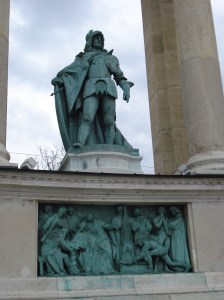
Statue of King Mátyás Hunyadi in Heroes’ Square Budapest (my photo)

King Mátyás plays a small but pivotal role in my novel, Return to the Eyrie. The heroine, Margit, is distantly related to him as her father (fictional character) was a third cousin of the king’s mother, Erzsébet Szilágyi.

Margit needs the King’s support to reclaim her inheritance, which was violently taken when she was a child by her close relatives.

Apart from being a historical adventure, the novel also addresses the issue of female inheritance. Despite her noble status, Margit could not inherit landed property from her father due to the strict inheritance laws in the Kingdom of Hungary. Noble daughters were only entitled to a monetary dowry when they married unless their husband was a commoner, in which case—ironically—they could inherit part of the land. So, according to the law, Margit’s land would pass to her closest male relative (her first cousin in this case).

However, a nobleman could invoke the custom of Prefection (Fiúsítás in Hungarian or praefectio in filium in Latin), whereby he could petition the King to “promote” his daughter to a son and therefore, allow her to inherit landed property. This would usually happen when there were no close male relatives, or in other exceptional cases. Margit’s father had sent such a petition to King Mátyás, but his relatives plotted against him. With an evil trick, they presented him as a traitor to the King’s eyes, had him murdered, and took over his land while Margit barely escaped with her life thanks to her father’s most loyal friend.

Blurb:
Honour, revenge, and the quest for justice.
Belgrade, Kingdom of Hungary, 1470:

Raised in exile, adolescent noblewoman Margit Szilágyi dreams of returning to her homeland of Transylvania to avenge her father’s murder and reclaim her stolen legacy. To achieve this, she must break the constraints of her gender and social status and secretly train in combat.
When the king offers her a chance at justice, she seizes it—even if it means disguising herself as a man to infiltrate the vultures’ nest that now occupies her ancestral ‘eyrie’.

Plagued by childhood trauma and torn between two passionate loves, Margit faces brutal battles, her murderous kin’s traps, and inner demons on her quest for vengeance. Only by confronting the past can she reclaim her honour—if she can survive long enough to see it through.

Return to the Eyrie is an epic coming-of-age tale of a young woman’s unwavering pursuit of justice and destiny in 15th-century Hungary.

Buy Link:
Universal Buy Link: https://books2read.com/u/bz8gJL

Author Bio:

Katerina Dunne is the pen name of Katerina Vavoulidou. Originally from Athens, Greece, Katerina has been living in Ireland since 1999. She has a degree in English Language and Literature from the University of Athens, an MA in Film Studies from University College Dublin, and an MPhil in Medieval History from Trinity College Dublin.

Katerina is passionate about history, especially medieval history, and her main area of interest is 13th to 15th-century Hungary. Although the main characters of her stories are fictional, Katerina uses real events and personalities as part of her narrative to bring to life the fascinating history of the medieval Kingdom of Hungary, a location and period not so well-known to English-speaking readers.

Return to the Eyrie (published April 2024) is the second book in the Medieval Hungary series, a sequel to Lord of the Eyrie (published in February 2022).

Author Links:

Website (publisher): https://www.thehistoricalfictioncompany.com/hp-authors/katerina-dunne
Facebook: https://www.facebook.com/profile.php?id=100076818802721
LinkedIn: https://www.linkedin.com/in/katerina-vavoulidou-07962a85/
Amazon Author Page: https://www.amazon.com/stores/Katerina-Dunne/author/B09R4P733K
Goodreads: https://www.goodreads.com/author/show/22196953.Katerina_Dunne

Book Review: “The Lost Queen” by Carol McGrath

The Lost QueenThe Crusades were conflicts predominantly focused on the stories of knights, kings, popes, Christians, and Muslims. We have some stories of women like Eleanor of Aquitaine who joined their husbands in battle. However, some women’s stories tend to get lost in the sands of the past. Take, for example, Eleanor of Aquitaine’s daughter-in-law, Berengaria of Navarre, the wife of Richard the Lionheart. Amid the Third Crusades, she must join Eleanor of Aquitaine on a treacherous journey to meet her husband while he battles for Jerusalem. Can Richard and Berengaria survive the journey to and from the Holy Land and produce the desired heir for the English throne before their enemies can claim victory? Carol McGrath has chosen to tell the tale of the forgotten queen Berengaria of Navarre in her latest novel, “The Lost Queen.”

I would like to thank Carol McGrath and Headline Books for sending me a copy of this novel. I am always looking for new heroes and heroines from the past to read about, whether it is historical fiction or nonfiction. I have heard the name Berengaria of Navarre mentioned in previous books about Plantagenet queens, but she is more of a footnote, so when I heard there was going to be a novel about her life, I knew I wanted to read it.

The year is 1191 and Berengaria of Navarre is meeting her future mother-in-law Eleanor of Aquitaine to embark on a journey to meet her future husband Richard the Lionheart in the Outremer. At the same time, Avelina FitzWilliam is planning her trip to the Outremer to find her husband William FitzWilliam who never returned from the Crusades. Avelina’s journey would not be as glamorous as Berengaria’s as she would go in disguise as a nun. Berengaria must also be wary of her surroundings as Philip of France is against the union altogether as Richard decided to pass on a union with Philip’s sister Alice of France to marry Berengaria.

Berengaria and Avelina were united by chance and became the closest of friends through numerous trials. Not only did they have to deal with the dangerous Alps crossing, but they also had to deal with pirates, Saladin’s army, Crusader factions loyal to Philip of France, Walter of Winchester and Prince John in England, and women like Princess Irene of Cyprus who only had eyes for King Richard. Through all the chaos around them, at the heart of this novel, are two love stories, Berengaria and Richard and Avelina and William.

As someone who knew very little about the life of Berengaria of Navarre, I found this novel positively enthralling. It was filled with twists, turns, high drama, and romance. I loved reading this novel and I was genuinely sad when it ended. McGrath was able to craft a luscious novel that was meticulously researched that any fan of medieval historical fiction novels will adore. If this sounds like you, I highly suggest you read, “The Lost Queen” by Carol McGrath.

The Lost Queen

1191 and the Third Crusade is underway . . .

It is 1191 and King Richard the Lionheart is on crusade to pitch battle against Saladin and liberate the city of Jerusalem and her lands. His mother, the formidable Eleanor of Aquitaine and his promised bride, Princess Berengaria of Navarre, make a perilous journey over the Alps in midwinter. They are to rendezvous with Richard in the Sicilian port of Messina.

There are hazards along the way – vicious assassins, marauding pirates, violent storms and a shipwreck. Berengaria is as feisty as her foes and, surviving it all, she and Richard marry in Cyprus. England needs an heir. But first, Richard and his Queen must return home . . .

The Lost Queen is a thrilling medieval story of high adventure, survival, friendship and the enduring love of a Queen for her King.

Acclaim for Carol McGrath’s ROSE trilogy:
‘Powerful, gripping, and beautifully told’ KATE FURNIVALL on The Silken Rose
‘A tour de force of gripping writing, rich historical detail and complex, fascinating characters’ NICOLA CORNICK on The Stone Rose
‘A beautifully narrated novel’ K J MAITLAND on The Damask Rose

Purchase Linkhttps://tinyurl.com/5n8ab2xv

carol mcgrathAuthor Bio – Following a first degree in English and History, Carol McGrath completed an MA in Creative Writing from The Seamus Heaney Centre, Queens University Belfast, followed by an MPhil in English from the University of London. The Handfasted Wife, first in a trilogy about the royal women of 1066 was shortlisted for the RoNAS in 2014. The Swan-Daughter and The Betrothed Sister complete this highly acclaimed trilogy. Mistress Cromwell, a best-selling historical novel about Elizabeth Cromwell, wife of Henry VIII’s statesman, Thomas Cromwell, was republished by Headline in 2020. The Silken Rose, the first in a medieval She-Wolf Queens Trilogy, featuring Ailenor of Provence, saw publication in April 2020. This was followed by The Damask Rose. The Stone Rose was published in April 2022. Carol is writing Historical non-fiction as well as fiction. Sex and Sexuality in Tudor England was published in February 2022. The Stolen Crown 2023 and The Lost Queen will be published on 18th July 2024. Carol lives in Oxfordshire, England, and in Greece.

Find Carol on her website:

http://www.carolcmcgrath.co.uk.

Follow her on Amazon @CarolMcGrath

https://scribbling-inthemargins.blogspot.com/

https://www.linkedin.com/in/carol-mcgrath-906723a/

https://www.facebook.com/CarolMcGrathAuthor1/

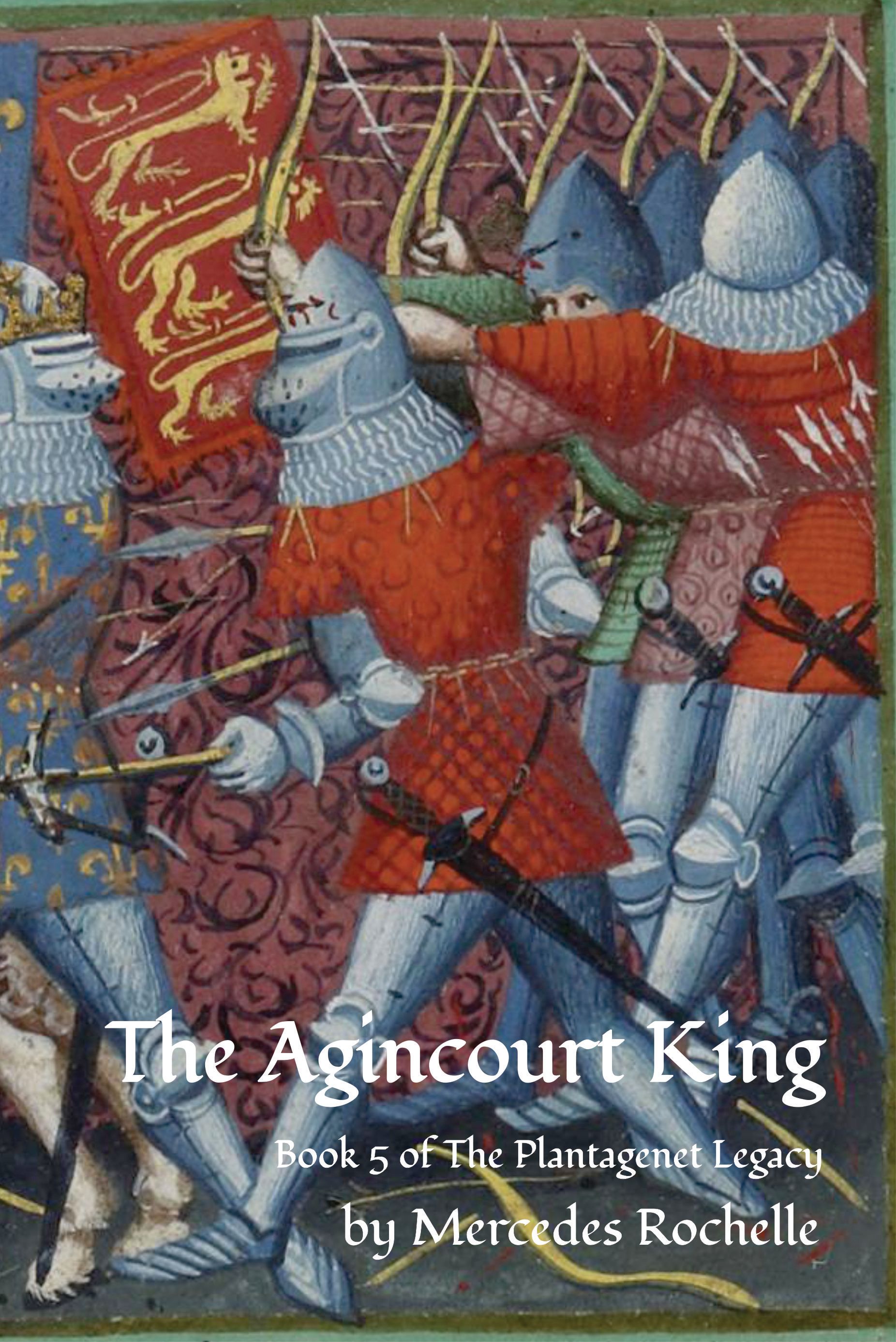
Guest Post: “Excerpt from ‘The Agincourt King’ by Mercedes Rochelle”

PWIzRwyKI am pleased to welcome Mercedes Rochelle back to my blog to share an excerpt from her novel, “The Agincourt King.” I would like to thank Mercedes Rochelle and The Coffee Pot Book Club for allowing me to be part of this blog tour.

THE CABOCHIEN REVOLT IN PARIS 

There was no doubt that France was in turmoil. King Henry IV of England wasn’t even cold in his grave at Canterbury Cathedral when a fierce rebellion broke out in Paris. As usual, King Charles VI had sunk into insensibility and the city simmered uneasily, agitated by John the Fearless, the Duke of Burgundy. Private and public accusations were aimed against the king’s ministers, and the most threatened among them started to leave town for the safety of the provinces. But another consideration had arisen to complicate matters. Louis the Dauphin had reached his sixteenth year and was poised to take on the regency while his father was incapacitated. Already he was chafing under Burgundy’s authority… 

Although today Burgundy was in charge, he was concerned about Louis the Dauphin. To control the heir to the throne, he had arranged a marriage between Louis and his daughter Margaret. Unfortunately, the union was not working out. The lad showed a disturbing independence and tended to reject his wife whenever possible. It was time to teach him a good lesson.  

It didn’t take long to devise a plan. Duke John secretly conversed with Governor Jacqueville (who happened to be the chamberlain) and others of his household. As he conveniently withdrew, the citizens worked themselves into another frenzy under the urging of their governor. Jacqueville mounted a platform and held up his hands for attention. 

“I have a list of traitors the Dauphin harbours under his protection,” he shouted. “They seek to strip you of your rights and privileges. We must take them prisoner! See here, the Duke of Bar is your enemy, and the Dauphin’s chancellor Jehan de Vailly. We must arrest the queen’s brother Duke Louis of Bavaria, members of her household, and her ladies in waiting. I have the list here!”  

Jacqueville waved a paper over his head. He was about to say more when a burly citizen mounted the platform. The crowd cheered and he recognized this man, a well-known mischief-maker who was popular with the people. He was dressed as a common workman, with a swarthy face and hair that stuck up like a brush. He strutted across the platform like he owned the place. 

“I am Simon Caboche, to those who do not know me,” the newcomer called out to much laughter. “I am a skinner of the ParisBoucherie and leader of our butcher’s guild. Follow me to the Hôtel de Guyenne, where we will have a parley with the Dauphin.” He pulled out a white hood—chaperon—from under his belt. “All those who are with me, here is our badge!” And to the governor’s amazement, most of the Parisians had a white hood, too. Who was playing into whose hand?   

Giving Jacqueville a meaningful look, Caboche took charge and led a shouting mob to the Dauphin’s hôtel. By the time they reached the Rue St. Antoine, they were six thousand strong and growing. The men guarding the door didn’t even try to interfere. While the Parisians surrounded the hôtel, the leaders pushed their way inside.  

“Where is he?” bellowed Caboche at the first servant he saw. The man backed against the wall. “Where is the Dauphin?” 

The poor servant blubbered in terror, and Caboche growled at him before continuing down the hall. Two old women carrying linens were just coming out a door when the butcher pointed at them. “Take us to the Dauphin!” he demanded. Looking at each other, the servants froze. 

“Come, friends,” he said more gently. “We won’t hurt you. We need to speak to the Dauphin.” 

One of the women pursed her lips and then gave her bundle to her companion. Jerking her head, she led the intruders to the Dauphin’s private apartment. Nodding his thanks, Caboche shoved open the door with a slam, surprising Louis while he was conversing with the Duke of Bar. 

Louis sprang awkwardly to his feet. “What is the meaning of this?” he cried in an unsteady voice. Unfortunately, the Dauphin did not inspire confidence and he knew it. His short frame was overweight, heavy, and slow. He was already known for keeping late hours and general laziness. Fond of excessive jewellery and rich clothing, he relied on the trappings of royalty to sustain his fragile dignity.  

Caboche stepped forward, flanked by his closest associates. He did not remove his white hood. “Our most redoubted lord,” he said, his voice barely respectful, “I have come with my fellow Parisians, who require, for your welfare and your father’s, that you deliver up certain traitors who are now in your hôtel.”  

Recovering his nerve, the Dauphin was filled with anger. “This is absurd. What you demand is impossible. There are no traitors in this hôtel.”  

“That is not true. I see them right before me.” Caboche nodded toward his victims and some of his men leapt across the room, grabbing the Duke of Bar by the arm; others seized the Dauphin’s chancellor. While Louis turned around in apprehension, his wife screamed. She had thrown her arm around one of his valets, trying to hold him back from two of the butchers who yanked him loose. Another servant was thrown to the floor.  

“Stop this!” cried Louis.  

Caboche gave him a sideways grin. “If you are willing to give them up,” he said, “well and good. Otherwise, we will take them right before your face and punish them as they deserve.” 

“I command you to let them go!” shouted the Dauphin. “My affairs are none of yours.” 

Jacqueville stepped up beside the butcher. “Monseigneur, this is very much our business. You have been badly misled, and your behaviour is that of a spoiled young man. You are sorely in need of correction.” 

“Get out of my sight!” cried the Dauphin. “Guards, help me! Guards!” 

Alerted by the shouting, several of the Dauphin’s men rushed into the room and threw themselves onto the intruders, who enthusiastically fought back. But no sooner had the scuffle begun when the Duke of Burgundy pushed his way into the room, shouting for order. His own men bore halberds and quickly interceded, pushing the antagonists apart. The Cabochiens, as they already called themselves, grouped together, still hanging onto their prisoners.  

Louis whirled around, pointing at his father-in-law. “This is your doing,” he growled. “These are your men. One day you will regret this. I won’t always be under your thumb.” 
LgQJ75mEBlurb:  

From the day he was crowned, Henry V was determined to prove the legitimacy of his house. His father’s usurpation weighed heavily on his mind. Only a grand gesture would capture the respect of his own countrymen and the rest of Europe. He would follow in his great-grandfather Edward III’s footsteps, and recover lost territory in France. 

Better yet, why not go for the crown? Poor, deranged Charles VI couldn’t manage his own barons. The civil war between the Burgundians and Armagnacs was more of a threat to his country than the English, even after Henry laid siege to Harfleur. But once Harfleur had fallen, the French came to their senses and determined to block his path to Calais and destroy him. 

By the time the English reached Agincourt, they were starving, exhausted, and easy pickings. Or so the French thought. Little did they reckon on Henry’s leadership and the stout-hearted English archers who proved, once again, that numbers didn’t matter when God was on their side. 

Buy Links: 

This title is available to read on #KindleUnlimited. 

Universal Buy Link: https://books2read.com/u/mq70Ze  
0S8YcxEYAuthor Bio:  

Mercedes Rochelle is an ardent lover of medieval history and has channeled this interest into fiction writing. Her first four books cover eleventh-century Britain and events surrounding the Norman Conquest of England. The next series is called “The Plantagenet Legacy” and begins with the reign of Richard II.  

She also writes a blog: www.HistoricalBritainBlog.com to explore the history behind the story. Born in St. Louis, MO, she received by BA in Literature at the Univ. of Missouri St.Louis in 1979 then moved to New York in 1982 while in her mid-20s to “see the world”. The search hasn’t ended! 

Today she lives in Sergeantsville, NJ with her husband in a log home they had built themselves. 

Author Links

Website: https://mercedesrochelle.com/  

Blog:  https://historicalbritainblog.com/  

Twitter / X: https://x.com/authorrochelle  

Facebook:  https://www.facebook.com/mercedesrochelle.net  

Book Bub: https://www.bookbub.com/authors/mercedes-rochelle  

Amazon Author Page:  https://www.amazon.com/stores/Mercedes-Rochelle/author/B001KMG5P6  

Goodreads: https://www.goodreads.com/author/show/1696491.Mercedes_Rochelle  

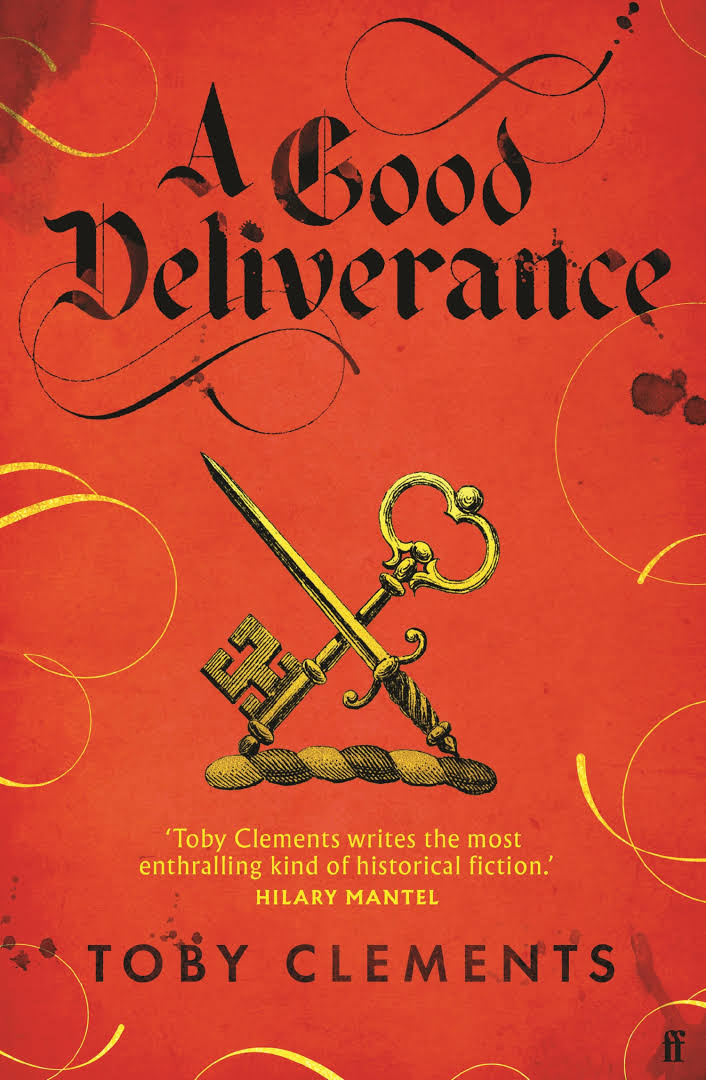
Book Review: “A Good Deliverance” by Toby Clements

A Good DeliveranceThe world of King Arthur and his Knights of the Round Table is filled with stories of adventures and romance. Many authors have tried to tell these tales in a way that will allow their books to live for centuries, but none were more successful than Sir Thomas Malory and his book Le Morte Darthur. King Arthur, Lady Guinevere, Sir Lancelot, Merlin, and Sir Gawain embark on numerous adventures including the Lady of the Lake, Camelot, the sword Excalibur, and the Quest for the Holy Grail. These tales were the epitome of chivalry and valiant knights in shining armor, but the author behind them was anything but perfect. Sir Thomas Malory has had his fair share of time in a prison cell. Who was Sir Thomas Malory and why did his book about King Arthur and the Knights of the Round Table still resonate with readers centuries after it was written? In his latest novel, “A Good Deliverance,” Toby Clements hopes to reveal the truth of this famous author whose story has been overshadowed by the myths he wrote down in his legendary tome.

I would like to thank Faber Books for sending me a copy of this novel. I have heard about the book Morte Darthur, as it is considered one of the most prominent texts about King Arthur, but when it comes to the author himself, I know nothing about his life. When I heard about this novel, the premise intrigued me enough to read it.

Clements begins his novel with Malory’s surprise arrest at a very old age. Malory is unsure why he has returned to prison as he has tried to live an honest life after he spent some time in the same cell over 20 years ago. He is at the mercy of King Edward IV. While imprisoned, waiting for word from his lawyer, Malory befriends a boy who is the son of one of the jailers named Brunt and he tells the young man his tale. Malory was the son of a knight who fought under King Henry IV in the search for the Welsh miscreant Owen Glendower. We get to see Malory become a knight and his fascination for King Arthur and the Knights of the Round Table that would become his magnum opus Morte Darthur. We see Malory’s moments of glory and utter defeat, his rivals, and the women that he admired from afar. Through Malory, we get to see how England changed, starting with Henry IV to his son Henry V, the young King Henry VI, and finally the first Yorkist King Edward IV. We also get to witness events such as the year of the 3 popes, the coronation of Henry V, Agincourt, the death of Jeanne d’Arc, the coronations of King Henry VI, and the beginning of the conflict known as the Wars of the Roses.

In a way, Clements created his Arthurian legend for Sir Thomas Malory with the way he chose to write this novel. However, it was the structure of this novel that bothered me when I was reading it, specifically the bullet points that Clements chose to include. When I am reading a novel, I want to read a cohesive piece, but the bullet points made it feel messy, which was probably used to simulate Malory as a storyteller figuring out what he wants to say to his young audience and what he wants to omit, however, it was just irritating for me to read. I don’t mind bullet points in nonfiction books, but it just doesn’t work for me in historical fiction. As for the main character, Sir Thomas Malory is okay, but there were moments where he rubbed me the wrong way. I did, however, enjoy his relationship with the boy.

Overall, it was a decent book. I think there were elements that I didn’t enjoy entirely, but the way Clements was able to incorporate the changes of the 15th century with the Arthurian legends to tell the story of this author was very unique. I think if you are a fan of Sir Thomas Mallory, the Arthurian legends, or the events of the 15th century, you might enjoy, “A Good Deliverance” by Toby Clements.