
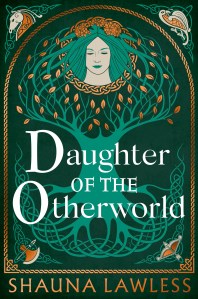
 When we think about the Norman Conquest, we often think about how it impacted England, Wales, and Scotland, but we tend to forget about Ireland. Early medieval Ireland do not get a whole lot of attention in historical fiction. That is, until Shauna Lawless’s Gael Song trilogy. Now, fifty years after the events of the original trilogy, Lawless has brought in a new cast of characters, as well as old characters, into the fight between the Descendants of the Tuatha De Danann and the Fomorians. When a child of prophecy is introduced into the mix that is said to be able to defeat the Fomorians, the race is on to protect the child or to kill her. Will the Descendants survive, or will the Fomorians torch the land and the Descendants’ hope? Shauna Lawless jumps back into this work with the Gael Song Era 2 book 1, “Daughter of the Otherworld.”
I would like to thank Bloomsbury USA and Net Galley for sending me a copy of this novel. I am new to this series, but I wanted to read it because I have never read a book about medieval Ireland or about Irish mythology, so when I saw this book available, I decided to give it a shot, especially with such a stunning cover.
We pick up fifty years after the Battle of Clontarf, and a man named Donnchad is on the run from Broccan of the Tuatha De Danann. Donnchad is a Fomorian, which means he can use fire magic and is the mortal enemy of those descendants of the Tuatha De Danann. Donnchad can reunite with his mother, Gormflaith, in Rome. Meanwhile, Broccan has a dream that tells him that he must go back to Rathlin Island and protect the daughter of Fodla, who has been in the Otherworld for a long time. The daughter, Isolde, is destined to defeat the fire, which might be a reference to the Fomorians.
Broccan raises Isolde as his own daughter until she is 17, but he never tells her who she is or her purpose in this giant conflict. But that all changes when the Fomorians find out about Isolde and decide to attack Rathlin Island. They believe that the threat has been neutralized, but Isolde lives and must travel to the mainland to find her cousin Colmon in Seir Kieran. While Isolde is searching for family and to figure out who she is, the Fomorians seek to control Ireland with the Norman lords of England.
This is a novel full of conflict, both magical and mortal, romance and heartbreak. Lawless does a great job of not only balancing numerous perspectives but also balancing mythology with historical battles and figures to create an original story. While I did enjoy the story, it did take me a while to figure out who the characters were and the overall conflict. I think after reading this particular book, I want to read the previous books in the series before I jump into the latest one. If you have read the previous books in the Gael Song trilogy, I think you will enjoy “Daughter of the Otherworld” by Shauna Lawless.
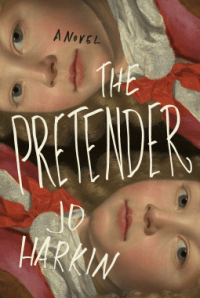 The Wars of the Roses are ending, and with it comes uncertainty about who will lead the country. On one side is King Richard III, who many believe killed his nephews to become King of England; on the other is Breton Henry, Henry Tudor, who believes he is the rightful king due to his bloodline. However, there is a third player in this entire debacle. A young farm boy named John Collan may spend his days daydreaming and studying to his heart’s content, but he is destined for more. A path that will lead him to hobnob with nobility and become the enemy of a king who just sat on his throne. Just who is John Collan, and how did this boy go from the farm to a life of infamy? Jo Harkin tells the story of how John Collan became Lambert Simnel in her novel, “The Pretender.”
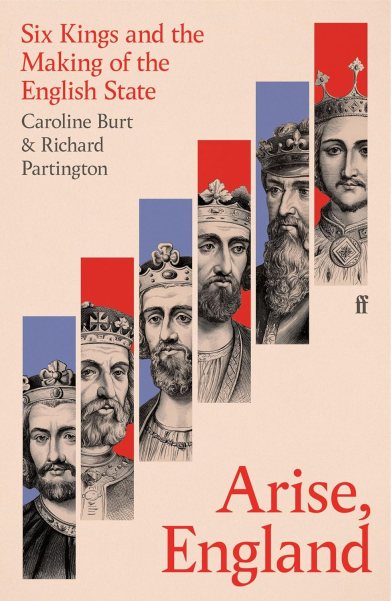 Like many other countries, England has been through growing pains when it comes to reforming its political, military, and judicial systems. None more so than the pains of the medieval period, specifically from 1199 to 1399. In those two centuries, there were six Plantagenet kings, each with a different style of being king and a different way of changing England with each reign. We often think that the biggest change to England’s political history during this time was the Magna Carta, but in fact, that was only just the beginning. Caroline Burt and Richard Partington have combed the archives to do a deep dive into each reign of these Plantagenet kings, examining the political and judicial changes that happened in a short period. Their comprehensive book is entitled, “Arise, England: Six Kings and the Making of the English State.”
 Three women in one family who shared the same first name saw England change over a tumultuous century. They saw the end of the Plantagenet dynasty and the rise of the Tudors while on the sidelines of great battles. Through heartaches and triumphs, the women of the Woodville family became princesses and queens that would transform the political landscape of England forever. These three women, Elizabeth Woodville, Elizabeth of York, and Elizabeth Grey, were incredible examples of what it meant to be medieval royal women. They are featured in Sarah J. Hodder’s latest book, “The Woodville Women.”
 A man who wants to get ahead in any royal court must have an impeccable background and a willingness to serve his monarch no matter the obstacles thrown their way. It takes an extraordinary man who doesn’t have a pristine background to make it in the ruthless world of a royal court, but some men made names for themselves. One such man was an adventurer, a poet, an explorer, and a courtier. He came from humble beginnings and rose to prominence to become known as one of the last true Elizabethans. The man was Sir Walter Raleigh, and his story is told in Tony Riches’ latest novel, “Raleigh: Tudor Adventurer.”
 The Wars of the Roses was a time filled with dynamic figures who fought for the right to restore order to England. We often think about the strong warrior men who marched into battle, facing their inevitable doom just for the chance to wear the crown and rule the land. The women who stood by their husbands’ and sons’ sides were just as strong as their male counterparts, even if they did not wear armor. They were on the sidelines, ensuring that they could create alliances that would prove helpful in future conflicts. The most famous examples of strong women during the Wars of the Roses are Margaret of Anjou, Margaret Beaufort, and Elizabeth Woodville. Yet, there was another woman who stood firmly on the side of the Yorkist cause. She was known as the Rose of Raby and the wife of Richard, Duke of York. Her name was Cecily Neville, and she is the protagonist of Annie Garthwaite’s brilliant debut novel, “Cecily.”
 A man who was young and had charisma would attract the attention of the Virgin Queen herself, yet that attention came with a price. The young man could not do what he desired and was buried in debt. His anger could not be quenched and he would end up rebelling against the very queen who brought him so much glory and honor. This rebellion would lead to his execution. The man’s name was Robert Devereux, 2nd Earl of Essex, and his story is told in Sarah-Beth Watkins’ latest bite-size biography, “Elizabeth I’s Last Favourite: Robert Devereux, 2nd Earl of Essex”.
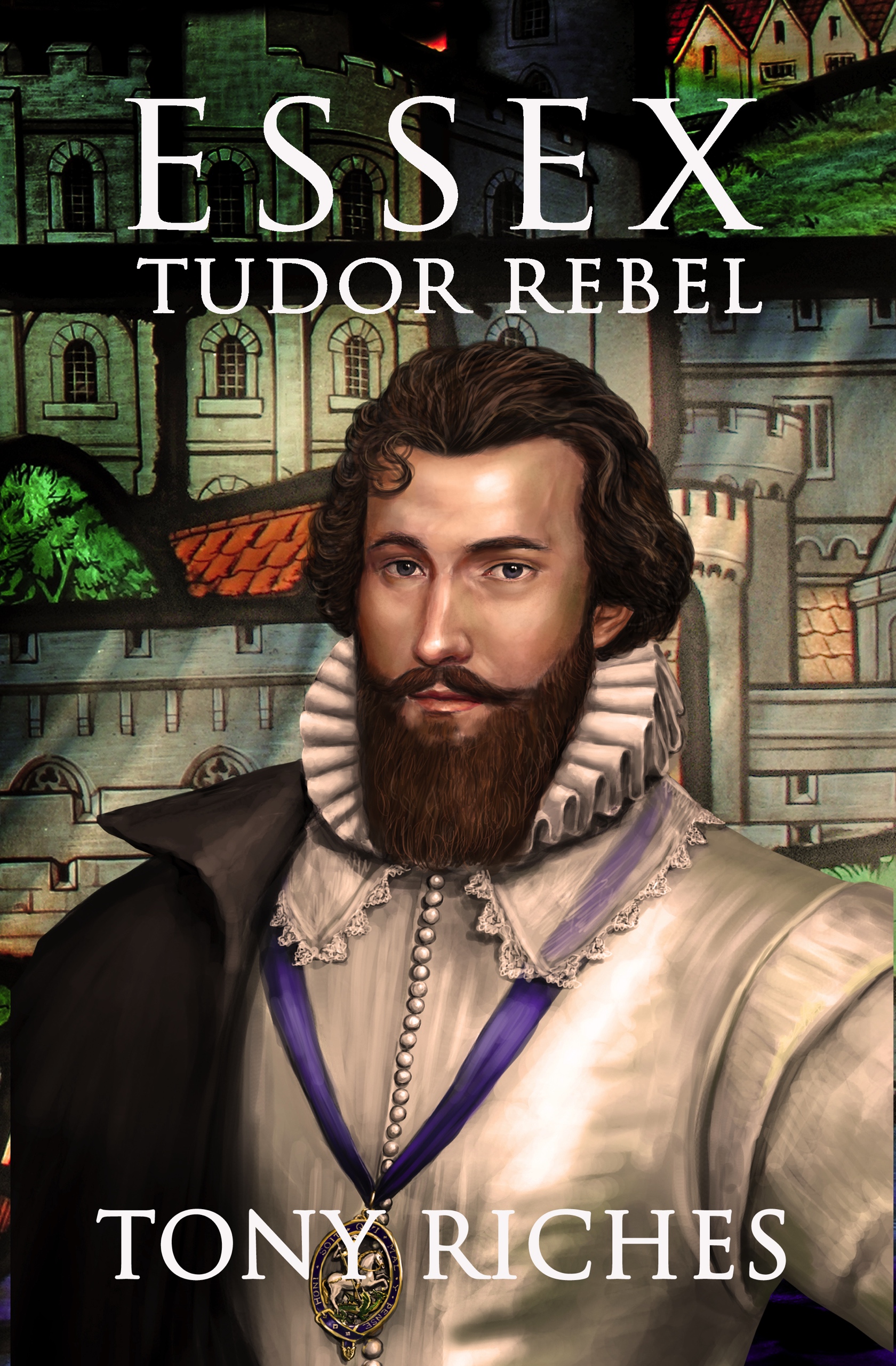
 Today, I am pleased to share my book review of the latest Elizabethan novel by Tony Riches as my contribution to his “Essex: Tudor Rebel” blog tour. Thank you to Tony Riches for sending me a copy of his latest novel, and to The Coffee Pot Book Club for allowing me to take part in this tour.
  (Blurb)
 Author Bio
 In English history, the story of the royal families tends to capture the imagination of those who study it. Full of dynamic tales of kings and queens, and numerous nobles, these are tales that make it into history books and history classes. We tend to focus on the same kings and queens, who have become the popular royals. But what about those who are left in the dust of those popular royals? Who were the royal women who lived in the shadow of the throne that time has forgotten? What were the lives of these women like? It is these women who are the focus of Erin Lawless’s latest book, “Forgotten Royal Women: The King and I”.
 Lancaster.
  Adventures of a Tudor Nerd