 Today, it is my pleasure to welcome Deborah Swift to my blog to discuss the inspiration for her latest novel, The Poison Keeper. I would like to thank Deborah Swift and The Coffee Pot Book Club for allowing my blog to host a stop on this tour.

I had enjoyed writing about Seville in A Divided Inheritance and was looking to find another setting where I could escape from the dull grey English winter. My husband suggested Italy and I remembered reading about Giulia Tofana, a notorious Renaissance poisoner, and the poison Aqua Tofana, named after her. I decided to investigate her a bit further to see if she would make a subject for a novel.
I was surprised to find that no one had written a novel about her in English, and so that made me even more determined. However, as soon as I started the research process I realized I was researching someone who was more of a myth than a real historical figure. Most of the information about her was from the 19th century, a good three hundred years since any proper record of her. Also, there were so many different dates associated with her life – for example, she is said by different sources to have been executed, to have escaped, and to have been bricked up behind a wall (!) – and her time of death was variously attributed to 1659, 1709 or 1730.

Three Generations of Poisoners
There were some peculiarities in the history and it soon became apparent that I was dealing not with one person, but with three – Theofania d’Adamo, her daughter Giulia Tofana and her daughter Girolamo Spara. In Italy at the time, women often took the contracted version of their mothers’ forenames as Christian names – hence Theofania = Tofana. I decided to focus on the middle generation because Giulia was the only one who escaped without execution as far as I could tell.
The one date that could be fixed by contemporary records was the death of Theofania who died on 12th July 1633. This concords with the first record of Aqua Tofana the poison named after Giulia Tofana, or more likely her mother Theofania, which was in 1632. This gave me a firm idea of the timescale for the book.

The enticing City of Naples
I was fascinated by the geography of Naples in the 17th Century – a city in the shadow of Mount Vesuvius that had erupted only two years earlier in 1631. The city was still recovering from those horrific events which included not only the eruption, with the city choked by dust and lava, but also by the earthquakes that preceded it and the devastating tsunami that followed it. I was able to use these events in my characters’ backstories. Society was sharply divided into rich and poor areas with glittering Palazzos and squalid slums. Corruption was rife both in the Church and in business.
The Camorra or Mafia
Powerful aristocratic families controlled the city through extortion and racketeering – this was the early inception of the mafia, known as the Camorra. The etymology is from Camo – boss, or head, and Morra – a type of gambling game popular in 17th Century Naples. This provided me with a subplot that I could use with my main male character and allowed me to create a strong antagonist, the Duke de Verdi, for my story.
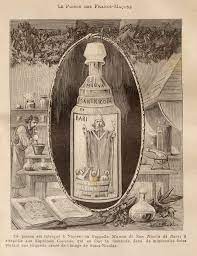
Aqua Tofana – A deadly poison
Aqua Tofana was supposed to kill by three drops in a drink or food. It was a colorless liquid, supposedly undetectable, but would cause death with similar symptoms to a wasting disease. The actual ingredients have never been confirmed, although many suspect arsenic to be the main ingredient. Naples was a city of alchemists and apothecaries, and the tradition of poison was well known in the city. There had been an epidemic of poisonings since the Borgias. This research area fascinated me, and I spent quite a few happy hours researching poisons in online libraries and through books.
The scope of the research was so interesting that the story soon grew into two books, and the sequel to The Poison Keeper, The Silkworm Keeper will be released soon.
Thank you for hosting me!
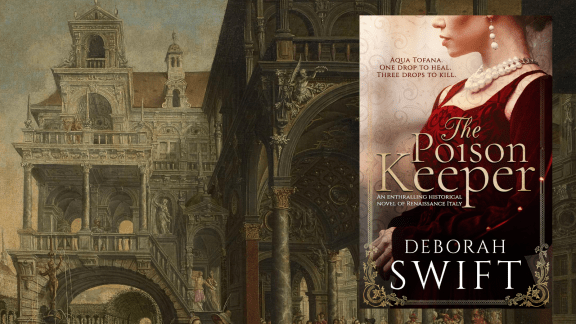 (Blurb)
Naples 1633
Aqua Tofana – One drop to heal. Three drops to kill.
Giulia Tofana longs for more responsibility in her mother’s apothecary business, but Mamma has always been secretive and refuses to tell Giulia the hidden keys to her success. When Mamma is arrested for the poisoning of the powerful Duke de Verdi, Giulia is shocked to uncover the darker side of her trade.
Giulia must run for her life, and escapes to Naples, under the shadow of Mount Vesuvius, to the home of her Aunt Isabetta, a famous courtesan. But when Giulia hears that her mother has been executed, and the cruel manner of her death, she swears she will wreak revenge on the Duke de Verdi.
The trouble is, Naples is in the grip of Domenico, the Duke’s brother, who controls the city with the ‘Camorra’, the mafia. Worse, her Aunt Isabetta, under Domenico’s thrall, insists that she should be consort to him – the brother of the man she has vowed to kill.
Based on the legendary life of Giulia Tofana, this is a story of hidden family secrets, and how even the darkest desires can be vanquished by courage and love.
‘Her characters so real they linger in the mind long after the book is back on the shelf’ Historical Novel Society
Buy Links:
Is your book on Kindle Unlimited? Yes
Universal Link (if you have it): mybook.to/PoisonKeeper
Amazon UK: https://www.amazon.co.uk/dp/B0928WPHMH
Amazon US: https://www.amazon.com/dp/B0928WPHMH
Amazon CA: https://www.amazon.ca/dp/B0928WPHMH
Amazon AU: https://www.amazon.com.au/dp/B0928WPHMH
 Author Bio:
Deborah Swift lives in the north of England and is a USA Today bestselling author who has written fourteen historical novels to date. Her first novel, The Lady’s Slipper, set in 17th Century England, was shortlisted for the Impress Prize, and her WW2 novel Past Encounters was a BookViral Millennium Award winner.
Deborah enjoys writing about ordinary people thrust into extraordinary circumstances, and most of her novels have been published in reading group editions. She holds an MA in Creative Writing from Lancaster University and is a mentor with The History Quill.
Social Media Links:
Website: http://www.deborahswift.com
Twitter: https://twitter.com/swiftstory
Facebook: https://www.facebook.com/authordeborahswift/
Instagram: https://www.instagram.com/deborahswiftauthor
Pinterest: https://www.pinterest.co.uk/deborahswift1/
Book Bub: https://www.bookbub.com/authors/deborah-swift
Amazon Author Page: http://author.to/DeborahSwift
Goodreads: https://www.goodreads.com/author/show/3297217.Deborah_Swift

 Two kings, two rivals from different countries defined the 16th century. One was the spare to his father’s crown, but when his eldest brother suddenly passed away, he became the next Tudor king. The other was the sole heir to his parent’s large kingdom and would become the Holy Roman Emperor. Wars, the Reformation, and family drama kept these two men, Henry VIII and Charles V, busy and at each other’s throats. They would sometimes join and fight for one another’s causes, showing the importance of international politics. With each new scenario, their relationship would shift, either for the best or the worst. Richard Heath has combined the stories of these two monarchs, these “frenemies,” into one joint biography, “Henry VIII and Charles V: Rival Monarchs, Uneasy Allies.”
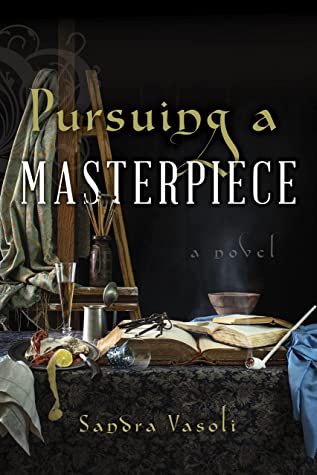 What if you found information about a mysterious portrait that would radically change how we view history forever? Who would you tell? When Zara Rossi entered the Ancient Manuscripts Room at the Papal Archives in Rome, she never imagined how a single letter would change her life and the Tudor community. Each piece of the puzzle unlocks a new story from the past and allows Zara to explore the remarkable tale of this masterpiece. Follow the clues with Zara Rossi to solve this mystery from the past in Sandra Vasoli’s latest book, “Pursuing a Masterpiece: A Novel.”
 A 16-year-old duchess, who lived a sheltered life, died in a remote villa after only being married to her husband, Alfonso Duke of Ferrera, for a mere year. Many suspect that she died of a fever, but there are rumors that her husband had her poisoned. Not much is known about Lucrezia de Medici, Duchess of Ferrara, except her marriage portrait and a brief mention of her in Robert Browning’s poem, “My Last Duchess.” Did she die of a fever, or was there a more sinister plot behind her demise? The mystery around her life and unexpected death have not been discussed much until now in Maggie O’Farrell’s latest novel, “The Marriage Portrait.”
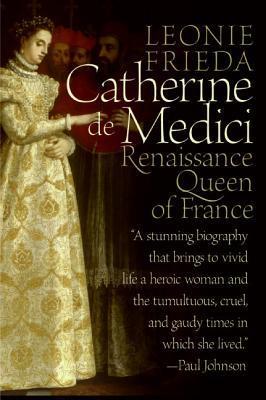 When we think about women rulers in the 16th century, some names, like Queen Mary I, Queen Elizabeth I, and Mary Queen of Scots, come to mind. However, another woman should be included in this list as her life helped keep the Valois dynasty alive and well in France, even though she was Italian by birth. Her name has been tainted with dark legends of poisoning, deadly incidents, and the infamous St. Bartholomew’s Day Massacre. This notorious queen was Catherine de Medici, and Leonie Frieda has chosen to shed some light on the myths and mysteries surrounding this misunderstood woman in her biography, “Catherine de Medici: Renaissance Queen of France.”
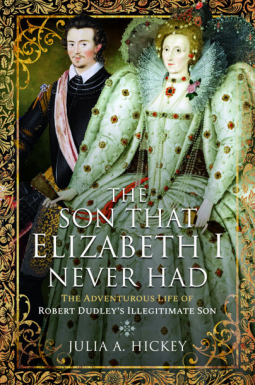 When we study the life of Queen Elizabeth I, the image of a virgin queen who never married tends to come to mind. Of course, she had a man who she favored above all others, Robert Dudley, but he married several times to Amy Robsart and Lettice Knollys. It was with Lettice Knollys that Robert Dudley was able to produce his heir, aptly named Robert Dudley Lord Denbigh, who unfortunately died at a young age. Robert Dudley was left without a legitimate heir, but he did have another son, albeit an illegitimate son, also named Robert Dudley. Julia A Hickey has decided to examine the life of the illegitimate Robert Dudley in her book, “The Son that Elizabeth I Never Had: The Adventurous Life of Robert Dudley’s Illegitimate Son.”
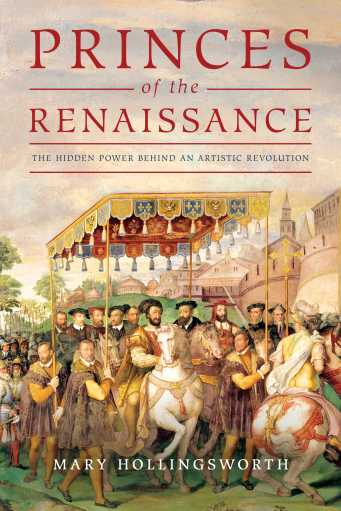 The 15th and 16th centuries were full of dynamic political and religious reforms, but they were also known for cultural changes throughout Europe. The medieval foundations started to crumble, and the early modern age emerged. One of the centers of change was Italy, a series of states with their rulers vying for power and prestige. These rulers would help finance masterpieces in art, literature, and architecture, but it was their rivals that threatened to tear the Renaissance society apart. In “Princes of the Renaissance: The Hidden Power Behind an Artistic Revolution,” Mary Hollingsworth explores the lives of the men and women who helped shape the Renaissance.
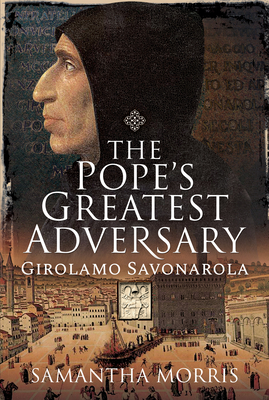 When we think about men who challenged the Church and are known as Reformers, we tend to think of Martin Luther, Jan Hus, and John Calvin. However, a man fought against corruption in his beloved Florence who should be included in the list of great reformers. He was a Dominican monk who was not afraid to preach against sin and took aim at the most powerful men in all of Italy, including Pope Alexander VII. His sermons were so scandalous that they would lead to his demise upon a pyre in the middle of Florence. His name was Girolamo Savonarola, and his story is told in Samantha Morris’s latest biography, “The Pope’s Greatest Adversary: Girolamo Savonarola.”
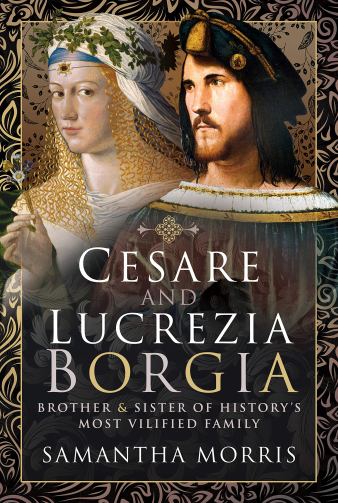 A family mired in myths and rumors of incest, murder, and intrigue for centuries. A brother and sister caught in the middle, attracting the attention of gossips and historians alike. No, I am not referring to a royal family in England. In fact, this story starts in Spain with Alonso de Borja, who moved to Italy and helped create the infamous Borgia family. Caught in the middle were the son and daughter of Rodrigo Borgia, Alonso’s nephew, and his mistress Vanozza Cattanei; Cesare and Lucrezia Borgia. How close were these famous siblings? What were their lives really like? In Samantha Morris’ latest biography, “Cesare and Lucrezia Borgia: Brother and Sister of History’s Vilified Family”, she dives deep into the archives to find out the truth about the legendary Borgia family.
 Adventures of a Tudor Nerd