Book Review: “Legenda: The Real Women Behind the Myths That Shaped Europe” by Janina Ramirez

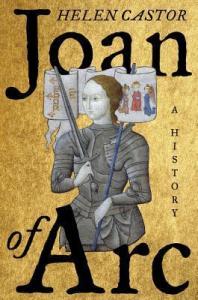
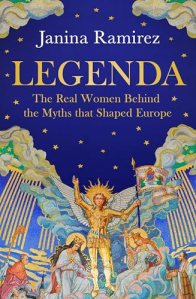
When we think of famous medieval European women, we often think of figures like Joan of Arc and Isabella of Castile. They are seen as women who broke the mold and challenged traditional stereotypes by becoming leaders in traditionally male-dominated fields. These women would be used to craft the identities of their respective nations, but they would help shape the identities of other women from the 18th and 19th centuries. We think we know the stories about these medieval women and their lives, but what new information can we learn from their lives when we examine their lives from their eras? Janina Ramirez takes the stories of seven medieval women and their contemporaries to show how their legacies have been transformed in her latest book, “Legenda: The Real Women Behind the Myths That Shaped Europe.”

This is the third book that I have read by Janina Ramirez, as I have read her book “Femina” and her biography on Julian of Norwich, which I loved. So when I saw that she was writing a new book about medieval women, I knew it was an instant buy for me.

While there have been centuries worth of amazing women from all over the world, Ramirez is focusing on seven countries/areas of interest: France, the Iberian Peninsula, Greece, the Low Countries, Germany, Italy, and Britain. In each chapter, Ramirez focuses on two women or groups of women, one from the medieval era and one from either the 18th or the 19th century. For the medieval period, she has selected: Joan of Arc, Isabella of Castile, Anna Komene, Marie of Oignies and the Beguines, Empress Adelaide of Bavaria, Catherine of Siena, and Lady Godiva. For the more modern women, Ramirez focuses on Charlotte Corday, Agustina Raimunda Maria Saragossa, Laskarina Bouboulina, the Sisters of Notre Dame de Namur, Lola Montez, Anna ‘Nina’ Morisi, and Queen Victoria. 

What is truly inspiring about this book is seeing these stories removed from the glossy veneer used to promote nationalism, to show that these women were real and they made a difference by being themselves. We get to see warriors, writers, queens, empresses, revolutionaries, and religious women. However, we also get to see them as daughters, sisters, wives, and mothers. These women did not live in a vacuum. They lived and were more than just symbols for their nations. They fought in their own ways for what they believed was right, whether it was to protect their families or their nations, or following the path set forward by their faith. These women were real, and they were not myths; they were human. 

This is another sensational book by Ramirez. While I did know a few of the medieval women featured in this book, I knew nothing about the 18th and 19th-century women, which was thrilling to see how Ramirez weaved these tales together. I loved this book so much, and I am excited to see what she will write next. If you love medieval women’s history and learning more about their legacies, I highly recommend you read  “Legenda: The Real Women Behind the Myths That Shaped Europe” by Janina Ramirez.

Book Review: “Edward IV & Elizabeth Woodville: A True Romance” by Amy Licence


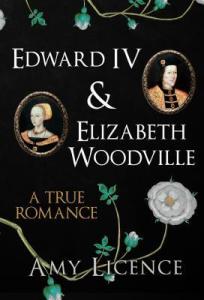
When we think of a fairy tale romance, we think about stories like Cinderella. A girl of lower status captures the heart of the handsome prince. They overcome the odds and live happily ever after. But that kind of romance only exists in books. The closest story we have to that in medieval English history might be the story of Edward IV and Elizabeth Woodville. A widow who begged the handsome and younger King of England for help, but ended up becoming his wife. It’s a story that any romance-loving history lover will swoon over, but how accurate is that story? What is the real story of Edward IV and Elizabeth Woodville? Amy Licence explores the nature of their relationship in her book, “Edward IV & Elizabeth Woodville: A True Romance.”

I have been reading books by Amy Licence for a few years now, so when I saw this title, I knew I wanted to read it. The Wars of the Roses is one of my favorite areas of history to study, but I have not read a joint biography of Edward IV and Elizabeth Woodville. When I saw this title, I knew that this was a must-read for me.

We begin in 1431 in Rouen, France, where the Maid of Orleans, who we know as Joan of Arc, is about to die on the pyre. In the same town, eleven years later, the future King Edward IV would be born to Cecily Neville and Richard, Duke of York. Edward’s future bride, Elizabeth Woodville, was born around six years after the death of Joan of Arc. Her mother, Jacquetta of Luxembourg, had married below her station after the death of her first husband, John Duke of Bedford passed away; Jacquetta would marry a knight, Sir Richard Woodville, Elizabeth’s father. Jacquetta was close to King Henry VI and Margaret of Anjou, the Lancastrian rulers of England, and Edward IV’s father, Richard, Duke of York, would fight against the Lancastrians for the right to rule England during the conflict that we know today as the Wars of the Roses. To top it all off, Elizabeth was married to Sir John Grey of Groby Old Hall, a man who fought and died for King Henry VI.

In other words, Edward and Elizabeth were on different sides of the Wars of the Roses, but somehow these two found each other after Edward IV became king. The obvious choice for Edward’s bride should have been a foreign princess to create an alliance, but there was something about Elizabeth that convinced Edward to forgo the wisdom of Warwick and marry her. Their court was based on the Burgundian court. They had a large family, but the fight for the crown with the Lancastrian cause and Edward’s own family continued. Just when the throne is secure, Edward passes away. Elizabeth had to fight for her children, fight against her brother-in-law, and join forces with her enemy Margaret Beaufort to help usher in the Tudor dynasty.

Licence was able to present the information not only about this period, but also about Edward and Elizabeth in such a comprehensive way that both novices and experts can understand. She can present theories that she either agrees with or disagrees with respectfully. I thoroughly enjoyed this joint biography as it gave me a better appreciation for the reign of Edward IV and Elizabeth Woodville. If you want to learn more about the Wars of the Roses, the first Yorkist king, and his wife, I highly recommend you read “Edward & Elizabeth Woodville: A True Romance” by Amy Licence.

Book Review: “Bloody Crowns: A New History of the Hundred Years War” by Michael Livingston

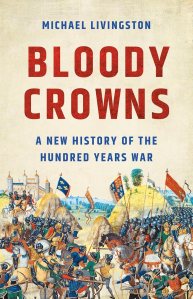
Medieval Europe was a time of conflicts and change. While smaller disputes between countries or civil wars would define borders, the most prominent conflict during this period was the Hundred Years’ War. A conflict that has been traditionally taught to have lasted 116 years between England and France. It is often told from the English perspective, with battles such as Agincourt, Crecy, and Poitiers celebrated. But what if we look at the bigger picture and expand our lens to the whole of Europe while keeping a neutral approach to the France vs England conflict? What if the conflict did not last a mere hundred years, but in fact two hundred years? What type of story would this kind of approach tell when it comes to medieval European history? Michael Livingston takes on the mammoth challenge of telling the tale of how this war changed European history forever in his latest book, “Bloody Crowns: A New History of the Hundred Years War.”

I would like to thank Basic Books and Net Galley for sending me a copy of this book. I enjoyed the previous book that I read by Michael Livingston on the Battle of Crecy, so when I heard that he was writing a new book about the Hundred Years’ War, I was intrigued. I wanted to see what new information he could provide for a conflict that has been discussed heavily for centuries.

Livingston delivers with a plethora of information. He begins by explaining that the term Hundred Years’ War came from a French textbook in 1823. We often think that it began when King Philippe VI of France declared English lands forfeit on May 24, 1337, so King Edward III declared that he was the rightful king of France; and the end of the war was when the French seized the city of Bordeaux on October 19, 1453. However, Livingston argues that the war began in 1292 and ended in 1492, which means it was a two-hundred-year war. Livingston then goes into explaining the origins of France and England to explain how on earth they even got to a state of strife.

While the study of the conflict between France and England tends to focus on these countries, Livingston expands his view to include a pirate war between English and Norman merchants, wars in Portugal, the Burgundian Wars, fights between England, Scotland, and Wales, peasant revolts of all varieties, and wars with the Flemish. We also see a few civil wars in both France and England, including the Wars of the Roses. There are also colorful characters, including a couple of mad kings, the Black Prince, Henry V, Joan of Arc, William Wallace, earls and dukes of every variety, knights who were loyal to a fault, queens who fought for their families, heiresses fighting for their land rights, and a ton of family squabbles. And of course, Livingston focuses on the battles that defined the period, including Crecy, Poitiers, Agincourt, and Orleans, as well as lesser-known battles that helped shift the momentum for either side. Livingston can provide such vivid details that it feels like you are on the battlefield, even when it comes to the more obscure battles.

In my opinion, Livingston is one of the finest medieval military historians right now, and this is his magnum opus. I learned so much by reading this book that it kind of redefined what I think of the Hundred Years’ War. This is one of the best books I have read this year. If you want a book about medieval Europe that will challenge your way of thinking about one of the biggest conflicts of the age, I highly recommend you read “Bloody Crowns: A New History of the Hundred Years War” by Michael Livingston.

Book Review: “Isabella: The Warrior Queen” by Kirstin Downey

In an age when most women of power did not have much power outside their own countries, one stood higher than most. She was not even supposed to become queen, but fate had a bigger mission for the young woman: rescue Christianity from dying out. As a ruler, this seems like a monumental task to complete especially when their enemies were the Ottoman Empire and the Turks at the height of the power. There was one woman who was up to the challenge while fighting to reclaim Spain for the Christians, exploring the new world, and dealing with her family drama. Isabella of Castile is either viewed as a saintly queen or a horrible woman ruler, but what do the archives tell us about her reign? Kirstin Downey tells the story of this revolutionary queen in her biography, “Isabella: The Warrior Queen.”

I knew a little bit about Queen Isabella of Castile from my research into her daughters Catherine of Aragon and Joanna. I learned about the stories of Christopher Columbus mostly through school. Finally, when it comes to the Inquisition and the Reconquista, it was mostly from movies and television shows. In other words, I did not know much about the reign of Queen Isabella and the history of Spain during this period, so I was excited to start learning through this biography.

Isabella of Castile may have been the daughter of King Juan II and his second wife Isabella of Portugal, but she had two brothers, Alfonso and her half-brother Enrique IV. As the son of King Juan’s first wife Maria of Aragon, Enrique IV became King of Castile after the death of King Juan. Enrique IV helped raise Isabella and Alfonso, but his court was filled with trials, tribulations, and battles. While Enrique IV did marry twice to Blanche II of Navarre and Joan of Portugal, he only had one child, a girl named Juanna le Beltraneja, but a woman could not rule, so the crown was supposed to pass to Alfonso. However, Alfonso died unexpectedly, which left Isabella and Juanna to fight for the throne after Enrique died. Isabella was a prize on the marriage market, but she decided to take her fate into her own hands instead of being a pawn in the game of international politics; she married a man of her choice, the future King Ferdinand II of Aragon.

However, this is not the only time that Isabella took matters into her own hands. When King Enrique IV of Castile died in December 1474, Isabella decided to crown herself Queen of Castile. Although she was married to Ferdinand, she ruled Castile on her own. Ferdinand was not a faithful husband as he was known to have dalliances on the side, but Isabella and Ferdinand did have children who would marry and influence European countries. Isabella was not a wallflower queen as she channeled the spirit of Joan of Arc, especially when it came to battles against the Ottoman Empire under the command of Mehmed II the Conqueror, the fall of Granada in 1492, and ended a struggle between Christians and Muslims in Spain. Isabella also created some questionably dark moments in European history including the Reconquista of Spain, the Inquisition, and the voyages of Christopher Columbus. While we often remember these events as something done by Ferdinand and Isabella, it should be noted that most of these were done according to Isabella’s will. It was not until the death of Isabella that one gets a sense of the type of ruler Ferdinand truly was as he fought against Philip the Handsome and Joanna of Aragon, Ferdinand’s daughter, for the right to rule Castile.

I found this book extremely accessible and informative. Downey was able to be balanced and fair when it came to the more controversial topics about Isabella’s reign. I have a new appreciation for Isabella’s life, her reign, and the history of Spain in general. If you want a fantastic biography about Isabella of Castile that is well-balanced and well-researched, I highly recommend you read, “Isabella: The Warrior Queen” by Kirstin Downey.

Book Review: “The Most Maligned Women in History” by Samantha Morris

Throughout history, women have been seen as pious mothers, wives, or daughters who stayed in their lane or vile manipulators who wanted power and were willing to do anything to maintain their status. While the former group of women would be an interesting study, as the saying goes, well-behaved women seldom make history. So why did certain women receive a villainess lens when we look at their lives and what do the historical records tell us about them? Samantha Morris has chosen to take the stories of these misunderstood maidens and tell them in her latest book, “The Most Maligned Women in History.”

I want to thank Pen and Sword Books and Net Galley for sending me a copy of this book. I enjoyed the previous books that I have read by Samantha Morris which covered Lucrezia and Cesare Borgia and Girolamo Savonrola When I heard that she was writing a book about maligned women in history, it caught my attention immediately as I wanted to see which women would be discussed in this book.

As Morris states in her introduction, there are numerous women who she could have chosen for this book she could make a second book, but in the end, she selected eleven women from different countries and centuries to highlight. The eleven women in this book are Cleopatra VII, Empress Wu, Joan of Arc, Lucrezia Borgia, Anne Boleyn, Elizabeth Bathory, Catherine the Great, Marie Antoinette, Lizzie Borden, Empress Dowager Cixi, and Iva Toguri the “Tokyo Rose.” Morris takes the time to tell their stories succinctly while explaining why they are considered maligned.

I do appreciate the fact that she included women from different walks of life and different centuries to show how women have been vilified throughout history. We had women who were born queens, those who were mistresses or concubines and became rulers, and average women who did extraordinary things to the ire of those in charge. While I knew some of these stories like Anne Boleyn, Marie Antoinette, Cleopatra, and Lucrezia Borgia, others were completely new to me, such as Empress Wu, Empress Dowager Cixi, and Iva Toguri. The other women in this book were names that I had heard mentioned and knew some elements of their tales, but I didn’t know their full stories.

I found this book such a fun read full of vivacious women who were not afraid to go beyond the status quo. I do hope Morris will write a sequel book and include even more women from the past who have been viewed as maligned and maybe include women from Africa, Australia, and South America to show women from even more diverse backgrounds. If you want a delightful and insightful book about women who had some bad reputations, I highly suggest you read, “The Most Maligned Women in History” by Samantha Morris.

Guest Post: “The Auld Alliance” by J R Tomlin

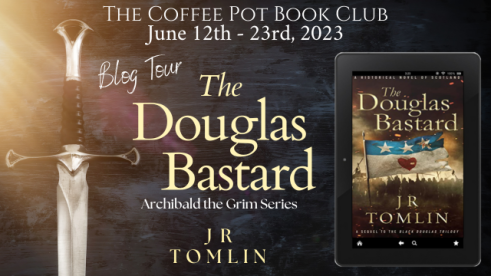
The Douglas Bastard Tour Banner 1Today, I am pleased to welcome J R Tomlin to my blog to share a guest post as part of the blog tour for her latest novel, “The Douglas Bastard / The Archibald the Grim Series.” I would like to thank J R Tomlin and The Coffee Pot Book Club for allowing me to be part of this blog tour. 

Many people think that Scotland always fought alone against the English conquest. This was partially true.

In 1290, civil war loomed after the death of Scotland’s seven-year-old queen, Margaret, the Maid of Norway. The Scots turned to what they thought was a friendly monarch, England’s King Edward I. (Sounds crazy, I know, but Scotland and England had been at peace for most of the 13th century). The Scottish government started looking for allies. Phillip IV had just declared England’s possession of Gascony forfeit, so an alliance between Scotland and France looked like a good idea. A Scottish embassy traveled to negotiate with King Phillip, and the Treaty of Paris was signed on October 24, 1295.

In the short term, the alliance was no protection for Scotland. Edward invaded Scotland in 1296, temporarily crushed resistance, stripped the King of Scots, John de Balliol, whom he had chosen, and temporarily ended any Scottish government. It was, in effect, a province of England. Three years later, England and France signed a treaty of perpetual peace, leaving Scotland on its own. In France’s defense, there was effectively no Scottish government for it to support.

As we all know, Scotland refused to remain crushed. Andrew de Moray led the resistance in the north of Scotland, and William Wallace, aided by Robert the Bruce and Sir William Douglas, raised an army in the south. They joined forces to defeat the English at the Battle of Stirling Bridge. De Moray was killed in that battle. Wallace had probably met with the King of France but received no French aid, and the Scottish resistance was once more crushed, ending with the execution of Wallace. 

Again, Scotland refused to stay crushed and rose once again under the leadership of King Robert the Bruce. But the Bruce had killed one of the Balliol (remember them?) inside a church. (I reject the idea that it was a planned ambush. The Bruce was too intelligent a man to plan to do something so stupid) The pope almost immediately excommunicated him and all of his followers. Luckily for him and Scotland, many Scottish bishops rejected the ex-communication based on English lies to the pope. But the effect was that the King of France would defy the pope by coming to the aid of a government under anathema. 

The war lasted a very long time, and it was not until In 1324 that Bruce’s nephew, Thomas Randolph, Earl of Moray, met the Pope in person at his court in Avignon. Randolph successfully persuaded Pope John to recognize Robert as King of Scots, a major diplomatic coup that allowed the French the option of renewing relations with Scotland. A new, largely precautionary, treaty between France and Scotland, again negotiated by the Earl of Moray, was signed two years later.

The following year, King Edward III signed a treaty recognizing Scotland’s independence and Robert the Bruce as the rightful King of Scots. That should have been the end of it. See me roll my eyes.

King Robert died in 1327, leaving his only son, then five years old, as king and Thomas Randolph as regent.

Edward III felt humiliated by his defeat in the field by a Scottish army led by Sir James Douglas and Thomas Randolph and by having had to sign a peace treaty with Scotland. He backed John Balliol’s claim to the throne of Scotland and repudiated the peace treaty. Randolph died on his way to fight the invasion by Balliol, which the English king secretly backed. So now, that treaty with France would have some use.

At first, the defense against the invasion went badly. Many leading nobles were killed at the Battle of Dupplin Moor, including the new Guardian and thousands of Scottish troops. Although Balliol was then driven from Scotland by a later attack by the Scots, King Edward openly invaded. Soon most of Scotland was in English hands, with only a few castles holding out, and a majority of Scottish nobles, at least for a time, swore fealty to the English and their pretender. 

Now Scotland needed that ally.  In the winter of 1332, King Phillip dispatched a flotilla of ten ships to aid the Scots, but they were blown off course in a storm and never arrived. In the spring of 1334, £1000 came from France to be distributed to the Scottish defenders along with an offer of sanctuary to young King David, his queen, and members of his court. David or Moravia, Bishop of Moray and determined defender of Scottish independence, founded the Scots College of the University of Paris in 1333. He had to have been in Scotland at the time and may have had some influence on France.

The situation in Scotland was desperate enough that the Scots accepted the offer. In May 1334, King David and Queen Joanna arrived in France, along with their confessors, tutors in arts and arms, the king’s sisters, the Douglas children, the late regent’s sons, other children of Scottish nobles, and a number of clerics and nobles. They were given Château Gaillard as a residence. The French regularly sent supplies to Scotland and paid an annual pension of £2000 for the upkeep of King David’s court in exile. In June 1339, William Douglas, Lord of Liddesdale, visited King David in France and returned to Scotland, taking with him Arnoul d’Audrehen in command of 200 French troops and several ships, which aided in the attack on and capture of Perth. I have some doubt that Scotland as a kingdom would have survived without this ongoing aid.

In 1346, Edward overwhelmed French forces at the Battle of Crécy. Two months later, David II of Scotland was captured at the Battle of Neville’s Cross in response to a request from the French to attack England in order to force King Edward to return home; King David invaded England. The English captured him at the disastrous Battle of Neville’s Cross. However, the French continued to supply money and some troops to distract King Edward from his war in France, sending substantial funds and about sixty knights to aid in the capture of Berwick. Berwick was quickly lost, but it distracted Edward, who led a large army to ravage southern Scotland. William Douglas, later 1st Earl of Douglas, took part in that and, the following year, led 200 men-at-arms and forty knights to fight with the French at the Battle of Poitiers.
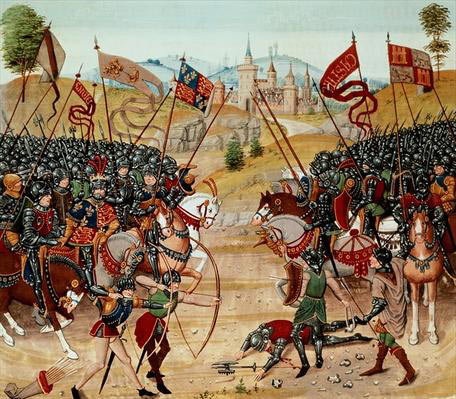
Battle of Poitiers - public domain

For a time, France was so battered as to have no funds for sending to Scotland, and Scotland’s King David I took peace with England as a policy. Even after King Robert II’s accession and the treaty’s renewal, neither nation saw any effects. It was in the following century that thousands of Scots once more went to the defense of Scotland. The Earl of Douglas’s son, the Earl of Wigtoun, and the Earl of Buchan helped the French defeat the English at the Battle of Baugé in 1421. It was a turning point in the Hundred Years’ War. King Charles VII granted Douglas the Duchy of Touraine, the first foreigner to be granted a dukedom in France. On May 8, 1429, Scots fought with Joan of Arc in the relief of Orléans, where legend has it bagpipes played Marche des Soldats de Robert Bruce as she entered the city.

England’s War of the Roses reduced the danger to both Scotland and France, at least for a time, but sometimes for good but often for bad, very bad; the Auld Alliance went on until James VI of Scotland, heir to the throne of England, repudiated it to strengthen his ties with England.

That, however, did not end the strong cultural ties between Scotland and France. The Scots’ language absorbed many French words. The ties with France could be seen in Scottish architecture, such as at Bothwell and Kildrummy Castle, built on French models. Many Scots who fought for France stayed to become citizens eventually. Scottish poets, bishops, and authors studied in France for centuries and brought the French influence home with them. The founder of Scotland’s first university, Bishop Henry Wardlaw, studied in France. So if you study there, you are benefiting from the Auld Alliance.
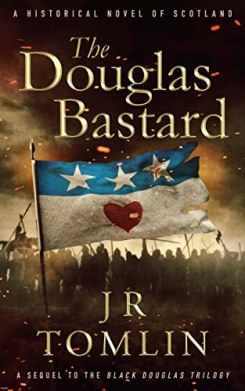
Cover - The Douglas BastardBlurb:

Young Archibald, the Black Douglas’s bastard son, returns from exile to a Scotland ravaged by war. The war-hardened Knight of Liddesdale will teach him what he must learn. And with danger on every side, he must learn to sleep with one eye open and a claymore in his hand because even their closest ally may betray them…

Buy Links:

The Douglas Bastard:

Universal Link:  https://books2read.com/u/4AAwdp 

Amazon UK: https://www.amazon.co.uk/dp/B0968X5V3Y 

Amazon US: https://www.amazon.com/dp/B0968X5V3Y 
Cover - Trust and TreasonAmazon CA: https://www.amazon.ca/dp/B0968X5V3Y 

Amazon AU: https://www.amazon.com.au/dp/B0968X5V3Y

Barnes and Noble: https://www.barnesandnoble.com/w/the-douglas-bastard-a-historical-novel-of-scotland-j-r-tomlin/1140930069 

Kobo: https://www.kobo.com/ebook/the-douglas-bastard

iBooks: https://books.apple.com/us/book/id1606972264 

Google Play: https://play.google.com/store/books/details/J_R_Tomlin_The_Douglas_Bastard?id=AM12EAAAQBAJ

Archibald the Grim Series on Amazon:

Amazon UK: https://www.amazon.co.uk/dp/B0BDW1VJ61 

Amazon US:  https://www.amazon.com/dp/B0BDW1VJ61 

BIM-BLD224477 - © - Steve Smith

Author Bio:

J R Tomlin is the author of twenty historical novels.

Her historical novels are mainly set in Scotland. You can trace her love of that nation to the stories of Robert the Bruce and the Black Douglas that her grandmother read her when she was small and to her hillwalking through the Scottish Cairngorms, where the granite mountains have a gorgeous red glow under the setting sun.

In addition to having lived in Scotland, she has traveled in the US, mainland Europe, and the Pacific Rim. She now lives in Oregon.

Social Media Links:

Website: http://www.jrtomlin.com  

Twitter: https://twitter.com/TomlinJeanne 

Book Bub: https://www.bookbub.com/profile/j-r-tomlin 

Amazon Author Page: https://www.amazon.com/stores/J.R.-Tomlin/author/B002J4ME1S

Goodreads: https://www.goodreads.com/author/show/4094154.J_R_Tomlin

Book Review: “The Lady of the Rivers” by Philippa Gregory

10796011The Wars of the Roses was a time full of fascinating people, both men, and women. They chose to live their lives to the best of their abilities. They had to decide who they were loyal to and, in some circumstances, they had to switch sides in order to survive. They had to chose to take destiny in their own hands, even if the decisions they had to make were controversial to others. This would perfectly describe the protagonist of Philippa Gregory’s book, “The Lady of the Rivers”. This is the story of Jacquetta Woodville, the mother of Elizabeth Woodville and a woman who took destiny into her own hands
Gregory is a great historical fiction author, however, in this book, she has taken some historical facts and has twisted them slightly. In this book, Gregory takes the story that since Jacquetta’s family claimed to be descendants of the water witch Melusina, Jacquetta was a witch herself. Although Jacquetta was accused of being a witch later in her life, she was cleared of these charges.  There were parts early in the book where Jacquetta used her skills to try and make sense of the future, but for one of the biggest decisions in her life, Gregory chose a different route for Jacquetta. After the death of her first husband, Jacquetta could have waited for the king to choose another husband for her or she could make her own path and marry the man she loved.

I am a woman of earth now, not a girl of water. I am not a maid, I am a lover. I am not interested in foreseeing; I will make my own future, not predict it. I don’t need a charm to tell me what I hope will happen. I throw the gold charm which is like a wedding ring up in the air and catch it before it falls. This is my choice. I don’t need magic to reveal my desire. The enchantment is already done: I am in love; I am swore to a man of the earth; I am not going to give this man up. All I have to do is consider how we can stay together. (Gregory, 107).

Gregory begins her book with Jacquetta meeting and becoming friends with Joan of Arc before she died. Shortly afterward, Jacquetta is married to John Duke of Bedford, who chooses to marry her solely because she was a descendant of Melusina. According to Gregory’s book, he wanted to marry her to help with his pursuits in alchemy. The addition of alchemy in the story adds an element of magic and mystery to an already compelling read. Jacquetta, in her first marriage, is more of a pawn to help her husband than a wife.

Jacquetta’s life would radically turn upside down when she fell in love with a man who was well below her station, Sir Richard Woodville. It was their loving marriage and their large family which kept Jacquetta going, even when England has been torn asunder by civil war. Jacquetta befriends Margaret of Anjou and helps her as she adjusts to life in England and as her husband, King Henry VI falls ill.

Before I read this book years ago, I really didn’t know much about Jacquetta Woodville, but now I really enjoy studying about the Woodvilles. Jacquetta Woodville lived a rather remarkable life. Even though Gregory takes some liberties with the facts about her life, what Gregory does well is bring Jacquetta’s story into the spotlight. Jacquetta may not be as famous as her daughter, Elizabeth Woodville, but her life was full of twists and turns. Like any good historical fiction book, this particular book’s intent was to bring attention to Jacquetta Woodville’s life and make the reader aware of this amazing woman. If you want an engaging historical fiction read about the matriarch of the Woodvilles, I highly recommend you read, “The Lady of the Rivers” by Philippa Gregory.

Biography: King Henry VI

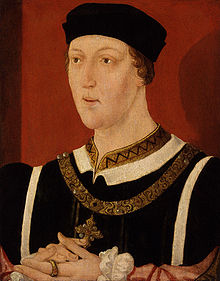
220px-King_Henry_VI_from_NPG_(2)(Born December 6, 1421- Died May 21, 1471). Son of Henry V and Catherine of Valois. Married to Margaret of Anjou. He had one son Edward of Westminster. Henry VI was a weak ruler who, combined with his bouts of mental illness and no desire to rule, led England to lose its lands in France and brought England into a 30 year civil war known as the Wars of the Roses.

Henry VI was the only child of Henry V and his wife Catherine of Valois. He was born on December 6, 1421 and became king of England at the tender age of nine months when his father died on August 31, 1422. Six weeks later, he became king of France after his grandfather Charles VI died, which was agreed upon with the Treaty of Troyes. A regency council was called and Henry’s uncle John, duke of Bedford, became his first regent, and was charged with taking care of the French, led by the king that the French declared, Charles VI’s son Charles VII. Both Charles VII and John duke of Bedford kept the Hundred Years’ War dragging on. The English captured Orleans in 1427, but in May 1429, a young Joan of Arc led a siege on Orleans, which the French was able to reconquer. This led to French nationalism which allowed the French to drive the English out of the Loire Valley and Charles VII was officially crowned king of France in June 1429.

This made Bedford nervous so he quickly had Henry VI crowned king of England in November 1429 and crowned king of France in 1431.  He was the first English king who was also the king of France, but it did not last long. With the newly founded French nationalism, the English were losing their French lands that Henry V had conquered left and right. This made Philip the Good, duke of Burgundy, an ally of the English, nervous, and so he signed the Treaty of Arras with Charles VII in 1435, which recognized Charles VII as the King of France. The Hundred Years’ War would continue for another 18 years until John Talbot, the earl of Shrewsbury was defeated at Castillon in 1453. The English lost all of their French territories, except for Calais.

John, duke of Bedford, was regent until his death in 1435. After Bedford died, Humphrey, duke of Gloucester became the protector, but he did not have the same control of the government that Bedford did. In 1437, Henry declared himself of age before his 16th birthday. Henry was a weak ruler who was not interested in ruling at all, so he allowed some of the least scrupulous people to control the government. One of these men was William de la Pole, earl of Suffolk, who became the king’s steward in 1435. William was a peacemaker at heart, which led to the loss of France; his opponent at court was Humphrey of Gloucester, who wanted the war with France to continue. Suffolk was able to negotiate the marriage between Henry VI and Margaret of Anjou in 1444, in exchange for Henry surrendering Maine to the French.  The couple was married on April 23, 1445. This was not a popular decision and Henry’s life was threatened so Margaret, Suffolk and Henry left London. Margaret and Suffolk convinced the king that Gloucester was plotting an uprising so Henry had him arrested and confined at Bury St. Edmunds in February 1447, where he would die a week later. The people were not satisfied with this and Suffolk decided to switch from peacemaker to warmonger and invaded Brittany in 1449. This brought Normandy into the middle of the Hundred Years’ War and Brittany was conquered by the French in 1450. This was the last mistake by Suffolk, who was arrested and banished, but his ship was intercepted at Dover and Suffolk was killed.

Suffolk’s allies were scapegoats for everything that was going wrong in France, which led to the revolution led by John Cade in May 1450. It was similar to the Peasants’ Revolt, however Henry VI was no Richard II and the revolt lasted for two months, until John Cade’s death. The purpose of this revolt was to purge the government, but the king did not live up to their expectations. Instead he polarized the government even further when he appointed Edmund Beaufort, the Duke of Somerset as his closest adviser. Somerset was a failure in France and he gained some notable enemies at court, especially Richard, duke of York, who was banished  to Ireland in 1447 for supporting Gloucester, but returned to England and to court in August 1450, demanding his place in the Council.

Somerset’s and York’s  rivalry simmered for several years, until  August 1453, when Henry VI had his first bout with mental illness. We are not sure what he suffered from but for weeks, he was unresponsive to everything. Some believe it was triggered by the loss of France. It affected him so much that he did not even acknowledge his only son Edward, believing that his son was born of the Holy Ghost. During this time, Richard Duke of York was made Lord Protector  in 1454 and had Somerset arrested. When Henry recovered, he restored Somerset and had York dismissed. This was the last straw for York. York and Somerset met on the battlefield at St. Albans on May 22, 1455, where Somerset was killed. This should have been the end of the conflict, however it was only just the beginning.

Henry was going to reconcile with York but another bout of mental illness hit Henry in November 1455 and York was made Lord Protector again; he was dismissed in February 1456. It was then that Margaret of Anjou took up her husband’s cause. She encouraged the new duke of Somerset Henry Beaufort to fight against York. The battlelines were being drawn. The Yorkists were led by Richard duke of York, Richard Neville earl of Salisbury and his son Richard Neville earl of Warwick. The Lancastrians were under Henry VI, but led by Margaret of Anjou, Somerset, and Henry Percy, third earl of Northumberland. In 1459, at the battle of Ludlow, the Lancastrians won and sent the Yorkists into hiding; however the Yorkists came back with a vengeance at the battle of Northampton. In September 1460, Richard duke of York officially placed his claim to the throne to Parliament. In order to avoid more conflict, York was declared the heir to the throne, in place of Prince Edward.

Henry VI seemed to be okay with this arrangement, but Margaret was not about to let this insult stand. On December 30, 1460 at the battle of Wakefield, York was killed. Margaret continued her march to London when in 1461, she met with Warwick and defeated him at the second battle of St. Albans. Warwick fled and raised another army with York’s son Edward and marched into London on March 1461. Then, in the bloodiest battle of the Wars of the Roses, Towton, the Lancastrian forces were defeated and Edward became Edward IV. Henry and Margaret fled to Scotland to seek aid from King James III. In exchange for the aid, Henry gave the Scots Berwick. After a few years, Henry was seen as an embarrassment to the Scots and so they returned him to northern England, where he was captured and imprisoned in the Tower of London by English forces in July 1465.

It looked like Henry’s days were numbered, but then on October 3, 1470, he was removed from the Tower and made king yet again. What had happened was that the earl of Warwick switched sides and fought for Henry VI and Margaret of Anjou. Warwick even had his daughter married to Henry’s son Edward to show his allegiance. However, Edward IV came back in April 1471 and killed Warwick and recaptured Henry VI. On May 4, 1471, Margaret’s forces faced off against Edward IV at the battle of Tewkesbury. It was a devastating loss for the Lancastrians as Prince Edward was killed and Margaret was imprisoned in the Tower. On May 21, 1471, King Henry VI was murdered. It is unknown who killed him, but many suspect that it was under the orders of  King Edward IV.