
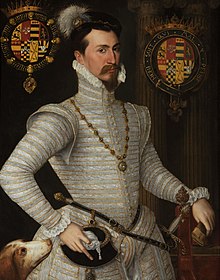
 (Born June 24, 1532- Died September 4, 1588)
Son of John Dudley, 1st Duke of Northumberland and Jane Guildford
Married to Amy Robsart and Lettice Knollys. (He did have a mistress named Douglas Sheffield).
Father of Sir Robert Dudley and Robert Dudley, Lord Denbigh.
Robert Dudley was known as one of Elizabeth I’s favorites at court. He tried to convince Elizabeth for 20 years to marry him, but it failed.
Robert Dudley was born on June 24, 1532 to John Dudley, 1st Duke of Northumberland and his wife Jane Guildford. Robert was the fifth child out of thirteen. Robert was tutored by John Dee, Thomas Wilson, and Roger Ascham and was taught how to be a courtier in the courts of Henry VIII and Edward VI. Robert had a certain knack for foreign languages and writing. In 1549, he participated in ending the Kett’s Rebellion, and this is where it is alleged that he met his first wife Amy Robsart, the daughter and heiress of Sir John Robsart, a gentleman farmer from Norfolk. The couple was married on June 4, 1550 in the presence of King Edward VI at Sheen Palace. It is believed that this marriage was a love match, but the couple depended heavily on the gifts from John Dudley, since he was the de facto ruler of England from 1550 until 1553 because Edward VI was very ill.
On July 6, 1553, King Edward VI died. Edward decided to not listen to his father’s Act of Succession and removed Mary and Elizabeth from the line of succession in order to place his cousin Lady Jane Grey on the throne. Lady Jane Grey was married to John Dudley’s son Guilford Dudley. John Dudley raised an army for Lady Jane Grey to face off against Mary to prevent her from becoming queen, but it failed and Jane’s reign ended on July 19th. Robert Dudley was put in the Tower of London and condemned to death, just like his brothers and his father, who were executed. Robert Dudley was in the Tower the same time that Elizabeth was imprisoned there for her alleged involvement in the Wyatt Rebellion. In February 1554, Guildford Dudley was executed and in the autumn, the surviving brothers, Robert and Ambrose, were released from prison. Later that year, Ambrose and Robert were welcomed to participate at a tournament to celebrate Anglo-Spanish friendship.
In 1557, Robert and Amy were able to allowed to repossess some of their former lands, and in March of the same year Dudley was at Calais where he was chosen to deliver personally to Queen Mary the happy news of Philip’s return to England. Ambrose, Robert, and Henry Dudley, the youngest brother, fought for Philip II at the Battle of St. Quentin in August 1557 where Henry Dudley was killed. During the first parliament of 1558, Mary I restored Robert Dudley and his siblings titles and they were able to return to court. Mary I would die on November 17, 1558.
On November 18, 1558, Robert Dudley was there to witness Elizabeth’s accession. He was at Hatfield to see Elizabeth receive the Great Seal and the same day, he was created Master of the Horse the same day. The Master of the Horse was a very prestigious position that required much personal attendance on the Queen, as well as organizing her public appearances, progresses, and her personal entertainment. This was a title that suited Robert very well and because he did a great job at this position, Elizabeth lavished titles and honors on him. In April 1559, Robert Dudley was made a Knight of the Garter. Elizabeth spent a lot of time with Dudley and the rumors began to spread that the two were lovers. There were even threats on Dudley’s life and rumors that Elizabeth had a child by Dudley.
Elizabeth would not let Dudley leave her side at court. They acted very much like a married couple. However, there was another person in the middle of this relationship between Elizabeth and her favorite and that was Dudley’s wife Amy Robsart. On September 8, 1560, Amy was found at the bottom of a staircase at Cumnor Place near Oxford with her neck broken. Many speculated that Dudley had his wife killed in order to marry the queen or that she committed suicide, but recent research has shown that it was probably an accident.
In 1561, Dudley wanted to get away and seek military adventures abroad, but Elizabeth would not let him leave. In 1562 when Elizabeth fell ill with smallpox, she said that if she was to die, she wanted Dudley to become Protector of the Realm; Elizabeth did recover so Dudley never became the Protector, but he did become a privy councilor. Dudley still wanted to be involved in foreign affairs and he did get his chance, but probably not the way he wanted. In 1563, Elizabeth offered Dudley as a suitor for Mary Queen of Scots. Both Dudley and Mary Queen of Scots were not convinced about Elizabeth’s sincerity so she decided to make Dudley more appealing to Mary. Elizabeth made Dudley the Earl of Leicester in 1564. Dudley soon realized that his chances for marrying Elizabeth were dwindling fast, but he was still hopeful that she would chose to marry him.
In July 1575, Dudley staged an elaborate 19- day festival that was meant to be his last proposal for the queen’s hand, but it failed. It was in 1569 when Dudley began his affair with Douglas Sheffield, who was a young widow from the Howard family. Dudley refused to marry her, but the couple did have a child in 1574 named Robert Dudley, named after his father.
Dudley would marry again to Lettice Knollys. Lettice Knollys was the wife of Walter Devereux, 1st Earl of Essex, and first cousin once removed of Queen Elizabeth on her mother’s side. Leicester had flirted with her in the summer of 1565, causing an outbreak of jealousy in the Queen. After Lord Essex went to Ireland in 1573, they possibly became lovers. In July 1576 Essex returned to Ireland, where he died of dysentery in September.
On September 21, 1578, Dudley secretly married Lettice Knollys. He did not dare to tell the Queen of his marriage; nine months later Dudley’s enemies at court acquainted her with the situation, causing a furious outburst. Dudley’s hope of an heir was fulfilled in 1581 when another Robert Dudley, styled Lord Denbigh, was born.The child died aged three in 1584, leaving his parents devastated. Dudley was a concerned parent to his four stepchildren,and in every respect worked for the advancement of Robert Devereux, 2nd Earl of Essex, whom he regarded as his political heir.
Elizabeth never accepted the marriage. She never could forgive Lettice Knollys and banished her from court. Dudley was able to return to his queen’s side at court. In 1585, Dudley was made commander of the English forces in the Netherlands. The Netherlands were revolting against the rule of Philip II, and the English were helping the Dutch in their campaign. Robert stayed in the Netherlands until 1587, although he did return to England during the Mary Queen of Scots crisis of 1586- 1587, and was present in England when Mary was executed. English involvement in the Netherlands was not particularly successful, and when he did return permanently, he received a lot of criticism for his actions there. Although Elizabeth herself had not always been pleased by what he had done, she would not hear a word said against his efforts there.
In 1588, when the Spanish sent their fleet against England , Dudley was put in charge of the land army, and he organized Elizabeth’s famous visit to Tilbury. However, by now he was not a well man, probably suffering from stomach cancer, and his days were numbered. Following the defeat of the Armada, he travelled to Buxton to try and take the healing waters there, but he never made it. He died at his house in Oxfordshire on September 4, 1588. Elizabeth deeply grieved over the death of one of her favorites at court and a close friend.
Sources:
http://www.elizabethi.org/contents/queensmen/robertdudley.htm
https://en.wikipedia.org/wiki/Robert_Dudley,_1st_Earl_of_Leicester
 There were some men who tried to court Elizabeth, including Robert Dudley, but none could ever get her to the altar. That was when she was queen, however, there was one man who was very close to marrying her when she was just Elizabeth Tudor. The man was Thomas Seymour, the brother of Edward and Jane Seymour and the husband of Catherine Parr. In Elizabeth Norton’s book, “The Temptation of Elizabeth Tudor: Elizabeth I, Thomas Seymour, and the Making of a Virgin Queen”, she explores the relationship between Thomas and Elizabeth and why he was her temptation.
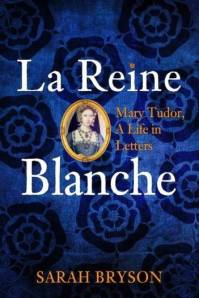 When we think of the Tudors, we often think of strong women like Katherine of Aragon, Anne Boleyn, Elizabeth I, Margaret Beaufort and Mary I. However, there was another Mary who made an impact during this time. She was the daughter of Henry VII, the sister of Henry VIII, and the wife of King Louis XII of France. She was referred to as one of the most beautiful women in the world. She gave away all of her titles to marry the man she loved, even though he was not a king. She took on debt to have a family and helped those who needed help. This is the life of Mary Tudor. In Sarah Bryson’s debut book, “La Reine Blanche: Mary Tudor, A Life in Letters”, Bryson explores the life of this extraordinary woman through her letters.
 When we think of the Grey family, we often come up with certain stereotypes. Lady Jane Grey was a passive, obedient girl who did whatever her family and her husband’s family wanted her to do. Frances Grey was a cruel mother. Katherine and Mary lived very uneventful lives. These could not be further from the truth. Leanda de Lisle in her book, “The Sisters Who Would Be Queen” attempts to paint a more realistic of the Grey sisters; Jane, Katherine and Mary.
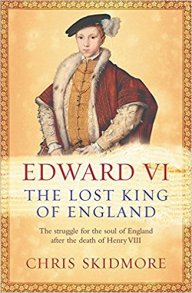 When we think of the Tudor rulers, we think of Henry VII, Henry VIII, Mary I and Elizabeth I. However, there was another king who ruled for only five years and was Henry VIII’s only legitimate male heir, Edward VI. Most people think that Edward was a mere pawn of his government officials but is that accurate? Chris Skidmore tackles that question of who was the real Edward VI in his book “Edward VI: The Lost King of England”.
 making a foothold in England. Most people think that Henry VIII was the one who helped bring the Protestant faith to England when he broke away from Rome. Henry VIII might of helped get the reform started, but Edward VI was the one who took the Protestant movement and was willing to make it known throughout England, even if it meant facing against his most formidable foe, his half-sister Mary who was a devout Catholic.
  Adventures of a Tudor Nerd