Book Review: “Tudor Roses: From Margaret Beaufort to Elizabeth I” by Amy Licence

36762189When one studies a specific dynasty, we tend to focus on the stories of those who rule their respective countries and explore the men who influenced the king’s decisions. A dynasty’s legacy tends to be viewed from the military and legal victories of the men, but just as important are the women who stood beside the king. Royal women tend to be considered side characters of the dynasty who were only crucial for their inheritance, who they married, and the children they could produce. But if we focused on the story of the royal women in a specific dynasty, what could we learn about the dynasty? Amy Licence took this concept to explore women’s voices and decided to tackle the Tudor dynasty in her latest book, “Tudor Roses: From Margaret Beaufort to Elizabeth I.”

I want to thank Amberley Publishing for sending me a copy of this book. I am always looking for a new perspective on the Tudor dynasty. Although there is nothing new about exploring the lives of Tudor women, the idea of analyzing the Tudor queens and their reigns in one book is so unique and vital.

Licence starts her book at the very beginning of the Tudor dynasty with the stories of Margaret Beaufort and Elizabeth Woodville. These women are often viewed as enemies on opposite sides of the Wars of the Roses. Still, closer examination shows how alike they were and how they came together to unite the warring factions with the marriage of their children, Henry VII and Elizabeth of York. The first Tudor queen, Elizabeth of York, was seen as the pinnacle of excellence and the ideal queen for those who would try to follow in her footsteps. We also get to see how Margaret and Mary Tudor influenced their family’s legacy, even though they never sat on the English throne like their brother, Henry VIII.

The next group of Tudor queens that we examine are the wives of Henry VIII; Catherine of Aragon, Anne Boleyn, Jane Seymour, Anne of Cleves, Catherine Howard, and Catherine Parr. These queens mark a different aspect of being a royal woman and helped England move forward. Finally, Licence explores the lives of the daughters of Catherine of Aragon, Frances Brandon, and Anne Boleyn, who would become queens themselves; Lady Jane Grey, Mary I, and Elizabeth I.

Licence shows how England and Europe viewed women who wielded power throughout this book. Although the Tudor dynasty only lasted 118 years, the change was significant and impactful. The Tudors queens had to navigate not only their traumas through the most public lens, but they had to balance their own beliefs with the shifting political landscape of Europe. There are also glimpses of how other European queens navigated the tumultuous 16th century and how their lives and women’s education influenced the Tudor queens.

Book Review: “A Woman of Noble Wit” by Rosemary Griggs

A Woman of Noble Wit Tour BannerFor a woman from the past to leave a mark in history books, she had to have lived an extraordinary life. Some have notorious reputations, or they were considered women of immaculate character. In Foxe’s Book of Martyrs, there was one who was “a woman of noble wit.” She was the daughter of an ancient gentry family who had connections with the court of Henry VIII. Her large family would navigate political turmoil and religious reformations to survive. The name of this wife and mother was Katherine Raleigh, and her tale is told in Rosemary Griggs’ debut novel, “A Woman of Noble Wit.”

I would like to thank The Coffee Pot Book Club and Rosemary Griggs for sending me a copy of this novel and allowing me to be part of this book tour. I did not know much about Katherine Raleigh before this novel, except that she was the mother of Sir Walter Raleigh, so I was looking forward to reading her story.

Katherine was a daughter of the Champernowne family who had a fiery passion for reading. As a girl, she was terrified of marrying an older man, but her family decided to marry Katherine to Otho Gilbert, a young man with a passion for firearms and adventures. As Katherine settles into her new life at Greenway Court, England experiences the reign of King Henry VIII through religious reforms, many marriages, and numerous executions. Although Katherine was not at court, she would receive gossip about court and her sister Kat, who we know today as Kat Ashley, the governess of Princess Elizabeth Tudor.

Katherine is a dutiful and loving wife to Otho, but her heart skips a beat when she meets the charming privateer Walter Raleigh Senior one day. I found Walter a much better match for Katherine than Otho, who seemed rather vain and jealous of his wife’s reputation. Katherine is free to be her educated self with Walter. They navigate the reigns of Edward VI, Mary I, and Elizabeth I while raising their family. We see how Katherine was known as “a woman of noble wit” through heartache, fear, and love.

As a debut novel, I found it a delightfully engaging read. Griggs has brought Katherine Raleigh from the shadows of her famous son’s fame and shined a light on her story. If I did have a complaint about this novel, it would be that I felt the ending was a bit rushed. Overall, I think it was an enchanting debut novel that illuminated the life of a fascinating woman who lived during the Tudor dynasty. I am excited to see what Rosemary Griggs will write about next. If you want a novel about a relatively hidden Tudor woman, I would highly suggest you read “A Woman of Noble Wit” by Rosemary Griggs.

59476111._SY475_A Woman of Noble Wit

By Rosemary Griggs

Few women of her time lived to see their name in print. But Katherine was no ordinary woman. She was Sir Walter Raleighs mother. This is her story.

Set against the turbulent background of a Devon rocked by the religious and social changes that shaped Tudor England; a Devon of privateers and pirates; a Devon riven by rebellions and plots, A Woman of Noble Wit tells how Katherine became the woman who would inspire her famous sons to follow their dreams. It is Tudor history seen though a womans eyes.

As the daughter of a gentry family with close connections to the glittering court of King Henry VIII, Katherines duty is clear. She must put aside her dreams and accept the husband chosen for her. Still a girl, she starts a new life at Greenway Court, overlooking the River Dart, relieved that her husband is not the ageing monster of her nightmares. She settles into the life of a dutiful wife and mother until a chance shipboard encounter with a handsome privateer, turns her world upside down.…..

Years later a courageous act will set Katherines name in print and her youngest son will fly high.

Trigger Warnings: Rape.

Buy Links:

Universal Link: https://books2read.com/u/47O1WE

Amazon UK: https://www.amazon.co.uk/Woman-Noble-Wit-Rosemary-Griggs-ebook/dp/B09FLVZKSK

Amazon US: https://www.amazon.com/Woman-Noble-Wit-Rosemary-Griggs-ebook/dp/B09FLVZKSK

Amazon CA: https://www.amazon.ca/Woman-Noble-Wit-Rosemary-Griggs-ebook/dp/B09FLVZKSK

Amazon AU: https://www.amazon.com.au/Woman-Noble-Wit-Rosemary-Griggs-ebook/dp/B09FLVZKSK

Barnes and Noble: https://www.barnesandnoble.com/w/a-woman-of-noble-wit-rosemary-griggs/1140139238

Waterstones: https://www.waterstones.com/book/a-woman-of-noble-wit/rosemary-griggs/9781800464599

iBooks: https://books.apple.com/gb/book/a-woman-of-noble-wit/id1584793135

WHSmith: https://www.whsmith.co.uk/products/a-woman-of-noble-wit/rosemary-griggs/paperback/9781800464599.html

Foyles: https://www.foyles.co.uk/witem/fiction-poetry/a-woman-of-noble-wit,rosemary-griggs-9781800464599

Rosemary GriggsAuthor Bio:

Rosemary Griggs is a retired Whitehall Senior Civil Servant with a lifelong passion for history. She is now a speaker on Devon’s sixteenth century history and costume. She leads heritage tours at Dartington Hall, has made regular costumed appearances at National Trust houses and helps local museums bring history to life.

Social Media Links:

Website: https://rosemarygriggs.co.uk/

Twitter: https://twitter.com/RAGriggsauthor

Facebook: https://www.facebook.com/ladykatherinesfarthingale

Instagram: https://www.instagram.com/griggs6176

Amazon Author Page: https://www.amazon.com/Rosemary-Griggs/e/B09GY6ZSYF

Goodreads: https://www.goodreads.com/author/show/21850977.Rosemary_Griggs

Guest Post: “ Gertrude Courtenay: Forgotten Tudor Woman” by Sylvia Barbara Soberton

banner-blogtour1Today, I am pleased to welcome Sylvia Barbara Soberton back to discuss another forgotten Tudor woman, Gertrude Courtenay, who is the subject of her latest book, “The Forgotten Tudor Women: Gertrude Courtenay. Wife and Mother of the last Plantagenets”.
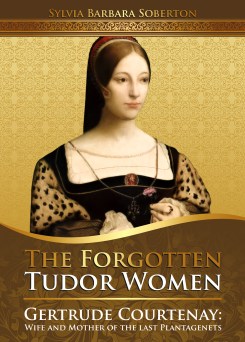
The biography of Gertrude Courtenay, Marchioness of Exeter, is the third volume in my best-selling series Forgotten Tudor Women. As the title of the series suggests, I am writing about the lesser-known women of the Tudor court. When I say “lesser-known”, I don’t mean that little is known about these women. Quite the contrary; they left an extraordinary trail of letters, papers, and documents and made their presence known to various chroniclers and ambassadors.

Why Gertrude, you may ask? Long story short: She was amazing! I wanted to write a biography of Gertrude for a very long time. Why was she so special?

Married to Henry VIII’s first cousin Henry Courtenay, Earl of Devon and then Marquis of Exeter, Gertrude was the wife and mother of the last Plantagenets at the Tudor court. Her husband, after whose noble title the Exeter Conspiracy is known today, was executed in 1538, and their son, Edward, spent fourteen years imprisoned in the Tower of London.

Gertrude was among the key political players of Henry VIII’s court during the infamous annulment, known as the Great Matter, commencing in 1527 and ending in 1533. A Catholic and staunch supporter of the King’s first wife, Katharine of Aragon, and their daughter, Princess Mary, Gertrude took an active part in the most turbulent events of Henry VIII’s political and private life. She was far from a passive observer, though. She exchanged letters with Eustace Chapuys, ambassador of the Holy Roman Emperor Charles V, and even visited him in disguise when it was dangerous to become Henry VIII’s enemy. She gave ear to the Nun of Kent’s prophecies (for which the Nun was executed in 1534) and remained Katharine of Aragon’s supporter even after the Queen’s banishment.

Gertrude’s hatred of Anne Boleyn, the King’s second wife, and everything she stood for achieved epic proportions and made Gertrude’s support of Katharine and Mary even more resounding. It was Gertrude who took an active part in the fall of Anne Boleyn and the rise of Jane Seymour in May 1536. Godmother to two Tudor monarchs, Elizabeth I and Edward VI, Gertrude was prominent in court circles until her luck ran out when her husband was executed in December 1538. His crime was having a close friendship with Henry Pole, brother of Cardinal Reginald Pole, with whom he discussed politics. Although Henry Courtenay died on the scaffold and their son was imprisoned for fifteen years, Gertrude was released from the Tower of London and survived under the radar until Henry VIII’s elder daughter, Mary, ascended to the throne in 1553. Gertrude’s lifelong friendship with Mary was tested when the Queen rejected Gertrude’s son as a prospective husband.

Gertrude’s story had to be told, and I am overjoyed that I can introduce her to a wider audience.

book-cover-forgotten-3-kdp-uploadAbout the Book

Gertrude Courtenay led a dangerous life, both personally and politically. Daughter of a prominent courtier, she started her career as maid of honor and then lady-in-waiting to Katharine of Aragon, Henry VIII’s first wife.

She sided with the Queen during the Great Matter, as the divorce case between Henry VIII and Katharine of Aragon was then often known. A bitter enemy of the King’s second wife, Anne Boleyn, Gertrude, plotted and intrigued with Henry VIII’s enemies, brushing with treason on many occasions.

Wife and mother of the last Plantagenets of the Tudor court, Gertrude was an ambitious and formidable political player. The story of her life is a thrilling tale of love and loss, conspiracies and plots, treason and rebellion.

This is Gertrude’s story.

Book Review: “Disability and the Tudors: All the King’s Fools” by Phillipa Vincent- Connolly

41975683When it comes to studies into the Tudor dynasty, many different approaches have been taken in the past. We have examined every monarch, their spouses, how they lived, what they wore, and the various political events that defined the dynasty. The list is endless to the different studies that have been done with the Tudors, yet there are still new areas of study that are being explored. One of those areas of study is how individuals with disabilities survived in the past. How did society treat those who had disabilities, and what rights did they have according to the laws of the land? In her first non-fiction book, “Disability and the Tudors: All the King’s Fools,” Philippa Vincent-Connolly explores the lives of famous fools and monarchs with disabilities to discover how they were treated by Tudor society.
I want to thank Pen and Sword Books and Net Galley for sending me a copy of this book. When I heard about this book, I was interested in learning more, and I will admit that studies on those who had disabilities in the past have never been an area of research that I considered before. I wanted to learn more and see if Vincent-Connolly could provide new information about the Tudors.

To understand disabilities during the Tudor dynasty, Vincent-Connolly defines a few terms, such as a natural fool, those with disabilities, and an artificial fool, which we consider clowns or jesters. They were either viewed as vile sinners or holy innocents, more divine than the average citizen. Like William Somers and Jayne Foole, natural fools were deemed prominent members of the Tudor court and allowed to speak freely to the monarch ruling at the time. Those who lived at court were well taken care of and were depicted in portraits as background figures. Of course, disabilities also affected royalty and the nobility, like Henry VIII, Claude of France, and Lady Mary Grey. For those who did not have the luxury of living at court, some Poor Laws and communities were dedicated to caring for natural fools. With the dissolution of the monasteries, the care for those with disabilities shifted from the church to the communities and their families.

Vincent-Connolly has a passion for this subject and is genuinely dedicated to sharing that passion with fellow Tudor nerds. The one major problem that I had with this book was its repetitive nature, and if it were organized better, this repetitive problem would not be as bad, which would be an easier read. She included one source that I disagreed with, but it was a minor issue in the grand scheme of things.

Overall, I found this book informative and fascinating. The lives of Tudors who had disabilities mattered, and it was an intriguing book that added a new aspect to Tudor research. I think this will open a discussion about those who had disabilities in the past and give us a better appreciation of their struggles and how they survived. If you want to learn something new about this dynasty, I suggest you check out “Disability and the Tudors: All the King’s Fools” by Phillipa Vincent-Connolly.

Book Review: “Woodsmoke and Sage: The Five Senses 1485-1603: How the Tudors Experienced the World” by Amy Licence

58563080When we study history, we tend to focus on specific dates, certain people, and the stories that transformed countries forever, no matter how much of an impact they made. What is difficult about studying history is understanding how they experienced life. What did they see? How did they communicate? What did they hear during a typical day? What smells wafted through the air? How did their view on how the body worked affected what they ate and how they cured their illnesses? In her latest nonfiction book,” Woodsmoke and Sage: The Five Senses 1485-1603: How the Tudors Experienced the World”, Amy Licence has taken on the challenge of explaining the Tudor world that they knew through their senses.
Licence breaks her book down into five sections, one for each sense. We begin with sight, since how the Tudors viewed themselves and their world was extremely important. We can walk through their world by taking a tour of their portraits, the architecture, and the landscapes that the average Tudor would find familiar. Of course, what the Tudors wore every day and the colors they chose impacted how others viewed them because image was everything. The next step in our journey is exploring the sense of smell, from the odiferous to the more pleasant scents.

The sounds of musical instruments, news being called, and gossips tell their tales to anyone who would like to fill the air. On their dining tables, culinary experiments with meat and fish combined with odd spices would seem strange to travelers from the 21st century. The closer you got to someone who sat on the throne, the more extravagant the dishes were. Finally, we explore how the Tudors understood how their body worked through the Humours Theory and how they used this theory to concoct cures.

Even though the Tudors lived over 500 years ago, they saw their world similarly to how we view it. They had homes and clothing to show how well off they were compared to others. They had different scents that they enjoyed compared to us. Their music and how they understood their bodies might be different from what we are used to, yet they still tried to enjoy life and live no matter what. The Tudors were humans like us trying to get through life day by day in their unique ways.

When I heard about the concept for this book, I was not sure how Licence would take on such an ambitious idea and what the result would be. However, Licence proved that this was a brilliant idea for a book. It is truly a treasure trove of Tudor trivia that historians, historical fiction authors, and Tudor nerds would all enjoy. If you want a new and exciting book about the Tudors that freshly explores their world, you should check out “Woodsmoke and Sage: The Five Senses 1485-1603: How the Tudors Experienced the World” by Amy Licence.

Book Review: “Elizabeth I’s Secret Lover: Robert Dudley, Earl of Leicester” by Robert Stedall

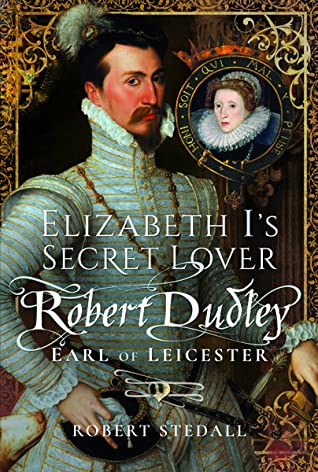
52718070._SX318_The last Tudor monarch, Queen Elizabeth I, was known for many things, but her main legacy is that she never chose to marry anyone. She was the infamous “Virgin Queen”. However, there were those around her who manage to capture her attention and her admiration for a time. The most famous of these men was Robert Dudley, Earl of Leicester. He was a massive supporter of the arts and the Protestant faith, gaining prestige and praise from his highly exalted monarch. Yet, his life and his relationship with his wives, his enemies, and Elizabeth I was full of dangers and numerous scandals. Who was this man who wooed the heart of the most eligible woman in all of 16th century Europe? Robert Stedall investigates the relationship between these two lovers destined to never marry each other in, “Elizabeth I’s Secret Lover: Robert Dudley, Earl of Leicester”.

I would like to thank Pen and Sword Books for sending me a copy of this book. I am always interested in learning new aspects about the reign of Elizabeth I and her love life. When I saw the cover, I was instantly drawn to it and I wanted to know more about Elizabeth and Robert.

Stedall begins his biography by exploring the reigns of Edward VI, Lady Jane Grey, and Mary I to show how the Dudleys came to power and how they fell out of power. I noticed that Stedall included Lady Jane Grey and Guildford Dudley in the family trees that he provided at the beginning of the book, but their death years are different, even though they both died in 1554 on the same day. I think that it was interesting to see how the fall of the Dudleys affected Robert and how it was truly through Elizabeth’s favor that they gained back their honor. This friendship between Elizabeth and Robert gradually developed into love, although it was quite taboo. Robert was Elizabeth’s Master of the Horse and he was already married to Amy Robsart. Even after Amy’s untimely death, Elizabeth and Robert could never be together as a couple because her council, especially Cecil, wanted her to marry a great European power to create a strong alliance, which was a reasonable request.

Sadly, Robert Dudley could not wait forever for Elizabeth, so he chose to marry again, this time to Lettice Knollys. To say Elizabeth was upset about this marriage would be an understatement. Even though she could never marry Robert, it did not mean she wanted another woman to marry him. Robert remained faithful to his queen as a military officer and a patron of the arts and building projects. It is impossible to discuss the Elizabethan Age without mentioning the contributions of Lord Robert Dudley.

I think Stedall has done his research very well. However, this book is a tad too dry for my taste. I was hoping to learn some new swoon-worthy facts about this notorious romance, but Stedall’s book was a bit too analytical for this to happen. It was a struggle for me to read this book as it took me a few weeks to finish it. With a title such as the one he provided, I was hoping for new romantic facts, but it fell flat for me.

Overall, I felt like this was a well-researched biography, but it fell flat on the delivery. I think if you are being introduced to the relationship of Elizabeth I and Robert Dudley, this is a decent introduction, but if you know the story, it might not be the best book to read. If you want to learn more about Robert Dudley and his influence in the Elizabethan court, check out, “Elizabeth I’s Secret Lover: Robert Dudley, Earl of Leicester” by Robert Stedall.

Book Review: “Medical Downfall of the Tudors: Sex, Reproduction and Succession” by Sylvia Barbara Soberton

The story of the Tudor dynasty has been told from many different angles. Each monarch has been explored through lenses like social and political history numerous times. However, there is a new approach that is coming into the forefront of historical research and that is the focus on the medical history of the Tudors. Each Tudor monarch, from Henry VII to Elizabeth I, had some sort of bout with illness that would drastically alter the course of their reigns and the future of the dynasty. In Sylvia Barbara Soberton’s latest book, “Medical Downfall of the Tudors: Sex, Reproduction and Succession”, she explores the more intimate aspects of this turbulent dynasty to discover the truth about why they fell.

I would like to thank Sylvia Barbara Soberton for sending me a copy of her latest book. I have talked to Sylvia in the past and I have hosted her on my blog before, but I have never read one of her books. When I heard about this particular title, I was intrigued since I find the medical history of the Tudors an area that needs to be explored a bit more.

Soberton begins her book by explaining the different diseases and medical maladies that were going around England during the reign of the Tudors. I found her knowledge about these different medical conditions quite fascinating. She explains in detail what the symptoms were and includes different descriptions of the conditions.

After this quick overview, Soberton dives into the main topic of her book, which is exploring the medical maladies of the Tudor monarchs and their significant others. She takes the time to explain each illness and rumors of pregnancy for each monarch, showing how fragile this dynasty truly was and how concerned those who were close to the throne were to preserve the health of the Tudors. I found this part a tad repetitive as many biographies do mention these maladies. However, Soberton does include possible theories about what the obscure maladies were and cures for the different conditions.

If I did have a suggestion on something that I wish Soberton would have included the prescriptions that the doctors would have prescribed their royal patients. Show the readers what some of the more unusual ingredients for these cures looked like and why they were used. I also wanted to see how the diagnosis of the royal family was different from those who were average citizens in England.

Overall, I found this book enjoyable. Soberton’s style of writing is easy to follow, yet her audience can tell she has researched her topic thoroughly. This may be the first time that I have read by Soberton, but now I want to explore her other titles. I think this book would be perfect for those who are still being introduced to the Tudor dynasty. If you are interested in the medical history of the Tudors or you are a fan of Sylvia Barbara Soberton’s books, you should check out “Medical Downfall of the Tudors: Sex, Reproduction, and Succession.”

Book Review: “Mary Tudor: A Story of Triumph, Sorrow and Fire” by Anthony Ruggiero

55127415._SX318_The Tudors were a royal family striving to survive in England through male heirs. Yet, its strongest rulers were female, Elizabeth, and her eldest half-sister, Mary. Obviously, many remember Queen Elizabeth I for her “Golden Age” and the first woman monarch of England to rule by her own right, but that title should really go to Mary I. Elizabeth tends to get all of the attention, but Mary’s life was full of her own struggles. In “Mary Tudor: A Story of Triumph, Sorrow and Fire”, Anthony Ruggiero explores the myths and the facts about this much-maligned and tragic figure in English history.
I would like to thank Anthony Ruggiero for sending me a copy of his book. When I first heard about this book from my friend Rebecca Larson of the Tudors Dynasty blog, I thought I would give it a shot.

Ruggiero’s book is relatively small yet it covers all of Mary’s life. He begins with the foundation of the Tudor dynasty itself and explains the relationship between Henry VIII and Catherine of Aragon. I think that Ruggiero does an excellent job explaining Mary’s life story to his audience in a clear and concise way. I think my main issue with this particular book is that it is too short. I was hoping that Ruggiero was going to expand on the ideas that he presented in his book and to include more original sources instead of secondary sources.

Overall, I found Anthony Ruggiero’s debut biography was a decent read. It provides a solid introduction to Mary Tudor for those who are studying the Tudors for the first time. I think there are a lot of promising elements in this book and I look forward to seeing what Ruggiero will write next. If this sounds like a book you might be interested in, check out, “Mary Tudor: A Story of Triumph, Sorrow and Fire” by Anthony Ruggiero.

Book Review: “The Anne Boleyn Collection III” by Claire Ridgway

49466496._SY475_The story and myths of Henry VIII’s second wife, Anne Boleyn, have been debated and dissected for centuries. Was she a cruel and calculating figure who got what she deserved or was she an innocent victim of an evil tyrant of a husband? The funny thing about history is that the truth is never clear cut. Historical figures are human beings, no matter how many centuries separate their lives from our own. They were not all good or all bad, which is the perspective that Claire Ridgway tries to show when she is writing about her favorite figure, Anne Boleyn, either in her books or on her blog, The Anne Boleyn Files. To celebrate the 10th anniversary of the Anne Boleyn Files, Claire Ridgway returns with the latest collection of articles, “The Anne Boleyn Collection III”.
Like the other two volumes of this series, Ridgway has taken some of the most popular articles from her blog, the Anne Boleyn Files. There are some recurring themes that Ridgway has highlighted in her previous two books, but there are some news topics that she discusses in length. Was Mary I or Lady Jane Grey the usurper? Did Anne Boleyn love Henry Norris? How did Henry VIII go from a Renaissance prince to an infamous tyrant? Who were the men who died with Anne Boleyn?

Ridgway’s passion for the Tudors, especially when it comes to Anne Boleyn, is extremely apparent when reading her books. That does not change at all in this book. Her writing style remains the same as in her previous books. It is like having a conversation with a friend about Tudor hot topics. What Ridgway added to this book was the use of poetry written about the historical figures that she discusses at length. I found the poetry refreshing and intriguing to delve deep into the meaning of the poet’s words.

I think this book is okay, but I did have a few problems when I was reading it. I did feel like this book was slightly redundant as it repeats some of the same points that she made in previous books. Now, this might be because they are articles from her blog and she wanted to focus heavily on certain topics, but I felt like there were other topics that she might have focused on. I wanted to learn new information about Anne Boleyn and her times.

Another issue that I had with this particular book was with the sources. Ridgway tends to favor certain authors and historians when it comes to her research, which is fine. However, I think there have been new biographies that were written before the publication of this book that would have helped Ridgway make her points even stronger. As a blogger, there are sources that we enjoy using, but one should be aware that there are other historians who are doing great research out there and they should be at least acknowledged. We should be open to new ideas, new sources, and new theories about historical figures, even if we don’t necessarily agree with them. It is how we grow as history lovers and how we can better understand the past.

Overall, I think this was a good book, but I was expecting a tad more, especially after how much I enjoyed book two of the collection. Ridgway’s feelings and passion for her subject were ever-present in this volume, but I think that she could have expanded her research a tad to include more recent biographies and books to get her point across to a new batch of readers. I think if you enjoyed her two previous books in this series, I would recommend you read Claire Ridgway’s latest book, “The Anne Boleyn Collection III”.

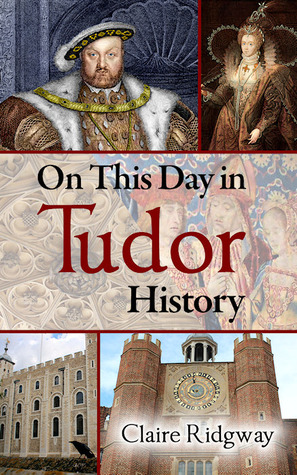
Book Review: “On This Day in Tudor History” by Claire Ridgway

16125013The Tudor dynasty and the stories of those who lived during this time have drawn novices and experts alike to explore the history surrounding these events for hundreds of years. These tales can seem fictional, but the truth is often stranger than fiction, which is why it is important to understand when and why these events happened. The “when” can often be difficult to remember for any student of history because there are a lot of dates to deal with when you are dealing with a whole dynasty. That is why resources, like this particular book, can be so invaluable to have in one’s collection. Claire Ridgway has taken the time to give readers a day-by-day guide to the Tudors in her book, “On This Day in Tudor History”.

Ridgway has taken the concept of history books that explore what life was like in a year for a typical person in a certain time and she has expanded to cover an entire dynasty. Like these books, this one is divided by each month of the year and then by chronological order of the year. She covers all of the Tudor dynasty, with some dates before and after, to show how this one era truly impacted European and world history. Of course, she covers the big names of the dynasty; like Elizabeth I, Henry VIII, Anne Boleyn (which is a given since Ridgway is known for her other project, the Anne Boleyn Files), Mary I, and numerous courtiers and diplomats who made this time so fascinating for many of us to study.

What caught my interest in this book was the numerous figures that many might not know a lot about. There are the monarchs from all around Europe whose stories are often looked over for their English counterparts. And then there are the English scholars, explorers, martyrs, and playwrights that are often forgotten for more colorful figures. Their births, deaths, trials, tribulations, and triumphs are just as important as those who make the headlines. I did not know about so many of their stories and it made me want to learn more, to dive even deeper into the study of the Tudor dynasty.

Although I did enjoy reading this book, it is one that you need to take your time to read. It is a book that should be used as a resource for research into this time period. I did notice that with a few of the dates, some of the years were out of chronological order (which did bug me a bit since I like chronological order), but it is a minor issue. There are also some grammatical and spacing mistakes, but they do not take away from the context of this book. Ridgway does use some typical stories that have been debunked by recent biographies, but the dates are relatively accurate. I did wish that Ridgway included the major holidays and festivals into the actual book, instead of being at the beginning of the book, so that we could get a sense of what was going on during these significant events.

Overall, I found this book informative and fun. Claire Ridgway combined the trivia of Tudor dates with an easy to understand writing style. It is a massive tome, but a labor of love. If you want a book full of terrific Tudor trivia, I would recommend you read, “On This Day in Tudor History” by Claire Ridgway. It is a great addition to any Tudor collection.