
Book Review: “The Temptation of Elizabeth Tudor” by Elizabeth Norton

Queen Elizabeth I is often known as “the Virgin Queen” because she never married. 25673950There were some men who tried to court Elizabeth, including Robert Dudley, but none could ever get her to the altar. That was when she was queen, however, there was one man who was very close to marrying her when she was just  Elizabeth Tudor. The man was Thomas Seymour, the brother of Edward and Jane Seymour and the husband of Catherine Parr. In Elizabeth Norton’s book, “The Temptation of Elizabeth Tudor: Elizabeth I, Thomas Seymour, and the Making of a Virgin Queen”, she explores the relationship between Thomas and Elizabeth and why he was her temptation.

Elizabeth Norton explains who Thomas Seymour was:

Thomas Seymour once said that the memory of brave men lived forever and that ‘a good name is the embalming of the virtuous to an eternity of love and gratitude among posterity.’ To future generations, his good name was lost; but those who had known him still remember him fondly. He was a turbulent, troublesome individual, but also a likable one, and – at the start of 1549- the man who would come closest to marrying the future Queen Elizabeth. As far as is recorded, no other man ever climbed into bed with England’s virgin queen, or trimmed her clothes and intimately appraised her body. As Elizabeth looked at Thomas’s portrait in the gallery at Somerset Place, she would have been able to reflect upon the man who had so nearly seduced her. He was the temptation of Elizabeth Tudor. (Norton, 280).

So how did Elizabeth meet Thomas Seymour and why did Elizabeth chose to become “the Virgin Queen”? These are the questions that Elizabeth Norton wants to answer in her book.

Norton begins her book with the birth of Edward VI, the death of Jane Seymour, and the relationship between Catherine Parr and Henry VIII. Catherine Parr had been married a few times before Henry and she tried to be the best step mother to Henry’s three children as she could be, but when Henry died, things changed. Since Edward VI was still a minor, he was granted a Lord Protector, his uncle Edward Seymour, 1st Duke of Somerset. His brother, Thomas Seymour, wanted to marry either princess Mary or princess Elizabeth, but after he was rejected by both, he would marry Catherine Parr shortly after the death of Henry VIII, sending shock waves throughout the court. Catherine would allow Elizabeth Tudor and Lady Jane Grey to be raised in her household, thinking that it would be beneficial for the young girls. While it was great for their education, Elizabeth was constantly under the wandering gaze of Thomas Seymour.

Thomas is reported to come into Elizabeth’s bedroom early in the morning when she was barely dressed to hug her and tickle her. Elizabeth’s governess Kate Ashley would often try to persuade Thomas to leave her alone, but he did not give up. There was one incident where Thomas took a knife to one of Elizabeth’s gowns while she was walking in a garden and tore it to shreds. It is even rumored that Elizabeth gave birth to Thomas’s child and that the child was thrown into a fire, but  Norton explains why this story is not related to Elizabeth. Catherine Parr was aware of what was happening, but because she promised to love and obey her husband, she never confronted Thomas about the relationship, although she did dismiss Elizabeth from her household. Catherine would eventually become pregnant and give birth to a baby girl. While she was on her deathbed, she did not want to see Thomas; Catherine would die on September 5, 1548, which meant that Thomas was a bachelor yet again.

With the death of Catherine, Thomas turned his eyes towards politics. He wanted what his brother Edward Seymour had, control of the king. He joined forces with William Sharington, a member of parliament and a known embezzler, to build an army to overthrow the government. During this time, he wrote a letter to Elizabeth to ask her to marry him. Kate Ashley thought it was a good idea and she told Elizabeth to send her reply through Thomas Parry that she desired to marry him. Unfortunately, Thomas Seymour would be caught by his brother Edward Seymour when it was reported that Thomas tried to either kidnap or kill the king. Thomas’s scheme with Sharington would be found out, as well as his relationship with Elizabeth; Thomas Parry and Kate Ashley were sent to the Tower for interrogations. Thomas Seymour would quickly be found guilty and was executed for treason. It was with Thomas’s death that Elizabeth’s desire to marry died as well.

Elizabeth Norton in her book “The Temptation of Elizabeth Tudor” paints a picture of the young Elizabeth Tudor in which love was her desire and Thomas Seymour was indeed her temptation. Norton shows Thomas Seymour in such a way that makes him intriguing. I found myself wanting to learn more about Thomas Seymour and his relationship with Elizabeth. This book was so well written and fascinating. If you are interested in Elizabeth’s childhood, Thomas Seymour and his fall, and the reason why Elizabeth chose to be known as “the Virgin Queen”,  this is the book for you.
“Whitewashing” History: Good Idea or Something to be Avoided?

Herodotus, the father of the study of history, once said that the study of history was used “to preserve the memory of the past by putting on record the astonishing achievements both of our own and of other peoples.”(Herodotus, 41). As we study the past, we tend to make our own opinions about what we study and the people who made these “achievements” possible. Unfortunately, there is a trend within the study of history of making historical figures look either perfect (whitewashing) or pure evil (what I will refer to as blackening). So since these are trends in history, are they good or bad?


There are those in Tudor history who have been either whitewashed or blackened throughout time; Henry VII, Henry VIII, Mary I, Elizabeth I, and  the most famous example of this is Richard III. We will use Richard III as an example on how “white washing” and “blackening” works.


A lot of people nowadays, specifically the Richard III Society, believe that Richard III had his name tarnished by men like Thomas More and Edward Hall. Thomas More is labeled as the man who ruined Richard’s reputation by stating that Richard was “malicious, wrathful, envious, and from afore his birth, ever forward”( Sylvester, 8). However, More was not the only one who blackened Richard’s name as we see with a quote from Hall:

Behold yonder Richard, tyrant worse than Nero, for he has not only murdered his nephew, bastardized his noble brothers and defamed the womb of his virtuous mother, but also employed all the means he could invent to carnally know his own niece under the pretence of a cloaked matrimony….(Dockray, 139).


If you read both of these accounts, you can see where the Richard III Society is coming from, yet they argue for a more whitewashed version of Richard III, that he was a victim of propaganda against him. They acknowledge the virtues and ignore the faults; the Tudor historians, it can be argued, do the exact opposite. So where’s the truth? I believe that a contemporary of Horace Walpole named William Hutton, an English poet and historian puts this discussion of Richard’s character into perspective:


Richard the Third, of all the English monarchs, bears the greatest contrariety of character….Some few have conferred on him almost angelic excellence, have clouded his errors and blazoned every virtue that could adorn a man. Others, as if only extremes could prevail, present him in the blackest dye; his thoughts were evil, and that continually, and his actions diabolical; the most degraded mind inhabited the most deformed body… (Dockray, 149).


Hutton is pointing out that Richard is either all good or all bad, according historians. This seems to be a common theme with historians about any historical figure. Henry VII is either described by Polydore Vergil in his book “Angelica Historia” as “shrewd and prudent”(Ellis, 226) or as Jack Lander writes, “an inexperienced political adventurer; an almost pathetic, rootless exile, in whom the powerful and rich could repose little, if any, confidence.”(Dockray, 176).


And it’s not just these two figures in Tudor history that  are seen as being either “white washed” or “blackened”. Henry VIII is viewed as the king who had six wives and the king who split from the Catholic Church, but we don’t see his intellectual side. Mary I is known as “Bloody Mary” for burning Protestants, but we never really understand why she was so strong in her faith. We think of Elizabeth I as a glorious  virgin ruler but we forget about how cruel she could be towards those who were around her. Thomas “The Admiral” Seymour is viewed as a villain who only wanted power, but is there more to his story?


These were complex people and yet we see them through either a “white washed” or “blackened” lense. This is the danger of this movement. We don’t see these people as “human” but rather almost like fictional heroes or villains. That’s just the thing. We have to realize that these people were humans and that they were flawed. They have elements of both good and evil inside of them. No one is perfect, yet we tend to think of historical figures at perfect.


As historians, amateur or professional, we have a responsibility to show both sides of a historical figure, the good and the bad. Sure we all have our favorite people to study in history and we want to think the best about them but we also have to tell the truth about them. What’s the point about studying the past if we only report about one side of the story? We read about our favorite people from multiple historians and multiple sources to find out what they were really like.


We don’t want others to label us so why do we label historical figures? We are humans, just like the kings and queens of the past, so why can’t we see their vices and virtues? Why do we “whitewash” or “blacken” human beings who lived hundreds of years ago?


If we “whitewash” or “blacken” a historical figure, we don’t get to see what made them who they are. We don’t see both the mistakes and the triumphs; we only see one or the other. “Whitewashing” and “blackening” history are ideas that should be avoided because we don’t see the full story of the people who came before us. If we let these ideas continue, we lose part of history. We have to tell both sides, the good and the bad because that is what makes us human. We are not perfect and neither were those who came before us.


Sources


Dockray, Keith. William Shakespeare, the Wars of the Roses and the Historians.      Charleston, SC: Tempus Publishing INC, 2002.

Ellis, Sir Henry. Three Books of Polydre Vergil’s English History, Compromising the Reigns of Henry VI, Edward IV and Richard III. London: Camden Society, 1844.

Herodotus. Herodotus: The Histories. New York: Penguin, 1954.

Sylvester, Richard S. St. Thomas More: The History of King Richard III and Selections from the English and Latin Poems. London: Yale University Press, 1976.


Book Review: “Edward VI: The Lost King of England” by Chris Skidmore

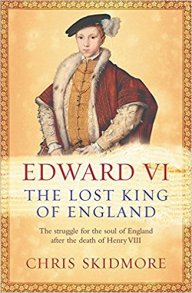
51uPYqC767L._SX324_BO1,204,203,200_When we think of the Tudor rulers, we think of Henry VII, Henry VIII, Mary I and Elizabeth I. However, there was another king who ruled for only five years and was Henry VIII’s only legitimate male heir, Edward VI. Most people think that Edward was a mere pawn of his government officials but is that accurate? Chris Skidmore tackles that question of who was the real Edward VI in his book “Edward VI: The Lost King of England”.

We all know the story of how Henry VIII wanted a male heir and how Henry dealt with his wives, Katherine of Aragon and Anne Boleyn, when they couldn’t produce male heirs. It was Jane Seymour who was able to give birth to Henry’s heir Edward on October 12, 1537, although she died shortly after. From the beginning of his young life, Edward was coddled and his education was carefully considered. Edward was living a comfortable life of a prince, but that all changed when on January 28, 1547, Henry VIII died and at the tender age of nine. Chris Skidmore put this young king’s life into perspective:

The legacy of Edward’s reign is one of the most exciting political histories of the Tudor age, from which few appeared unscathed. His untimely death cut short a life that, forged in the remarkable political circumstance of his childhood, would have left us with a very different Tudor England than that fashioned under the female monarchies of Mary and Elizabeth (page 9)

Some of the few men who were in charge of Edward’s well-being while he was making the transition from boy to king were Edward Seymour Duke of Somerset, Edward’s maternal uncle, John Dudley Duke of Northumberland, and John Cheke, Edward’s tutor.  Edward Seymour was the Lord Protector and the older brother of the somewhat infamous Thomas Seymour. Edward Seymour and John Dudley would later come to hate each other and most of Edward’s short reign consisted of the two men fighting each other for the right to help Edward run the kingdom, as well as fight rebellions that would spring up to try and throw the country into chaos.

John Cheke, as Edward’s tutor, taught the young king about the Protestant faith that was mw00459making a foothold in England. Most people think that Henry VIII was the one who helped bring the Protestant faith to England when he broke away from Rome. Henry VIII might of helped get the reform started, but Edward VI was the one who took the Protestant movement and was willing to make it known throughout England, even if it meant facing against his most formidable foe, his half-sister Mary who was a devout Catholic.
This was the world that King Edward VI lived in until he died on July 6, 1553 at the age of fifteen. Even after he died, he threw chaos into the succession that his father planned out by placing his cousin Lady Jane Grey on the throne instead of Mary. It did not last long but the six day reign of Lady Jane Grey was Edward’s choice and his alone. By the end of his life, Edward was becoming his own man and no one would stand in his way.

In “Edward VI: The Lost King of England”, Chris Skidmore brings the reader into this complex world of this young king both inside his court and what the laws he enacted did to the common people. Skidmore illuminates this once forgotten king whose life was cut short by tuberculosis and shows us how much of a reformer king he truly was. Edward may have been young but he was an intellectual who made up his mind just like his father. This book gives us a different view of religion and politics during this time. Edward VI will never be lost or forgotten after this book.  

Book Review; “The Queen’s Agent: Sir Francis Walsingham and the Rise of Espionage in Elizabethan England” by John Cooper

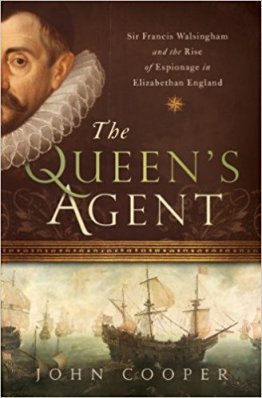
51FnxQ9BN5L._SX326_BO1,204,203,200_When we think about spies, we often think of modern examples like the ones we see in movies. However, spies and their spymasters have been working hard to protect their countries and their rulers for centuries. For Queen Elizabeth I, the only man she could trust to be her spymaster was Sir Francis Walsingham. But is it fair to call Walsingham as only Elizabeth’s “spymaster”? That is the question that John Cooper tries to answer in his book “The Queen’s Agent: Sir Francis Walsingham and the Rise of Espionage in Elizabethan England”. Who was Sir Francis Walsingham and what did he do to help his queen and his country?

First and foremost, Walsingham was a Protestant. This is very important to understand because, in this time, your religion determined where you stood on certain political and international issues. Walsingham would flee to universities in other countries while Mary I was queen, he would help Huguenots in France during the St. Bartholomew’s Day massacre, and helped Elizabeth navigate through her marriage prospects.  In the religious quagmire that was Europe at this time, it was Walsingham and Elizabeth who stood by their Protestant faith and would help the Reformation on.

As Secretary of State, it was Walsingham who helped set up the national defenses against the invading Spanish Armada and helped crack the code of the Babington plot that tried to put Mary Queen of Scots on the throne of England. Walsingham would also help solve the “Irish issue” and help make colonization in America possible. Walsingham and Queen Elizabeth I would often butt heads on issues, but in the end, they would come to a compromise that would benefit the entire country. Through all of this were men that Walsingham could trust, and some he thought he could but they turned out to be double agents for other countries. Walsingham had to navigate it all to protect his beloved queen and country.

John Cooper navigates the complex web of Walsingham’s life and his spy system to seek the truth about the man who became a legendary spymaster. There was a lot of information, but Cooper was able to organize the book in such a way that it was not overwhelming. This book had many twists and turns, as any good book about espionage would, however, the one thing that I wish Cooper would have included was a list of names and what they were known for. For me, it would have made the web a little less complex.

Overall, I found this book very enjoyable. Before this book, I did not know a lot about Walsingham or what he did for Elizabethan England. Walsingham was not just a spymaster, he was so much more and Protestant Elizabethan England would have been lost without him and his actions. If you want to learn more about Sir Francis Walsingham, the complex Europe world with Protestants versus Catholics, or espionage in Elizabethan England, this is the book for you.

Book Review: “Game of Queens: The Women who made Sixteenth-Century Europe” by Sarah Gristwood

When one thinks about strong women in the sixteenth century, many turn their 51mfzqo6PTL._SX327_BO1,204,203,200_attention towards women like Elizabeth I, Isabella of Castile, Katherine of Aragon, Mary I and Catherine de Medici. These seemed like extraordinary examples of power that stretched the boundaries on what was right and acceptable for women of the time. That, however, couldn’t be further from the truth. In fact, the sixteenth century in Europe was filled with powerful women who do not get the attention that they deserve. In Sarah Gristwood’s book “Game of Queens: The Women who made Sixteenth- Century Europe”, we are shown that it really wasn’t the men who had control, but their wives and daughters.


Diplomacy is often described as a chess game and in the case of the sixteenth century, that could not be more accurate. This was the century of political games, the importance of marriages, wars galore and religious reforms. It all started off with women like Isabella of Castile of Spain and Anne de Beaujeu of France; powerful women who would not only influence their own children but girls who would come into their homes to learn how to be strong royal wives. Anne of Beaujeu wrote a manual for noblewomen, including this piece of advice:

“And nothing is firm or lasting in the gifts of Fortune; today you see those raised high by Fortune who, two days later, are brought down hard.”


This would come to describe the lives of the women who would follow throughout the rest of the sixteenth century. Most of them had to act as regents for their sons or male relations. Others were wives of kings who tried to change their countries for the better and either succeeded or failed miserably. It was the women in the beginning and the middle of the century that would pave the way for the more infamous queens like Katherine of Aragon, Anne Boleyn, Mary Tudor, Elizabeth Tudor, and Mary Queen of Scots.


Sarah Gristwood was able to combine this complex game of women political chess with sixteen protagonists into a masterful biography to give a better understanding of how sixteenth century Europe worked. This was a sisterhood of queens with mothers teaching daughters on how to survive in the courts. These women were connected by blood and by marriage, however it was how they used the lessons of those who came before them which would define them.


Sarah Gristwood could have made sixteen separate biographies, but by combining all of these stories into one book, it shows how each country and each ruler truly depended on one another. In a world where male heirs were few or died young, it was the women who had to step in and make Europe ready for the future. The sixteenth century was the changing point for European history and it was the women who had to navigate the complex field to keep Europe from completely falling apart. This book is the story of powerful women who helped make Europe the powerhouse it would become in the sixteenth century and how they did it.