
 Also known as Elizabeth Cavendish and Elizabeth Talbot, Countess of Shrewsbury
(Born around 1527- Died February 13, 1608)
Daughter of John Hardwick of Derbyshire and Elizabeth Leeke.
Married to Robert Barley (or Barlow), Sir William Cavendish, Sir William St. Loe, and George Talbot, 6th Earl of Shrewsbury.
Mother of Frances Cavendish, Temperance Cavendish, Henry Cavendish, William Cavendish, 1st Earl of Devonshire, Charles Cavendish, Elizabeth Cavendish, Mary Cavendish, and Lucrece Cavendish.
Bess of Hardwick is one of the best known Elizabethans. She was the second wealthiest woman in England, the grandmother to a claimant to the throne, known for building the most spacious and modern stately home in England, and was a former jailer to Mary Queen of Scots. She rose from the yeomen gentry to one of the people inside Elizabeth I’s inner circle.
Bess of Hardwick was born around 1527 to John Hardwick of Derbyshire and his wife Elizabeth Leeke. The Hardwicks did not hold prestigious offices and the highest office that they ever achieved was esquire. John Hardwick died at the age of 40 and Bess’s mother remarried. When Bess was twelve years old, it is said that she went to live with the Zouche family at Condor Castle in Derbyshire, where it is believed she learned how to be a Lady in Waiting. There are also rumors this is where she met her first husband Robert Barley (or Barlow); they married in 1543 but Robert died a year later in December 1544. We do not know if they in fact lived together because they were so young. There was an issue about the dowry that Bess should have received; Bess took the matter to court and it took several years to finally give Bess her portion of the Barley(Barlow) estates and inheritance.
After her first husband’s death, Bess had moved to live as a serving gentlewoman with the Duke and Duchess of Suffolk, parents of Lady Jane Grey, at Bradgate Park, Leicestershire, where she befriended Duchess, Frances Brandon, niece of Henry VIII. It was at Bradgate Park where Bess met her second husband Sir William Cavendish, who was twice the age of Bess. They married on August 20, 1547 and they had eight children: Frances Cavendish, Temperance Cavendish, Henry Cavendish, William Cavendish, 1st Earl of Devonshire, Charles Cavendish, Elizabeth Cavendish, Mary Cavendish, and Lucrece Cavendish. William’s fortune had been made following the Dissolution of the Monasteries and possibly acting on Bess’s advice, Sir William sold his lands in the south of England and bought the Chatsworth estates in her home county of Derbyshire. When Sir William Cavendish died on October 25, 1557 after ten years of marriage, Bess became a widow for a second time and she was now deep in debt.
Bess had to marry again to take care of the debts from Sir William Cavendish so in 1559, she married Sir William St. Loe and became Lady St. Loe. He was Captain of the Guard to Queen Elizabeth I and Chief Butler of England. Bess was made a Lady of the Private Chamber to Elizabeth I as a wedding present. Sir William St. Loe owned a lot of large estates and when he died of mysterious circumstances in either 1564 or 1565, his brother tried to gain possession of all of the St. Loe inheritance. Bess had to take care of her 6 kids, plus St. Loe’s two daughters, who were at this point grown women, so she took her case to court and won. Bess became the second wealthiest woman in England after Elizabeth I with the possession of the St. Loe inheritance.
Bess did not remarry until 1568 to her last husband George Talbot, 6th Earl of Shrewsbury and she became Countess of Shrewsbury. In order to combine the families even further, , two of his children were married to two of hers in a double ceremony in February 1568: Bess’s daughter Mary Cavendish was given in marriage to Shrewsbury’s eldest son Gilbert; while Bess’s son, Sir Henry Cavendish married Shrewsbury’s daughter Lady Grace Talbot.
During 1568 there was a major shake-up happening in Scotland. Rebel Scottish lords rose up against Mary, Queen of Scots, imprisoned her, and forced her to abdicate in favor of her one-year-old infant son, James. In May 1568, Mary escaped captivity in Scotland, and fled south towards England, seeking the protection of her cousin, Queen Elizabeth. This not go well for Mary as she was imprisoned in May 18, 1568 at Carlisle Castle. Elizabeth did not feel that Mary was secure and in 1569, Mary was transferred into the care of the Earl and Countess of Shrewsbury. She would stay in there custody for over 15 years. Bess would become one of Mary’s companions, working with her on embroidery and textile projects. In fact, all of Mary’s work later became part of Bess’s historical collection at Hardwick Hall.
In 1574 Bess arranged a marriage between one of her daughters and the son of the Countess of Lennox. This was a significant match for Bess because the Countess of Lennox was Margaret Douglas, a member of the royal family, being the daughter of Margaret Tudor, Queen Dowager of Scotland and sister of Henry VIII, and therefore, also Queen Elizabeth’s first cousin. In this match, the bride was Bess’s daughter, Elizabeth Cavendish, and the groom was Charles Stuart, who was himself also the first cousin of Mary, Queen of Scots and was the younger brother of Henry Stuart, Lord Darnley who had been married to Mary until his death.. The marriage ceremony took place without the knowledge of Shrewsbury, who, declined to accept any responsibility. Due to the Lennox family’s claim to the throne, the marriage was considered potentially treasonable, since Queen Elizabeth’s consent had not been obtained. The Countess of Lennox, went to the Tower for several months, and Bess was ordered to London to face an official inquiry, but she ignored the summons, and remained in Sheffield until the row died down. The child of the marriage was Arbella Stuart, who had a claim to the thrones of Scotland and England as the second cousin to King James VI of Scotland.
After her husband’s death in 1590, Bess became the Dowager Countess of Shrewsbury. Bess of Hardwick would on February 13, 1608 at the age of 81.
Sources:
https://en.wikipedia.org/wiki/Bess_of_Hardwick
http://www.maryqueenofscots.net/people/bess-hardwick-countess-shrewsbury/
Bess of Hardwick: The Second Wealthiest Woman in Tudor England (After the Queen)
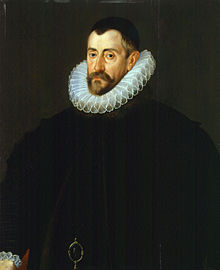 (Born around 1532- Died April 6, 1590)
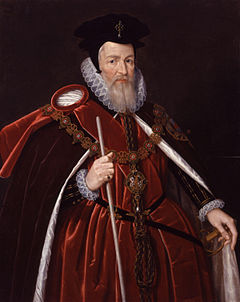 (Born September 13, 1520- Died August 4, 1598)
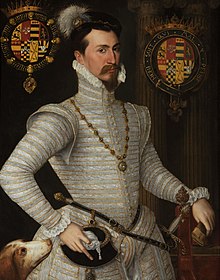 (Born June 24, 1532- Died September 4, 1588)
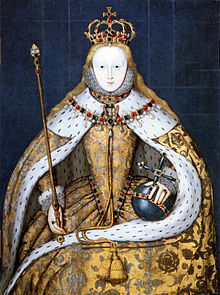 (Born September 7, 1533- Died March 24, 1603)
 The story of Elizabeth I is full of twists and turns. From the moment she was born, she had to fight to survive. Through all that she went through, Elizabeth found the strength and courage to become the legendary queen to help England to enter into a golden age of peace and prosperity. This, however, is just one side of Elizabeth. The other side of Elizabeth’s personality, her anger and her interactions with her councilors, is explored thoroughly in Carolly Erickson’s book “The First Elizabeth”.
  Elizabeth I was perhaps the most influential monarch in English history. There are episodes in her life that became legendary. From her tumultuous childhood to her reign where everyone either wanted her to marry or put someone else on the throne, Elizabeth’s life was hardly easy. Even though much is known about her public life as queen, we really do not know a lot about her private life. In Alison Weir’s book, “The Life of Elizabeth I”, the gap between the public Elizabeth and the private Elizabeth is bridged in order to give a more complete biography of this fascinating English queen.
 The man who would become king of England and the patriarch of the Tudor dynasty.
 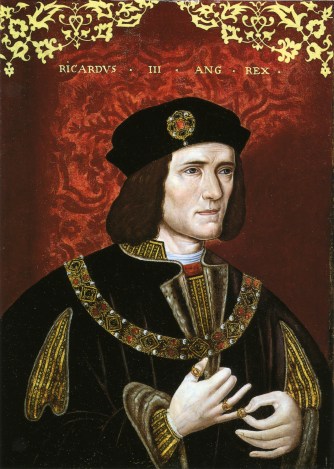 served a Tudor king so why is he on this list? To me, Richard has just as much influence in creating the Tudor dynasty as the Tudors themselves. If you think about it, if he didn’t take the throne, then Henry wouldn’t have marched against him at the Battle of Bosworth Field. It was his death that helped start the Tudor dynasty.
 The man. The myth. The legend.
 learning and discoveries. While that is true, like any age, there were good elements and bad elements. We tend to overlook the bad elements with Elizabeth’s “Golden Age” and move on to the good elements. However, we cannot get a full image of the age if we only look at the good elements. That is why A.N. Wilson wrote the book “The Elizabethans”:
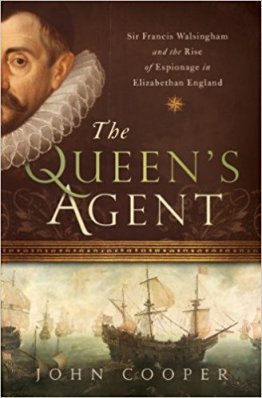 When we think about spies, we often think of modern examples like the ones we see in movies. However, spies and their spymasters have been working hard to protect their countries and their rulers for centuries. For Queen Elizabeth I, the only man she could trust to be her spymaster was Sir Francis Walsingham. But is it fair to call Walsingham as only Elizabeth’s “spymaster”? That is the question that John Cooper tries to answer in his book “The Queen’s Agent: Sir Francis Walsingham and the Rise of Espionage in Elizabethan England”. Who was Sir Francis Walsingham and what did he do to help his queen and his country?
 Adventures of a Tudor Nerd