
 When we think of the term “Viking”, we often get images of battle-harden warriors, covered in guts and dirt, with horned helmets. We also believe that Vikings are warriors primarily from the Scandinavian world and that the Viking age ended in 1066 with the Norman Invasion of England. Our assumptions, thanks to television and a certain operatic cycle, are wrong. The Viking Age is a complex period of the past that spans centuries over half the known world. Using archeological evidence and written records, Eleanor Barraclough tells the tale of the Viking Age in her book, “Embers of the Hands: Hidden Histories of the Viking Age.”
I want to thank W.W. Norton & Company and Net Galley for sending me a copy of this book. I enjoy reading books about archeological discoveries, so when I heard about a book about the Viking Age and archeology, I jumped at the chance to read it. I have read a few historical fiction novels about the Viking Age and a few about the Anglo-Saxons, so I was curious what new information Barraclough would present in her book.
The short answer to that question is that Barraclough provided a plethora of information about the Viking Age. As she explains in her prologue, we try to compartmentalize history, but history flows like a river. Just because we label a period like the Viking Age does not mean that it ends at a certain date. We have artifacts from other parts of the world, including Russia and the Middle East, that would be dated to the 1500s. So what can the artifacts from the past tell us about this diverse age?
To tell the story of this age, Barraclough breaks her book into sections that focus on different elements such as beginnings, love, travel, slavery (known in this book as unfreedom), and endings. Each section focuses on not only the artifacts, like a comb, a chess piece, or a runestone with a love story, but also what these pieces can tell us about the average citizens who lived during this period. We can learn about their grooming habits, how they lived, how they traveled, their ever-changing beliefs from Norse mythology to Christianity, and how they approached issues like slavery and childbirth. Barraclough also takes the time to show what the chronicles and sources tell us about this period while showing how to understand what the runes on artifacts can tell us. I think my one concern about this book is that because it was not in chronological order, it was a bit hard to follow and there were points where it was a bit dry for my taste.
Overall, I found this book fascinating and a difficult read. It took me a long time to understand how complex the Viking Age was as I am not as familiar with the language and historical accounts. I think Barraclough does a decent job of presenting the information to not only those who are familiar with the era but to complete novices. If you want to understand the Viking Age through archeological research, I suggest you read, “Embers of the Hands: Hidden Histories of the Viking Age” by Eleanor Barraclough.
 When we consider the issue of succession, we often imagine the crown being passed to the next legitimate heir, regardless of gender, but that was not always the case. We think about the struggles that women like Mary I and Elizabeth I endured to secure and stay on the throne, but one woman came before them so close to becoming England’s first ruling queen. She was the daughter of King Henry I and the next in line to the throne after her brother tragically died, but after her father passed away, it was her cousin Stephen who usurped the throne. The war for the crown which would last decades would be known as The Anarchy is the primary focus for Sharon Kay Penman’s novel, “When Christ and His Saints Slept.”
 English history is filled with kings who had to fight for their crown, both at home and away in foreign lands. Men like William the Conqueror, Henry II, Henry IV, Edward IV, and Henry VII can be considered warrior kings, but one stands above them all. He only ruled for a little over nine years, but he proved his worth time and time again, especially against his French adversaries, and secured the crown of France for his young son. He was the son of Henry Bolingbroke, King Henry IV, and the grandson of John of Gaunt. He was Henry V and his story is one of the most remarkable tales in English medieval history, told masterfully in Dan Jones’ latest book, “Henry V: The Astonishing Triumph of England’s Greatest Warrior King.”
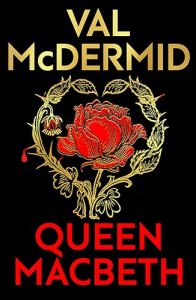 When we think of the name Macbeth, we often imagine the play by William Shakespeare of a power-hungry man and his equally vicious wife willing to do whatever it took to become King and Queen of Scotland. It is a play about revenge and murder, but Shakespeare did not pull these characters out of thin air. He took these characters from the annals of history, such as a man named Macbeth and his wife, a Lady Macbeth named Gruoch. However, the names are about as much as Shakespeare gets right regarding the story of one of the first Kings of Scotland. Val McDermid tells her version of Macbeth and Gruoch’s story in her latest novel, “Queen Macbeth.”
 The year is 1342 in the sleepy coastal English town of Hookton when marauders attack and steal a precious relic. Thomas, a young archer, is the only survivor. With his father’s dying breath, he has given Thomas a mission to carry out, retrieve the relic, and avenge his family’s honor. The hunt for the man responsible takes Thomas to France during the beginning of the conflict that will be known as the Hundred Years’ War. Can Thomas of Hookton find the relic he was tasked to find or will another quest drag him into an even darker path? Thomas’s tale begins in the first book of the Grail Quest trilogy by Bernard Cornwell called, “The Archer’s Tale.”
 I am pleased to welcome Julia Ibbotson to my blog today to share a spotlight for her novel, “The Dragon Tree.” I want to thank Julia Ibbotson and The Coffee Pot Book Club for allowing me to be part of this blog tour.
  Blurb:
 Author Bio
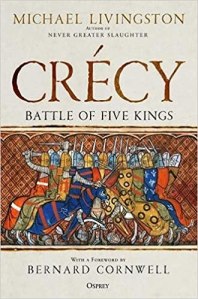 The year is 1346 and war has just begun between France and England. This conflict would be known as the Hundred Years War, which lasted over 116 years and ended in failure for the English. However, some glorious moments like Agincourt gave the English cause to celebrate, but none more so than the Battle of Crecy. It was a colossal battle between five European kings, leaving countless dead on the field without many long-term rewards. So how did the French and English armies meet on the field of Crecy and what truly happened? Michael Livingston dives deep into the archives and archaeological research to tell the truth of this famous battle in his book, “Crecy: Battle of Five Kings.”
 The Crusades were conflicts predominantly focused on the stories of knights, kings, popes, Christians, and Muslims. We have some stories of women like Eleanor of Aquitaine who joined their husbands in battle. However, some women’s stories tend to get lost in the sands of the past. Take, for example, Eleanor of Aquitaine’s daughter-in-law, Berengaria of Navarre, the wife of Richard the Lionheart. Amid the Third Crusades, she must join Eleanor of Aquitaine on a treacherous journey to meet her husband while he battles for Jerusalem. Can Richard and Berengaria survive the journey to and from the Holy Land and produce the desired heir for the English throne before their enemies can claim victory? Carol McGrath has chosen to tell the tale of the forgotten queen Berengaria of Navarre in her latest novel, “The Lost Queen.”
 Author Bio – Following a first degree in English and History, Carol McGrath completed an MA in Creative Writing from The Seamus Heaney Centre, Queens University Belfast, followed by an MPhil in English from the University of London. The Handfasted Wife, first in a trilogy about the royal women of 1066 was shortlisted for the RoNAS in 2014. The Swan-Daughter and The Betrothed Sister complete this highly acclaimed trilogy. Mistress Cromwell, a best-selling historical novel about Elizabeth Cromwell, wife of Henry VIII’s statesman, Thomas Cromwell, was republished by Headline in 2020. The Silken Rose, the first in a medieval She-Wolf Queens Trilogy, featuring Ailenor of Provence, saw publication in April 2020. This was followed by The Damask Rose. The Stone Rose was published in April 2022. Carol is writing Historical non-fiction as well as fiction. Sex and Sexuality in Tudor England was published in February 2022. The Stolen Crown 2023 and The Lost Queen will be published on 18th July 2024. Carol lives in Oxfordshire, England, and in Greece.
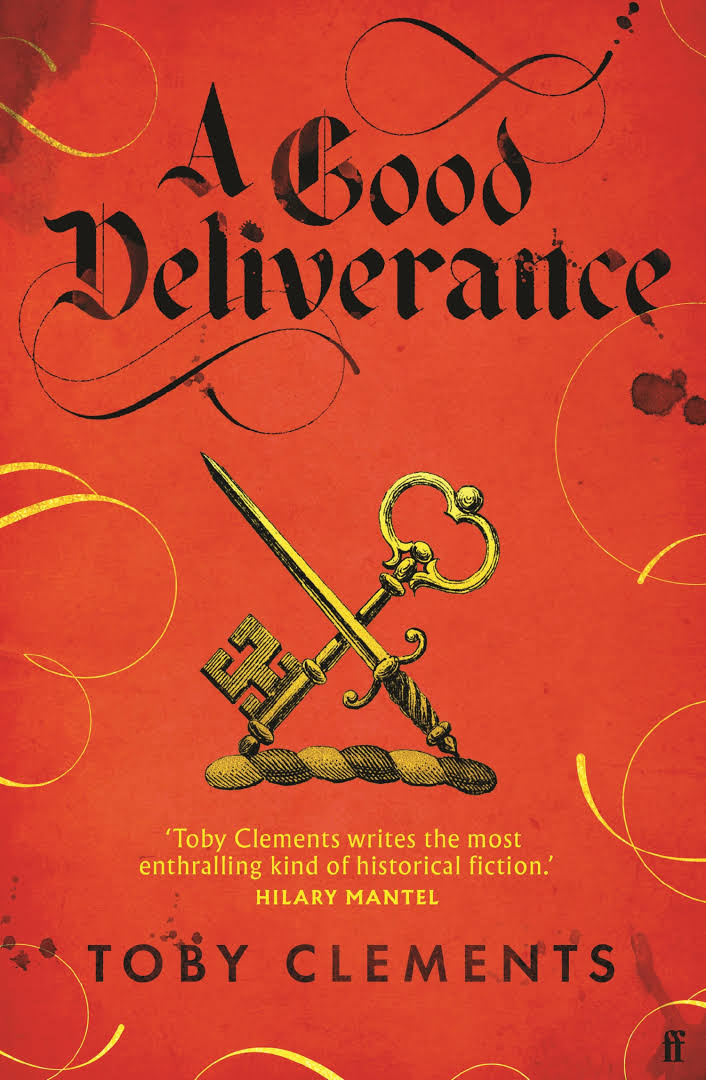 The world of King Arthur and his Knights of the Round Table is filled with stories of adventures and romance. Many authors have tried to tell these tales in a way that will allow their books to live for centuries, but none were more successful than Sir Thomas Malory and his book Le Morte Darthur. King Arthur, Lady Guinevere, Sir Lancelot, Merlin, and Sir Gawain embark on numerous adventures including the Lady of the Lake, Camelot, the sword Excalibur, and the Quest for the Holy Grail. These tales were the epitome of chivalry and valiant knights in shining armor, but the author behind them was anything but perfect. Sir Thomas Malory has had his fair share of time in a prison cell. Who was Sir Thomas Malory and why did his book about King Arthur and the Knights of the Round Table still resonate with readers centuries after it was written? In his latest novel, “A Good Deliverance,” Toby Clements hopes to reveal the truth of this famous author whose story has been overshadowed by the myths he wrote down in his legendary tome.
 I am pleased to welcome Anna Chant to my blog today to share a spotlight for her novel, “Courage of the Conquered.” I would like to thank The Coffee Pot Book Club and Anna Chant for allowing me to be part of this blog tour.
 Blurb:
 Author Bio
 Adventures of a Tudor Nerd