
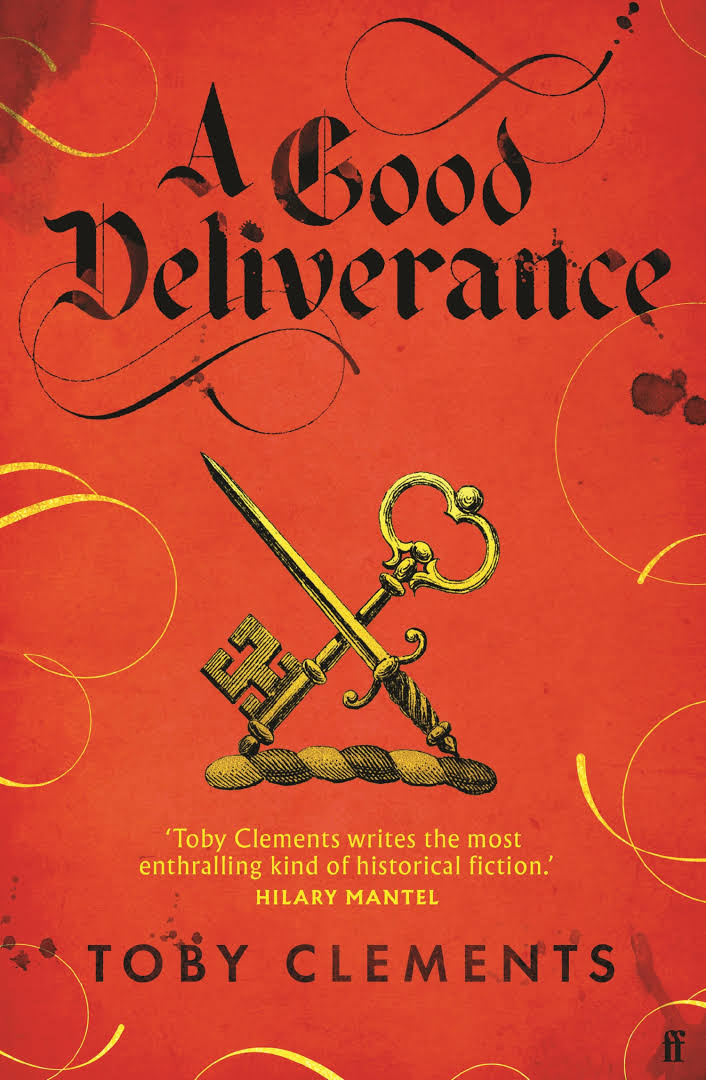
 The world of King Arthur and his Knights of the Round Table is filled with stories of adventures and romance. Many authors have tried to tell these tales in a way that will allow their books to live for centuries, but none were more successful than Sir Thomas Malory and his book Le Morte Darthur. King Arthur, Lady Guinevere, Sir Lancelot, Merlin, and Sir Gawain embark on numerous adventures including the Lady of the Lake, Camelot, the sword Excalibur, and the Quest for the Holy Grail. These tales were the epitome of chivalry and valiant knights in shining armor, but the author behind them was anything but perfect. Sir Thomas Malory has had his fair share of time in a prison cell. Who was Sir Thomas Malory and why did his book about King Arthur and the Knights of the Round Table still resonate with readers centuries after it was written? In his latest novel, “A Good Deliverance,” Toby Clements hopes to reveal the truth of this famous author whose story has been overshadowed by the myths he wrote down in his legendary tome.
I would like to thank Faber Books for sending me a copy of this novel. I have heard about the book Morte Darthur, as it is considered one of the most prominent texts about King Arthur, but when it comes to the author himself, I know nothing about his life. When I heard about this novel, the premise intrigued me enough to read it.
Clements begins his novel with Malory’s surprise arrest at a very old age. Malory is unsure why he has returned to prison as he has tried to live an honest life after he spent some time in the same cell over 20 years ago. He is at the mercy of King Edward IV. While imprisoned, waiting for word from his lawyer, Malory befriends a boy who is the son of one of the jailers named Brunt and he tells the young man his tale. Malory was the son of a knight who fought under King Henry IV in the search for the Welsh miscreant Owen Glendower. We get to see Malory become a knight and his fascination for King Arthur and the Knights of the Round Table that would become his magnum opus Morte Darthur. We see Malory’s moments of glory and utter defeat, his rivals, and the women that he admired from afar. Through Malory, we get to see how England changed, starting with Henry IV to his son Henry V, the young King Henry VI, and finally the first Yorkist King Edward IV. We also get to witness events such as the year of the 3 popes, the coronation of Henry V, Agincourt, the death of Jeanne d’Arc, the coronations of King Henry VI, and the beginning of the conflict known as the Wars of the Roses.
In a way, Clements created his Arthurian legend for Sir Thomas Malory with the way he chose to write this novel. However, it was the structure of this novel that bothered me when I was reading it, specifically the bullet points that Clements chose to include. When I am reading a novel, I want to read a cohesive piece, but the bullet points made it feel messy, which was probably used to simulate Malory as a storyteller figuring out what he wants to say to his young audience and what he wants to omit, however, it was just irritating for me to read. I don’t mind bullet points in nonfiction books, but it just doesn’t work for me in historical fiction. As for the main character, Sir Thomas Malory is okay, but there were moments where he rubbed me the wrong way. I did, however, enjoy his relationship with the boy.
Overall, it was a decent book. I think there were elements that I didn’t enjoy entirely, but the way Clements was able to incorporate the changes of the 15th century with the Arthurian legends to tell the story of this author was very unique. I think if you are a fan of Sir Thomas Mallory, the Arthurian legends, or the events of the 15th century, you might enjoy, “A Good Deliverance” by Toby Clements.
 I am pleased to welcome Anna Chant to my blog today to share a spotlight for her novel, “Courage of the Conquered.” I would like to thank The Coffee Pot Book Club and Anna Chant for allowing me to be part of this blog tour.
 Blurb:
 Author Bio
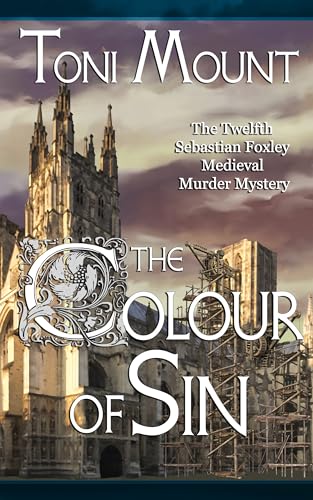 The year is 1480 and King Edward IV sits firmly on the throne, yet the Lancasterian threat lurks in the shadow. Things have taken a drastic turn for Sebastian Foxley’s workshop and his family. It has been months since a fire destroyed the Foxley home and workshop, which also left his brother Jude injured. Seb has decided now would be the perfect time to go on a pilgrimage to Canterbury to pray at the shrine of St Thomas Becket. The pilgrimage had its perils on paper before even setting out on the road. What terrors await Seb and his monty crew of pilgrims and can they survive the trip? Toni Mount’s twelfth Sebastian Foxley Medieval Murder, “The Colour of Sin,” takes our hero on a journey beyond the streets of his beloved London into a wider world full of intrigue.
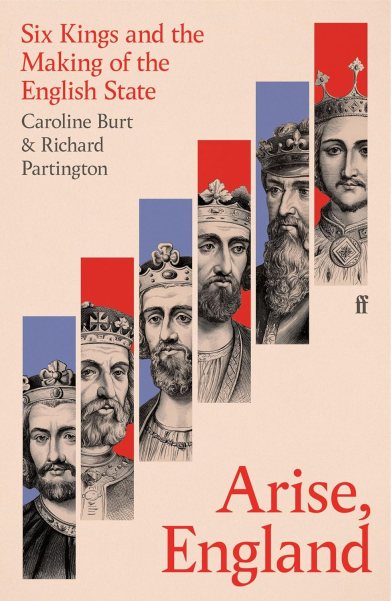 Like many other countries, England has been through growing pains when it comes to reforming its political, military, and judicial systems. None more so than the pains of the medieval period, specifically from 1199 to 1399. In those two centuries, there were six Plantagenet kings, each with a different style of being king and a different way of changing England with each reign. We often think that the biggest change to England’s political history during this time was the Magna Carta, but in fact, that was only just the beginning. Caroline Burt and Richard Partington have combed the archives to do a deep dive into each reign of these Plantagenet kings, examining the political and judicial changes that happened in a short period. Their comprehensive book is entitled, “Arise, England: Six Kings and the Making of the English State.”
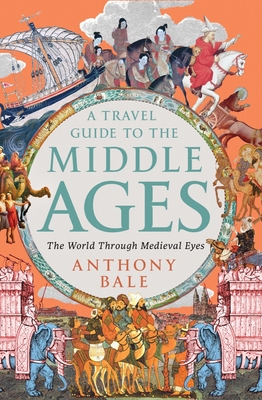 When we think about travel in the Middle Ages, we often think of wealthy nobles or those who went to war fighting in foreign lands. However, that is merely a misconception. Travel was open to everyone, from the wealthy, the poor, the pious pilgrims, and the merchants. Each group had their reasons for traveling to different countries. Still, they all wrote down their experiences to tell future generations about their encounters and encourage others to explore the world, both the known and unknown parts. Anthony Bale has compiled many of these accounts into one comprehensive book called, “A Travel Guide to the Middle Ages: The World Through Medieval Eyes.”
 The field of history for centuries has been focused on men and the struggles that mankind has had to endure for society to survive. We tend to get only a mere glimpse at the lives of women when they are next to powerful men. Some will write about women, mostly royal women, who lead extraordinary lives and left an imprint on the past. But what about those who lived ordinary lives? What about the women who lived daily, fighting to survive every obstacle? What can we learn about history through the eyes of ordinary women? Philippa Gregory has taken on the mammoth task of trying to answer these questions and more with her tome, “Normal Women: Nine Hundred Years of Making History.”
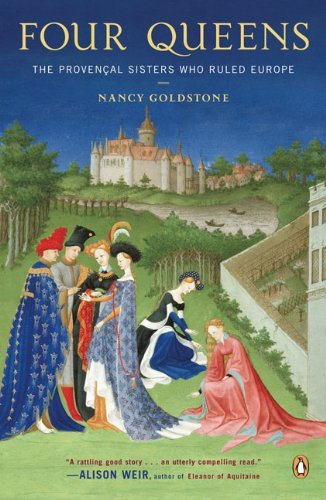 In southeastern France, there is a region called Provence, known today for its lavender fields and its vineyards. In 13th-century France, Provence would be known as the birthplace of four queens who dominated European politics. The daughters, Marguerite, Eleanor, Sanchia, and Beatrice were the daughters of Raymond Berenger V Count of Provence, and his wife Beatrice of Savoy. They would become the queens of France, England, Germany, and Sicily. While the sisters were known for their beauty, how they acted as queen consorts for their husbands cemented their legacies in history. Nancy Goldstone tells the tale of these remarkable siblings and how they changed European history in her book, “Four Queens: The Provencal Sisters Who Ruled Europe.”
 Castles, the monuments of medieval times, are buildings that hold many tales. Tales of sieges and sorrow, triumphs and tribulations. Through the centuries, their stones and foundations held many secrets. Some of the stories are famous, but most are hidden in the shadows of time and are hidden in ruins. Although castles exist in numerous countries and are centuries old, the castles of medieval England tell a story of a country facing turmoil and changing European and world history forever. Malcolm Hislop, a historian and researcher who specializes in architecture and archaeology, has written a single book exploring every medieval castle and its original architecture entitled, “A Guide to the Medieval Castles of England.”
 England is a nation that is rich in history and conflicts galore. Through the centuries, England has seen so much change. Many of us know the stories of the medieval and the Tudor kings and queens of England, covered in numerous books, but Peter Ackroyd has taken this concept a step forward. Ackroyd embarked on an epic quest to chronicle the history of England from its prehistoric origins to the modern age. In “Foundation: The History of England From Its Earliest Beginnings to the Tudors,” Peter Ackroyd begins his epic journey into the past to explore the origins of English history.
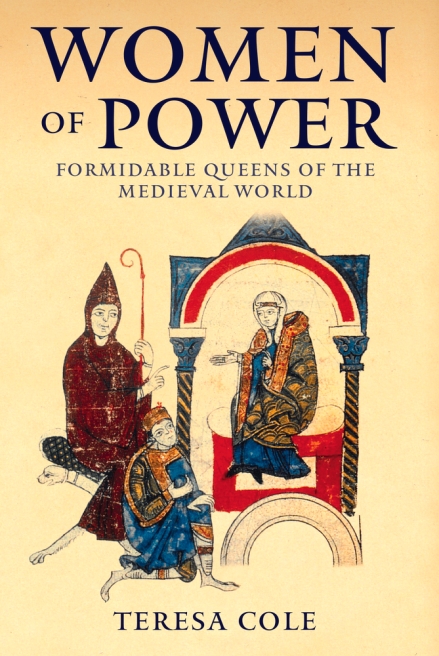 When we think about medieval women, we often think about very pious figures who relied on men, had numerous children, and would often fade into obscurity when they died. While this would be the ultimate fate for many women, it was not so for those close to thrones worldwide. In times of war and political upheaval, the daughters, the wives, and the queens picked up the pieces and patched their respective kingdoms back together. In her latest book, “Women of Power: Formidable Queens of the Medieval World,” Teresa Cole has chosen a select group of women to highlight her point about the strength of women who held power in the Middle Ages.
 Adventures of a Tudor Nerd