

I am pleased to welcome Carolyn Hughes to my blog today to share an excerpt from her novel, “The Merchant’s Dilemma.” I would like to thank Carolyn Hughes and The Coffee Pot Book Club for allowing me to be part of this blog tour.
From Chapter 2
Riccardo had found himself distracted most of the morning, even when in conversation with his client. It was fortunate there had been only one so, once they had shaken hands on an agreement, he was able to spend some time alone, walking and thinking through the situation, and what and how to tell Bea.
His heart swelled whenever he thought of her. It had never done so at the thought, or even sight, of Katherine. She was not an unattractive woman, but her nervous nature and seeming lack of interest in him discouraged him from even trying to love her. Even when he was lying next to her in bed, he had to steel himself to turn to face her. When he put out a hand to touch her breast, she would flinch, then when he rolled on top of her to complete the task – for “task” it did seem to be – Katherine would whimper, not with pleasure, he was certain, but with urgent longing for it to be over. It was scarcely surprising the so-called act of love with his wife was one he came to dread and even balk at. In truth, it was a wonder little Oliver had ever been conceived.
It had not been that way in those few months before his marriage when Bea had lived here with him. Their love-making had been full of delight and pleasure for them both. In that short time, he had grown to love her deeply. When he was obliged to marry Katherine, and effectively abandon the woman he adored, he had been distraught. He blamed himself, both then and now, for being the cause of Bea leaving Winchester. And, therefore, of the terrible events in Meonbridge that at length brought her back to the city, but as a homeless beggar.
These past three months had been the happiest he could remember for a long while. His worry about Bea’s health aside, their easy, loving relationship – albeit they were sleeping apart until she was fully well – made each day one to look forward to. And to make his happiness complete surely Bea should no longer continue as his mistress, but become his wife.
Yet, marrying her would not be easy. For, if his father learned of Bea’s former life, he would refuse to sanction marriage to her and would almost certainly deny him his inheritance.
Finding himself in the cathedral precinct, Riccardo slipped into the building. At the main west entrance, scaffolding had been raised, and masons were dismantling some of the ancient stonework. He had heard that Bishop Edington had plans to alter the west end of the building, from the ancient Romanesque original to a more modern style. He looked forward to seeing their fine cathedral transformed into an even more magnificent monument to God, albeit he regretted the dust and noise that was the inevitable result. A result that would continue for many years.
But, despite the noise outside, inside was peaceful enough, if chilly, in stark contrast with the gentle warmth of the April day. He was not entirely alone: a few people, mostly aged women, were standing or kneeling before the high altar, mumbling prayers. He approached the altar too, but kept a distance. He dropped down onto one knee for a moment, then stood up again and, with bowed head, muttered a few prayerful words himself, asking for some sort of guidance in the awkward conversation he had ahead of him.
In truth, he did not feel he received an answer to his entreaty but hoped it might come to him if he thought the matter over a little further. Despite the coldness of the vast, high building, he made his way to the south transept, where there was a stone bench he could sit on for a while.
He returned to thinking about his father. Would it matter if he was deprived of his inheritance? As the elder of the two Marchaunt sons, he was entitled to the principal Marchaunt estate and the greater proportion of his father’s wealth. Yet the money was not important, nor even the artifacts his father had acquired over the years, magnificent as many of them were. He had made such a success of his own business, he was more than prosperous enough to maintain a wife and family.
No, what really mattered had nothing to do with money.
His first concern was a matter of the heart. He really wanted to own Chilcumbe Hall, the splendid manor house a few miles outside the city. He had been looking forward to the time when he could raise his own children in the place where he and his brother spent such a happy childhood. How disappointing it would be if he lost that opportunity!
But the second concern was even more important. His father was much admired and respected amongst Winchester’s great and good. He had been a master of the guild, several times a city alderman, and was once elected mayor. Riccardo’s own success as a businessman was due partly to being his father’s son. If he was not his father’s principal heir – if he was known to have been cast aside – he would be disgraced, his standing in society ruined.
There was so much to lose: not just the legacy, and his status as his father’s heir, but everything he had worked for, and even his authority to continue his career.
He closed his eyes a moment, contemplating what such a loss might mean. If all that happened, he supposed he could leave Winchester, and try to establish himself again elsewhere. But the prospect of doing that, at his age, was daunting. And not what he wanted.
Until three months ago, he had presumed he would at length find another wife, a woman from another respectable city family. Hopefully one with a pleasanter disposition than poor Katherine. But he had not been in any hurry. He had expected to find his bride himself, and would not approach his father for advice. Although he might have asked Mama if she knew of any suitable young women looking for a husband.
But that was all before he discovered Bea collapsed on his doorstep. Now, the only woman he wanted as his wife, and the mother to his children, was her. Yet, either marrying her or living with her in a sinful state, accepting their children would be illegitimate, would surely enrage his father. He would simply consider it unacceptable for his heir to sire children upon a woman such as Bea, whether or not they were legitimately man and wife.
Riccardo sat upright and flexed his shoulders. His back was aching from the cold seeping from the stone bench up through his clothes. He pushed himself to his feet, ready to go home.
So, what was the answer?
In truth, it was obvious, if disagreeable. He refused to give up Bea, but the consequences of losing his father’s favour were so serious, the only answer was to wait until the old man was no longer able to cast him aside.
He had to wait until his father died.
 Blurb
Blurb
1362. Winchester. Seven months ago, accused of bringing plague and death from Winchester, Bea Ward was hounded out of Meonbridge by her former friends and neighbors. Finding food and shelter where she could, she struggled to make her way back to Winchester again.
Yet, once she arrived, she wondered why she’d come.
For her former lover – the love of her life – Riccardo Marchaunt, had married a year ago. And she no longer had the strength to go back to her old life on the streets. Frail, destitute, and homeless, she was reduced to begging. Then, in January, during a tumultuous and destructive storm, she found herself on Riccardo’s doorstep. She had no plan, beyond hoping he might help her, or at least provide a final resting place for her poor body.
When Bea awakes to find she’s lying in Riccardo’s bed once more, she’s thankful, thrilled, but mystified. But she soon learns that his wife died four months ago, along with their newborn son, and finds too that Riccardo loves her now as much as he ever did, and wants to make her his wife. But can he? And, even if he can, could she ever really be a proper merchant’s wife?
Riccardo could not have been more relieved to find Bea still alive when he thought he had lost her forever. She had been close to death but is now recovering her health. He adores her and wants her to be his wife. But how? His father would forbid such an “unfitting” match, on pain of denying him his inheritance. And what would his fellow merchants think of it? And their haughty wives?
Yet, Riccardo is determined that Bea will be his wife. He has to find a solution to his dilemma… With the help of his beloved mother, Emilia, and her close friend, Cecily, he hatches a plan to make it happen.
But even the best-laid plans sometimes go awry. And the path of love never did run smooth…
The Merchant’s Dilemma is a companion novel to the main series of MEONBRIDGE CHRONICLES, and continues the story of Bea and Riccardo after the end of the fourth Chronicle, Children’s Fate. It is a little more romantic and light-hearted than the other Chronicles but, if you’ve enjoyed reading about the lives of the characters of Meonbridge, you will almost certainly enjoy reading The Merchant’s Dilemma too!
Buy Links:
This title is available to read on #KindleUnlimited.
Universal Link: https://books2read.com/u/3RY7Yj
Amazon UK: https://www.amazon.co.uk/Merchants-Dilemma-Meonbridge-Chronicles-Companion-ebook/dp/B0CJJKJFT6/
Amazon US: https://www.amazon.com/Merchants-Dilemma-Meonbridge-Chronicles-Companion-ebook/dp/B0CJJKJFT6/
Amazon AU: https://www.amazon.com.au/Merchants-Dilemma-Meonbridge-Chronicles-Companion-ebook/dp/B0CJJKJFT6/
Amazon CA: https://www.amazon.ca/Merchants-Dilemma-Meonbridge-Chronicles-Companion-ebook/dp/B0CJJKJFT6/
 Author Bio:
Carolyn Hughes has lived much of her life in Hampshire. With a first degree in Classics and English, she started working life as a computer programmer, then a very new profession. But it was technical authoring that later proved her vocation, word-smithing for many different clients, including banks, an international hotel group, and medical instruments manufacturers.
Although she wrote creatively on and off for most of her adult life, it was not until her children flew the nest that writing historical fiction took center stage. But why historical fiction? Serendipity!
Seeking inspiration for what to write for her Creative Writing Masters, she discovered the handwritten draft, beginning in her twenties, of a novel, set in 14th-century rural England… Intrigued by the period and setting, she realized that, by writing a novel set in the period, she’d be able to both learn more about the medieval past and interpret it, which seemed like a thrilling thing to do. A few days later, the first Meonbridge Chronicle, Fortune’s Wheel, was underway.
Six published books later (with more to come), Carolyn does now think of herself as a Historical Novelist. And she wouldn’t have it any other way…
Carolyn has a Master’s in Creative Writing from Portsmouth University and a PhD from the University of Southampton.
You can connect with Carolyn through her website http://www.carolynhughesauthor.com and social media.
Author Links:
Website: http://www.carolynhughesauthor.com
Twitter: https://twitter.com/writingcalliope
Facebook: https://www.facebook.com/CarolynHughesAuthor/
Book Bub: https://www.bookbub.com/profile/carolyn-hughes
Amazon Author Page: https://www.amazon.co.uk/Carolyn-Hughes/e/B01MG5TWH1
Goodreads: https://www.goodreads.com/author/show/16048212.Carolyn_Hughes
 I am pleased to welcome James Gault to my blog to share a bit of information about his novel, “King’s Warrior.” I want to thank James Gault and The Coffee Pot Book Club for allowing me to be part of this blog tour.
  Blurb:
 Author Bio:
 Today, I am pleased to welcome to my blog Anna Belfrage to promote the audiobook for her novel, “His Castilian Hawk.” Thank you, Anna Belfrage and The Coffee Pot Book Club, for allowing me to participate in this tour.
  Buy Links:
  Author Bio:
 When we think about royal relationships from the past, we do not associate them with love; it is more about cementing power. Princes and kings knew how much was at stake, so they tended to have wives for politics and produce legitimate heirs that would inherit their kingdoms. For matters of love and lust, kings and princes would have mistresses, either of noble birth or lower, on the side. These women have been deemed whores and homewreckers but is that a fair assessment of their legacies? Julia A. Hickey takes a closer look at these misunderstood mistresses in her latest book, “Medieval Royal Mistresses: Mischievous Women who Slept with Kings and Princes.”
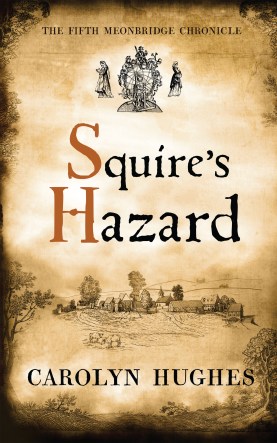
 Today, I am pleased to welcome Carolyn Hughes to my blog to discuss the topic, “what makes a historical novel seem ‘authentic’” as part of the blog tour for her latest novel, “Squire’s Hazard,” the fifth book in her Meonbridge Chronicle series. Thank you, The Coffee Pot Book Club and Carolyn Hughes, for allowing me to be part of this blog tour.
  Blurb:
 Author Bio
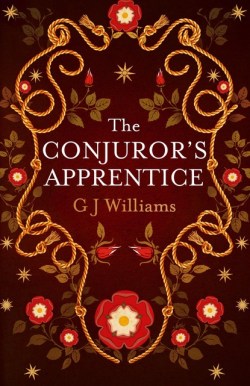
 I am pleased to welcome G.J. Williams to my blog today to share an excerpt from her latest novel, “The Conjuror’s Apprentice.” I want to thank G.J. Williams and The Coffee Pot Book Club for allowing me to be part of this blog tour.
  Blurb
Blurb Author Bio
  Medieval Europe was inundated with strong rulers and dominant figures who made a difference in how the policies of certain countries were formed. We tend to focus on the male figures, from kings to lords and rebels, when we study medieval European history. Still, the women in their lives significantly influenced how their countries were governed. Although many women stood by the side of their husbands and didn’t make much of an impact on European history, some women chose to stand out from the crowd and make a name for themselves. Rebecca Holdorph has chosen to highlight a handful of these dynamic women throughout medieval Europe in her book, “Women in the Medieval Court: Consorts and Concubines.”
 When we think about the more intimate moments in the medieval period of European history, a few misconceptions and myths come to mind, thanks to historical fiction and medieval movies. The idea that girls as young as twelve were married off to much older men was the norm, and there were such things as chastity belts. Everyone was filthy and smelled awful, so they only married in the spring when they would take their annual baths. And the brilliant idea that the wealthiest lords of the village were able to have their way with the bride on her wedding day. The latest book by Kathryn Warner, “Sex and Sexuality in Medieval England,” aims to eliminate these myths to reveal the truth of the intimate lives of those who lived during the medieval period.
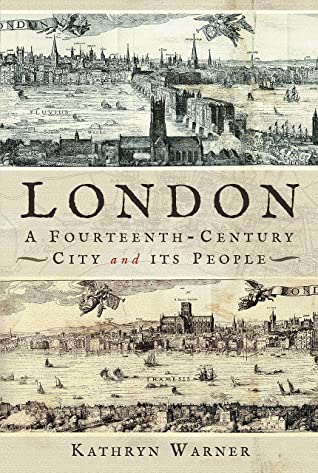 The city of London has been around for over two millennia, and with each passing century, it changes ever so slightly. From the Roman Londinium to medieval London, we see the city grow from a settlement of between 30,000 to 60,000 people to a bustling town of around 80,000 to 100,000 people. With growth comes changes to the city that would become the capital of England, and one of the most significant periods of transformation for the capital was during the fourteenth century. What was life like in fourteenth-century London for the average citizen of this sprawling city? Kathryn Warner attempts to answer this question in her latest nonfiction book, “London, A Fourteenth-Century City and its People.”
 The year is 1480. Intrigue and murder lurk everywhere at the Palace of Westminister, where no one is safe. A mysterious letter and the men who want the letter back lead to the murder of one of the clerks from the Office of the King’s Secretary. Under the orders of powerful men at court, including King Edward IV himself, Seb Foxley must join his wayward brother Jude as one of Secretary Oliver’s clerks to uncover the truth of the conspiracy against the crown. Can the brothers work together to decode the truth and save the life of the king’s beloved heir in time? Seb Foxley’s latest adventure is told in book ten of Toni Mount’s Sebastian Foxley Medieval Murder Mystery series, “The Colour of Rubies.”
 Adventures of a Tudor Nerd