Book Review: “Four Queens: The Provencal Sisters Who Ruled Europe” by Nancy Goldstone

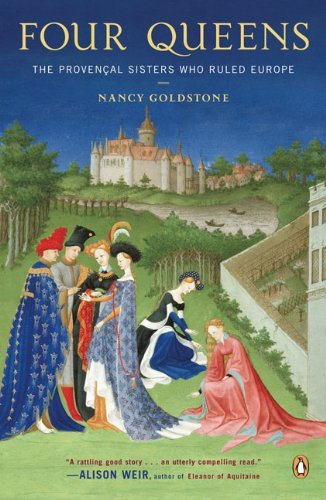
Four QueensIn southeastern France, there is a region called Provence, known today for its lavender fields and its vineyards. In 13th-century France, Provence would be known as the birthplace of four queens who dominated European politics. The daughters, Marguerite, Eleanor, Sanchia, and Beatrice were the daughters of Raymond Berenger V Count of Provence, and his wife Beatrice of Savoy. They would become the queens of France, England, Germany, and Sicily. While the sisters were known for their beauty, how they acted as queen consorts for their husbands cemented their legacies in history. Nancy Goldstone tells the tale of these remarkable siblings and how they changed European history in her book, “Four Queens: The Provencal Sisters Who Ruled Europe.”

I am always looking for a new history story to familiarize myself with to read and grow as a history nerd. I was familiar with Eleanor of Provence as she is mentioned in biographies about Henry III, but her sisters were a complete mystery to me and so when I heard about this book and its exploration into the sister queens and 13th-century European history, it intrigued me.

Goldstone begins with a story of how the English King Henry III met with the French King Louis IX in Paris during Christmas 1254, and this extraordinary meeting was orchestrated by two sisters, Eleanor and Marguerite of Provence. We then jump back in time to the childhood of the four sisters in Provence, full of wine and songs of the troubadours. At the heart of this glamorous court was Raymond Berenger V and Beatrice of Savoy, Count and Countess of Provence, along with their four daughters; Marguerite, Eleanor, Sanchia, and Beatrice. All around Provence, wars raged, and without a male heir, Raymond Berenger V and his beloved Provence risked the wars coming into his home and taking everything he loved. What is a father to do, but make exceptional matches for his daughters?

Marguerite, the oldest daughter, was married to the young Louis IX of France, thanks to the deal made by her father and her new mother-in-law, the formidable Blanche of Castile, the White Queen. Guillaume of Savoy, the sisters’ uncle, decided to arrange the next marriage, which was between Eleanor of Provence and the King of England, Henry III, who had been ruling a turbulent nation for over 20 years. The two eldest sisters would help weather civil wars and crusades to allow the dynasties that they married to survive.

The younger sisters, Sanchia and Beatrice, married men who were also younger siblings and were fighting for their rights to rule in Europe. Sanchia married Richard, Earl of Cornwall, the younger brother of Henry III. They would become King and Queen of Germany for only a brief time, but they would pave the way for the Habsburgs. Finally, Beatrice married the younger brother of Louis IX, Charles Count of Anjou; they would soon become the King and Queen of Sicily.

In the world of 13th-century Europe which was dominated by kings and popes fighting crusades and civil wars, it was the women at home and their husbands’ sides that helped stabilize nations. Marguerite, Eleanor, Sanchia, and Beatrice were fierce women who were loyal to their own families even if that meant that they had to step in the way of their sister’s glory. Goldstone can weave together a narrative of all four siblings that is compelling, engaging, and academically fascinating. If you want a book that explores the familial bonds of four sisters and the lengths that they had to go to to protect what they loved the most, I highly suggest you read, “Four Queens: The Provencal Sisters Who Ruled Europe” by Nancy Goldstone.

Book Review: “A Guide to the Medieval Castles of England” by Malcolm Hislop

A Guide to Medieval Castles of EnglandCastles, the monuments of medieval times, are buildings that hold many tales. Tales of sieges and sorrow, triumphs and tribulations. Through the centuries, their stones and foundations held many secrets. Some of the stories are famous, but most are hidden in the shadows of time and are hidden in ruins. Although castles exist in numerous countries and are centuries old, the castles of medieval England tell a story of a country facing turmoil and changing European and world history forever. Malcolm Hislop, a historian and researcher who specializes in architecture and archaeology, has written a single book exploring every medieval castle and its original architecture entitled, “A Guide to the Medieval Castles of England.”

I would like to thank Pen and Sword Books and Net Galley for sending me a copy of this book. I am somewhat of an architecture novice. I did take a class about the history of art and architecture when I was in college. When I saw the title of this book, I was hoping that he would dive into the terminology and the history of how each castle changed over time. Hislop does his best to deliver just that for his readers.

Hislop begins by explaining the premise behind this book and what the time range will be for a castle to be considered medieval, which is if it was built between 1050 and 1500, which means this book covers over 400 castles. It is quite a mammoth task to cover that many castles and so much archeology, but Hislop does include a sort of glossary to help his readers traverse the complex world of medieval architecture. I do wish that Hislop included terms like motte and bailey in his glossary to help distinguish the different types of castles for novices.

The bulk of this book is focused on the gazetteer, which is simply a list of castles from A to W. Each entry explains where the castle is located, whether it is open to the public or not, a brief history of the occupants and builders of the castle, and finally detailed descriptions of the castle. While I do appreciate the effort that it took to write this book if you are not in England or a writer of historical fiction or nonfiction, this particular guide may seem a bit dry as a read. I feel like if I took a trip to England, I might take this book along with me as a starting point for which castles I should visit, but I think it might not be the best book for casual readers. It’s a resource and not necessarily a riveting read and that may be because Hislop’s approach is more academic than casual history.

Overall, it is an academically sound book but it is not a casual read. This is a book for those who are architecture aficionados, castle nerds, medieval academics, and those who want to explore the ruins of England’s past. If this sounds like you, I recommend you read, “A Guide to the Medieval Castles of England” by Malcolm Hislop.

Book Review: “Foundation: The History of England From Its Earliest Beginnings to the Tudors” by Peter Ackroyd

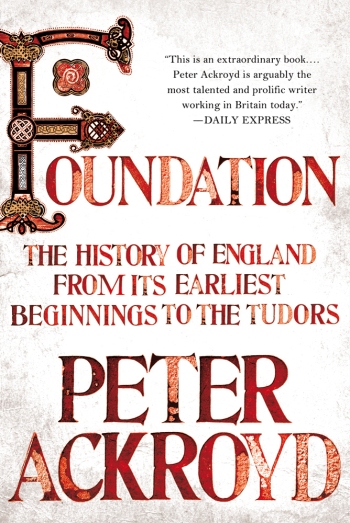
FoundationEngland is a nation that is rich in history and conflicts galore. Through the centuries, England has seen so much change. Many of us know the stories of the medieval and the Tudor kings and queens of England, covered in numerous books, but Peter Ackroyd has taken this concept a step forward. Ackroyd embarked on an epic quest to chronicle the history of England from its prehistoric origins to the modern age. In “Foundation: The History of England From Its Earliest Beginnings to the Tudors,” Peter Ackroyd begins his epic journey into the past to explore the origins of English history.

This book is one that I have seen every time I go to a bookstore and look at the history nonfiction section. I have heard great things about Ackroyd and this series, however, I have yet to read any of his books. It was always an intriguing book to me, but it was one that I never read until now.

Ackroyd has decided to begin his book with one of the most ancient sites in all of England, Stonehenge, explaining that before the first stone was set in Stonehenge, the origins of England were centuries old. We travel through the Stone Age, the Bronze Age, the Iron Age, and into Roman Britain before we dive into the time of the Anglo-Saxons and the Viking invasions. There is a lot of history to cover in less than a hundred pages, but Ackroyd can get his point across about how much change England went through during that time and that it continued to grow throughout the following centuries.

We see the impact that the Norman Conquest and William the Conqueror’s reign. The fall of the Normans with the death of King Stephen led to the rise of the Plantagenets and the reign of King Henry II. It was the Plantagenets that Ackroyd focuses the bulk of this book on as the dynasty lasted over 300 years and witnessed much change. From the Crusades, the Hundred Years War, and the Wars of the Roses, to the Black Death, rebellions, and religious changes, the Plantagenets saw England through major highs and lows. It was not just the monarchs that Ackroyd highlights in this book, he also examines how normal life changed with each dynasty and through the centuries, which adds a bit of depth to his examination of the past. Ackroyd concludes with the fall of Richard III and the rise of Henry VII and the Tudor dynasty. I wish Ackroyd would have waited until his next book to discuss the reign of Henry VII, but it is a minor qualm in the long run.

Overall, I found this an enjoyable and informative read. This is not only a tale of warring kings but a story of the people of England and what makes England so unique. A story whose origins are centuries old, but are rich and vivid in details. I look forward to seeing how Ackroyd will chronicle the Tudors and the rest of England’s history. If you want a book that explores as much of the beginnings of England’s story through multiple dynasties and dramatic changes, I would suggest you read, “Foundation: The History of England From Its Earliest Beginnings to the Tudors” by Peter Ackroyd.

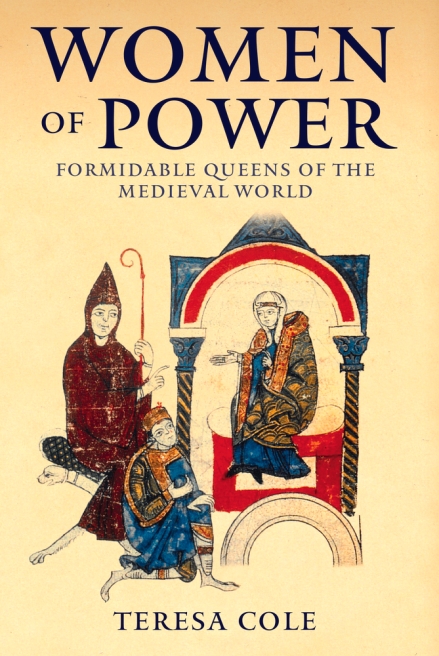
Book Review: “Women of Power: Formidable Queens of the Medieval World” by Teresa Cole

Women of PowerWhen we think about medieval women, we often think about very pious figures who relied on men, had numerous children, and would often fade into obscurity when they died. While this would be the ultimate fate for many women, it was not so for those close to thrones worldwide. In times of war and political upheaval, the daughters, the wives, and the queens picked up the pieces and patched their respective kingdoms back together. In her latest book, “Women of Power: Formidable Queens of the Medieval World,” Teresa Cole has chosen a select group of women to highlight her point about the strength of women who held power in the Middle Ages.

I would like to thank Amberley Publishing for sending me a copy of this book. When I heard about this book, I had an inkling about which women would be included in this conversation, but I wanted to see who else Cole included in her book and if she decided to stay in England or venture off to other countries.

The group of powerful women that Cole has chosen to highlight in this book are Emma of Normandy, Matilda of Tuscany, Empress of Matilda, Matilda of Boulogne, Melisende of Jerusalem and her sisters of the Outremer, and Eleanor of Aquitaine. In terms of history, it is a span of close to three hundred years, covering everything from the Viking invasions of England, the Anarchy, the Holy Roman Empire vs the Papacy, the Crusades, and the reign of Henry II. It is a lot to cover in one book, but what Cole does well is that she has chosen women whose stories are interconnected to create a glimpse of the political environment in Europe and the Middle East during this time.

Before reading this book, I knew quite a bit about Emma of Normandy, Empress Matilda, Matilda of Boulogne, and Eleanor of Aquitaine, so those sections felt like a review for me. The stories of Matilda of Tuscany and Melisende of Jerusalem with her sisters of the Outremer were filled with new information for me and while I thoroughly enjoyed learning about Melisende of Jerusalem and the Outremer, I had such a struggle reading about Matilda of Tuscany.

There were so many popes, anti-popes, and Holy Roman Emperors during that period in which Matilda ruled Tuscany, I wish Cole had included some sort of chart to make it easier to follow. I also wish that Cole spent a little bit more time focusing on the women instead of their male counterparts in the chapters to truly highlight their strengths because there were points where I felt like the women were being lost in their chapters.

Overall, I think Cole does a decent job highlighting the women and the periods in this book. It does show a glimpse into the hardships women had to endure to hold onto power in the medieval world. If you want to explore the Middle Ages with some new historical figures who left their marks on the past, I recommend you read, “Women of Power: Formidable Queens of the Medieval World” by Teresa Cole.

Guest Post: “Excerpt from ‘The Merchant’s Dilemma’ by Carolyn Hughes”

The Merchant's Dilemma Tour Banner

I am pleased to welcome Carolyn Hughes to my blog today to share an excerpt from her novel, “The Merchant’s Dilemma.” I would like to thank Carolyn Hughes and The Coffee Pot Book Club for allowing me to be part of this blog tour. 

From Chapter 2

Riccardo had found himself distracted most of the morning, even when in conversation with his client. It was fortunate there had been only one so, once they had shaken hands on an agreement, he was able to spend some time alone, walking and thinking through the situation, and what and how to tell Bea.

His heart swelled whenever he thought of her. It had never done so at the thought, or even sight, of Katherine. She was not an unattractive woman, but her nervous nature and seeming lack of interest in him discouraged him from even trying to love her. Even when he was lying next to her in bed, he had to steel himself to turn to face her. When he put out a hand to touch her breast, she would flinch, then when he rolled on top of her to complete the task – for “task” it did seem to be – Katherine would whimper, not with pleasure, he was certain, but with urgent longing for it to be over. It was scarcely surprising the so-called act of love with his wife was one he came to dread and even balk at. In truth, it was a wonder little Oliver had ever been conceived.

It had not been that way in those few months before his marriage when Bea had lived here with him. Their love-making had been full of delight and pleasure for them both. In that short time, he had grown to love her deeply. When he was obliged to marry Katherine, and effectively abandon the woman he adored, he had been distraught. He blamed himself, both then and now, for being the cause of Bea leaving Winchester. And, therefore, of the terrible events in Meonbridge that at length brought her back to the city, but as a homeless beggar. 

These past three months had been the happiest he could remember for a long while. His worry about Bea’s health aside, their easy, loving relationship – albeit they were sleeping apart until she was fully well – made each day one to look forward to. And to make his happiness complete surely Bea should no longer continue as his mistress, but become his wife.

Yet, marrying her would not be easy. For, if his father learned of Bea’s former life, he would refuse to sanction marriage to her and would almost certainly deny him his inheritance.

Finding himself in the cathedral precinct, Riccardo slipped into the building. At the main west entrance, scaffolding had been raised, and masons were dismantling some of the ancient stonework. He had heard that Bishop Edington had plans to alter the west end of the building, from the ancient Romanesque original to a more modern style. He looked forward to seeing their fine cathedral transformed into an even more magnificent monument to God, albeit he regretted the dust and noise that was the inevitable result. A result that would continue for many years.

But, despite the noise outside, inside was peaceful enough, if chilly, in stark contrast with the gentle warmth of the April day. He was not entirely alone: a few people, mostly aged women, were standing or kneeling before the high altar, mumbling prayers. He approached the altar too, but kept a distance. He dropped down onto one knee for a moment, then stood up again and, with bowed head, muttered a few prayerful words himself, asking for some sort of guidance in the awkward conversation he had ahead of him.

In truth, he did not feel he received an answer to his entreaty but hoped it might come to him if he thought the matter over a little further. Despite the coldness of the vast, high building, he made his way to the south transept, where there was a stone bench he could sit on for a while. 

He returned to thinking about his father. Would it matter if he was deprived of his inheritance? As the elder of the two Marchaunt sons, he was entitled to the principal Marchaunt estate and the greater proportion of his father’s wealth. Yet the money was not important, nor even the artifacts his father had acquired over the years, magnificent as many of them were. He had made such a success of his own business, he was more than prosperous enough to maintain a wife and family.

No, what really mattered had nothing to do with money.

His first concern was a matter of the heart. He really wanted to own Chilcumbe Hall, the splendid manor house a few miles outside the city. He had been looking forward to the time when he could raise his own children in the place where he and his brother spent such a happy childhood. How disappointing it would be if he lost that opportunity!

But the second concern was even more important. His father was much admired and respected amongst Winchester’s great and good. He had been a master of the guild, several times a city alderman, and was once elected mayor. Riccardo’s own success as a businessman was due partly to being his father’s son. If he was not his father’s principal heir – if he was known to have been cast aside – he would be disgraced, his standing in society ruined. 

There was so much to lose: not just the legacy, and his status as his father’s heir, but everything he had worked for, and even his authority to continue his career.

He closed his eyes a moment, contemplating what such a loss might mean. If all that happened, he supposed he could leave Winchester, and try to establish himself again elsewhere. But the prospect of doing that, at his age, was daunting. And not what he wanted.

Until three months ago, he had presumed he would at length find another wife, a woman from another respectable city family. Hopefully one with a pleasanter disposition than poor Katherine. But he had not been in any hurry. He had expected to find his bride himself, and would not approach his father for advice. Although he might have asked Mama if she knew of any suitable young women looking for a husband.

But that was all before he discovered Bea collapsed on his doorstep. Now, the only woman he wanted as his wife, and the mother to his children, was her. Yet, either marrying her or living with her in a sinful state, accepting their children would be illegitimate, would surely enrage his father. He would simply consider it unacceptable for his heir to sire children upon a woman such as Bea, whether or not they were legitimately man and wife. 

Riccardo sat upright and flexed his shoulders. His back was aching from the cold seeping from the stone bench up through his clothes. He pushed himself to his feet, ready to go home.

So, what was the answer? 

In truth, it was obvious, if disagreeable. He refused to give up Bea, but the consequences of losing his father’s favour were so serious, the only answer was to wait until the old man was no longer able to cast him aside.

He had to wait until his father died.

TMD-CoverBlurb

1362. Winchester. Seven months ago, accused of bringing plague and death from Winchester, Bea Ward was hounded out of Meonbridge by her former friends and neighbors. Finding food and shelter where she could, she struggled to make her way back to Winchester again.

Yet, once she arrived, she wondered why she’d come.

For her former lover – the love of her life – Riccardo Marchaunt, had married a year ago. And she no longer had the strength to go back to her old life on the streets. Frail, destitute, and homeless, she was reduced to begging. Then, in January, during a tumultuous and destructive storm, she found herself on Riccardo’s doorstep. She had no plan, beyond hoping he might help her, or at least provide a final resting place for her poor body.

When Bea awakes to find she’s lying in Riccardo’s bed once more, she’s thankful, thrilled, but mystified. But she soon learns that his wife died four months ago, along with their newborn son, and finds too that Riccardo loves her now as much as he ever did, and wants to make her his wife. But can he? And, even if he can, could she ever really be a proper merchant’s wife?

Riccardo could not have been more relieved to find Bea still alive when he thought he had lost her forever. She had been close to death but is now recovering her health. He adores her and wants her to be his wife. But how? His father would forbid such an “unfitting” match, on pain of denying him his inheritance. And what would his fellow merchants think of it? And their haughty wives?

Yet, Riccardo is determined that Bea will be his wife. He has to find a solution to his dilemma… With the help of his beloved mother, Emilia, and her close friend, Cecily, he hatches a plan to make it happen.

But even the best-laid plans sometimes go awry. And the path of love never did run smooth…

The Merchant’s Dilemma is a companion novel to the main series of MEONBRIDGE CHRONICLES, and continues the story of Bea and Riccardo after the end of the fourth Chronicle, Children’s Fate. It is a little more romantic and light-hearted than the other Chronicles but, if you’ve enjoyed reading about the lives of the characters of Meonbridge, you will almost certainly enjoy reading The Merchant’s Dilemma too!

Buy Links:

This title is available to read on #KindleUnlimited.

Universal Link: https://books2read.com/u/3RY7Yj 

Amazon UK: https://www.amazon.co.uk/Merchants-Dilemma-Meonbridge-Chronicles-Companion-ebook/dp/B0CJJKJFT6/ 

Amazon US: https://www.amazon.com/Merchants-Dilemma-Meonbridge-Chronicles-Companion-ebook/dp/B0CJJKJFT6/ 

Amazon AU: https://www.amazon.com.au/Merchants-Dilemma-Meonbridge-Chronicles-Companion-ebook/dp/B0CJJKJFT6/ 

Amazon CA: https://www.amazon.ca/Merchants-Dilemma-Meonbridge-Chronicles-Companion-ebook/dp/B0CJJKJFT6/ 

Carolyn Hughes authorAuthor Bio:

Carolyn Hughes has lived much of her life in Hampshire. With a first degree in Classics and English, she started working life as a computer programmer, then a very new profession. But it was technical authoring that later proved her vocation, word-smithing for many different clients, including banks, an international hotel group, and medical instruments manufacturers.

Although she wrote creatively on and off for most of her adult life, it was not until her children flew the nest that writing historical fiction took center stage. But why historical fiction? Serendipity!

Seeking inspiration for what to write for her Creative Writing Masters, she discovered the handwritten draft, beginning in her twenties, of a novel, set in 14th-century rural England… Intrigued by the period and setting, she realized that, by writing a novel set in the period, she’d be able to both learn more about the medieval past and interpret it, which seemed like a thrilling thing to do. A few days later, the first Meonbridge Chronicle, Fortune’s Wheel, was underway.

Six published books later (with more to come), Carolyn does now think of herself as a Historical Novelist. And she wouldn’t have it any other way…

Carolyn has a Master’s in Creative Writing from Portsmouth University and a PhD from the University of Southampton.

You can connect with Carolyn through her website http://www.carolynhughesauthor.com and social media.

Author Links:

Website: http://www.carolynhughesauthor.com 

Twitter: https://twitter.com/writingcalliope 

Facebook: https://www.facebook.com/CarolynHughesAuthor/ 

Book Bub: https://www.bookbub.com/profile/carolyn-hughes 

Amazon Author Page: https://www.amazon.co.uk/Carolyn-Hughes/e/B01MG5TWH1

Goodreads: https://www.goodreads.com/author/show/16048212.Carolyn_Hughes 

Guest Post: “King’s Warrior” by James Gault

King's Warrior Tour Banner 1I am pleased to welcome James Gault to my blog to share a bit of information about his novel, “King’s Warrior.” I want to thank James Gault and The Coffee Pot Book Club for allowing me to be part of this blog tour. 

“King’s Warrior” is the third in a series about Owerd, a decent but unsophisticated 11th-century Briton who has struggled out of poverty by dint of courage and good fortune (“wyrd” if you will). The series came about by accident, initially intended as a single volume to bring Charles Kingsley’s classic novel “Hereward the Wake” into a more digestible form for the contemporary reader. That attempt proved impossible – one cannot, I found, tinker with a classic, however challenging its rather antiquated prose. Hence a new character set in the same period of a land beset by inequity, strife, and a Norman invasion. In this book Owerd, having already established his credentials as a loyal subject and “Sea Lord” returns to the role he fills best, that of warrior.

As with any other work of historical fiction, the bare bones are laid out by historical events, at least the events and their rationale as we know them. I have found it quite a challenge to reliably determine many such facts as they relate to late 11th century England and it has been said that recorded English history only began after 1066. We probably know more of the sayings of the sages of early China such as Confucius than we do of William the Conqueror. That is perhaps not surprising when we are addressing a monarch who spoke a Norman version of French, was barely literate in Latin, and gave up trying to learn English, the mother tongue of his subdued nation.

A degree of reliance must necessarily be placed upon the anonymous authors of The Anglo-Saxon Chronicles, compiled from around 890 AD. I have done so whilst acknowledging a degree of bias in that record and its seemingly undue focus on the appointments and subsequent demise of bishops. Nonetheless, that record has provided me with a wonderful basis for the ‘bare bones’ of the story and I am grateful to those monkish chroniclers.

I have much admiration for the authors of historical non-fiction and do not envy the inevitable peer scrutiny of their documented assertions of historical fact. I suspect many such authors, though, are acknowledged scholars in their field and have access to resources beyond me such as the Bodleian Library. Oh, such envy! I live in a small coastal town in SE Australia where the local library has a history section that goes back as far as WW-1 at best. I have been forced therefore to do much research on the internet – a risky and academically maligned source but of high utility to those such as myself. My old high school atlas has provided the wherewithal for most of the geographic elements of the tale, although much inadequate use of a magnifying glass has occasionally forced me back onto the Web.

I have been as careful as possible to align the story with the events and characters of the time. It is a work of fiction, though, and I gratefully acknowledge a certain leeway allowed for such works. Fiction does provide an opening for more conjecture and imaginative description of events and a certain subjective view of the characters. I have been occasionally harsh in my characterization of the Normans and somewhat less so of the Bretons. For William himself I have taken a relatively benign view, accepting his reputation for both cruelty and mercy in equal measure.

I would wish it otherwise but accept that there will be shortcomings in my research. I have, however, enjoyed that element of the writing task immensely. As other writers in the genre will know, a week’s research might well lead to a single paragraph of text. That can still be a satisfying return on investment.

King's Warrior coverBlurb:

In 11th-century England, King William achieved almost total domination of the English and turned his attention to Scotland. Owerd, possibly the last of the Britons to be deemed ‘lord’, faces powerful enemies from all quarters. He seems to hold the king’s favor by a thread, which only serves to encourage others to try and bring him down. 

Treachery abounds as he tries to juggle multiple roles and prove himself and his men worthy warriors for the Norman king. But will his lust for a woman finally prove his undoing?

Note from the author:

11th Century men and women were just as complex beings as we are today. Owerd, the main character in these chronicles is no different. In “King’s Warrior”, the third book of the series, he goes from violence (“…the air was filled with the clash of swords, angry shouts, and screams of the injured”) to compassion (“… Owerd had rarely if ever, made love as tenderly as he did with Runa that night”) in the space of a day.

Happiness, fear, disgust, anger, pride, and jealousy all play their part in Owerd’s character but what comes to the fore is courage, with perhaps a helping hand from fate – “wyrd” if you will.

Buy Links:

This title is available to read on #KindleUnlimited.

Universal Link: https://books2read.com/u/4A27gp 

Amazon UK: https://www.amazon.co.uk/gp/product/B0CC5VH6BM

Amazon US: https://www.amazon.com/gp/product/B0CC5VH6BM

Amazon AU: https://www.amazon.com.au/gp/product/B0CC5VH6BM

Amazon CA: https://www.amazon.ca/gp/product/B0CC5VH6BM

James GaultAuthor Bio:

James is a semi-retired Naval Captain with an abiding interest in storytelling and history. He has written a few contemporary fiction stories and a history text but lately has concentrated on historical fiction. He lives in a small coastal town in SE Australia – which provides quite a challenge when addressing medieval England with the aid of an old-school atlas.

Author Links:

Twitter: https://twitter.com/@ozjimg

Facebook: https://www.facebook.com/james.gault.9421/

Instagram: https://www.instagram.com/ozjimg/

Amazon Author Page: https://www.amazon.com/author/jgault

Guest Post: “His Castilian Hawk” by Anna Belfrage- AudioBook Blast

His Castilian Hawk Tour BannerToday, I am pleased to welcome to my blog Anna Belfrage to promote the audiobook for her novel, “His Castilian Hawk.” Thank you, Anna Belfrage and The Coffee Pot Book Club, for allowing me to participate in this tour. 

Blurb:

For bastard-born Robert FitzStephan, being given Eleanor d’Outremer in marriage is an honour. For Eleanor, this forced wedding is anything but a fairy tale. 

Robert FitzStephan has served Edward Longshanks loyally since the age of twelve. Now he is riding with his king to bring Wales under English control once and for all. 

Eleanor d’Outremer—Noor to family—lost her Castilian mother as a child and is left entirely alone when her father and brother are killed. When ordered to wed the unknown Robert FitzStephan, she has no choice but to comply. 

Two strangers in a marriage bed are not accessible. Things are further complicated by Noor’s blood ties to the Welsh princes and by covetous Edith, who has warmed Robert’s bed for years. 

Robert’s new wife may be young and innocent, but he is soon to discover that she is not only spirited and proud but also brave. Because when Wales lies gasping and Edward I exacts terrible justice on the last prince and his children, Noor is determined to save at least one member of the House of Aberffraw from the English king.

Will years of ingrained service have Robert standing with his king, or will he follow his heart and protect his wife, his beautiful and fierce Castilian hawk?

His Castilian Hawk audiobook coverBuy Links: 

The Kindle ebook of this title is available to read on #KindleUnlimited.

Universal Link: http://myBook.to/HISHAWK

Audible Amazon: https://www.audible.com/pd/His-Castilian-Hawk-Audiobook/B0BLPXJL8M 

Bingebooks : https://bingebooks.com/book/the-castilian-hawk 

NOOK (Barnes and Noble): https://www.barnesandnoble.com/w/his-castilian-hawk-anna-belfrage/1137734133 

Chirp: https://www.chirpbooks.com/audiobooks/his-castilian-hawk-by-anna-belfrage 

Libro: https://libro.fm/audiobooks/9789198507249 

Storytel: https://www.storytel.com/se/sv/books/3555095 

Scribd: https://www.scribd.com/audiobook/600535465/His-Castilian-Hawk 

Kobo & Walmart: https://www.kobo.com/us/en/audiobook/his-castilian-hawk 

Google Play: https://play.google.com/store/audiobooks/details/Anna_Belfrage_His_Castilian_Hawk?id=AQAAAEBCAX5BLM 

Audiobooks: https://www.audiobooks.com/audiobook/his-castilian-hawk/640346 

Anna BelfrageAuthor Bio:

Anna Belfrage

Had Anna been allowed to choose, she’d have become a time traveler. As this was impossible, she became a financial professional with two absorbing interests: history and writing. Anna has authored the acclaimed time-traveling series The Graham Saga, set in 17th-century Scotland and Maryland, and the equally acclaimed medieval series The King’s Greatest Enemy, set in 14th-century England.

Anna has also published The Wanderer, a fast-paced contemporary romantic suspense trilogy with paranormal and time-slip ingredients.

Her Castilian Heart is the third in her “Castilian” series, a stand-alone sequel to her September 2020 release, His Castilian Hawk. Set against the complications of Edward I’s invasion of Wales; His Castilian Hawk is a story of loyalty, integrity—and love. In the second installment, The Castilian Pomegranate, we travel with the protagonists to the complex political world of medieval Spain. This latest release finds our protagonists back in England—not necessarily any safer than the wilds of Spain!

Anna has also authored The Whirlpools of Time, in which she returns to the world of time travel. Join Duncan and the somewhat reluctant time-traveler Erin on their adventures through the Scottish Highlands just as the first Jacobite rebellion is about to explode! 

Anna’s books have been awarded the IndieBRAG Medallion, she has several Historical Novel Society Editor’s Choices, and one of her books won the HNS Indie Award in 2015. She is also the proud recipient of various Reader’s Favorite medals and has won different Gold, Silver, and Bronze Coffee Pot Book Club awards.

Find out more about Anna and her books, and enjoy her eclectic historical blog on her website, http://www.annabelfrage.com.  

Social Media Links:

Website: http://www.annabelfrage.com

Twitter: https://twitter.com/abelfrageauthor

Facebook: https://www.facebook.com/annabelfrageauthor

Instagram: https://instagram.com/annabelfrageauthor

Book Bub: https://www.bookbub.com/profile/anna-belfrage

Amazon Author Page: http://Author.to/ABG

Goodreads: https://www.goodreads.com/author/show/6449528.Anna_Belfrage

Book Review: “Medieval Royal Mistresses: Mischievous Women who Slept with Kings and Princes” by Julia A. Hickey

61816116When we think about royal relationships from the past, we do not associate them with love; it is more about cementing power. Princes and kings knew how much was at stake, so they tended to have wives for politics and produce legitimate heirs that would inherit their kingdoms. For matters of love and lust, kings and princes would have mistresses, either of noble birth or lower, on the side. These women have been deemed whores and homewreckers but is that a fair assessment of their legacies? Julia A. Hickey takes a closer look at these misunderstood mistresses in her latest book, “Medieval Royal Mistresses: Mischievous Women who Slept with Kings and Princes.”

Thank you, Pen and Sword Books and Net Galley, for sending me a copy of this book. When I saw this title, it intrigued me, and I was hoping to learn something new.

Hickey covers several hundred years in this book, starting around the year 1000 and ending in 1485. We begin with Queen Emma, Aelfgifu, and the confusion of whether Aelfgifu should be considered a mistress. With these Anglo-Saxon and Norman kings of England, we see many relatively hidden mistresses of William I and Henry I (who had quite a few). We then move to the Plantagenets with Henry II, King John, Edward II, Edward III, and Edward IV. Hickey also pays attention to other affairs in different countries, such as King David of Scotland and the Tour de Neste Affair.

Some of these mistresses would be familiar to readers, such as Isabella of Angouleme, Fair Rosamund, Piers Gaveston, Alice Perrers, Katherine Swynford, Isabella of France and Roger Mortimer, Jane Shore, Eleanor Talbot, and Elizabeth Woodville. Many were new to me, including Princess Nest of Wales, whose abduction started a war, Edith Forne Sigulfson, and Elizabeth Wayte. She even included Eleanor of Aquitaine as one of the mistresses mentioned in this book, which I’m afraid I have to disagree with, as most of this stems from the black legend that has tainted her legacy.

I found the information provided in this book rather intriguing, but my one concern about this book was how it was structured. I wish Hickey had sections marked for each king she mentioned in this book so we could distinguish which mistress was associated with which king or prince.

Overall, I found this book enjoyable and informative. It was a bit repetitive, and there were some arguments that I disagreed with. Still, the fact that Hickey could combine nearly 500 years’ worth of history about relatively hidden royal mistresses is quite admirable. Suppose you want a solid introduction to medieval England’s world of royal mistresses. In that case, I recommend you read “Medieval Royal Mistresses: Mischievous Women who Slept with Kings and Princes” by Julia A. Hickey.

Guest Post: “What Makes a Historical Novel Seem ‘Authentic’?” by Carolyn Hughes

Squire's Hazard Tour BannerToday, I am pleased to welcome Carolyn Hughes to my blog to discuss the topic, “what makes a historical novel seem ‘authentic’” as part of the blog tour for her latest novel, “Squire’s Hazard,” the fifth book in her Meonbridge Chronicle series. Thank you, The Coffee Pot Book Club and Carolyn Hughes, for allowing me to be part of this blog tour. 

I love reading and writing historical fiction. My series of novels, The Meonbridge Chronicles, is set in fourteenth-century rural Hampshire. Though, the last three books, De Bohun’s Destiny, Children’s Fate, and Squire’s Hazard, do have scenes set elsewhere as well. The novels mostly focus on the lives of “ordinary people,” and in particular, the common people of fictional Meonbridge, though both De Bohun’s Destiny and Squire’s Hazard also depict the lives of the gentry too. But the novels are not about politics or war, or royals or heroes, but are rather the “everyday stories of country folk,” and my particular writing pleasure is trying to recreate their world in which readers can immerse themselves. 

And to make that world feel natural requires both “authenticity” and a little “strangeness,” so here are a few thoughts on how I try to achieve this…

Although my novels are not about “history,” history does provide the important factual context in which my characters’ fictional lives are set. The novels are set in a specific time, and each one follows on from the previous one after a two or three years gap. Mostly, what was going on in England as a whole is not important to the Chronicles’ stories. But that isn’t the case for Fortune’s Wheel, the first Chronicle, or the fourth one, Children’s Fate, where what we call the Black Death – plague – underlies the premise for the stories. In Children’s Fate, too, I describe a devastating storm that occurred in January 1363. I write about it because it emphasizes the horror that people had already been suffering in the previous months when the plague was killing children and young people when it must have seemed as if the world was coming to an end.

What was it like to live then? I enjoy depicting what we know or can deduce about how people lived – their homes, clothes, food, tools, and working practices – and showing everyday life as authentically as possible. Portraying the environment, in particular – people’s homes and their interactions with the world outside – can also help to give an authentic-seeming picture.

For example, in my depictions of peasants’ homes, I try to show how generally cramped, dark and smoky they were and, in bad weather, cold and damp. I don’t dwell on the unpleasantness but don’t shy away from it when required. Part of me thinks the grimness would be in our eyes rather than theirs. The Chronicles are told in the voices of the characters, not from the perspective of an omniscient narrator, and my feeling is that the people wouldn’t necessarily notice those things that we would find hard to cope with. Trying to put me into my characters’ shoes, to imagine the minutiae of their daily lives, is what I see so fascinating about writing about the past and what I hope contributes to that sense of authenticity.

Some readers might think I’m obsessed with the weather! Weather does play a big part in my novels, for it surely affected medieval people’s lives far more than it does ours (here in England, at any rate). If you owned only, at most, two sets of clothes, how miserable was it to work outdoors in the rain and come home all wet, with just a small hearth fire (no radiators or tumble dryer…)? Drying clothes must have been so difficult! No book has yet told me exactly what they did, so, putting myself in their shoes, I assume they arranged their clothes around the fire, on some sort of rack, perhaps, and that they possibly slept in their damp clothes – sometimes, anyway – to help dry them out. A pretty ghastly prospect! Yet what else could they do?

Depicting the physical aspects of daily life is important, but almost more important – and yet more difficult – is portraying the intangible aspects. Sexuality, religion, superstition, ideas, and sensibilities, in general, are trickier. The difficulty lies in transporting oneself as a writer into their very different mindsets. Fourteenth-century people must have been like us in many ways, yet also unlike us in many others, and tapping into those dissimilarities is a challenge and, perhaps, one of the principal points – and pleasures – of writing historical fiction.

For example, the Church was central to daily life: in prayers and oaths, influencing people’s view of their position in society, directing how they ran their lives to an extent that we would consider deeply interfering. The fourteenth century was also a world where what we consider natural (or man-made) disasters, such as ruinous weather, famine, and plague, were presumed to be God’s punishment for man’s sin. These aspects of life need to be portrayed in a way that shows the differences in people’s thinking, yet without making them seem alien – they were still individuals with ambitions and concerns, emotions and desires.

Historical fiction is sometimes criticized for failing to portray the past’s strangeness (the “foreign country”). Beyond religion and superstition are aspects of belief that modern readers are likely to find obscure or even bizarre: religious charms, relics, magic and spells, monsters, weird concepts, and seemingly fantastical happenings that today can be explained or dismissed. All of these were normal to people of the time, yet they need careful handling in a novel. “Magic and monsters” might have been part of a medieval person’s ordinary belief, but they are the opposite: we tend to consider them fantastical, not commonplace. And a danger of introducing such elements – however natural they might have been to a medieval mind – is that the novel might seem to the modern reader to be less historical fiction than fantasy. Achieving a sense of naturalness requires a balance between the authentic past and the skeptical present. This aspect of writing historical fiction makes it both a challenge and a pleasure. 

Squire-Final-working.inddBlurb:

How do you overcome the loathing, lust, and bitterness threatening you and your family’s honour?

It’s 1363, and in Steyning Castle, Sussex, Dickon de Bohun is enjoying life as a squire in the household of Earl Raoul de Fougère. Or he would be if it weren’t for Edwin de Courtenay, who’s making his life a misery with his bullying, threatening to expose the truth about Dickon’s birth.

At home in Meonbridge for Christmas, Dickon notices how grown-up his childhood playmate, Libby Fletcher, has become since he last saw her and feels the stirrings of desire. Libby, seeing how different he is, too, falls instantly in love. But as a servant to Dickon’s grandmother, Lady Margaret de Bohun, she could never be his wife.

Margery Tyler, Libby’s aunt, meeting her niece by chance and learns of her passion for young Dickon. Their conversation rekindles Margery’s long-held rancor against the de Bohuns, whom she blames for all the ills that befell her family, including her own servitude. For years she’s hidden her hunger for retribution, but she can no longer keep her hostility in check.

As the future Lord of Meonbridge, Dickon knows he must rise above de Courtenay’s loathing and intimidation and get the better of him. And, surely, he must master his lust for Libby so his own mother’s shocking history is not repeated? Of Margery’s bitterness, however, he has yet to learn…

Beset by the hazards these powerful and dangerous emotions bring, can young Dickon summon up the courage and resolve to overcome them?

Secrets, hatred, and betrayal, but also love and courage – Squire’s Hazard, the fifth MEONBRIDGE CHRONICLE.

Buy Links:

This book is available to read on #KindleUnlimited.

Universal Link: https://books2read.com/u/bW5yJz 

Amazon UK: https://www.amazon.co.uk/Squires-Hazard-Meonbridge-Chronicle-Chronicles-ebook/dp/B0BHKH1QB1/ 

Amazon US: https://www.amazon.com/Squires-Hazard-Meonbridge-Chronicle-Chronicles-ebook/dp/B0BHKH1QB1/ 

Amazon CA: https://www.amazon.ca/Squires-Hazard-Meonbridge-Chronicle-Chronicles-ebook/dp/B0BHKH1QB1/ 

Amazon AU: https://www.amazon.com.au/Squires-Hazard-Meonbridge-Chronicle-Chronicles-ebook/dp/B0BHKH1QB1/ 

The paperback is available at Amazon, Barnes & Noble, and Waterstones. 

Carolyn Hughes authorAuthor Bio:

CAROLYN HUGHES has lived much of her life in Hampshire. With a first degree in Classics and English, she started working life as a computer programmer, then a very new profession. But it was technical authoring that later proved her vocation, as she wrote and edited material, some fascinating, some dull, for an array of different clients, including banks, an international hotel group, and medical instruments manufacturers.

Having written creatively for most of her adult life, it was not until her children flew the nest several years ago that writing historical fiction took centre stage, alongside gaining a Master’s degree in Creative Writing from Portsmouth University and a Ph.D. from the University of Southampton.

Squire’s Hazard is the fifth MEONBRIDGE CHRONICLE, and more stories about the folk of Meonbridge will follow.

You can connect with Carolyn through her website http://www.carolynhughesauthor.com and on social media.

Social Media Links:

Website: http://www.carolynhughesauthor.com 

Twitter: https://twitter.com/writingcalliope 

Facebook: https://www.facebook.com/CarolynHughesAuthor/ 

Book Bub: https://www.bookbub.com/profile/carolyn-hughes 

Amazon Author Page UK: https://www.amazon.co.uk/Carolyn-Hughes/e/B01MG5TWH1/ 

Goodreads: https://www.goodreads.com/author/show/16048212.Carolyn_Hughes 
Guest Post: Excerpt from “The Conjuror’s Apprentice” by G.J. Williams

The Conjuror’s ApprenticeI am pleased to welcome G.J. Williams to my blog today to share an excerpt from her latest novel, “The Conjuror’s Apprentice.” I want to thank G.J. Williams and The Coffee Pot Book Club for allowing me to be part of this blog tour. 

John Dee stared at the letter, then at Cecil. ‘The letter must have been penned by someone who has sight of this household – and the same person who planted the letter on Jonas.’

The master of the house nodded and put his head in his hands, propelling Mildred to cross the room and put her hand on his shoulder. He glanced up and patted her fingers. ‘Are you quite sure what you read, my dear?’

‘Yes. You heard the words yourself. The letter is to someone who wants testimony of your movements. The scrivener speaks of your visits to Lady Elizabeth. Each one is listed. They even know you are due to visit her again this week.’ Her lips pinched together in anxiety. ‘They state that you hide a book of Elizabeth’s treachery to protect her.’ Mildred looked at John Dee. ‘Why would they make up such stories of us?’

But next to her, Cecil did not move. He kept staring at the wood of his desk, his brow crinkled in thought. A slight flush spread across his cheeks.

Margaretta shifted in her seat, the feelings rising inside her. Dread. Something you’ve done. A secret. You imagine being arrested. You are hiding something. She leaned forward, touched John Dee’s sleeve, and whispered, ‘Mae e’n cuddio rhywbeth.’ He hides something.

Cecil’s eyes darted to her. ‘I do not speak my forefathers’ tongue with ease. What did you say?’

Thank the Lord John Dee stepped in. ‘She says she must away to the kitchen and her chores soon.’ He leaned forward and dropped his voice to a cajoling purr. ‘Is there anything you have secreted, my friend? Better we know.’

Cecil sat up straight and cleared his throat. His wife’s fingers tightened on his shoulder as she looked down, beginning to frown. Her husband looked at the window as if searching for the right words. ‘I…I…hold a book belonging to the Lady Elizabeth. Nothing treasonous. Just her thoughts.’ He swallowed and looked to Dee, a faint beseeching in his eyes.

The room was silent.

Panic. Confusion. It is you, Lady Mildred. Anger.

John Dee leaned forward again, keeping the low, calm voice. ‘Where is this book?’

‘Mildred’s library. Well hidden among the religious texts.’ At this, Lady Cecil gave a short, sharp cry and snatched her hand away from her husband. She walked to the window and put her hands on the glass. They could see her kirtle move with her fearful breathing. Then she turned and faced him, her face pale and fixed in fury. ‘You brought secrets here and put us all in danger? Have your senses left you, husband?’ Her voice was slow and cold.

In an instant, he was on his feet, rebutting her challenge with indignation. ‘No, Mildred. I was showing loyalty to a fragile girl wracked with fears. She is under constant suspicion.

So, when she was summoned to court to attend her sister’s birthing, she dared not take it with her nor leave it behind. I am the only one she trusts. What could I do? Abandon her?’

‘And what is in this book, William?’ asked Dee.

‘Her thoughts on regency. She speaks of a fair rule; of religious tolerance rather than the burning we live with today; of making this land great again and not a puppet of Spain.’

Cecil dropped his head forward, and his voice fell to a murmur. ‘She speaks of a golden age in which men thrive, not fear life.’

Dee sighed. ‘So, she speaks of being queen.’ He waited until Cecil nodded. ‘So, with Mary expecting her own son to succeed her, it is a tome of treason.’ He gave a small laugh. ‘Making my conjuring look pale in comparison.’

Cecil bristled. ‘No. It is a volume of hope. The only treason lies with those who would put a Spanish prince as our ruler.’

He gave a low growl. ‘For the love of God, they circle court like hawks awaiting the death of Mary and her babe so they can grasp power while England mourns.’

John Dee opened his palms in question. ‘Mary herself made Philip King of England. Not a prince. Not her consort. A king.’

Cecil wheeled round. ‘Elizabeth is the rightful heir to the throne. Not a Spanish puppet of the Catholic Pope. A woman of true faith…Protestantism.’

‘So, if Elizabeth aspires to be queen, she is the single threat to the supporters of Philip.’ John Dee pointed an accusing finger. ‘And that book sets out her ambition.’ He paused. ‘That book will take her to the Tower and her death for treason… and someone in your household knows of it. They also know your involvement.’

From the window, Lady Cecil spoke. ‘And her treasonous book is in this house. And somebody knows it.’ She turned to look through the glass onto the bustling street below. ‘May God save us.’

9781915194190Blurb

Born with the ability to hear thoughts and feelings when there is no sound, Margaretta Morgan’s strange gift sees her apprenticed to Doctor John Dee, a mathematician, astronomer, and alchemist. Using her secret link with the hidden side and her master’s brilliance, Margaretta faces her first murder mystery. Margaretta and Dee must uncover the evil bound to unravel the court of Bloody Mary. 

The year is 1555. This is a time ruled by fear. What secrets await to be pulled from the water?

The Conjuror’s Apprentice takes real people and true events in 1555, into which G J Williams weaves a tale of murder and intrigue. Appealing to readers of crime and well-researched historical fiction alike, this is the first in a series which will follow the life, times, plots, and murders of the Tudor Court.

Trigger Warnings:

Descriptions of bodies and the injuries that brought about their death. 

Threat of torture; description of man who has been tortured.

Buy Links

Amazon UK: https://www.amazon.co.uk/Conjurors-Apprentice-G-J-Williams/dp/1915194199

Waterstones

https://www.waterstones.com/book/the-conjurors-apprentice/g-j-williams/9781915194190

RedDoor

https://www.reddoorpress.co.uk/products/the-conjurors-apprentice?_pos=1&_sid=30c68d694&_ss=r

Gwenllian Author photoAuthor Bio 

After a career as a business psychologist for city firms, G.J. Williams has returned to her first passion – writing tales of murder, mystery, and intrigue. Her psychology background, melded with a love of medieval history, draws her to the twists and turns of the human mind, subconscious powers, and the dark side of people who want too much. 

She lives between Somerset and London in the UK and is regularly found writing on a train next to a grumpy cat and a bucket of tea.


Social Media Links:

Twitter: https://mobile.twitter.com/gjwilliams92