 Today, I am pleased to welcome Carolyn Hughes to my blog to discuss the topic, “what makes a historical novel seem ‘authentic’” as part of the blog tour for her latest novel, “Squire’s Hazard,” the fifth book in her Meonbridge Chronicle series. Thank you, The Coffee Pot Book Club and Carolyn Hughes, for allowing me to be part of this blog tour.
I love reading and writing historical fiction. My series of novels, The Meonbridge Chronicles, is set in fourteenth-century rural Hampshire. Though, the last three books, De Bohun’s Destiny, Children’s Fate, and Squire’s Hazard, do have scenes set elsewhere as well. The novels mostly focus on the lives of “ordinary people,” and in particular, the common people of fictional Meonbridge, though both De Bohun’s Destiny and Squire’s Hazard also depict the lives of the gentry too. But the novels are not about politics or war, or royals or heroes, but are rather the “everyday stories of country folk,” and my particular writing pleasure is trying to recreate their world in which readers can immerse themselves.
And to make that world feel natural requires both “authenticity” and a little “strangeness,” so here are a few thoughts on how I try to achieve this…
Although my novels are not about “history,” history does provide the important factual context in which my characters’ fictional lives are set. The novels are set in a specific time, and each one follows on from the previous one after a two or three years gap. Mostly, what was going on in England as a whole is not important to the Chronicles’ stories. But that isn’t the case for Fortune’s Wheel, the first Chronicle, or the fourth one, Children’s Fate, where what we call the Black Death – plague – underlies the premise for the stories. In Children’s Fate, too, I describe a devastating storm that occurred in January 1363. I write about it because it emphasizes the horror that people had already been suffering in the previous months when the plague was killing children and young people when it must have seemed as if the world was coming to an end.
What was it like to live then? I enjoy depicting what we know or can deduce about how people lived – their homes, clothes, food, tools, and working practices – and showing everyday life as authentically as possible. Portraying the environment, in particular – people’s homes and their interactions with the world outside – can also help to give an authentic-seeming picture.
For example, in my depictions of peasants’ homes, I try to show how generally cramped, dark and smoky they were and, in bad weather, cold and damp. I don’t dwell on the unpleasantness but don’t shy away from it when required. Part of me thinks the grimness would be in our eyes rather than theirs. The Chronicles are told in the voices of the characters, not from the perspective of an omniscient narrator, and my feeling is that the people wouldn’t necessarily notice those things that we would find hard to cope with. Trying to put me into my characters’ shoes, to imagine the minutiae of their daily lives, is what I see so fascinating about writing about the past and what I hope contributes to that sense of authenticity.
Some readers might think I’m obsessed with the weather! Weather does play a big part in my novels, for it surely affected medieval people’s lives far more than it does ours (here in England, at any rate). If you owned only, at most, two sets of clothes, how miserable was it to work outdoors in the rain and come home all wet, with just a small hearth fire (no radiators or tumble dryer…)? Drying clothes must have been so difficult! No book has yet told me exactly what they did, so, putting myself in their shoes, I assume they arranged their clothes around the fire, on some sort of rack, perhaps, and that they possibly slept in their damp clothes – sometimes, anyway – to help dry them out. A pretty ghastly prospect! Yet what else could they do?
Depicting the physical aspects of daily life is important, but almost more important – and yet more difficult – is portraying the intangible aspects. Sexuality, religion, superstition, ideas, and sensibilities, in general, are trickier. The difficulty lies in transporting oneself as a writer into their very different mindsets. Fourteenth-century people must have been like us in many ways, yet also unlike us in many others, and tapping into those dissimilarities is a challenge and, perhaps, one of the principal points – and pleasures – of writing historical fiction.
For example, the Church was central to daily life: in prayers and oaths, influencing people’s view of their position in society, directing how they ran their lives to an extent that we would consider deeply interfering. The fourteenth century was also a world where what we consider natural (or man-made) disasters, such as ruinous weather, famine, and plague, were presumed to be God’s punishment for man’s sin. These aspects of life need to be portrayed in a way that shows the differences in people’s thinking, yet without making them seem alien – they were still individuals with ambitions and concerns, emotions and desires.
Historical fiction is sometimes criticized for failing to portray the past’s strangeness (the “foreign country”). Beyond religion and superstition are aspects of belief that modern readers are likely to find obscure or even bizarre: religious charms, relics, magic and spells, monsters, weird concepts, and seemingly fantastical happenings that today can be explained or dismissed. All of these were normal to people of the time, yet they need careful handling in a novel. “Magic and monsters” might have been part of a medieval person’s ordinary belief, but they are the opposite: we tend to consider them fantastical, not commonplace. And a danger of introducing such elements – however natural they might have been to a medieval mind – is that the novel might seem to the modern reader to be less historical fiction than fantasy. Achieving a sense of naturalness requires a balance between the authentic past and the skeptical present. This aspect of writing historical fiction makes it both a challenge and a pleasure.
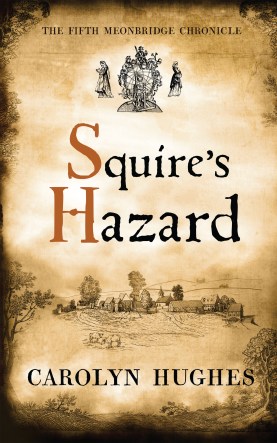 Blurb:
How do you overcome the loathing, lust, and bitterness threatening you and your family’s honour?
It’s 1363, and in Steyning Castle, Sussex, Dickon de Bohun is enjoying life as a squire in the household of Earl Raoul de Fougère. Or he would be if it weren’t for Edwin de Courtenay, who’s making his life a misery with his bullying, threatening to expose the truth about Dickon’s birth.
At home in Meonbridge for Christmas, Dickon notices how grown-up his childhood playmate, Libby Fletcher, has become since he last saw her and feels the stirrings of desire. Libby, seeing how different he is, too, falls instantly in love. But as a servant to Dickon’s grandmother, Lady Margaret de Bohun, she could never be his wife.
Margery Tyler, Libby’s aunt, meeting her niece by chance and learns of her passion for young Dickon. Their conversation rekindles Margery’s long-held rancor against the de Bohuns, whom she blames for all the ills that befell her family, including her own servitude. For years she’s hidden her hunger for retribution, but she can no longer keep her hostility in check.
As the future Lord of Meonbridge, Dickon knows he must rise above de Courtenay’s loathing and intimidation and get the better of him. And, surely, he must master his lust for Libby so his own mother’s shocking history is not repeated? Of Margery’s bitterness, however, he has yet to learn…
Beset by the hazards these powerful and dangerous emotions bring, can young Dickon summon up the courage and resolve to overcome them?
Secrets, hatred, and betrayal, but also love and courage – Squire’s Hazard, the fifth MEONBRIDGE CHRONICLE.
Buy Links:
This book is available to read on #KindleUnlimited.
Universal Link: https://books2read.com/u/bW5yJz
Amazon UK: https://www.amazon.co.uk/Squires-Hazard-Meonbridge-Chronicle-Chronicles-ebook/dp/B0BHKH1QB1/
Amazon US: https://www.amazon.com/Squires-Hazard-Meonbridge-Chronicle-Chronicles-ebook/dp/B0BHKH1QB1/
Amazon CA: https://www.amazon.ca/Squires-Hazard-Meonbridge-Chronicle-Chronicles-ebook/dp/B0BHKH1QB1/
Amazon AU: https://www.amazon.com.au/Squires-Hazard-Meonbridge-Chronicle-Chronicles-ebook/dp/B0BHKH1QB1/
The paperback is available at Amazon, Barnes & Noble, and Waterstones.
 Author Bio:
CAROLYN HUGHES has lived much of her life in Hampshire. With a first degree in Classics and English, she started working life as a computer programmer, then a very new profession. But it was technical authoring that later proved her vocation, as she wrote and edited material, some fascinating, some dull, for an array of different clients, including banks, an international hotel group, and medical instruments manufacturers.
Having written creatively for most of her adult life, it was not until her children flew the nest several years ago that writing historical fiction took centre stage, alongside gaining a Master’s degree in Creative Writing from Portsmouth University and a Ph.D. from the University of Southampton.
Squire’s Hazard is the fifth MEONBRIDGE CHRONICLE, and more stories about the folk of Meonbridge will follow.
You can connect with Carolyn through her website http://www.carolynhughesauthor.com and on social media.
Social Media Links:
Website: http://www.carolynhughesauthor.com
Twitter: https://twitter.com/writingcalliope
Facebook: https://www.facebook.com/CarolynHughesAuthor/
Book Bub: https://www.bookbub.com/profile/carolyn-hughes
Amazon Author Page UK: https://www.amazon.co.uk/Carolyn-Hughes/e/B01MG5TWH1/
Goodreads: https://www.goodreads.com/author/show/16048212.Carolyn_Hughes

 Today, I am pleased to welcome to my blog Anna Belfrage to promote the audiobook for her novel, “His Castilian Hawk.” Thank you, Anna Belfrage and The Coffee Pot Book Club, for allowing me to participate in this tour.
  Buy Links:
  Author Bio:
 When we think about royal relationships from the past, we do not associate them with love; it is more about cementing power. Princes and kings knew how much was at stake, so they tended to have wives for politics and produce legitimate heirs that would inherit their kingdoms. For matters of love and lust, kings and princes would have mistresses, either of noble birth or lower, on the side. These women have been deemed whores and homewreckers but is that a fair assessment of their legacies? Julia A. Hickey takes a closer look at these misunderstood mistresses in her latest book, “Medieval Royal Mistresses: Mischievous Women who Slept with Kings and Princes.”
 I am pleased to welcome G.J. Williams to my blog today to share an excerpt from her latest novel, “The Conjuror’s Apprentice.” I want to thank G.J. Williams and The Coffee Pot Book Club for allowing me to be part of this blog tour.
  Blurb
Blurb Author Bio
  Medieval Europe was inundated with strong rulers and dominant figures who made a difference in how the policies of certain countries were formed. We tend to focus on the male figures, from kings to lords and rebels, when we study medieval European history. Still, the women in their lives significantly influenced how their countries were governed. Although many women stood by the side of their husbands and didn’t make much of an impact on European history, some women chose to stand out from the crowd and make a name for themselves. Rebecca Holdorph has chosen to highlight a handful of these dynamic women throughout medieval Europe in her book, “Women in the Medieval Court: Consorts and Concubines.”
 When we think about the more intimate moments in the medieval period of European history, a few misconceptions and myths come to mind, thanks to historical fiction and medieval movies. The idea that girls as young as twelve were married off to much older men was the norm, and there were such things as chastity belts. Everyone was filthy and smelled awful, so they only married in the spring when they would take their annual baths. And the brilliant idea that the wealthiest lords of the village were able to have their way with the bride on her wedding day. The latest book by Kathryn Warner, “Sex and Sexuality in Medieval England,” aims to eliminate these myths to reveal the truth of the intimate lives of those who lived during the medieval period.
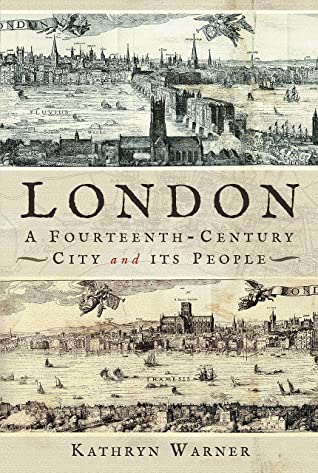 The city of London has been around for over two millennia, and with each passing century, it changes ever so slightly. From the Roman Londinium to medieval London, we see the city grow from a settlement of between 30,000 to 60,000 people to a bustling town of around 80,000 to 100,000 people. With growth comes changes to the city that would become the capital of England, and one of the most significant periods of transformation for the capital was during the fourteenth century. What was life like in fourteenth-century London for the average citizen of this sprawling city? Kathryn Warner attempts to answer this question in her latest nonfiction book, “London, A Fourteenth-Century City and its People.”
 The year is 1480. Intrigue and murder lurk everywhere at the Palace of Westminister, where no one is safe. A mysterious letter and the men who want the letter back lead to the murder of one of the clerks from the Office of the King’s Secretary. Under the orders of powerful men at court, including King Edward IV himself, Seb Foxley must join his wayward brother Jude as one of Secretary Oliver’s clerks to uncover the truth of the conspiracy against the crown. Can the brothers work together to decode the truth and save the life of the king’s beloved heir in time? Seb Foxley’s latest adventure is told in book ten of Toni Mount’s Sebastian Foxley Medieval Murder Mystery series, “The Colour of Rubies.”
 When we think of Vikings, a few images come to mind. It is either the cartoonish image of warriors with horned helmets or blood-soaked warriors from TV shows like The Vikings. They are seen as men and women who fight Christians in England and France and sometimes into North America, but we do not see them in the east. With archaeological digs and discoveries being made recently, what can the artifacts tell us about the Viking world? In “River Kings: A New History of the Vikings from Scandinavia to the Silk Roads,” Dr. Cat Jarman takes her readers on a journey of discovery, following the trail of a single carnelian bead.
 Medieval princes are often viewed as men who will one day be king of their homeland or another country. They are seen as wealthy men with prestige and honor who live lavish lifestyles and go to war to earn titles and estates. One of these noble medieval princes was a man who married three times, including to his most beloved mistress. He was the son of Edward III, the uncle of Richard II, and the father of the queen of Castile and King Henry IV, the first Lancastrian king. His children, grandchildren, and great-grandchildren would rule in different European countries, even though he never had the chance to wear the crown of England or Castile for himself. His name was John of Gaunt, and his story is told in Kathryn Warner’s latest biography, “ John of Gaunt: Son of One King, Father to Another.”
 Adventures of a Tudor Nerd