 I am pleased to welcome G.J. Williams to my blog today to share an excerpt from her latest novel, “The Conjuror’s Apprentice.” I want to thank G.J. Williams and The Coffee Pot Book Club for allowing me to be part of this blog tour.
John Dee stared at the letter, then at Cecil. ‘The letter must have been penned by someone who has sight of this household – and the same person who planted the letter on Jonas.’
The master of the house nodded and put his head in his hands, propelling Mildred to cross the room and put her hand on his shoulder. He glanced up and patted her fingers. ‘Are you quite sure what you read, my dear?’
‘Yes. You heard the words yourself. The letter is to someone who wants testimony of your movements. The scrivener speaks of your visits to Lady Elizabeth. Each one is listed. They even know you are due to visit her again this week.’ Her lips pinched together in anxiety. ‘They state that you hide a book of Elizabeth’s treachery to protect her.’ Mildred looked at John Dee. ‘Why would they make up such stories of us?’
But next to her, Cecil did not move. He kept staring at the wood of his desk, his brow crinkled in thought. A slight flush spread across his cheeks.
Margaretta shifted in her seat, the feelings rising inside her. Dread. Something you’ve done. A secret. You imagine being arrested. You are hiding something. She leaned forward, touched John Dee’s sleeve, and whispered, ‘Mae e’n cuddio rhywbeth.’ He hides something.
Cecil’s eyes darted to her. ‘I do not speak my forefathers’ tongue with ease. What did you say?’
Thank the Lord John Dee stepped in. ‘She says she must away to the kitchen and her chores soon.’ He leaned forward and dropped his voice to a cajoling purr. ‘Is there anything you have secreted, my friend? Better we know.’
Cecil sat up straight and cleared his throat. His wife’s fingers tightened on his shoulder as she looked down, beginning to frown. Her husband looked at the window as if searching for the right words. ‘I…I…hold a book belonging to the Lady Elizabeth. Nothing treasonous. Just her thoughts.’ He swallowed and looked to Dee, a faint beseeching in his eyes.
The room was silent.
Panic. Confusion. It is you, Lady Mildred. Anger.
John Dee leaned forward again, keeping the low, calm voice. ‘Where is this book?’
‘Mildred’s library. Well hidden among the religious texts.’ At this, Lady Cecil gave a short, sharp cry and snatched her hand away from her husband. She walked to the window and put her hands on the glass. They could see her kirtle move with her fearful breathing. Then she turned and faced him, her face pale and fixed in fury. ‘You brought secrets here and put us all in danger? Have your senses left you, husband?’ Her voice was slow and cold.
In an instant, he was on his feet, rebutting her challenge with indignation. ‘No, Mildred. I was showing loyalty to a fragile girl wracked with fears. She is under constant suspicion.
So, when she was summoned to court to attend her sister’s birthing, she dared not take it with her nor leave it behind. I am the only one she trusts. What could I do? Abandon her?’
‘And what is in this book, William?’ asked Dee.
‘Her thoughts on regency. She speaks of a fair rule; of religious tolerance rather than the burning we live with today; of making this land great again and not a puppet of Spain.’
Cecil dropped his head forward, and his voice fell to a murmur. ‘She speaks of a golden age in which men thrive, not fear life.’
Dee sighed. ‘So, she speaks of being queen.’ He waited until Cecil nodded. ‘So, with Mary expecting her own son to succeed her, it is a tome of treason.’ He gave a small laugh. ‘Making my conjuring look pale in comparison.’
Cecil bristled. ‘No. It is a volume of hope. The only treason lies with those who would put a Spanish prince as our ruler.’
He gave a low growl. ‘For the love of God, they circle court like hawks awaiting the death of Mary and her babe so they can grasp power while England mourns.’
John Dee opened his palms in question. ‘Mary herself made Philip King of England. Not a prince. Not her consort. A king.’
Cecil wheeled round. ‘Elizabeth is the rightful heir to the throne. Not a Spanish puppet of the Catholic Pope. A woman of true faith…Protestantism.’
‘So, if Elizabeth aspires to be queen, she is the single threat to the supporters of Philip.’ John Dee pointed an accusing finger. ‘And that book sets out her ambition.’ He paused. ‘That book will take her to the Tower and her death for treason… and someone in your household knows of it. They also know your involvement.’
From the window, Lady Cecil spoke. ‘And her treasonous book is in this house. And somebody knows it.’ She turned to look through the glass onto the bustling street below. ‘May God save us.’
 Blurb
Blurb
Born with the ability to hear thoughts and feelings when there is no sound, Margaretta Morgan’s strange gift sees her apprenticed to Doctor John Dee, a mathematician, astronomer, and alchemist. Using her secret link with the hidden side and her master’s brilliance, Margaretta faces her first murder mystery. Margaretta and Dee must uncover the evil bound to unravel the court of Bloody Mary.
The year is 1555. This is a time ruled by fear. What secrets await to be pulled from the water?
The Conjuror’s Apprentice takes real people and true events in 1555, into which G J Williams weaves a tale of murder and intrigue. Appealing to readers of crime and well-researched historical fiction alike, this is the first in a series which will follow the life, times, plots, and murders of the Tudor Court.
Trigger Warnings:
Descriptions of bodies and the injuries that brought about their death.
Threat of torture; description of man who has been tortured.
Buy Links
Amazon UK: https://www.amazon.co.uk/Conjurors-Apprentice-G-J-Williams/dp/1915194199
Waterstones
https://www.waterstones.com/book/the-conjurors-apprentice/g-j-williams/9781915194190
RedDoor
https://www.reddoorpress.co.uk/products/the-conjurors-apprentice?_pos=1&_sid=30c68d694&_ss=r
 Author Bio
After a career as a business psychologist for city firms, G.J. Williams has returned to her first passion – writing tales of murder, mystery, and intrigue. Her psychology background, melded with a love of medieval history, draws her to the twists and turns of the human mind, subconscious powers, and the dark side of people who want too much.
She lives between Somerset and London in the UK and is regularly found writing on a train next to a grumpy cat and a bucket of tea.
Social Media Links:
Twitter: https://mobile.twitter.com/gjwilliams92

 What if you found information about a mysterious portrait that would radically change how we view history forever? Who would you tell? When Zara Rossi entered the Ancient Manuscripts Room at the Papal Archives in Rome, she never imagined how a single letter would change her life and the Tudor community. Each piece of the puzzle unlocks a new story from the past and allows Zara to explore the remarkable tale of this masterpiece. Follow the clues with Zara Rossi to solve this mystery from the past in Sandra Vasoli’s latest book, “Pursuing a Masterpiece: A Novel.”
 The year is 1480. Intrigue and murder lurk everywhere at the Palace of Westminister, where no one is safe. A mysterious letter and the men who want the letter back lead to the murder of one of the clerks from the Office of the King’s Secretary. Under the orders of powerful men at court, including King Edward IV himself, Seb Foxley must join his wayward brother Jude as one of Secretary Oliver’s clerks to uncover the truth of the conspiracy against the crown. Can the brothers work together to decode the truth and save the life of the king’s beloved heir in time? Seb Foxley’s latest adventure is told in book ten of Toni Mount’s Sebastian Foxley Medieval Murder Mystery series, “The Colour of Rubies.”
 A man hidden from the world languishes for decades in a prison cell. He is not allowed to speak to anyone, or he will face severe consequences. Often in literature, his head is covered in a mask made of iron. His identity and why he angered King Louis XIV so much have remained a mystery for centuries. The prisoner was known as the man in the iron mask throughout history, but who was this enigmatic figure? In her latest book, “The Man in the Iron Mask: The True Story of Europe’s Most Famous Prisoner,” Josephine Wilkinson dives deep into the archives to construct his story and the stories of the men behind the mystery.
 The year is 1586 and Ursula Blanchard is on a mission to protect Queen Elizabeth I. After returning home from a previous mission, Ursula and her household come into contact with a countrywoman named Etheldreda Hope who has brought a peculiar case to the forefront. In the forest by the village that Etheldreda calls home, there have been strange rituals occurring that include reference to an evil queen. Are these rituals harmless or is there a sinister motive behind the beliefs of the pagans who meet in the forest? Will Ursula and her household solve the case in time? This is the premise of Fiona Buckley’s latest Ursula Blanchard Tudor mystery, “Forest of Secrets”.
 In 1483, King Edward IV’s family received a devastating announcement; the king in the prime of his life died, leaving the throne to his young son Edward V. However, neither Edward V nor his younger brother Richard of York would ever see the throne. Instead, they were taken to the Tower of London by their protector, Richard of Gloucester, for protection, never to be seen again. For over five hundred years, many theories have emerged about what happened to the princes in the tower and who might have possibly killed the boys. In MJ Trow’s latest book, “The Killer of the Princes in the Tower: A New Suspect Revealed”, he works hard to uncover the truth of what might have happened to the sons of King Edward IV.
 The year is 1399 in Paris and the royal family is concerned about the Priory in Poissy. Something has happened behind the cloistered walls and only one person who is extremely loyal to the king and queen can figure out what is amiss, Christine de Pizan the famous medieval writer. Christine goes to Poissy to act as a copyist for the prioress, but she soon finds herself in the middle of a sinister murder case. A nun has been found dead and it is up to Christine and her allies, plus one frenemy, to figure out who killed the nun while protecting the king’s youngest daughter who calls the priory home. Can Christine figure out who murdered the young nun and make it out of the priory alive? This is the premise of Tania Bayard’s latest installment of her Christine de Pizan murder mystery series, “Murder in the Cloister”.
 Money problems litter the streets of London like debris. Those who have money have power. Yet, there are those who try to beat the system by making their own counterfeit currency to beat the system. When this counterfeit currency leaves to murder, only Seb Foxley and his merry band of friends and family members can bring justice to those who were killed. When unexpected complications arise, like Seb’s wayward brother Jude coming home with an Italian child bride and a commission from King Edward IV himself, can Seb solve the case before anyone else becomes the next victim in this vicious cycle of greed and exploitation? Toni Mount takes her readers on another thrilling adventure in, “The Colour of Evil”, the ninth installment of the Sebastian Foxley Medieval Murder Mystery series.
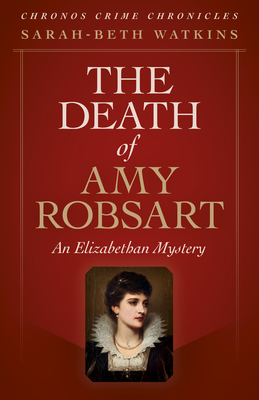 On September 8, 1560, a woman was found dead at the bottom of a flight of stairs inside Cumnor Place. The only visible marks on her body were two wounds on the side of her head, yet her neck was clearly broken. If she was an ordinary woman, her death would not have been remembered through the centuries, yet she was no ordinary woman. She was the wife of Robert Dudley, the man who was considered as one of Queen Elizabeth I’s favorite courtiers. Amy Robsart was a third wheel in the relationship between her husband and the queen, but does that mean that she was murdered? In her latest book, “Chronos Crime Chronicles- The Death of Amy Robsart: An Elizabethan Mystery”, Sarah-Beth Watkins plays detective to uncover the cause of death and the possible motive for those who wanted to see Amy dead.
 Adventures of a Tudor Nerd