
 The world of someone close to a king, especially someone close to King Henry VIII, was full of hazards and great triumphs. All the glist and glamor of the Tudor court could not save them from the rage of the King. This could apply to anyone who fell during the reign of this infamous King, but none more so than his second wife and queen, Anne Boleyn. Much has been written about Anne Boleyn and her dramatic fall from grace, specifically the final month of her life, but what was she doing in her last year alive? Natalie Grueninger hopes to answer this question in her latest book, “The Final Year of Anne Boleyn.”
I want to thank Pen and Sword Books and NetGalley for sending me a copy of this book. I am always learning new facts about influential Tudors, like Anne Boleyn, so when I heard about this book, I knew it would be on my to-be-read pile.
We begin our journey to Anne’s demise with the court’s changes in 1535. There is still tons of support for Henry’s first wife, Katherine of Aragon, and her daughter Mary, even with the new Act of Respecting the Oath to the Succession, which proclaimed Princess Elizabeth as King Henry VIII’s heir, not Mary. Anne interacts with ambassadors from foreign lands, like Charles de Solier from France and Eustace Chapuys, the imperial ambassador.
My favorite part of this book is how much care Grueinger took in telling the story of Anne Boleyn’s final progress with Henry VIII. I have never read an account of this progress in the details Grueinger provided, including where she stayed and who served her at different royal houses. We also see how she dealt with the divide between Catholics and Protestants and how she relaxed in her downtime.
Grueninger examines Anne’s fall from grace and how it took place, starting with Henry’s dramatic fall from his horse and Anne’s tragic miscarriage of a son that would have secured her place on the throne. Here, we see the death of Katherine of Aragon and the rise of Jane Seymour. Emotions are running high, and rumors are flying all over Europe, so Grueninger takes the time to bust a few of these myths. Finally, we look at the show trials and the executions that sealed the fate of Anne Boleyn and the men associated with her.
Natalie Grueninger’s passion for telling the true story of Anne Boleyn is evident on every page of this book with the amount of research she poured into this subject. This book presents Anne Boleyn in a new sympathetic light, which any Tudor fan would appreciate. If you want a beautiful nonfiction book that examines the tragic fall of Anne Boleyn, I highly recommend you read “The Final Year of Anne Boleyn” by Natalie Grueninger.
 Medieval Europe was inundated with strong rulers and dominant figures who made a difference in how the policies of certain countries were formed. We tend to focus on the male figures, from kings to lords and rebels, when we study medieval European history. Still, the women in their lives significantly influenced how their countries were governed. Although many women stood by the side of their husbands and didn’t make much of an impact on European history, some women chose to stand out from the crowd and make a name for themselves. Rebecca Holdorph has chosen to highlight a handful of these dynamic women throughout medieval Europe in her book, “Women in the Medieval Court: Consorts and Concubines.”
 Three women in one family who shared the same first name saw England change over a tumultuous century. They saw the end of the Plantagenet dynasty and the rise of the Tudors while on the sidelines of great battles. Through heartaches and triumphs, the women of the Woodville family became princesses and queens that would transform the political landscape of England forever. These three women, Elizabeth Woodville, Elizabeth of York, and Elizabeth Grey, were incredible examples of what it meant to be medieval royal women. They are featured in Sarah J. Hodder’s latest book, “The Woodville Women.”
 When we think about those who rose through the ranks to achieve significant titles in the Tudor Court, we instantly think about Thomas Cromwell. However, we should also consider his mentor as one of these great men, Cardinal Thomas Wolsey. The son of Robert Wolsey, an Ispwich businessman, and his wife, Joan Daundy, who worked hard and ended up being the right-hand man of the young King Henry VIII. The man behind Hampton Court helped start the Great Matter and The Field of Cloth of Gold, Wolsey had numerous achievements. Who was the man behind these significant Tudor moments? This is the question Phil Roberts tries to address in his book, “Cardinal Wolsey: For King and Country.”
 Today, I am pleased to welcome Sylvia Barbara Soberton to my blog to discuss one of the women featured in her latest book, “Ladies-in-Waiting: Women Who Served Anne Boleyn.”
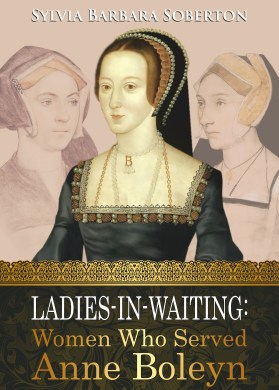 Description:
 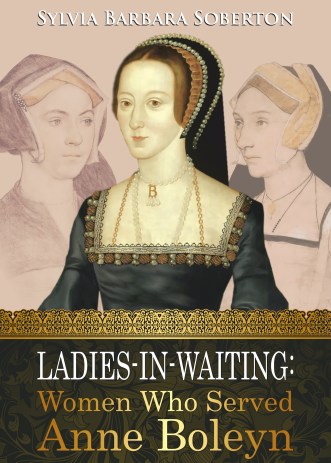 The story of Anne Boleyn and her rise and fall has been told throughout the centuries in numerous ways. With tales of this memorable monarch came rumors of what happened inside her court and the women who served her during her reign. We tend to look at her life through the lens of the men who interacted with Anne Boleyn at court, but what about the women who knew her? Stories of ladies-in-waiting selling the queen out and secret romances ran rampant throughout the centuries, but how much truth is in these tales? Sylvia Barbara Soberton explores these questions in her latest book, “Ladies-in-Waiting: Women Who Served Anne Boleyn.”
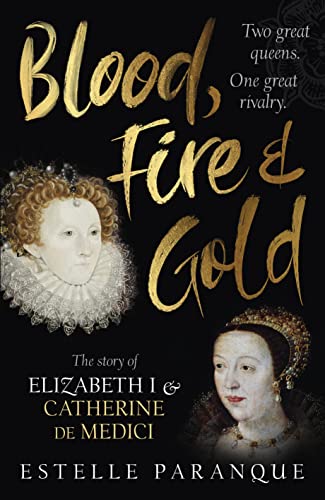 Two queens; one a wife and the mother of kings and the other a virgin who had to fight for the right to rule her country independently. Two women who found friendship and a rivalry between each other with only a sea that divided them and religious discord to drive them apart. Catherine de Medici and Elizabeth I would define what it meant to be female rulers in the 16th century for France and England, respectively. The tales of Elizabeth I and Catherine de Medici have been covered in numerous books, but a joint biography of these two powerhouses is a rarity until now. Estelle Paranque demonstrates how both queens greatly affected each other’s lives in her latest book, “Blood, Fire & Gold: The Story of Elizabeth I and Catherine de Medici.”
 When we think about the more intimate moments in the medieval period of European history, a few misconceptions and myths come to mind, thanks to historical fiction and medieval movies. The idea that girls as young as twelve were married off to much older men was the norm, and there were such things as chastity belts. Everyone was filthy and smelled awful, so they only married in the spring when they would take their annual baths. And the brilliant idea that the wealthiest lords of the village were able to have their way with the bride on her wedding day. The latest book by Kathryn Warner, “Sex and Sexuality in Medieval England,” aims to eliminate these myths to reveal the truth of the intimate lives of those who lived during the medieval period.
 When we think about the men who surrounded King Henry VIII, a few names come to mind. Cranmer, More, Wolsey, and Wroithesley are just a few, but the man who is synonymous with the infamous king’s reign is Thomas Cromwell. The man who helped Henry get his divorce from Katherine of Aragon saw both the rise and fall of Anne Boleyn. He also assisted in the dissolution of the monasteries and brought reform to England with the break from the Roman Catholic Church. To modern audiences, it feels as if we know everything that there was to know about Thomas Cromwell’s public life, but what was he like in his private life when his friends and family surrounded him? Caroline Angus gives her readers an insight into Cromwell’s personal life in her latest book, “The Private Life of Thomas Cromwell.”
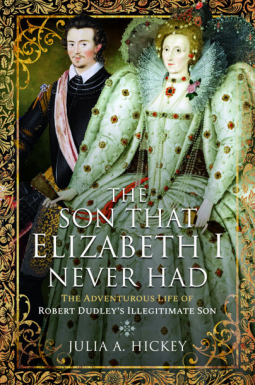 When we study the life of Queen Elizabeth I, the image of a virgin queen who never married tends to come to mind. Of course, she had a man who she favored above all others, Robert Dudley, but he married several times to Amy Robsart and Lettice Knollys. It was with Lettice Knollys that Robert Dudley was able to produce his heir, aptly named Robert Dudley Lord Denbigh, who unfortunately died at a young age. Robert Dudley was left without a legitimate heir, but he did have another son, albeit an illegitimate son, also named Robert Dudley. Julia A Hickey has decided to examine the life of the illegitimate Robert Dudley in her book, “The Son that Elizabeth I Never Had: The Adventurous Life of Robert Dudley’s Illegitimate Son.”
 Adventures of a Tudor Nerd