
 A man who was young and had charisma would attract the attention of the Virgin Queen herself, yet that attention came with a price. The young man could not do what he desired and was buried in debt. His anger could not be quenched and he would end up rebelling against the very queen who brought him so much glory and honor. This rebellion would lead to his execution. The man’s name was Robert Devereux, 2nd Earl of Essex, and his story is told in Sarah-Beth Watkins’ latest bite-size biography, “Elizabeth I’s Last Favourite: Robert Devereux, 2nd Earl of Essex”.
I would like to thank Chronos Books for sending me a copy of this book. I had heard that Sarah-Beth Watkins was releasing this book around the same time that Tony Riches released his novel about Robert Devereux, so I thought it might be nice to read about this man through fiction and nonfiction.
The son of Walter Devereux and Lettice Knollys, Robert Devereux was destined to his father’s heir when he passed away. However, when Walter died, he left his young heir a mountain of debt. His mother would remarry, but her choice would cause her to be an enemy of the queen herself. Lettice Knollys married Elizabeth I’s most prized favorite at court, Robert Dudley. The legacies that Robert’s mother and father left him forced the penniless earl to think big and to strive to gain the queen’s favor.
His looks helped win the queen’s favor, but Robert wanted more. He wanted power, money, and military prestige, which was typical of an earl during the Tudor time. However, Robert was pretty terrible at being a military leader. No matter if it was in France, Spain, or Ireland, Devereux managed to fail on his missions and irritating the queen. Watkins included transcripts of poems and letters that Devereux and Elizabeth I exchanged and you can feel the anger and frustration centuries later. Devereux comes off as a spoiled brat who whined when he didn’t get his way and Elizabeth just continued to exasperate him.
Devereux would redeem himself slightly when he uncovered a plot by Elizabeth’s doctor Lopez to assassinate the queen with poison. Yet for the most part, the queen was almost always upset with the young man, which made him act recklessly. Although he did marry the daughter of Sir Francis Walsingham, he was known to have a few mistresses and illegitimate children on the side. When he was really upset with the queen, he would break into her chamber or he would sulk at home feigning illness until she would beg for him to come back to court. This was his routine until he was pushed over the edge and would stage a rebellion against the woman who raised him so high, ultimately leading to his own demise.
.Robert Devereux was the moody last favorite of Elizabeth I who depended too heavily on her influence to guide his life choices. Watkins does a very good job at portraying Devereux’s numerous attempts to change his fate and how he failed miserably. The length of this biography was reasonable and it did allow readers to get to know the truth about the young man who would be the final favorite. If you want a short biography about the man behind the Essex Rebellion, you should check out, “Elizabeth I’s Last Favourite: Robert Devereux, 2nd Earl of Essex” by Sarah-Beth Watkins.
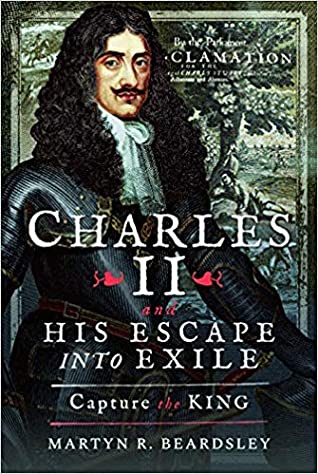 On January 30, 1649, the Stuart monarchy took a major hit when Charles I was tried and executed by the Rump Parliament, making way for the Commonwealth of England to take control. His eldest son, Charles II, fled England leaving the control of the country in the hands of Oliver Cromwell. Two years later, in 1651, Charles tried to make his triumphant return to restore the monarchy. However, it failed miserably at the Battle of Worcester on September 3, 1651; Charles II was able to escape with the help of those loyal to the crown. The story of his escape from Cromwell’s men and his exile in Europe are told in Martyn R. Beardsley’s book, “Charles II and His Escape into Exile: Capture the King.”
 Two cousins fighting for the right to rule England during the 16th century. One was the daughter of Henry VIII and Anne Boleyn who fought tooth and nail to rule without a man by her side. The other was the daughter of Mary of Guise and King James V of Scotland whose marriage record would prove to be fatal. Elizabeth I and Mary, Queen of Scots, may have been sister queens, but the way they were treated in their own countries differed completely. While Elizabeth I was praised and protected from harm in England, Mary was a scapegoat for so many in Scotland. The way that Mary was used as a pawn even though she wore a crown was nothing short of extraordinary. The story of how these two queens came on a collision course that would leave one queen beheaded and the other forever changed has been told in many different ways from both sides of the tale, but it has rarely been told as a cohesive nonfiction book. That is until Kate Williams’ marvelous biography, “The Betrayal of Mary, Queen of Scots: Elizabeth I and Her Greatest Rival”.
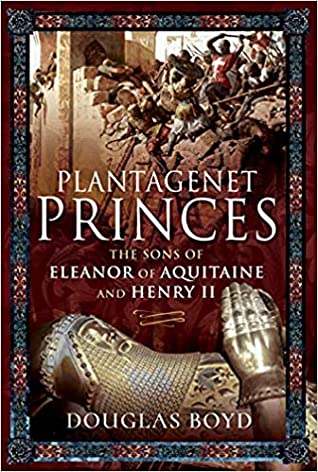 One of the most infamous families in the history of England lasted for over three hundred years and it was filled with numerous princes that fought for their right to rule, much to the chagrin of the Tudor dynasty. The Plantagenet Dynasty was full of scandals and bloodshed, testing the core values of what it meant to be a family and rulers of an emerging country like England. This dynastic clash for power that came to define this dynasty began with Henry II and his sons by his wife Eleanor of Aquitaine. When their father refused to give the boys any true power, which was to be excepted with all princes, his sons waged war against Henry II and their brothers. The stories of these bonds and what ultimately tore them asunder are told in Douglas Boyd’s latest collection of biographies aptly titled, “Plantagenet Princes: The Sons of Eleanor of Aquitaine and Henry II”.
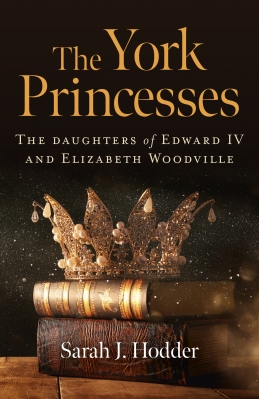 The life of a medieval princess was not a life of luxury that we often see in fantasy films. It can be filled with lovely gowns and castles, but it can change in an instance. Take, for example, the lives of the daughters of King Edward IV and Elizabeth Woodville. One minute their father was King of England and life was comfortable; the next minute, they were in the sanctuary, hoping and praying that they would be able to be reunited with their father one day. Their lives were planned out for them when their father was alive, but when Edward IV died unexpectedly in April 1483, the princesses found their world taking another turn. We know what happened with the eldest daughter, Elizabeth of York, as she married Henry VII and became the first Tudor queen, but what about her sisters? In her second book, “The York Princesses: The Daughters of Edward IV and Elizabeth Woodville”, Sarah J. Hodder explores what happened to Elizabeth of York and her sisters once the House of York fell and the Tudors became the new dynasty.
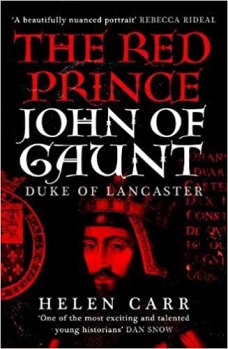 When one studies the history of the English monarchy, we tend to consider those who ruled and those who advised the ruler as significant characters. We rarely study the family members of the monarch who did not win the right to rule the kingdom. Yet, they are often either extremely loyal or they desire the crown with such ferocity that they rebel against their own family. It seems like a rather cruel world, but that was the life of a medieval monarch. True loyalty for one’s family was a rare feat. One man showed the depth of his loyalty to his family, even when the people despised him. He was the son of King Edward III, the brother of the famous Black Prince, the uncle of King Richard II, and the father of Henry Bolingbroke who would become King Henry IV. Gaunt’s reputation and legacy have been marred by his wealth and the role that he played with the Peasants’ Revolt, but was he such a bad person? In Helen Carr’s brilliant debut biography, “The Red Prince: The Life of John of Gaunt, the Duke of Lancaster”, she looks to uncover the truth about the man behind the throne and why he never desired the crown for himself.
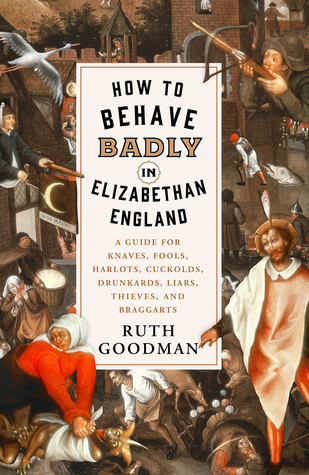 In many books about the different mannerisms and routines of different dynasties, we tend to see how the average person lived in the most prim and proper manner. How they avoided trouble at all costs to provide the best life that they could for their families. Yet, we know that there were those who did not adhere to the rules. They chose to rebel against the natural way of life. Every social echelon had their own rule-breakers, but what were these rules that they chose to break? How are these troublemakers of the past similar and different from our modern-day rebels? Famed experimental archeologist and historian Ruth Goodman takes her readers on a journey through the Elizabethan and the early Stuart eras to show how the drunkards, thieves, and knaves made a name for themselves. The name of this rather imaginative book is “How to Behave Badly in Elizabethan England: A Guide for Knaves, Fools, Harlots, Cuckolds, Drunkards, Liars, Thieves, and Braggarts”.
 Have you ever read a history book and wondered what life was really like for those who lived in the past? To understand a time period and the motives of the people of the past, we have to understand the structure of their society. How they understood things like class, sex, violence, government, and religion is essential for us to understand what separates us from our ancestors. What they ate, what they wore, and where they slept also give a unique insight into the time period. It can be a difficult undertaking to figure out all of the different aspects of the past connect and to present it cohesively, yet acclaimed historian Ian Mortimer has embraced this challenge head-on to tackle one of the most complex periods of the past; the Elizabethan era. His love letter to the Elizabethan age entitled, “The Time Traveler’s Guide to Elizabethan England” is a delightfully imaginative guide to the past.
 In 1483, King Edward IV’s family received a devastating announcement; the king in the prime of his life died, leaving the throne to his young son Edward V. However, neither Edward V nor his younger brother Richard of York would ever see the throne. Instead, they were taken to the Tower of London by their protector, Richard of Gloucester, for protection, never to be seen again. For over five hundred years, many theories have emerged about what happened to the princes in the tower and who might have possibly killed the boys. In MJ Trow’s latest book, “The Killer of the Princes in the Tower: A New Suspect Revealed”, he works hard to uncover the truth of what might have happened to the sons of King Edward IV.
 Adventures of a Tudor Nerd