
 The year is 1546 and England is once again in turmoil. Rumors swirl that the once-mighty King Henry VIII is gravely ill and his councilors, both Protestants and Catholics, are vying for power to see who will help Henry’s young son, Edward when he becomes king. With such distinct factions, those are not Protestant or Catholic, like the Anabaptists, are deemed heretics and they are hunted down. Executions over faith, like the death of Anne Askew, run rampant across London. Those who own books that were deemed “controversial” were under a shroud of suspicion. When Matthew Shardlake’s main supporter, Queen Catherine Parr’s book Lamentation of a Sinner, goes missing, Shardlake must navigate the religious divide carefully to retrieve the missing manuscript before it is discovered. Can Shardlake and his friends save the queen from the heresy hunt in time? The stakes could never be higher in C.J. Sansom’s sixth Shardlake novel, “Lamentation”.
If you have been following my adventures with this series, you know it quickly is becoming one of my favorites. Of course, I wanted to read this novel, but when I found out that it involved Catherine Parr and one of her books, I immediately had to jump back into Shardlake’s world.
Sansom begins his sixth novel with Shardlake witnessing the execution of Anne Askew. The introduction alone made me a bit squeamish, because of its intensity. The way he described this event cemented how real the consequences were for those who were on the wrong side of the religious divide. Shortly after this horrific event, Shardlake is giving a new mission by his patroness, Catherine Parr. Someone has stolen the manuscript of a very personal book that she wrote, Lamentation of a Sinner, and if should fall into the wrong hands, the queen may be executed like Anne Askew. Since Shardlake is fond of the queen, he cannot allow this to happen, so he embarks on a secretive mission to retrieve the manuscript, which leads him on a collision course with some of the kingdom’s most illustrious and powerful men, including his arch-nemesis, Sir Richard Rich.
To top it all off, Shardlake has another case, because the man can never take things easy and tackle one case at a time. This time, it is a sibling squabble over an inheritance and a painting. However, this is not just a simple case of sibling rivalry as the brother and sister share a dark secret that will radically change the course of this case and their lives forever.
I feel like the previous Shardlake novels have had an element of danger, but this book amplified the danger level immensely for our intrepid lawyer and his friends. I think the secret-keeping that Matthew had to do and the relationship between him, Guy, Barak, and a new assistant Nicholas Overton, was brilliant and heightened the drama. The last one hundred pages left me speechless. It was an incredible conclusion to a heart-racing novel.
I don’t know how Sansom keeps writing hit after hit, but he does. This adventure was mesmerizing in its complexity. There were so many times I thought I had the crime solved and Sansom threw another twist. I did not want this one to end because I know that there is only one book left and I am not ready to say goodbye to these characters that I have grown to love so much. If you are a fan of the Shardlake series, you must read “Lamentation” by C.J. Sansom, as soon as possible.
 The year is 1479, and Richard III is still the Duke of Gloucester. Peace reigns throughout England as Edward IV continues his second reign as king, and for Sebastian Foxley and his household, life is hectic yet thrilling with new projects for his workshop and his family growing. But life has a way of changing rather quickly. When a young boy is found dead in Sebastian’s studio, and another goes missing, the investigation into both cases takes Foxley and those close to him into the nefarious underworld of Bankside and the mysterious The Mermaid Tavern. Can they shed some light into this dark world of shadows to uncover the truth in time to save a life? This is the premise of the latest Seb Foxley mystery by Toni Mount, “The Colour of Shadows.”
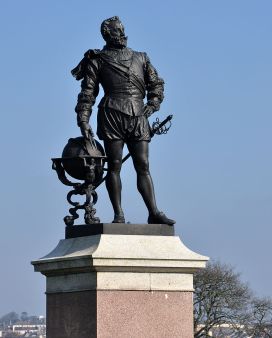 Two things I remember being taught about Francis Drake at school are he was the first British man to sail around the world, and that he nonchalantly played a game of bowls as the Spanish Armada sailed up the British Channel in 1588.
 Another popular belief is that Drake was the hero of the defeat of the Spanish Armada. Although he was made vice-admiral of the English fleet sent out to fight the Armada, Drake spotted a damaged galleon falling behind, and couldn’t resist boarding her. The first captured ship of the Armada, the Nuestra Señora del Rosario (Our Lady of the Rosary) was commanded by the Spanish Admiral General Don Pedro de Valdés, and was taken as a prize.
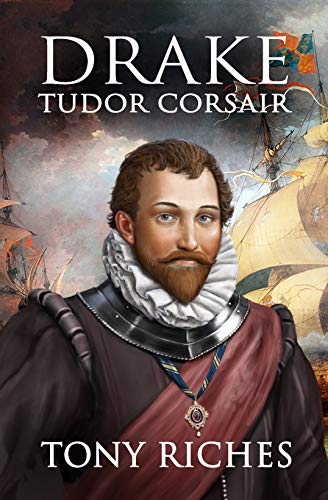 Drake- Tudor Corsair
 lives in Pembrokeshire, West Wales and is a specialist in the history of the Tudors. For more information about Tony’s books please visit his website tonyriches.com and his blog, The Writing Desk and find him on Facebook and Twitter @tonyriches
 In 1547, young Prince Edward is having the time of his life studying and hoping to one day take part in a tournament. He has not a care in the world. That is until his beloved father King Henry VIII passes away, and the 9-year-old boy is now Edward VI, King of England. He must navigate family drama between his older half-sister Mary Tudor and his uncles, Edward and Thomas Seymour while maintaining order throughout the kingdom. To top it all off, he is trying to reform the entire country and convert Catholics into the Protestant faith. His short life and reign are portrayed in Janet Wertman’s third book in The Seymour Saga, “The Boy King”.
 The year 1540 during the reign of Henry VIII was a turbulent time. Henry’s new wife, Anne of Cleves, is not exactly the person who he imagined and his eye is starting to wander to a new woman, Katherine Howard. The reformers are starting to lose favor with the king as they and Catholics alike are being executed for treason. This is the London that Matthew Shardlake, our favorite hunchback lawyer turned detective, calls home. He thinks that he has retired from his detective work and serving Thomas Cromwell, but he is sadly mistaken. His next adventure has twice the number of cases and just as much danger that makes his trip to the monastery in “Dissolution” look easy. In the second book of the Shardlake series, “Dark Fire”, C.J. Sansom turns up the heat, the action, and the danger.
 The Tudor dynasty marked tons of changes in society and religious norms. In 1537, the changes are in full force. Anne Boleyn was executed a year earlier and Henry’s third wife, Jane Seymour recently passed away after giving birth to Edward VI. Religious reformers are clashing with the Catholic Church after Henry VIII has declared himself the Supreme Head of the Church of England. Henry VIII’s reign marked the changing point in societal and religious norms, none more so than the dissolution of the monasteries. As monasteries and monks alike adjust to the new ways of life, the monastery at Scarnsea buzzes with activity and murder. Henry VIII’s right-hand man, Thomas Cromwell, sends an unlikely man to investigate the situation; the hunchback reformer lawyer, Matthew Shardlake. This is the world that C.J. Sansom has chosen to create in the first book of his Tudor mystery series, aptly named, “Dissolution”.
 A weak king caught in the middle of court drama, each side fighting for the control of the crown and the right to have their opinions heard. England is on the brink of civil war with a young heiress struggling to find where she belongs and to survive. The young heiress is Margaret Beaufort, the mother of Henry Tudor (the future of Henry VII) and a survivor of the Wars of the Roses. Her story has been told in many different ways, but the story of her early years has rarely been told, until now. Judith Arnopp has decided to tell Margaret’s story from her perspective in her novel, “The Beaufort Bride: Book One of The Beaufort Chronicle”.
 A foreign princess who travels to England to marry the king to establish a strong political alliance. To those who study history, this is a story that has been told numerous times, but what makes this particular story unique is the people involved. The bridegroom was the recently-widowed Henry VIII, the shadow of his former self and notorious throughout Europe for having his second wife Anne Boleyn executed. His new bride to be is the German princess Anna of Kleve. To say that they did not see eye to eye would be an understatement as the marriage did not last long. Her story is often swept under the rug. Anna is often viewed as the “lucky” wife of Henry VIII, but was she? What was Anna’s story and what was her marriage with Henry really like? Alison Weir has taken up the challenge to give her readers a taste of what Anna’s life might have been like in this novel, “Six Tudor Queens: Anna of Kleve, Queen of Secrets”.
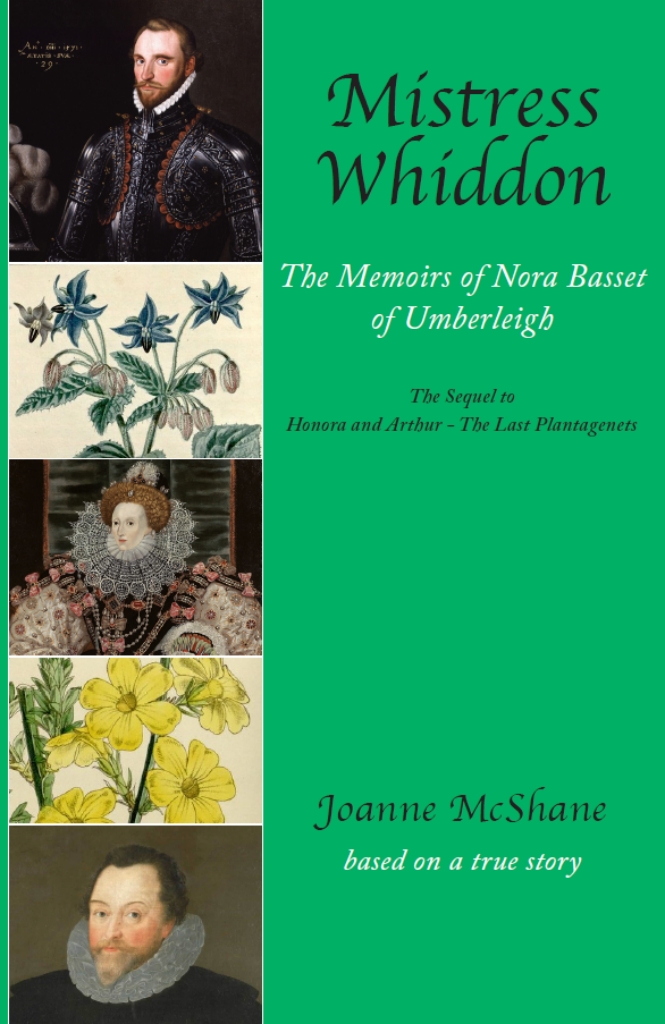 Young Nora Basset has no memory of her father, John, as he died when she was very young. Her first years are spent at Umberleigh in Devon with her family. When she is three years old, she meets her grandmother, Honora Lisle, who has returned from imprisonment in Calais and has been tragically widowed. Nora and her grandmother form a close bond, as the child unwittingly assists the older woman to come to terms with her loss. The following year, Nora’s mother, Frances Plantagenet, remarries. Her new husband is Thomas Monk of Potheridge and the family leaves Umberleigh to begin their new life.
 Adventures of a Tudor Nerd