A castle looms in the distance and the owner, a glamourous countess, has asked for fair maidens from the surrounding areas to work for her. But this is not an ordinary castle and this was not a benevolent countess. The rumors say if you enter the castle, you will never return as the infamous Blood Countess Erzsebet Bathory will kill you and bathe in your blood. A rather gruesome tale that has been told for centuries, but how true is this story? What truly happened in the Countess’s castle and what was the countess like? Sonia Velton hopes to answer these questions in her novel about Erzsebet Bathory’s life, entitled “The Nightingale’s Castle.”
I want to thank Harper Perennial and Net Galley for sending me a copy of this novel. I have heard about Elizabeth Bathory the Blood Countess, but just the dark tales about how she killed virgins and bathed in their blood to keep her youth. Sadly, I don’t know much about the woman herself and the circumstances around her life that made the charges around her so extreme.
We begin with a scene in the future from a court case where we see a mysterious girl listing the names of the accomplices who helped the countess, namely Janos Ficzko Ujvary, Ilona Jo Nagy, Dorottya (Dorka) Szentes, and Katalin Beneczky. The mysterious figure also reveals that there is a ledger that she claims lists the names of every victim of the countess, which totals hundreds of young ladies. Then, we jump to the main story with two servants of the countess, Dorka, and Fickzo, looking for a new woman to work at Cachtice Castle, which they find in Boroka Libalany, the adopted daughter of the town doctor Jozsef. It is at the castle where Boroka meets another girl named Suzanna and the two girls form a sort of friendship as they work in the laundry.
Things seem to be going well for Boroka and Suzanna until they realize that there is something off about this castle. While Boroka meets Countess Erszebet Bathory and gets to interact with her court of young noble ladies, Suzanna sees the darker side of the castle. I do appreciate that each one of the accomplices of the countess gets their unique backstories on how they met Erszebet Bathory. As Boroka gets closer to the countess and earns her trust as a stand-in for her portrait by Valentino, she discovers an intricately craved box and a journal inside that tells the story of Boroka’s birth mother, however the context of the box changes for those who open it. While I do enjoy learning more about Boroka’s familial connection to the countess, the magical box element almost felt unnecessary as she could have easily found the diary in the countess’s library and it would have had the same effect for Boroka.
Finally, we get to see how the case against Erszebet Bathory and her accomplices occurred. Gyorgy Thurzo Count Palatine of Hungary joins with King Matthias of Hungary to create a case against the countess. We get to see the arrest of the countess and her accomplices, the trial, and the aftermath of this case on the entire cast of characters, but especially Boroka.
As this was the first novel that I have read set in late 16th/ early 17th century Hungary and that was about Erszebet Bathory “the Blood Countess,” I found this novel extremely engrossing. It was a haunting yet stunning story filled with so many twists and turns that I did not want it to end. If you want a riveting retake on the life of the infamous Blood Countess, I highly recommend you read, “The Nightingale’s Castle” by Sonia Velton.
Marriage has been an integral part of life for centuries. It has been used to create strong alliances and cement love matches. However, once the wedding ceremony is finalized, the facade often fades and the truth about the families is revealed. Jane Parker finally marries the love of her life, George Boleyn, but she soon realizes that her new family is full of ambition, especially her new sister-in-law Anne Boleyn. As one of the greatest marriages of the 16th century is beginning to fall apart, can a new romance be waiting in the wing to rock England and all of Europe to its core and whose side will Jane join in the end? Danielle Marchant continues her exploration of Jane Parker Boleyn, Lady Rochford’s life in her novel, “The Lady Rochford Saga Part 2: Tourmens de Mariage.”
I’d like to thank Danielle Marchant for sending me a copy of this novel. I enjoyed the first novel in this series, “Into the Ranks of the Deceived,” so I wanted to see how Marchant would continue this series and where book two would end.
We begin with Catherine of Aragon attending the Blackfriars to discuss her marriage with Henry VIII. He wants the marriage dissolved because Catherine was married to his brother Prince Arthur Tudor and that is why they cannot have any living male children. Obviously, Catherine disagrees and is fighting for her marriage, which gains the respect of Jane Parker. However, Anne is not interested in the affairs of the queen and instead has her heart set on marrying Henry Percy. This does not work out for Anne as Cardinal Wolsey finds out and decides to put a stop to their engagement, which creates animosity between Anne and Wolsey.
While Anne is trying to figure out her love life, we see Mary Boleyn become a mother of two while dealing with the death of her husband William Carey. Jane must navigate these complex issues of her new family while she enters a new chapter of her life when she marries the love of her life, George Boleyn. However, Jane’s married life is not all sunshine and rainbows and she realizes that they are having problems conceiving a child. I think the story of this second novel was good, but I think it should have covered a bit more ground and possibly gone to the marriage of Anne Boleyn and Henry VIII so that the third book could focus on the fall of Anne and George Boleyn and hopefully show a glimpse of Jane’s fall from grace.
Overall, I think it was a decent novel that shows the softer side of Jane and George’s relationship which is sometimes lacking in other novels. I think it was a bit short for the material that I hoped she would cover in this series since there is so much to Jane’s story, but I think she can create a story with believable characters that you don’t want to stop reading. If you have enjoyed the first book in this trilogy, I think you should read, “The Lady Rochford Saga Part 2: Tourmens de Mariage” by Danielle Marchant.
Weddings are supposed to be happy occasions to unite two families through the bonds of love, at least in our more modern sense of the ceremony. However, in the past, weddings were ceremonies that would unite families through contracts to create powerful alliances—hardly a romantic endeavor. One of the grandest weddings of the 16th century was meant to unite France, which led to bloodshed between Catholics and Huguenots. Minou Joubert and her family are invited to the wedding of Marguerite de Valois and Henri of Navarre in Paris, but the decision to attend the lavish event leads her family on a path full of tears and heartbreak. The story of the Joubert family’s struggle to fight for the faith they strongly believe in and to unite their broken family is masterfully told in Kate Mosse’s novel, “The City of Tears.”
This is a book that I found when I was going used book shopping one day. I had heard about Kate Mosse and her novels, so I wanted to give them a try. I didn’t realize that it was the second book in a series until after I brought it home, but the premise of this novel was so intriguing that I couldn’t wait to read it. So I decided to read the books out of order to see if this would be a series that I would enjoy reading.
We begin our tale with one of the Joubert descendants from the 1800s going to the house that her ancestors lived in in Amsterdam. I am not sure where this particular storyline will lead, but I am excited to find out. We then join the family Joubert in the year 1572 as they are debating whether or not to go to Paris for the royal wedding; even though it is a great honor to receive an invitation, the problem is that the Jouberts are a Huguenot family. Their mortal enemy, Vidal or Cardinal Valentin, is always looking for a way to harm Minou and her husband Piet no matter what, even if it means sending assassins to hurt those closest to them. Even with the danger and the tragedies that befall them before the journey, they still choose to take a risk and go to Paris.
Paris was one of the biggest cities of its time and with big cities comes excitement and risks of danger. On the day of the wedding, everything ran smoothly, but three days later, on St. Bartholomew’s Day, a massacre of the Huguenots happened on the streets of Paris and the Joubert family lost their precocious daughter Marta and Minou’s brother Aimeric in the midst of the chaos. Now, Minou and Piet must take their remaining family members and flee with Cornelia van Raay to her native Amsterdam. What they did not realize was that religious change was also brewing in Amsterdam, which they also had to navigate. To top it all off, the life they left behind in France decided to rear its head as reunions and plots against the Jouberts were afoot. The Jouberts must face every challenge head-on if they have any hope of seeing a brighter future.
I enjoyed reading this novel. It may have taken me a moment to get into the story as this is book two in a series so getting used to the characters and their background, but once I did, I became super attached to them. I found it extremely fascinating to read about France and the Netherlands during the 16th century in historical fiction because even though France features pretty commonly in this era’s historical novels, the Netherlands is a new area to explore. I was so enthralled by this novel that I bought the first and third novels in this series and I am looking forward to reading more books by Kate Mosse. I would suggest if you want to start this season, start with the first book, “The Burning Chambers.” If you have started this series and want to see what happens next, I highly suggest you read, “The City of Tears” by Kate Mosse.
The year is 1517, and Florence is experiencing great change. No longer is it a grand republic that it once was; instead, it is under the control of the Medici family. They ruthlessly controlled Florence, especially Pope Leo X, who was born Giovanni di Lorenzo de’ Medici. The people suffer as the Medici become increasingly wealthy, but a band of misfits and thieves plan to give some power back to the people with one of the greatest heists of 16th century Italy. Can they survive as a group when revelations from the past and dangers lurk around every corner? The adventure with this ragtag team of thieves as they fight for Florence is explored in Caitlin Schneiderhan’s novel, “Medici Heist.”
I want to thank Feiwel and Friends and Net Galley for sending me a copy of this novel. It’s been a little bit since I read a new YA historical fiction novel, and so when I read the description of this one, I jumped at the chance to read it. I like a good novel set in Italy during the Renaissance, so I wanted to see what Schneiderhan could bring to the genre.
We kick off with Pope Leo X in all his grandeur entering the city and being greeted by a girl named Cat throwing a mud pie at the Pope. This incident sets the mood of the city towards the Medicis. We then jump to meeting our main four protagonists; the con woman/ leader of the misfits Rosa Cellini, Sarra the Tinkerer, Khalid the skilled fighter, and Giacomo the master of disguise. Along with the apothecary Agata, Dominic the apprentice, and even Michelangelo, the crew has decided that the only way to free Florence from Medici rule was to steal the indulgences that the people gave the church for the forgiveness of their sins so they spend less time in purgatory when they died. The Medicis were able to gather about 10,000 florins, an impressive amount that the band of thieves hoped to split evenly. However, complications do arise such as unexpected reminders of the past, romances, and those who want the treasure for their nefarious purposes.
While I do applaud Schneiderhan for writing her first-ever historical fiction novel, which is not an easy task, I did have a few issues when I was reading this particular novel. I felt like this book read more like a screenplay in that it gave locations and information, but it was hard to visualize for someone who cannot see these locations as images. The characters felt a bit generic and blended together, especially with the short chapters that might have been purposeful to get through the story quickly, but I was not able to build a connection to these characters. Finally, I feel like this story does not feel like it could take place in the 16th century, except for a few famous name drops, historical places, and the currency used at the time. It feels too modern and it could be put into any period and it would still work. I wanted to get lost in 16th century Florence and that did not happen for me.
Overall, as a YA heist book, I think it is a pretty good book, but it missed the mark when it came to the historical element for me. I feel like the concept of this book was strong, but the execution was a bit lacking. It was a difficult book for me to read and at times, I did want to put it into a did not finish pile, which I never do with books. I know that some books just are not right for me, but they might be right for other people, which is why I continued to read this book. If you do want to read this book, it might be a good idea to have a device next to you to look up the locations mentioned to help visualize what is happening. If you want a heist book with some history sprinkled in, “Medici Heist” by Caitlin Schneiderhan might be the book for you.
The Crusades were conflicts predominantly focused on the stories of knights, kings, popes, Christians, and Muslims. We have some stories of women like Eleanor of Aquitaine who joined their husbands in battle. However, some women’s stories tend to get lost in the sands of the past. Take, for example, Eleanor of Aquitaine’s daughter-in-law, Berengaria of Navarre, the wife of Richard the Lionheart. Amid the Third Crusades, she must join Eleanor of Aquitaine on a treacherous journey to meet her husband while he battles for Jerusalem. Can Richard and Berengaria survive the journey to and from the Holy Land and produce the desired heir for the English throne before their enemies can claim victory? Carol McGrath has chosen to tell the tale of the forgotten queen Berengaria of Navarre in her latest novel, “The Lost Queen.”
I would like to thank Carol McGrath and Headline Books for sending me a copy of this novel. I am always looking for new heroes and heroines from the past to read about, whether it is historical fiction or nonfiction. I have heard the name Berengaria of Navarre mentioned in previous books about Plantagenet queens, but she is more of a footnote, so when I heard there was going to be a novel about her life, I knew I wanted to read it.
The year is 1191 and Berengaria of Navarre is meeting her future mother-in-law Eleanor of Aquitaine to embark on a journey to meet her future husband Richard the Lionheart in the Outremer. At the same time, Avelina FitzWilliam is planning her trip to the Outremer to find her husband William FitzWilliam who never returned from the Crusades. Avelina’s journey would not be as glamorous as Berengaria’s as she would go in disguise as a nun. Berengaria must also be wary of her surroundings as Philip of France is against the union altogether as Richard decided to pass on a union with Philip’s sister Alice of France to marry Berengaria.
Berengaria and Avelina were united by chance and became the closest of friends through numerous trials. Not only did they have to deal with the dangerous Alps crossing, but they also had to deal with pirates, Saladin’s army, Crusader factions loyal to Philip of France, Walter of Winchester and Prince John in England, and women like Princess Irene of Cyprus who only had eyes for King Richard. Through all the chaos around them, at the heart of this novel, are two love stories, Berengaria and Richard and Avelina and William.
As someone who knew very little about the life of Berengaria of Navarre, I found this novel positively enthralling. It was filled with twists, turns, high drama, and romance. I loved reading this novel and I was genuinely sad when it ended. McGrath was able to craft a luscious novel that was meticulously researched that any fan of medieval historical fiction novels will adore. If this sounds like you, I highly suggest you read, “The Lost Queen” by Carol McGrath.
The Lost Queen
1191 and the Third Crusade is underway . . .
It is 1191 and King Richard the Lionheart is on crusade to pitch battle against Saladin and liberate the city of Jerusalem and her lands. His mother, the formidable Eleanor of Aquitaine and his promised bride, Princess Berengaria of Navarre, make a perilous journey over the Alps in midwinter. They are to rendezvous with Richard in the Sicilian port of Messina.
There are hazards along the way – vicious assassins, marauding pirates, violent storms and a shipwreck. Berengaria is as feisty as her foes and, surviving it all, she and Richard marry in Cyprus. England needs an heir. But first, Richard and his Queen must return home . . .
The Lost Queen is a thrilling medieval story of high adventure, survival, friendship and the enduring love of a Queen for her King.
Acclaim for Carol McGrath’s ROSE trilogy:
‘Powerful, gripping, and beautifully told’ KATE FURNIVALL on The Silken Rose
‘A tour de force of gripping writing, rich historical detail and complex, fascinating characters’ NICOLA CORNICK on The Stone Rose
‘A beautifully narrated novel’ K J MAITLAND on The Damask Rose
Author Bio – Following a first degree in English and History, Carol McGrath completed an MA in Creative Writing from The Seamus Heaney Centre, Queens University Belfast, followed by an MPhil in English from the University of London. The Handfasted Wife, first in a trilogy about the royal women of 1066 was shortlisted for the RoNAS in 2014. The Swan-Daughter and The Betrothed Sister complete this highly acclaimed trilogy. Mistress Cromwell, a best-selling historical novel about Elizabeth Cromwell, wife of Henry VIII’s statesman, Thomas Cromwell, was republished by Headline in 2020. The Silken Rose, the first in a medieval She-Wolf Queens Trilogy, featuring Ailenor of Provence, saw publication in April 2020. This was followed by The Damask Rose. The Stone Rose was published in April 2022. Carol is writing Historical non-fiction as well as fiction. Sex and Sexuality in Tudor England was published in February 2022. The Stolen Crown 2023 and The Lost Queen will be published on 18th July 2024. Carol lives in Oxfordshire, England, and in Greece.
I am pleased to welcome Anna Chant to my blog today to share a spotlight for her novel, “Courage of the Conquered.” I would like to thank The Coffee Pot Book Club and Anna Chant for allowing me to be part of this blog tour.
Blurb:
All the wonders of the Mediterranean have not prepared the English for the splendors of Constantinople. As Siward of Gloucester settles into the city, he is grateful to have finally found what he was looking for A fine, god-fearing lord he is proud to serve and a safe place where he and Oswyth can await the birth of their child.
But as the months pass, doubts creep in. Emperor Michael proves to be a weak ruler, continually threatened with rebellion. Determined to keep the English army close, his promises of reward grow increasingly vague.
With tension in the city rising, Siward and his friends are caught up in the power struggle. While Bridwin maintains his loyalty to the emperor and Siward continues to trust in the friendship of the cunning Alexios Komnenos, Frebern grows close to John Bryennios, a man whose ambitions may include the imperial throne itself. With the friends drawn in different directions, Siward fears they could find themselves fighting on opposing sides.
Desperate to escape, he renews his efforts to find the home the English have so long craved. But the beauty of Constantinople conceals dangers that go far beyond Siward’s fears as sordid secrets and ruthless betrayals stalk the lives of those he holds dear.
As the English prepare for battle yet again, will Siward’s quest for New England end in a heart-breaking tragedy?
Buy Links:
This title is available to read on #KindleUnlimited.
Anna Chant grew up in Essex, with her first home a tiny medieval cottage. Aged 18 she moved to Yorkshire to study history at the University of Sheffield. In 2015, inspired by her love of medieval history and her Scottish ancestry, Anna started writing her first book with Kenneth’s Queen, the tale of the unknown wife of Kenneth Mac Alpin, published the following year. Taking inspiration from both history and legend, she particularly enjoys bringing to life the lesser-known people, events, and folklore of the past. When not writing, Anna enjoys walking the coast and countryside of Devon where she lives with her husband, three sons (if they’re home), and a rather cheeky bearded dragon.
I am pleased to welcome Gina Buonaguro to blog today to share a blurb from her novel, “The Virgins of Venice.” I would like to thank The Coffee Pot Book Club and Gina Buonaguro for allowing me to be part of this blog tour.
Blurb:
In sixteenth-century Venice, one young noblewoman dares to resist the choices made for her
Venice in 1509 is on the brink of war. The displeasure of Pope Julius II is a continuing threat to the republic, as is the barely contained fighting in the countryside. Amid this turmoil, noblewoman Justina Soranzo, just sixteen, hopes to make a rare love marriage with her sweetheart, Luca Cicogna. Her hopes are dashed when her father decides her younger sister, Rosa, will marry in a strategic alliance and Justina will be sent to the San Zaccaria convent, in the tradition of aristocratic daughters. Lord Soranzo is not acting only to protect his family. It’s well known that he is in debt to both his trading partners and the most infamous courtesan in the city, La Diamante, and the pressure is closing in.
After arriving at the convent, Justina takes solace in her aunt Livia, one of the nuns, and in the growing knowledge that all is not strictly devout at San Zaccaria. Justina is shocked to discover how the women of the convent find their own freedom in what seems to her like a prison. But secrets and scandals breach the convent walls, and Justina learns there may be even worse fates for her than the veil, if La Diamante makes good on her threats.
Desperate to protect herself and the ones she loves, Justina turns to Luca for help. She finds she must trust her own heart to make the impossible decisions that may save or ruin them all.
Gina Buonaguro is the co-author of The Wolves of St. Peters, Ciao Bella , and The Sidewalk Artist, as well as several romance titles under the name Meadow Taylor. The Virgins of Venice is her first solo novel.
She has a BA in English from Villanova University in Pennsylvania and earned an MA in English from the University of British Columbia while on a Fulbright Scholarship. Born in New Jersey, Gina Buonaguro lives in Toronto.
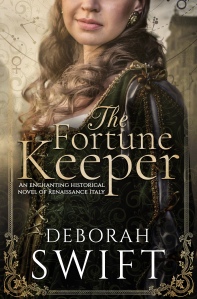
I am pleased to welcome Deborah Swift to my blog to share an article about researching crime in Renaissance Venice for her novel, The Fortune Keeper. I would like to thank Deborah Swift and The Coffee Pot Book Club for allowing me to be part of this blog tour.
One of the things I was aware of as soon as I started this novel, The Fortune Keeper, was that although not a crime novel, it would probably have several murders within its pages. This is because the whole series is about Giulia Tofana, who was renowned for poisoning men so that their wives could escape marital persecution.
Giulia Tofana became a legend and it is probable that she didn’t poison as many men as the rumors say, and that she was probably blamed for the crimes of others. One of the others suspected of her crimes was her stepdaughter Girolama. As she was to be featured in this book, it led me to look into the law in early modern Venice because I knew I would have to be aware of policing, punishment, and the mechanisms of the law.
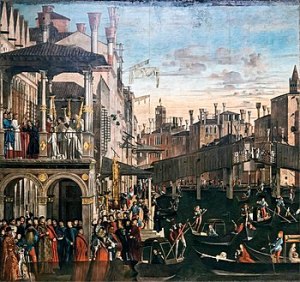
Accademia – Miracle of the Holy Cross at Rialto by Vittore Carpaccio
Renaissance Robbery
Venice was extremely wealthy in the Renaissance period, and vagabonds and thieves flooded into the city in search of easy pickings. In the picture above you can see the canal thronged with men dressed in rich clothing and ornament. The most common crimes in Venice were burglary and forgery, but it was by no means unusual for there to be murders over money and debts. The punishment for robbery was calculated based on the quantity of property taken. First offenders who stole goods worth less than one lira could get away with a whipping, but woe betide you if you stole something bigger. The penalty was the loss of an eye for goods valued between five to ten lire, and the noose awaited those brave enough to steal something worth more than forty lire. Debt and Death
The law allowed anyone owed more than five lire de piccola to threaten and even kill the debtor to recoup their money, putting the onus firmly on the debtor, not the avenger. This tells us that money was the main driving force in Venetian society. But what about armed robbery or assault where no debt was owed? Most assaults were subject to a mere fine of twenty-five lire, or banishment from the city-state. If your crime was a crime that drew blood – sanguinem fecerit – then the punishment was up to the judging council. Venetian law had no such thing as ‘innocent until proven guilty’ at that time. The proof was largely circumstantial, and it relied on the judge and jury’s instinct regarding the guilt of the person involved. Renaissance Lawkeepers
The Avogaria di Comun were a group equivalent to lawyers, though non-professional, drawn exclusively from the nobility. They acted as prosecutors for the state, giving evidence and arguing for punishments before the main judicial councils of Venice. Because of their status, their judgments were often influenced by their social position, and the personal axes they had to grind.
Execution and Mutilation
In this period it was still common for mutilations to take place, which had been traditional in medieval times. Cutting out the tongue for heresy, cutting off the thumb or fingers for pilfering. Courtesans regularly had their noses or faces cut. There was also the custom of cutting off the ‘offending’ part – this led to men who were convicted of dabbling in heresy or alchemy, or crimes against the Holy Roman Church having their hand cut off to remove the ‘devil’s instrument’. This kind of public ritual and humiliation was designed to bring public vengeance to the accused person and to reaffirm the values of the Church or state.
The ritual turned the execution into a purification of the city.
Few crimes brought down corporal or capital punishment. The types of corporal punishment used for the crimes of rape and assault were minor by today’s standards. As an example, for assault, out of 569 cases only fifteen involved mutilation of the criminal; and sixteen more involved some form of corporal discipline. For rape offenses, corporal punishment was even less significant, with twenty cases of discipline and only four of mutilation.
Maintaining law and order
On the streets, the main arbiters of law and order were the town guard, the vigili urbani, who acted as our police do now. Their job was to make sure masked men didn’t carry arms, that only noblemen wore swords, and to act as a preventative force as well as policing troublemakers.
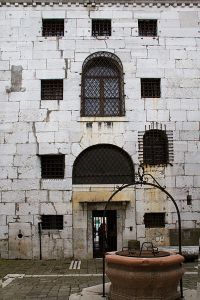
Further up the ladder was the Council of Ten, a kind of secret police force whose job was to maintain order within the city-state of Venice. There was not much space in the city gaols of Venice due to the whole nature of its construction. For crimes of fraud, marital dispute, and affray, these men sat in judgment. It was unfeasible to keep men incarcerated for long because otherwise, the gaols would be full of minor offenders. Small fines and short gaol sentences were the usual punishments for common violence in Venice. When the crime crossed the line into something that was considered ‘against God’ or ‘against the reputation of Venice’ then ritual punishment could be relied upon to warn the populace about sinning against these bigger, less personal edifices.
Documents I found helpful in my research:
Law and Punishment in Early Renaissance Venice
Violence in Early Renaissance Venice – Guido Ruggiero
Banditry and Social Identity in the Republic of Venice – Sergio Lavarda
Authority and the Law in Renaissance Venice — G. Cozzi
xr:d:DAEbig1CmJo:257,j:33693903820,t:22082511
Blurb:
Count your nights by stars, not shadows ~ Italian Proverb
Winter in Renaissance Venice
Mia Caiozzi is determined to discover her destiny by studying the science of astronomy. But her stepmother Giulia forbids her to engage in this occupation, fearing it will lead her into danger. The ideas of Galileo are banned by the Inquisition, so Mia must study in secret.
Giulia’s real name is Giulia Tofana, renowned for her poison Aqua Tofana, and she is in hiding from the Duke de Verdi’s family who are intent on revenge for the death of their brother. Giulia insists Mia should live quietly out of public view. If not, it could threaten them all. But Mia doesn’t understand this, and rebels against Giulia, determined to go her own way.
When the two secret lives collide, it has far-reaching and fatal consequences that will change Mia’s life forever.
Set amongst opulent palazzos and shimmering canals, The Fortune Keeper is the third novel of adventure and romance based on the life and legend of Giulia Tofana, the famous poisoner.
‘Her characters are so real they linger in the mind long after the book is back on the shelf’
~ Historical Novel Society
NB This is the third in a series but can stand alone as it features a new protagonist. The other two books are available if reviewers want them.
Trigger Warnings:
Murder and violence in keeping with the era.
Buy Links:
This title is available to read on #KindleUnlimited.
Deborah Swift is a USA TODAY bestselling author who is passionate about the past. Deborah used to be a costume designer for the BBC, before becoming a writer. Now she lives in an old English school house in a village full of 17th Century houses, near the glorious Lake District. Deborah has an award-winning historical fiction blog on her website http://www.deborahswift.com.
Deborah loves to write about how extraordinary events in history have transformed the lives of ordinary people, and how the events of the past can live on in her books and still resonate today.
The first in her series about the Renaissance poisoner Giulia Tofana, The Poison Keeper, was a winner of the Wishing Shelf Book of the Decade, a Coffee Pot Book Club Gold Medal, and the latest in her WW2 Secret Agent series, Operation Tulip, is coming soon.
Those born of royal blood are either blessed by being able to sit on the throne or cursed to be under intense scrutiny for fears of treason. That is the case for the Grey sisters. Jane, Katherine, and Mary were the daughters of Henry and Frances Grey and the granddaughters of Mary and Charles Brandon. Their bloodline made them cousins to Mary I and Elizabeth I, which meant they threatened the two queens, especially when Edward VI named Lady Jane Grey his heir. After Mary I executes Jane and their father Henry for treason, the remaining Grey sisters, Katherine and Mary, must survive the treacherous Tudor court or end up like their sister. Can Katherine and Mary survive in a court where their royal blood leaves a target on their backs? Elizabeth Fremantle tells the tale of the lesser-known Grey sisters in her novel, “Sisters of Treason.”
A few years ago, I read the first book in The Tudor Trilogy by Elizabeth Fremantle called, “Queen’s Gambit: A Novel of Katherine Parr,” and I adored it. I have always been fascinated with Tudor heroines that do not get enough attention. I feel like Katherine and Mary Grey fit that bill and another woman Fremantle included in this novel, Levina Teerlinc. When I read the description of this book, I knew I would enjoy it.
We begin with the tragic execution of Lady Jane Grey as her mother Frances and Levina Teerlinc, a family friend, watch in horror in the middle of the crowd. They know they cannot save her, but they can protect her sisters from the same grisly fate by keeping a close eye on them from themselves and the schemes of others. Mary Grey can keep herself from major scandals and close to her cousins because of her misshapen body. She knows that she cannot threaten the house of Tudor because she cannot have children. On the other hand, Katherine Grey only cares about love and having her own family; she does not care about the consequences that she may have to deal with if she marries without the queen’s permission.
While Mary Grey is a constant companion for Queen Mary and Queen Elizabeth, Katherine is on the outside looking in, wanting her own life and to marry Edward Seymour, Earl of Hertford. Eventually, they marry secretly, much to the chagrin of Queen Elizabeth I. Katherine and Hertford suffer the consequences of their love match by spending time in the Tower. Mary on the other hand knows her duty to the throne and how it is important to keep her family safe from the Tudor queens’ ire, even when she falls in love with Thomas Keyes. We also have the perspective of the artist Levina Teerlinc, a family friend of the Greys and a surrogate mother to Katherine and Mary after the death of Frances. The Greys and Teerlinc must also navigate the ever-changing religious world as they are reformers when Catholicism battles it out with Protestantism.
This is yet another sublime novel by Elizabeth Fremantle. It is full of tension, intrigue, romance, and love for one’s family, whether a friend as close as a mother or the bonds of blood. Even though I knew how the stories of Katherine and Mary Grey played out, it was still a thrilling read, especially with the addition of Levina Teerlinc. I have loved every novel that I have read by Fremantle so far and I look forward to reading more. If you want an excellent novel about the Grey sisters, I highly recommend you read “Sisters of Treason” by Elizabeth Fremantle.
A king’s eldest child is usually the next in line to inherit the throne and become the next ruler. At least that is how the line of succession is supposed to work if the heir is male. Mary I knew this better than anyone. As the eldest daughter of King Henry VIII, she knew that once her mother Katherine of Aragon had a son, Mary would become a pawn in the marriage game. She was willing to accept this fate until her father fell in love with Anne Boleyn. Mary is declared a bastard and must fight for her inheritance and the crown of England while maintaining her Catholic faith. Alison Weir tells the tale of this remarkable woman, from her tumultuous childhood to her short reign that marked her legacy, in her latest novel, “The Passionate Tudor: A Novel of Queen Mary I.”
I would like to thank Ballantine Books and Net Galley for sending me a copy of this book. I have enjoyed the previous novels in The Tudor Rose trilogy by Alison Weir about Elizabeth of York and King Henry VIII, so when I heard she was writing a book about Mary I, I knew I wanted to read it. Mary I is one of those figures who shows how devastating it can be to be close to the throne and the hard decisions one makes when king or queen of a country.
Weir began her novel with Mary at the age of nine in 1525. She is her parent’s pride and joy as she is their only child. Her mother Katherine of Aragon is arranging an advantageous marriage for Mary that would create a strong alliance for England. Not even the birth of her half-brother Henry Fitzroy could dampen Mary Tudor’s spirits. However, that all changed when Anne Boleyn entered the picture and the Great Matter was made public. Katherine of Aragon is no longer queen, Anne Boleyn is Mary’s stepmother, and Mary is now declared a bastard in favor of her half-sister Elizabeth Tudor.
Mary’s life after the birth of Elizabeth Tudor begins to become even more tragic. Her mother Katherine of Aragon dies before she can see her daughter again and Anne Boleyn is executed for treason soon afterwards. Henry VIII marries Jane Seymour, has his desired male heir Edward VI, before Jane tragically dies quickly. As the Supreme Head of the Church of England, Henry wants his daughter Mary, a devout Catholic, to submit to his will, which she ultimately does. We also get to see how Mary interacted with her other stepmothers, Anna of Cleves, Katherine Howard, and Katherine Parr, until the death of her father Henry VIII. Before he died, Henry VIII revised his Act of Succession, making Mary Edward’s heir if he did not have children. However, Edward VI has his idea for who will succeed him after he dies and he names Lady Jane Grey as his heir, although that plan does not last long and Mary is proclaimed the first queen of England to rule on her own.
Weir shows Mary’s life and reign in a very sympathetic way. Even though she does still give her the nickname “Bloody Mary”, we can see a woman who is concerned about the faith of her kingdom and the well-being of her family, especially Edward, Prince Philip her husband, and Elizabeth, who she argues with on matters that matter to her. It is such a tragedy that Mary never had a child that she desperately wanted to have as she suffered through phantom pregnancies. At the end of the day, whether it was matters of faith or family, Mary was someone who was passionate and someone who desired to be loved.
This is a delightful novel about a woman who has often been vilified but maybe we should have sympathy for everything she had to endure starting at a young age. I enjoyed this novel very much and I look forward to the next novel by Weir. If you have enjoyed the previous books in the Tudor Rose trilogy or you just want a different take on Mary I’s story, I highly suggest you read, “The Passionate Tudor: A Novel of Queen Mary I” by Alison Weir.

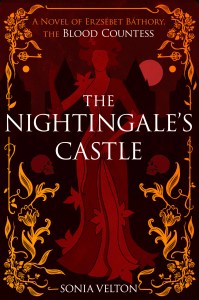 A castle looms in the distance and the owner, a glamourous countess, has asked for fair maidens from the surrounding areas to work for her. But this is not an ordinary castle and this was not a benevolent countess. The rumors say if you enter the castle, you will never return as the infamous Blood Countess Erzsebet Bathory will kill you and bathe in your blood. A rather gruesome tale that has been told for centuries, but how true is this story? What truly happened in the Countess’s castle and what was the countess like? Sonia Velton hopes to answer these questions in her novel about Erzsebet Bathory’s life, entitled “The Nightingale’s Castle.”
 Marriage has been an integral part of life for centuries. It has been used to create strong alliances and cement love matches. However, once the wedding ceremony is finalized, the facade often fades and the truth about the families is revealed. Jane Parker finally marries the love of her life, George Boleyn, but she soon realizes that her new family is full of ambition, especially her new sister-in-law Anne Boleyn. As one of the greatest marriages of the 16th century is beginning to fall apart, can a new romance be waiting in the wing to rock England and all of Europe to its core and whose side will Jane join in the end? Danielle Marchant continues her exploration of Jane Parker Boleyn, Lady Rochford’s life in her novel, “The Lady Rochford Saga Part 2: Tourmens de Mariage.”
 Weddings are supposed to be happy occasions to unite two families through the bonds of love, at least in our more modern sense of the ceremony. However, in the past, weddings were ceremonies that would unite families through contracts to create powerful alliances—hardly a romantic endeavor. One of the grandest weddings of the 16th century was meant to unite France, which led to bloodshed between Catholics and Huguenots. Minou Joubert and her family are invited to the wedding of Marguerite de Valois and Henri of Navarre in Paris, but the decision to attend the lavish event leads her family on a path full of tears and heartbreak. The story of the Joubert family’s struggle to fight for the faith they strongly believe in and to unite their broken family is masterfully told in Kate Mosse’s novel, “The City of Tears.”
 The year is 1517, and Florence is experiencing great change. No longer is it a grand republic that it once was; instead, it is under the control of the Medici family. They ruthlessly controlled Florence, especially Pope Leo X, who was born Giovanni di Lorenzo de’ Medici. The people suffer as the Medici become increasingly wealthy, but a band of misfits and thieves plan to give some power back to the people with one of the greatest heists of 16th century Italy. Can they survive as a group when revelations from the past and dangers lurk around every corner? The adventure with this ragtag team of thieves as they fight for Florence is explored in Caitlin Schneiderhan’s novel, “Medici Heist.”
 The Crusades were conflicts predominantly focused on the stories of knights, kings, popes, Christians, and Muslims. We have some stories of women like Eleanor of Aquitaine who joined their husbands in battle. However, some women’s stories tend to get lost in the sands of the past. Take, for example, Eleanor of Aquitaine’s daughter-in-law, Berengaria of Navarre, the wife of Richard the Lionheart. Amid the Third Crusades, she must join Eleanor of Aquitaine on a treacherous journey to meet her husband while he battles for Jerusalem. Can Richard and Berengaria survive the journey to and from the Holy Land and produce the desired heir for the English throne before their enemies can claim victory? Carol McGrath has chosen to tell the tale of the forgotten queen Berengaria of Navarre in her latest novel, “The Lost Queen.”
 Author Bio – Following a first degree in English and History, Carol McGrath completed an MA in Creative Writing from The Seamus Heaney Centre, Queens University Belfast, followed by an MPhil in English from the University of London. The Handfasted Wife, first in a trilogy about the royal women of 1066 was shortlisted for the RoNAS in 2014. The Swan-Daughter and The Betrothed Sister complete this highly acclaimed trilogy. Mistress Cromwell, a best-selling historical novel about Elizabeth Cromwell, wife of Henry VIII’s statesman, Thomas Cromwell, was republished by Headline in 2020. The Silken Rose, the first in a medieval She-Wolf Queens Trilogy, featuring Ailenor of Provence, saw publication in April 2020. This was followed by The Damask Rose. The Stone Rose was published in April 2022. Carol is writing Historical non-fiction as well as fiction. Sex and Sexuality in Tudor England was published in February 2022. The Stolen Crown 2023 and The Lost Queen will be published on 18th July 2024. Carol lives in Oxfordshire, England, and in Greece.
 I am pleased to welcome Anna Chant to my blog today to share a spotlight for her novel, “Courage of the Conquered.” I would like to thank The Coffee Pot Book Club and Anna Chant for allowing me to be part of this blog tour.
 Blurb:
 Author Bio
 I am pleased to welcome Gina Buonaguro to blog today to share a blurb from her novel, “The Virgins of Venice.” I would like to thank The Coffee Pot Book Club and Gina Buonaguro for allowing me to be part of this blog tour.
 Author Bio:



 Author Bio:
 Those born of royal blood are either blessed by being able to sit on the throne or cursed to be under intense scrutiny for fears of treason. That is the case for the Grey sisters. Jane, Katherine, and Mary were the daughters of Henry and Frances Grey and the granddaughters of Mary and Charles Brandon. Their bloodline made them cousins to Mary I and Elizabeth I, which meant they threatened the two queens, especially when Edward VI named Lady Jane Grey his heir. After Mary I executes Jane and their father Henry for treason, the remaining Grey sisters, Katherine and Mary, must survive the treacherous Tudor court or end up like their sister. Can Katherine and Mary survive in a court where their royal blood leaves a target on their backs? Elizabeth Fremantle tells the tale of the lesser-known Grey sisters in her novel, “Sisters of Treason.”
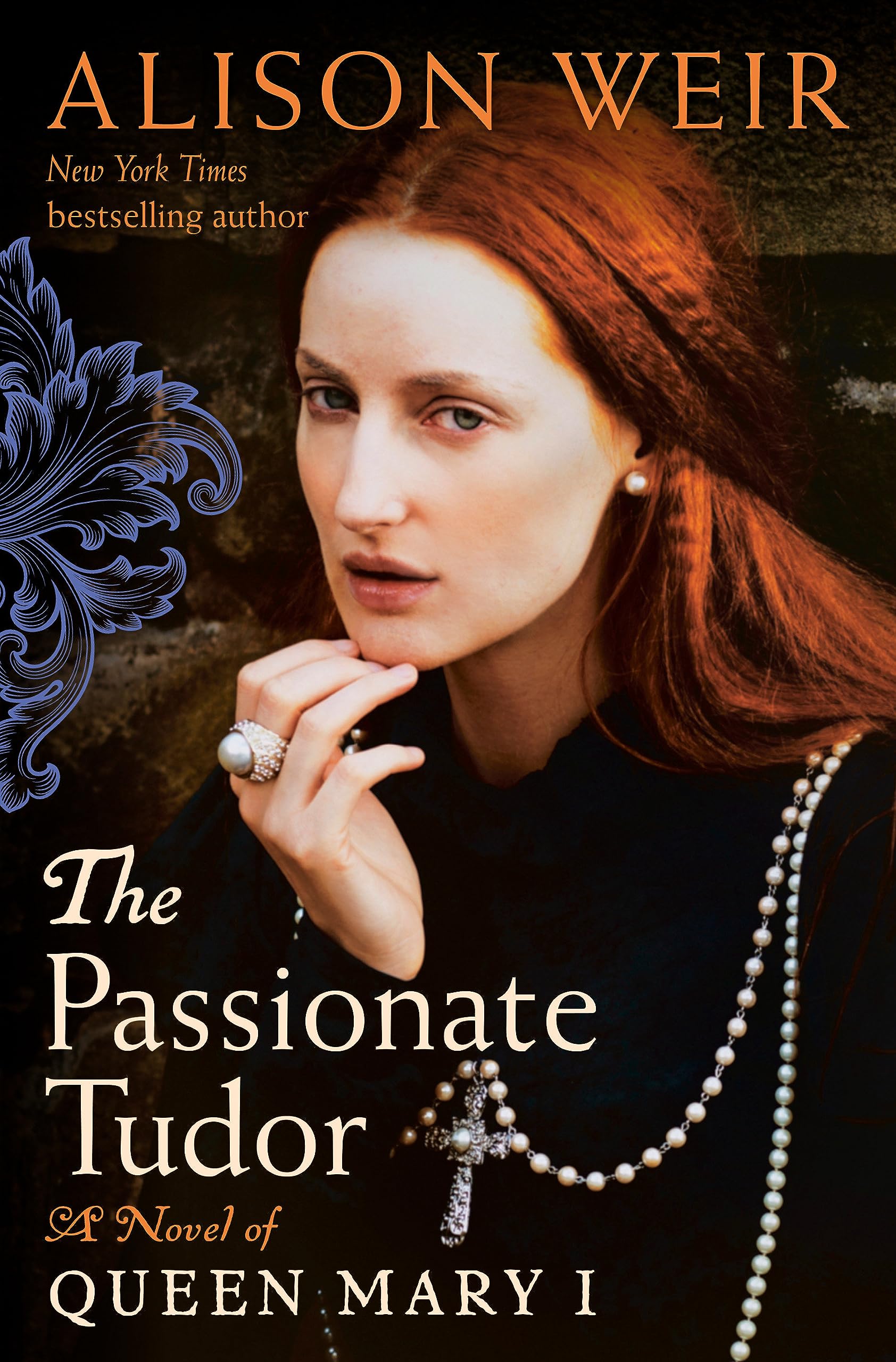 A king’s eldest child is usually the next in line to inherit the throne and become the next ruler. At least that is how the line of succession is supposed to work if the heir is male. Mary I knew this better than anyone. As the eldest daughter of King Henry VIII, she knew that once her mother Katherine of Aragon had a son, Mary would become a pawn in the marriage game. She was willing to accept this fate until her father fell in love with Anne Boleyn. Mary is declared a bastard and must fight for her inheritance and the crown of England while maintaining her Catholic faith. Alison Weir tells the tale of this remarkable woman, from her tumultuous childhood to her short reign that marked her legacy, in her latest novel, “The Passionate Tudor: A Novel of Queen Mary I.”
 Adventures of a Tudor Nerd