
 In the study of history, we tend to look at the beginning and the end of a battle and why they were fought. We rarely pay attention to the march that led to the battle, but when we do, there is a distinct reason why. One particular case is of Henry Tudor’s march to the Battle of Bosworth Field. It is a tale that started from his birth at Pembroke Castle to being an exile and then from an exile to being King of England. The story of how an exile became a king and founded the infamous Tudor dynasty deserves attention. Phil Carradice believed that it was time for the story of the first Tudor king and his march to destiny to be told in his latest book, “Following in the Footsteps of Henry Tudor: A Historical Journey From Pembroke to Bosworth”.
I would like to thank Pen and Sword Books for sending me a copy of this book. This is the second book in the “Following in the Footsteps” series that I have read, so I was cautiously optimistic. I wanted to learn more about Henry Tudor’s march to Bosworth and I certainly did in this book.
Carradice begins his book with a novel-like description of Henry, or “Harri”, and his uncle Jasper Tudor landing in Wales. As a reader, I was a bit confused about the direction that Carradice was taking by using this approach since this is a historical non-fiction book instead of historical fiction, but Carradice was able to tie it in nicely. He then explains, rather briefly, the conflict known as the Wars of the Roses and how England got to the point where it was Henry Tudor versus King Richard III for the throne. It is this information that is crucial for readers to understand Henry’s motive for claiming the throne and how it was an arduous task to achieve. It was in these early chapters that we see how Henry went from a regular boy to an exile who became a thorn in the side of the Yorkist Kings Edward IV and Richard III.
The bulk of Carradice’s book deals with what happens after Henry Tudor and his men land in Wales. He deals with issues of exactly where Henry landed and why the traditional place for the landing does not make a whole lot of sense. Carradice also takes on the legends that surrounded the different locations during the march and compared them to the facts that we do know about the march, primarily from Polydore Vergil. The one problem that I had with this book was that Carradice did not include a map of the march. I was not familiar with the locations, particularly the Welsh locations, so it was difficult to visualize the distances. What I did appreciate was the fact that as the battle approached, Carradice showed how both Henry and Richard III must have been feeling and how their decisions on that fateful day made all the difference.
Overall, I was pleasantly surprised by this book. It may be small, but it is rather mighty with all the information that it contains. Carradice’s writing style makes this book feel like a historical fiction novel with a plethora of information one expects from a historical nonfiction book. If you want a great introduction book to Henry Tudor’s march to Bosworth Field and the beginning of the Tudor dynasty, I highly recommend you read, “Following in the Footsteps of Henry Tudor: A Historical Journey From Pembroke to Bosworth” by Phil Carradice.
 The children of King Henry VII and Elizabeth of York lived rather eventful and fascinating lives. We all know the stories of Prince Arthur, who tragically died, his younger brother Henry, who would become the notorious King Henry VIII, and Mary, who would become Queen of France and then marry the man she loved, Charles Brandon. The one sibling that many tend to forget about is Margaret Tudor, who would become the wife of King James IV and the mother of King James V and Margaret Douglas. Her love life was quite rocky, but she kept fighting for what she believed was right for her family and her adoptive country of Scotland. This remarkable woman didn’t receive much attention in her lifetime, but Melanie Clegg hopes that people today will know Margaret’s story. This is why she wrote this delightful biography of the Tudor princess turned Queen of Scotland, “Margaret Tudor: The Life of Henry VIII’s Sister”.
  The study of the Tudors tends to focus on England as a country of focus, however the Tudors did affect other countries like Spain, France, and Scotland. Many know the story of Mary, Queen of Scots and her relationship with Elizabeth I, but many do not know the tale of her mother, Marie de Guise. Her tale is one of love for her family and her adoptive country of Scotland. It is of loyalty and strength to do what she believed was right. She was a sister, a daughter, a mother, a queen, and a regent of Scotland. Marie’s story tends to be overshadowed by her daughter’s tragic tale, until now. Her story is the main focus of Melanie Clegg’s latest biography, “Scourge of Henry VIII: The Life of Marie de Guise”.
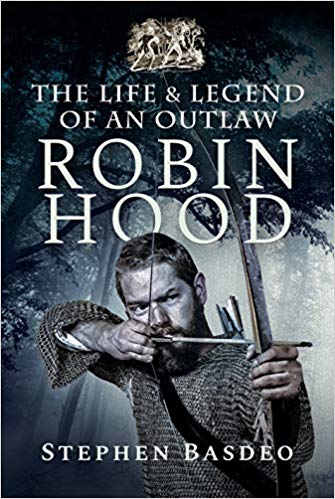 When one studies history, one comes across legends and myths that seem to transcend time itself. In England, there are two such legends. One, of course, is King Arthur and his Knights of the Round Table. The other is of a rogue and his band of merry men, who “stole from the rich and gave to the poor”. Of course, I am speaking of none other than Robin Hood. When exploring Robin Hood, tons of questions come to mind. Who was Robin Hood? Was Robin Hood an actual person? How did his legend change over time? Stephen Basdeo, an Assistant Professor of History at Richmond University, dives into discovering the truth about Robin Hood in his latest book, “Robin Hood: The Life and Legend of an Outlaw”.
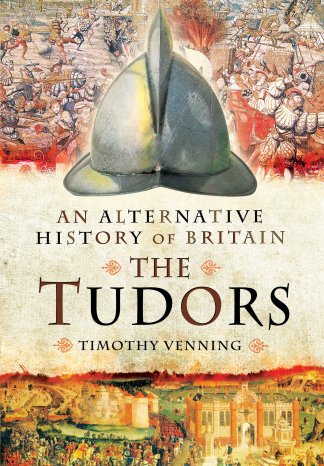 The study of history is all about asking questions about how and why events happened. We understand that history is very much a study of cause and effect; if a certain person causes something to happen, we study the effect of those actions. But what if the person changes what they do? What would happen to the course of history? These are considered the “what ifs” of history, which is something that history fans and students like to discuss with one another. These questions rarely are discussed in books, until now. Timothy Venning explores some of the “what ifs” of the Tudor Dynasty in his book, “An Alternative History of Britain: The Tudors”.
 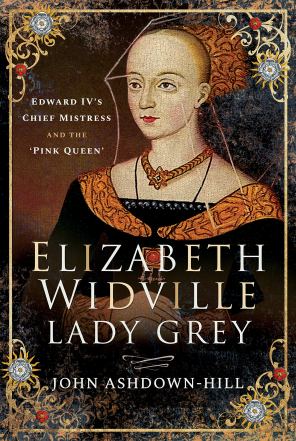 The English conflict known as the Wars of the Roses is filled with dynamic figures whose stories are those of legends. None more so than the wife of Edward IV and the mother of Elizabeth of York and the princes in the Tower, Elizabeth Woodville. She has been known in popular culture as the commoner turned “White Queen” consort, but do we really know the true story about her life? Was she really Edward IV’s wife? How much influence did she actually carry? These questions and more are tackled in Dr. John Ashdown-Hill’s latest book, “Elizabeth Widville Lady Grey: Edward IV’s Chief Mistress and the ‘Pink Queen’.
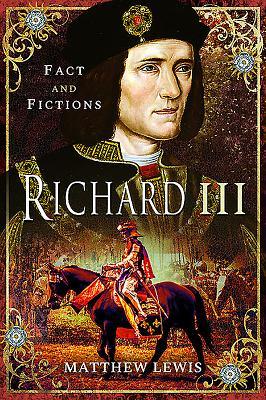 When one looks at the study of history as a whole, the traditional way to look at a person as either good or bad through a combination of facts and fictional tales of their supposed exploits. None so much so as King Richard III, one of the most controversial English monarchs. Fictitious tales, like William Shakespeare’s play
  When one thinks about the Wars of the Roses, we often think about the adults who fought against each other. However, there were also children who were stuck in the middle of the conflict. Two of the most famous children of this time were Edward V and Richard of Shrewsbury, Duke of York, the sons of Edward IV and Elizabeth Woodville. Today, we refer to these brothers as “the Princes in the Tower”. The disappearance of these two boys has sparked so much debate over the past five centuries as to who killed them or if they did indeed escape the tower, yet we have no way to know what happened to them. What we do have is the physical locations that were part of the young princes’ lives. Instead of diving into the quagmire that is the mystery of the princes’ lives, Andrew Beattie takes a different approach in his book, “Following in the Footsteps of the Princes in the Tower.”
 Historically, royal marriages have been viewed with such interest. A king and a queen who can come from either similar or different backgrounds in order to make their country better, or in some cases, worse. During the Wars of the Roses, there were some legendary relationships that shaped the war between the Yorks and the Lancasters. Edward IV and Elizabeth Woodville. George Duke of Clarence and Isabel Neville. Richard III and Anne Neville. Henry Tudor and Elizabeth of York. However, these relationships fail in comparison to the impact that the marriage of Henry VI and Margaret of Anjou had on England during this time. Henry VI was seen as a weak, pious ruler; Margaret was seen as too strong for a woman. They have been viewed separately for a long time, never as a couple. That is until Amy Licence wrote her latest biography, “Henry VI and Margaret of Anjou: A Marriage of Unequals”.
 Adventures of a Tudor Nerd