
 The stories of the men behind the English crown can be as compelling as the men who wore the crown themselves. They were ruthless, cunning, power-hungry, and for many of them, did not last long. However, there were a select few who proved loyal to the crown and lived long and eventful lives. They are not as well known as their infamous counterparts, yet their stories are just as important to tell. One such man was the grandfather of two of Henry VIII’s wives and the great-grandfather of Elizabeth I. He lived through the reign of six kings and led his men to victory at the Battle of Flodden against King James IV of Scotland towards the end of his life. Thomas Howard, 2nd Duke of Norfolk had his fair shares of highs and lows, including imprisonment, but his story is rarely told. That is until now. Kirsten Claiden-Yardley has taken up the challenge to explore the life of this rather extraordinary man in her book, “The Man Behind the Tudors: Thomas Howards, 2nd Duke of Norfolk”.
I would like to thank Pen and Sword Books for sending me a copy of this book. I honestly did not know a whole lot about the Howard family, other than Katherine Howard, so this book sounded intriguing to me.
Claiden- Yardley begins her biography by exploring the rise of Thomas Howard’s family and how his father, John Howard, became a powerful man. What was interesting was the Howard connection to the de Mowbrays and how John used these relations to his advantage to help his growing family find favor with the nobility and the monarchs of the time, including Edward IV and Richard III. She explores the relationship between Thomas and Richard III, including the possibility that Thomas had something to do with the Princes in the Tower.
It was at the Battle of Bosworth Field where things get treacherous for the Howard family. Richard III and John Howard were both killed and Thomas Howard was captured, stripped of his titles, and sent to prison to await Henry VII’s decision on how to handle him. After some time, Thomas not only was released from prison, he became a valuable asset for the Tudor dynasty. He would be a diplomat, a chief mourner for Arthur Tudor’s funeral, and escort two princesses to their weddings in France and Scotland. He worked hard to make sure that his family married well and that they were financially stable.
The Battle of Flodden would be Thomas’ defining moment, even though it was towards the end of his life. Claiden-Yardley takes the time to explain why this battle had to be fought and the details of the battle. I found this extremely interesting to see how Thomas led his men into battle and how he helped stopped a Scottish invasion of England at the age of 70.
Claiden-Yardley has done extensive research into the life of Thomas Howard. I did find her writing a bit dry in some places, but overall, she did what she set out to do. She shed some light on a rather remarkable man who was really behind the curtain during the reigns of quite a few English kings. His loyalty to the crown and his family was unwavering. If you want to read a good biography about Thomas Howard and how the Howard family rose to power during the Tudor dynasty, I would recommend you read, “The Man Behind the Tudors: Thomas Howard, 2nd Duke of Norfolk” by Kirsten Claiden-Yardley.
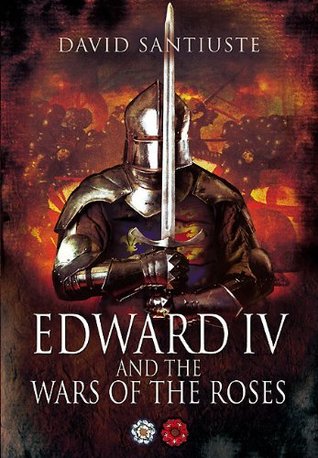 The romanticized conflict that was known as the Wars of the Roses had numerous colorful figures. From the sleeping king, Henry VI and his strong wife Margaret of Anjou to the cunning Kingmaker Warwick and the hotly debated figure Richard III, these men and women made this conflict rather fascinating. However, there was one man who would truly define this era in English history, Edward IV. He was a son of Richard duke of York who fought to avenge his father’s death and the man who would marry a woman, Elizabeth Woodville, who he loved instead of allying himself with a European power. These are elements of his story that most people know, but he was first and foremost an effective general, which is a side that is rarely explored when examining his life. David Santiuste decided to explore this vital part of Edward’s life in his book, “Edward IV and the Wars of the Roses”.
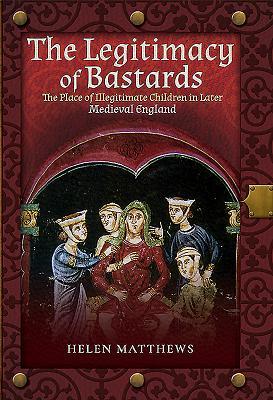 In the medieval world, a person’s lineage was everything. It determined who you could marry, what job you could have, and where you could live. To be considered a legitimate child meant that the world was your oyster, for the most part. It was a bit difficult if you were considered an illegitimate child. We often look at lineage when it comes to royal families, but what about the nobility and the gentry. If you were considered an illegitimate child in the late medieval time period to a family who is part of the nobility or the gentry, what kind of opportunities would be available to you? This question and others are explored in Helen Matthews’ book, “The Legitimacy of Bastards: The Place of Illegitimate Children in Later Medieval England”.
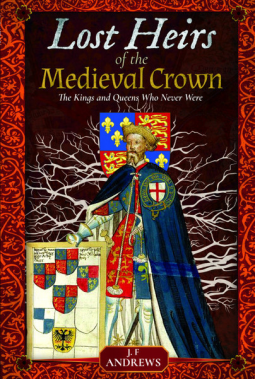 In history, we tend to focus on those who were crowned kings and queens of different nations. Their strengths and their weaknesses. Their accessions and the legacies that they left behind. With every story of someone who triumphed in gaining the throne, there are tales of those who were close to the throne but were never able to achieve the ultimate goal of ruling a nation. These “lost heirs” fall into two categories; either their names live on in infamy or they are thrown into the dust of the past. Who were these men and women and why did they lose their chances to sit on the throne? These questions are explored in J.F. Andrews’ book, “Lost Heirs of the Medieval Crown: The Kings and Queens Who Never Were”.
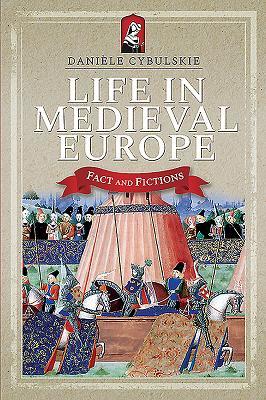 Have you ever read a book, either historical fiction or nonfiction, about medieval Europe and wondered if what the author was writing about was true? What about historical movies or dramas? You know that they probably have the facts about the important people and events correct, or at least you hope, but you wonder about the small details. What did they eat? How did they keep themselves clean and healthy? How did religion and the criminal justice system work in medieval Europe? What was medieval warfare like? These questions and more are explored in Daniele Cybulskie’s enchanting book, “Life in Medieval Europe: Fact and Fiction”.
 Being part of a royal family has its perks, like power and prestige. However, especially in medieval Europe, it meant that you could not marry the person you loved. Marriage was used as a tool to create strong alliances and the women from royal families were used as extremely powerful pawns to strengthen these connections. During the reigns of King Edward II and Edward III, three sisters proved to be very valuable pawns in the marriage market. They were the Clare sisters, Eleanor, Margaret, and Elizabeth. Their stories of their numerous marriages and abductions help to tell the tale of English politics during the reigns of their uncle King Edward II and his son Edward III. Kathryn Warner’s latest book, “Edward II’s Nieces The Clare Sisters: Powerful Pawns of the Crown” explores how these sisters and their families helped transform England during this transformative time in history.
 Two women who shared a name, related by marriage but divided by political and monetary motives. In Medieval Europe, this statement could refer to any number of women, but the two women who are the center of this particular story revolve around medieval England and the reign of King Henry III. One was Henry’s sister whose marriages and money problems were a thorn in her brother’s side. The other was Henry III’s wife who stood by his side and protected their children even when the nation despised her. Their names were Eleanor de Montfort and Eleanor of Provence respectfully; their stories are filled with disasters and triumphs that would shape how England was ruled in medieval times. Darren Baker explores their lives and the lives of their families in his latest biography, “The Two Eleanors of Henry III: The Lives of Eleanor of Provence and Eleanor De Montfort”.
 Civil wars between cousins have had many names in the past, notably in England, the Wars of the Roses. However, there was a civil war that pre-dates the colorful contest known as The Anarchy. Two cousins fighting against one another from the throne of England, but what makes this contest unique was the main protagonists caught in the middle. One was the only legitimate child of King Henry I, Empress Matilda. The other was Henry I’s favorite nephew, Stephen of Blois. This conflict stretched for decades and has fascinated historians for centuries. It is complex and at times, a bit confusing, but Matthew Lewis has chosen to shed some light on what happened during this period in history in his latest book, “Stephen and Matilda’s Civil War: Cousins of Anarchy”.
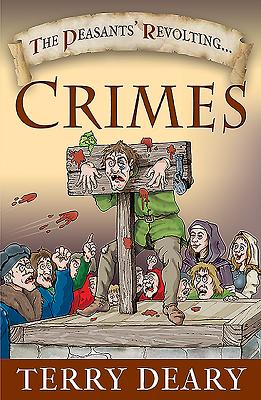 In history, we tend to look at people based on their class. There are the upper class (royalty and nobility), the middle class, and the underclasses (peasants). Most of the focus tends to be on the deeds of the upper and middle classes, yet the underclasses had there own struggles, some of which resulted in them committing crimes. What was life like for the criminals of the underclasses? What type of crimes did they commit and what sort of punishments did they suffer once they were caught? Terry Deary decided to explore the crimes of the British peasants throughout history, in his own humorous way, in his latest book, “The Peasants’ Revolting….Crimes”.
 In English history, the story of the royal families tends to capture the imagination of those who study it. Full of dynamic tales of kings and queens, and numerous nobles, these are tales that make it into history books and history classes. We tend to focus on the same kings and queens, who have become the popular royals. But what about those who are left in the dust of those popular royals? Who were the royal women who lived in the shadow of the throne that time has forgotten? What were the lives of these women like? It is these women who are the focus of Erin Lawless’s latest book, “Forgotten Royal Women: The King and I”.
 Adventures of a Tudor Nerd