
 The reigns of the Tudor monarchs were full of change, not only in court and in culture, but also when it came to religion. None more so than in the reign of King Henry VIII, especially during the incident known as “The Great Matter”, when the king wanted a divorce from his first wife, Katherine of Aragon. Many people were swept into the chaos of this time, but there are two who were infamous during this time; Thomas Wolsey and Anne Boleyn. These two were adversaries, vying for the attention of the king. They both experienced extreme highs and tragic lows as they navigated the change in England that would be the start of the Reformation. Lynda Telford explores the lives of Thomas Wolsey and Anne Boleyn, as well as the lives of other people who were caught displeasing King Henry VIII during this tumultuous time in her book, “Tudor Victims of the Reformation”.
I would like to thank Pen and Sword Books for sending me a copy of this book to read and review. The title had me intrigued and I really wanted to dive into this interesting book.
Before I started reading this book, I thought that this book was going to be about the entire Tudor dynasty and the stories of the victims of the Reformation, from King Henry VIII to Queen Elizabeth I. I also thought that this book might touch on the victims of the counter-Reformation during the reign of Queen Mary I. That is not what this book is about. Instead, Telford decided to focus on the lives of two main individuals, Thomas Wolsey and Anne Boleyn, ending in 1536. The title seemed rather misleading to me since the main focus of this book is “The Great Matter” rather than the Reformation, which was getting its start at this time, but really didn’t go into full swing in England until later in the Tudor dynasty.
Telford tells the story of Thomas Wolsey and Anne Boleyn and how they rose to be by King Henry VIII’s side. Wolsey was a brilliant scholar who rose to prominence in the Catholic church and in the court of the King. He became an ally and advisor to Henry VIII during the early years of his reign. Anne Boleyn was the daughter of Thomas Boleyn 1st Earl of Wiltshire and an English diplomat. She was able to capture the heart of the king, even though he was still married to his first wife, Katherine of Aragon. Henry decided that after decades of being married to Katherine of Aragon that she would never give him the son that he wanted, so it was only sensible to divorce her and marry Anne Boleyn. This decision would radically change England and the lives of so many forever, including Wolsey and Anne Boleyn.
As someone who knows the story of “The Great Matter”, the rise and fall of Thomas Wolsey and Anne Boleyn, and how these decisions affected England as a whole, this book felt like a review for me. There were points when I did feel like this book was a tad dry, but Telford did add more information from other European sources that helped give a new perspective about this time. Personally, this book felt like a review for me, but for someone who is being introduced to this topic for the first time, this book is a good place to start. If you have just started studying the Tudors and the event known as “The Great Matter”, I would recommend you read Lynda Telford’s book, “Tudor Victims of the Reformation”.
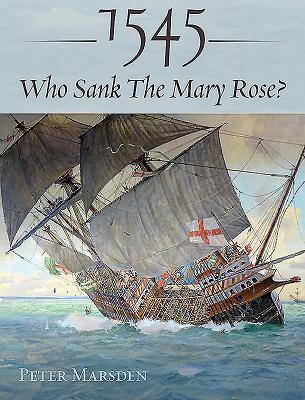 On a calm summer day in July of 1545, a battle was being fought in Solent between the Tudor navy and the French navy. Tragedy struck when the
  In the study of history, we tend to look at the beginning and the end of a battle and why they were fought. We rarely pay attention to the march that led to the battle, but when we do, there is a distinct reason why. One particular case is of Henry Tudor’s march to the Battle of Bosworth Field. It is a tale that started from his birth at Pembroke Castle to being an exile and then from an exile to being King of England. The story of how an exile became a king and founded the infamous Tudor dynasty deserves attention. Phil Carradice believed that it was time for the story of the first Tudor king and his march to destiny to be told in his latest book, “Following in the Footsteps of Henry Tudor: A Historical Journey From Pembroke to Bosworth”.
 The children of King Henry VII and Elizabeth of York lived rather eventful and fascinating lives. We all know the stories of Prince Arthur, who tragically died, his younger brother Henry, who would become the notorious King Henry VIII, and Mary, who would become Queen of France and then marry the man she loved, Charles Brandon. The one sibling that many tend to forget about is Margaret Tudor, who would become the wife of King James IV and the mother of King James V and Margaret Douglas. Her love life was quite rocky, but she kept fighting for what she believed was right for her family and her adoptive country of Scotland. This remarkable woman didn’t receive much attention in her lifetime, but Melanie Clegg hopes that people today will know Margaret’s story. This is why she wrote this delightful biography of the Tudor princess turned Queen of Scotland, “Margaret Tudor: The Life of Henry VIII’s Sister”.
  The study of the Tudors tends to focus on England as a country of focus, however the Tudors did affect other countries like Spain, France, and Scotland. Many know the story of Mary, Queen of Scots and her relationship with Elizabeth I, but many do not know the tale of her mother, Marie de Guise. Her tale is one of love for her family and her adoptive country of Scotland. It is of loyalty and strength to do what she believed was right. She was a sister, a daughter, a mother, a queen, and a regent of Scotland. Marie’s story tends to be overshadowed by her daughter’s tragic tale, until now. Her story is the main focus of Melanie Clegg’s latest biography, “Scourge of Henry VIII: The Life of Marie de Guise”.
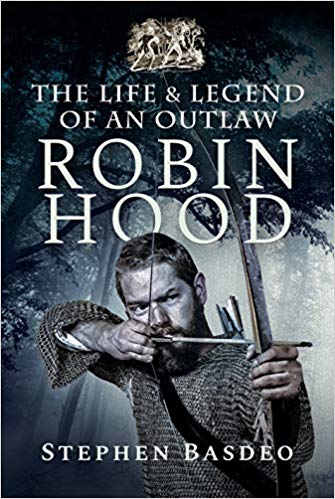 When one studies history, one comes across legends and myths that seem to transcend time itself. In England, there are two such legends. One, of course, is King Arthur and his Knights of the Round Table. The other is of a rogue and his band of merry men, who “stole from the rich and gave to the poor”. Of course, I am speaking of none other than Robin Hood. When exploring Robin Hood, tons of questions come to mind. Who was Robin Hood? Was Robin Hood an actual person? How did his legend change over time? Stephen Basdeo, an Assistant Professor of History at Richmond University, dives into discovering the truth about Robin Hood in his latest book, “Robin Hood: The Life and Legend of an Outlaw”.
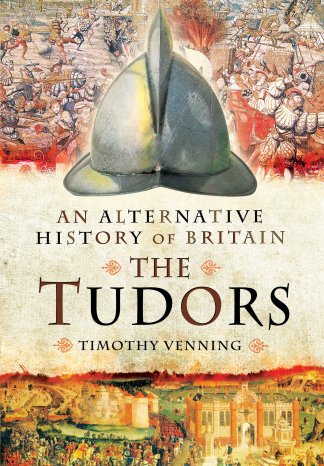 The study of history is all about asking questions about how and why events happened. We understand that history is very much a study of cause and effect; if a certain person causes something to happen, we study the effect of those actions. But what if the person changes what they do? What would happen to the course of history? These are considered the “what ifs” of history, which is something that history fans and students like to discuss with one another. These questions rarely are discussed in books, until now. Timothy Venning explores some of the “what ifs” of the Tudor Dynasty in his book, “An Alternative History of Britain: The Tudors”.
 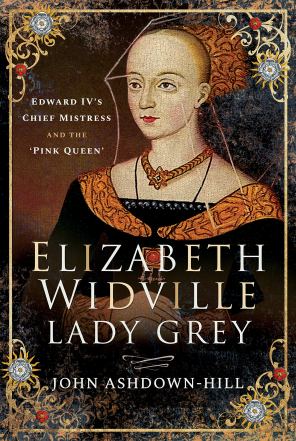 The English conflict known as the Wars of the Roses is filled with dynamic figures whose stories are those of legends. None more so than the wife of Edward IV and the mother of Elizabeth of York and the princes in the Tower, Elizabeth Woodville. She has been known in popular culture as the commoner turned “White Queen” consort, but do we really know the true story about her life? Was she really Edward IV’s wife? How much influence did she actually carry? These questions and more are tackled in Dr. John Ashdown-Hill’s latest book, “Elizabeth Widville Lady Grey: Edward IV’s Chief Mistress and the ‘Pink Queen’.
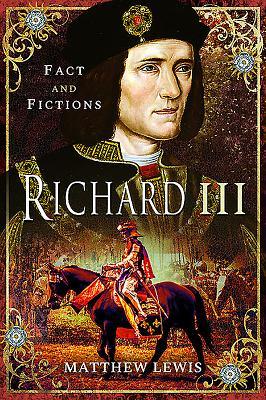 When one looks at the study of history as a whole, the traditional way to look at a person as either good or bad through a combination of facts and fictional tales of their supposed exploits. None so much so as King Richard III, one of the most controversial English monarchs. Fictitious tales, like William Shakespeare’s play
  When one thinks about the Wars of the Roses, we often think about the adults who fought against each other. However, there were also children who were stuck in the middle of the conflict. Two of the most famous children of this time were Edward V and Richard of Shrewsbury, Duke of York, the sons of Edward IV and Elizabeth Woodville. Today, we refer to these brothers as “the Princes in the Tower”. The disappearance of these two boys has sparked so much debate over the past five centuries as to who killed them or if they did indeed escape the tower, yet we have no way to know what happened to them. What we do have is the physical locations that were part of the young princes’ lives. Instead of diving into the quagmire that is the mystery of the princes’ lives, Andrew Beattie takes a different approach in his book, “Following in the Footsteps of the Princes in the Tower.”
 Adventures of a Tudor Nerd